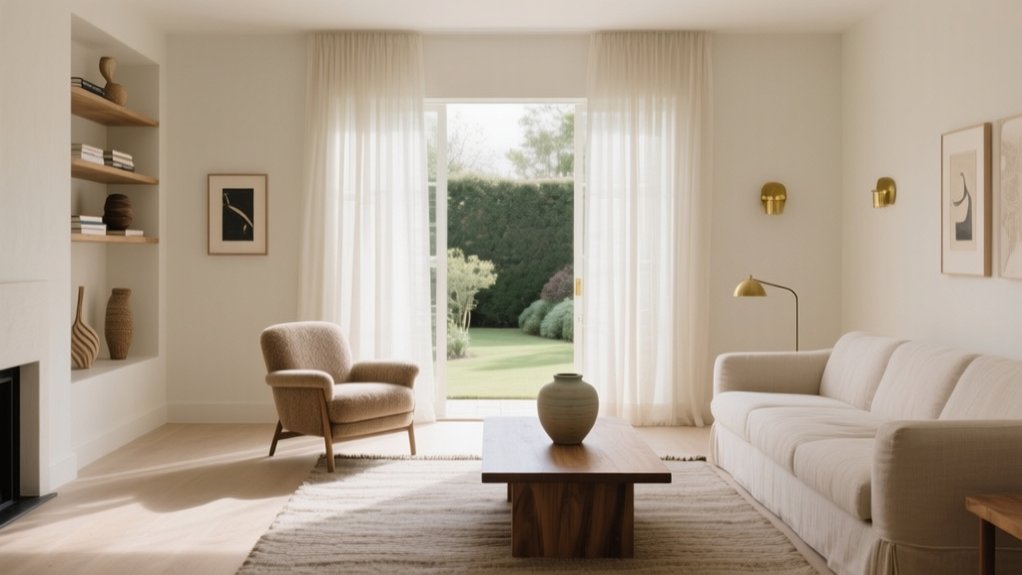

You create an effortless-yet-considered home by setting function-first rules: keep main pathways 36 inches clear, store daily items at arm’s height, and add landing surfaces near seating and the entry. Edit clutter before you decorate—keep what you use weekly, label seasonal storage, and donate anything untouched for a year. Zone each room for real routines, then buy anchor pieces that fit. Stick to a 3–5 tone palette, layered textures, and warm dimmable lighting. Next, you’ll tighten the details.
Set Your “Effortless Home” Rules (Function First)
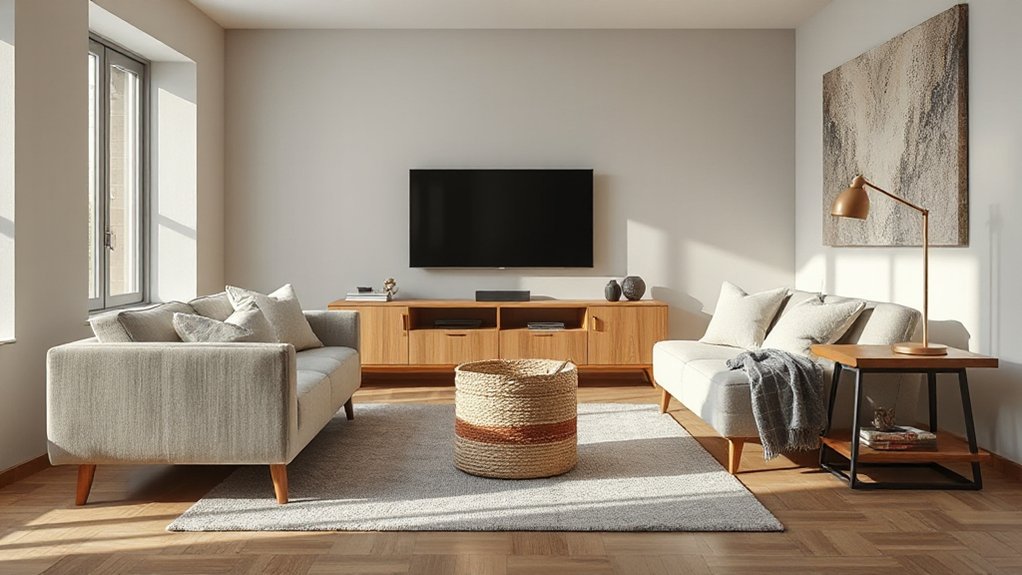
Before you pick paint colors or buy furniture, decide what “effortless” must mean in your day-to-day life. Map your routines room by room: where you drop keys, charge devices, sort mail, prep meals, and unwind. Turn those into Functional priorities: clear landing zones, reachable storage, durable surfaces, and lighting you can use without thinking.
Set nonnegotiables—traffic paths stay open, frequently used items live at arm’s height, and every seat has a nearby surface for a drink. Then write aesthetic guidelines that support function, not fight it: a tight palette that hides visual noise, finishes that clean quickly, and materials that age well.
If a choice complicates maintenance or movement, it doesn’t qualify as effortless.
Edit Before You Buy: Keep, Store, Donate
Once you’ve defined what “effortless” requires, you need to reduce what competes with it. Edit before you buy so every new item has a clear job and a clear home. Treat Clutter management like maintenance: schedule a quick audit monthly, and don’t “upgrade” until you’ve removed an equivalent.
- Keep: Choose items you use weekly or that solve a recurring problem; confirm condition and duplicates.
- Store: Box seasonal or occasional pieces; label by category and review dates, not vague “someday.”
- Donate: Release usable items you haven’t touched in a year; set a drop-off deadline within 7 days.
- Decide: For Sentimental sorting, keep one best version, photograph the rest, and let them go.
Start With Layout: Clear Paths and Zones
When your layout supports how you actually move through the house, everything else gets easier to maintain. Map your daily routes from entry to kitchen, bath, and bedrooms, then remove obstacles that pinch traffic flow. Keep primary paths at least 36 inches wide, and avoid forcing detours around furniture or open doors.
Next, use zoning strategies to assign each room clear functions. Create a “drop zone” near the entry for shoes, bags, and mail, and keep it contained to one wall or corner.
In living areas, separate conversation, media, and work zones with placement and lighting, not clutter.
In kitchens, group prep, cooking, and cleaning into tight triangles so you don’t cross the room repeatedly.
Finally, leave one flexible zone for overflow so mess doesn’t migrate.
Choose Anchor Pieces That Earn Their Place
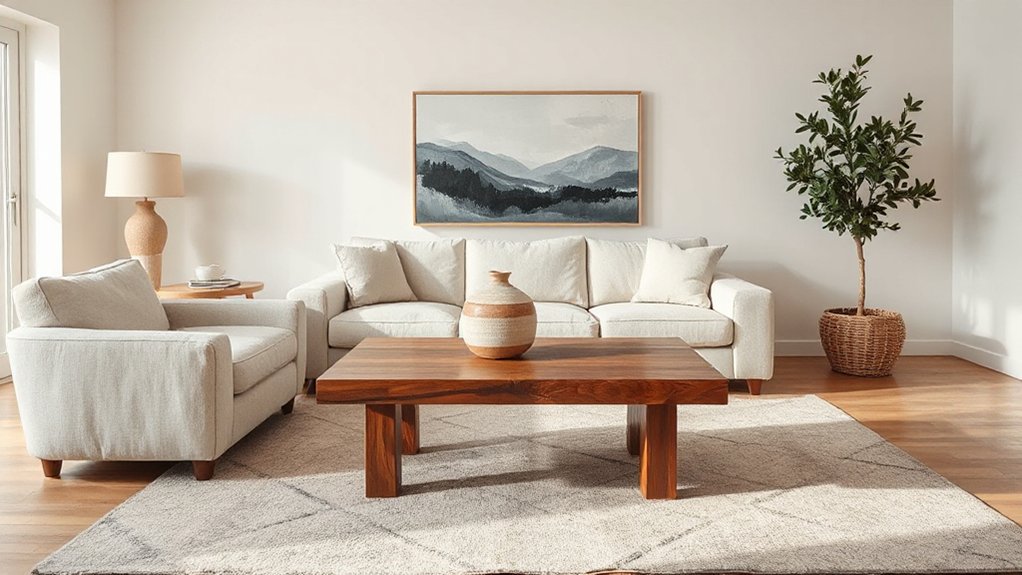
A clean layout sets the routes and zones, but your anchor pieces determine whether those zones stay usable or get swallowed by stuff. Choose fewer, better items that handle real daily work and create clear focal points without demanding constant rearranging. Treat statement pieces as earned: they should solve a function, hold up to wear, and fit the room’s scale.
- Measure first: lock in sofa, bed, or dining table dimensions before you shop.
- Prioritize comfort and durability: test seat depth, mattress support, drawer glide, and fabric ratings.
- Control visual weight: keep pathways open; pick legs, heights, and silhouettes that don’t block sightlines.
- Commit to placement: give each anchor a permanent home, then add only what supports it.
Build an Effortless Home Color Palette (3–5 Tones)
Even if your furniture layout stays fixed, a loose color plan can make the whole room feel restless. Lock in Color harmony by choosing 3–5 tones and repeating them consistently across the space.
Start with one neutral base (walls or large upholstery), then add a supporting neutral, one mid-tone, and one accent; reserve a fifth tone only if it repeats at least three times.
For Palette selection, pull from one undertone family (warm, cool, or balanced) so whites, grays, and woods don’t clash.
Use a 70/20/10 ratio: 70% base, 20% supporting, 10% accent.
Test swatches in morning and evening light, and commit only after you’ve compared them side by side.
Layer Textures: Textiles, Wood, Metal, Greenery
Once your palette’s set, texture does the heavy lifting that makes a room feel finished without looking “styled.” Start by mixing at least three tactile categories in every zone: soft textiles (linen curtains, a wool rug, a chunky knit throw), a grounded wood tone (oak side table, walnut frame, or rattan), a touch of metal for edge and light bounce (brass lamp, matte black hardware, stainless accents), and one living element (a tall floor plant, trailing pothos, or a vase of cut stems).
- Repeat one texture twice per room to create rhythm—like boucle on a chair and cushions.
- Balance weights: pair nubby weaves with smoother leather or cotton.
- Keep grain consistent; don’t mix warm oak with cool gray ash.
- Edit plants: one large, one small, both healthy. Textile layering and Material mixing should feel intentional.
Use Lighting to Make Everything Feel Calmer
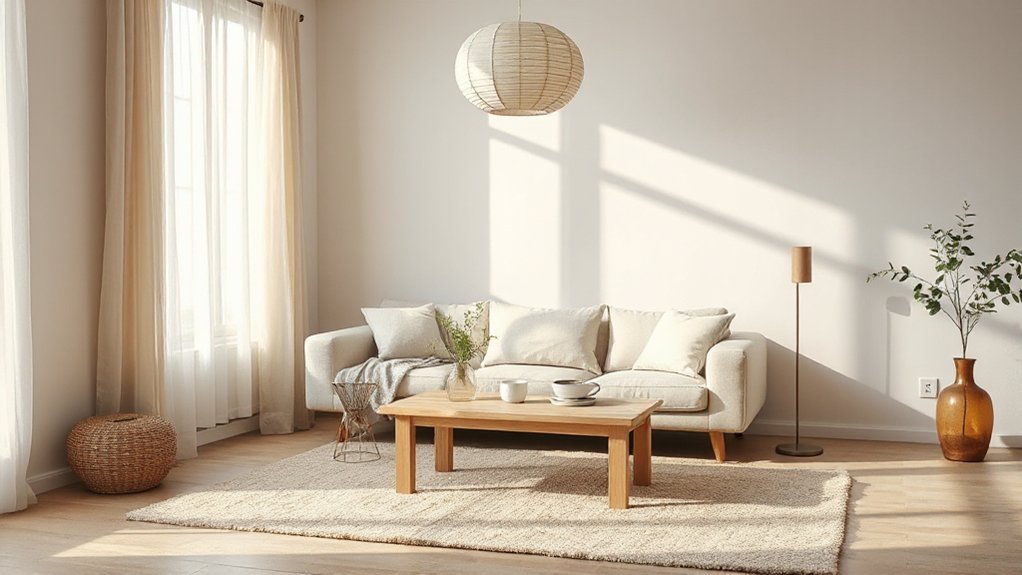
Texture gives a room depth, but lighting sets the nervous system’s tone and decides whether those materials read as soft and inviting or sharp and busy. Start by replacing harsh overhead bulbs with a dimmable, warm source (2700K–3000K) so you can keep an Ambient glow after sunset.
Add two to three low-level lamps per room to spread light laterally and reduce contrast. Aim bulbs at walls or ceilings, not straight at your eyes, and you’ll get soft shadows that smooth edges and calm visual noise.
Use task lights only where you work—reading chair, kitchen prep, desk—and choose diffused shades to avoid glare. Put key circuits on dimmers or smart scenes: “Morning,” “Evening,” and “Wind-down.”
Add Personal Details: Then Cap the Clutter
Because a room only feels effortless when it reflects real life—not a showroom—add personal details with intent and then set a hard limit on how many stay out. Choose pieces that signal personal expression and spark emotional connection, then edit like a curator so surfaces stay breathable.
- Pick one “anchor” vignette per zone (console, coffee table, bedside).
- Limit each vignette to 3–5 objects: one tall, one horizontal, one personal.
- Rotate items seasonally; store the rest in a labeled bin nearby.
- Enforce a daily reset: clear counters, return strays, wipe surfaces.
Frame kids’ art, display a travel book, or keep one heirloom bowl. If you can’t name why it matters, it doesn’t earn the spot.
Frequently Asked Questions
How Do I Make an Effortless Home With Kids or Pets?
You make an effortless home by choosing washable slipcovers, closed storage, and zone-based routines. Use Child proofing essentials—anchored furniture, outlet covers, rounded corners. Specify Pet friendly materials like performance fabric, sealed floors, and washable rugs.
What’s the Best Way to Blend Different Design Styles Without Chaos?
Pick one dominant style, then layer two accents consistently. Lock in color harmony with a tight palette, repeat materials, and edit hard. Preserve furniture flow by matching scale, aligning sightlines, and keeping pathways clear.
How Can I Make a Rental Feel Considered Without Permanent Changes?
You can make a rental feel considered by using Temporary solutions: peel-and-stick wallpaper, swap hardware, plug-in sconces, layered rugs, and curtains. Add Personal touches through art, plants, books, cohesive textiles, and well-edited lighting.
What’s the Ideal Budget Split Between Furniture, Decor, and Improvements?
Use this Budget allocation: 60% furniture, 25% decor, 15% improvements. Set Spending priorities by buying durable seating and lighting first, then textiles and art, then renter-safe upgrades like hardware swaps, peel-and-stick, and storage.
How Do I Choose Art That Feels Personal but Still Cohesive?
You’ll choose art that feels personal yet cohesive by anchoring personal expression to a repeatable palette. 67% remember homes by visuals first. Prioritize color coordination, consistent framing, and one theme; vary mediums, keep scale proportional.
Conclusion
When you design an effortless yet considered home, you’re conducting a quiet symphony: function sets the tempo, editing clears the noise, and layout keeps every note in place. You choose anchor pieces like keystones, then stitch the room together with a tight palette and tactile layers—linen, oak, brushed metal, living green. You soften edges with lighting that pools like lamplight on water. Add personal details, then stop—so your space can breathe.