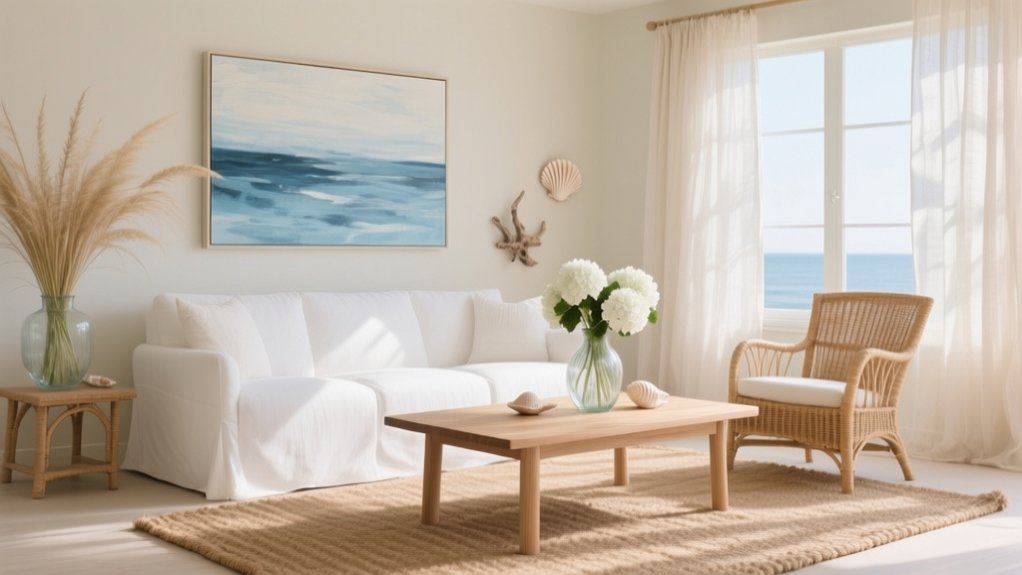

You can bring coastal design into any home by starting with sun-washed neutrals—warm white, sand, and driftwood—then layering natural texture like linen, rattan, light oak, jute, and matte ceramics. Keep furniture low-profile with airy legs, and use sheer linen curtains hung high and wide to boost daylight. Add sea-glass blue or soft sage in a few repeat accents, not themes. Choose warm, diffused 2700–3000K lighting on dimmers. Next, you’ll see easy room-by-room upgrades.
Key Takeaways
- Start with a light, airy base of warm whites and sand tones, then add muted sea-glass blues or greens in a 70/20/10 ratio.
- Layer natural textures—linen, rattan, jute, light oak, and matte ceramics—to create depth without relying on bold color.
- Choose low-profile, open-leg furniture and simple silhouettes to keep rooms feeling breezy, bright, and visually uncluttered.
- Use warm, diffused lighting (2700–3000K) with woven or frosted fixtures, plus dimmers, to mimic soft coastal glow.
- Hang sheer or washed-linen curtains high and wide, then add two to three sea-inspired accents for polish without a themed look.
Start With the 5 Essentials of Coastal Style
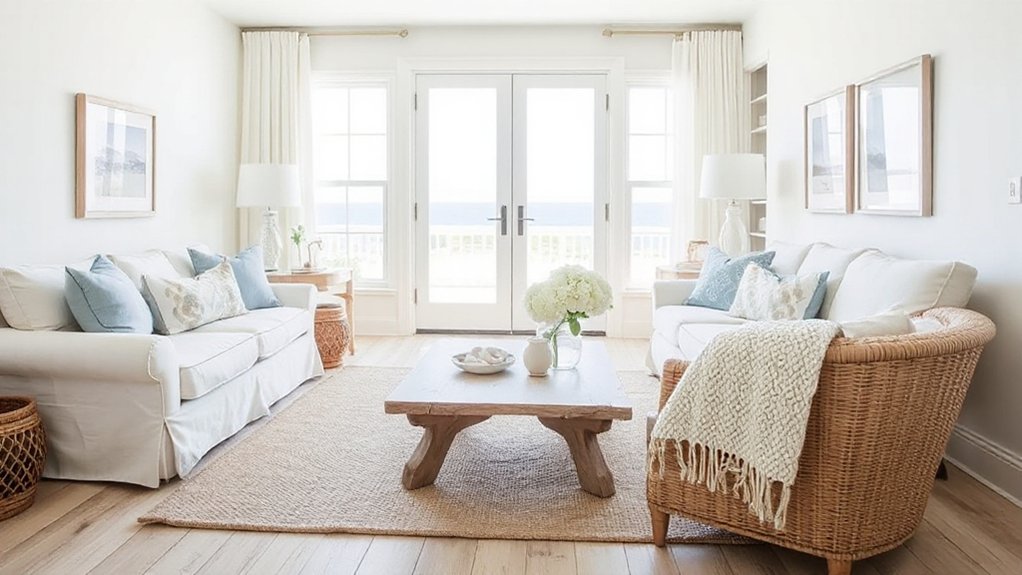
If you want your home to feel coastal—without drifting into theme décor—start with five essentials that designers rely on: an airy, light-leaning palette; natural textures like linen, rattan, and light woods; sun-washed finishes that look softly weathered; simple, low-profile silhouettes that keep rooms open; and a few sea-inspired accents used sparingly for polish, not kitsch.
You’ll get the most mileage by repeating each essential across the room: layer a linen slipcover with a jute rug, choose oak or ash over dark stains, and swap glossy hardware for brushed, patinated metals. Keep shapes streamlined—think open-leg seating and clean-lined casegoods—so light travels.
For personality, try beach-inspired florals on one pillow and practice nautical pattern mixing with a subtle stripe nearby; keep scale different and colors related. Finish with one sculptural coral-like object.
Choose a Coastal Color Palette for Any Home
Those coastal building blocks land best when you lock in a palette that reads bright, calm, and believable in your home’s natural light. Start with three neutrals—warm white, sand, and driftwood—then add one ocean note like sea-glass green or dusty aqua, plus a deep anchor in navy or charcoal. Keep the ratio 70/20/10 so the look stays airy, not themed.
Pull hues from Seaside botanicals: muted olive, eucalyptus, and soft sage work anywhere and play well with natural fibers. Repeat your accent color in small, movable hits—pillows, art, ceramics, and striped textiles—to keep it flexible across seasons.
Finish with Coastal aromatherapy: rosemary, salt air, or citrus notes that reinforce the palette without adding visual clutter.
Coastal Paint Colors That Keep Rooms Bright
Because coastal rooms live or die by light, you’ll get the freshest look by choosing paint colors that bounce daylight instead of absorbing it. Pick airy blue-grays, misty aqua, or pale sea-glass green in a satin or eggshell finish to reflect light without looking shiny.
In north-facing rooms, choose clearer, warmer-leaning blues to prevent a flat, chilly cast; in sunny spaces, you can go slightly cooler for that crisp shoreline feel.
Test swatches morning, noon, and night, and match them to Beach inspired lighting bulbs (3000K keeps it clean, not icy). Keep trim a touch brighter than walls to sharpen edges, and let Seaside inspired furniture bring contrast through texture rather than dark paint.
Build the Base With Warm Whites and Sandy Neutrals
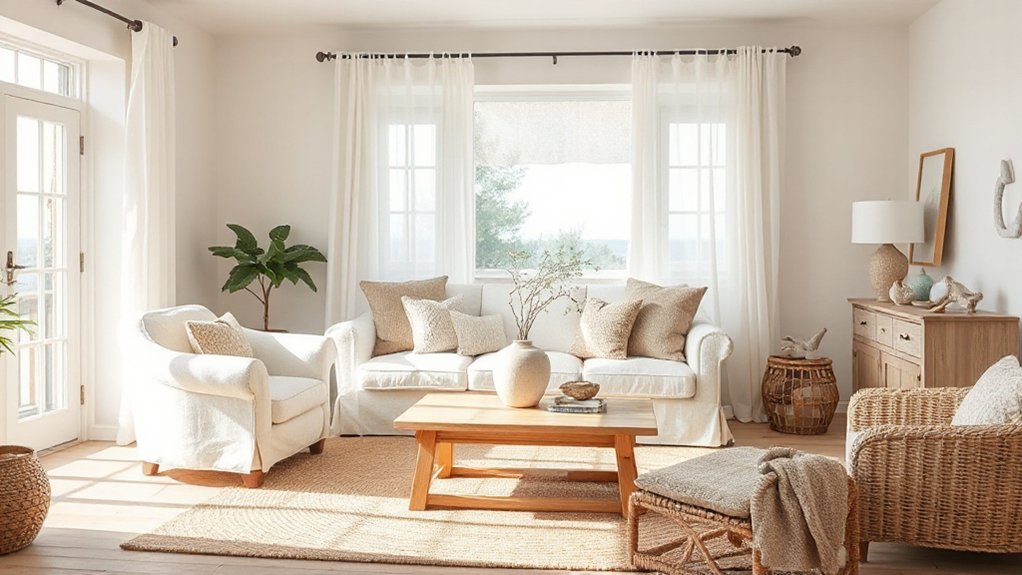
While ocean hues get the attention, warm whites and sandy neutrals do the real work in coastal design by setting a sunlit, relaxed base that won’t feel stark. Choose creamy whites with a drop of yellow or beige, then layer dune tones—oat, flax, putty—across walls, trim, and upholstery for a continuous glow.
You’ll get the most believable look when you vary texture, not color: slipcovered linen, matte plaster, boucle, rattan, pale oak, and jute. Treat it like Coastal fashion: keep the palette restrained, then let materials add depth and movement.
Pull cues from Seaside gardens by mixing sun-bleached stone, weathered wood, and soft, sandy pathways. Finish with warm metals and natural ceramics so the room reads collected, not cold, day or night.
Add Sea-Glass Blues and Soft Greens (The Easy Way)
Once you’ve set your warm white and sandy base, you can add sea-glass blues with zero commitment through throw pillows, glassware, and small art that reads coastal without turning kitschy.
Layer soft greens next—think sage linen, eucalyptus-toned ceramics, or a muted rug—to echo natural shore tones and keep the palette current.
You’ll get that breezy, collected look by repeating each color in two to three spots and balancing it with your existing neutrals.
Effortless Sea-Glass Accents
If you want a coastal look that feels current—not themed—sea-glass blues and soft greens deliver the vibe instantly with minimal commitment. Start small with Sea glass decor that reads refined: a recycled-glass vase, a translucent lamp base, or a set of tinted tumblers on an open shelf. These pieces catch light, add watery color, and stay neutral enough to work year-round.
Swap in coastal accessories where you already style: a framed ocean-toned print, a pale aqua throw pillow, or a ceramic dish in misty green by the entry. Keep finishes modern—matte brass, light oak, or whitewashed frames—so the palette feels elevated.
Limit accents to two or three moments per room for a crisp, curated effect.
Soft Green Layering Tips
Because soft greens and sea-glass blues sit close to neutrals, you can layer them like a modern “coastal wash” without committing to a themed palette. Start with one anchor: a sage throw, celadon pillow, or blue-green rug, then repeat that tone twice more at different heights. Keep undertones consistent (greyed, not neon) so the room reads calm and current.
For soft layering, mix matte paint, washed linen, and nubby cotton; that variation keeps the look elevated even in small doses. Add beachy textures through woven baskets, rattan, or light oak, and balance them with smooth ceramics in sea-glass glazes.
Finish with greenery or eucalyptus stems—real or faux—to bridge colors and refresh the whole scheme.
Use Wood, Rattan, and Seagrass for Coastal Warmth
While crisp whites and ocean blues set the coastal mood, it’s natural materials that give the space its warmth. Bring in light oak, ash, or whitewashed pine to soften hard edges and keep rooms feeling sunlit, not stark.
Then add rattan furniture to introduce breezy structure without visual weight—think a woven accent chair, bar stools, or a cane-front console.
Anchor the room with seagrass rugs; their subtle variation reads relaxed yet polished, and they hide everyday wear better than flat synthetics. Keep finishes matte and lightly textured, so everything feels lived-in, not themed.
- Choose pale, open-grain woods over red-toned stains
- Mix rattan with clean-lined upholstery for balance
- Layer seagrass in high-traffic zones to ground the palette
Layer Linen, Cotton, Jute, and Other Beachy Textures
You’ll get that effortless coastal look by stacking natural fibers—linen slipcovers, crisp cotton throws, and a jute rug as your grounding layer.
Keep it current by pairing airy, soft textiles with rougher weaves so the room feels relaxed, not flat.
Aim for balance: smooth linens up top, textured jute and woven accents below, and you’ll create depth without clutter.
Mix Natural Fiber Layers
How do coastal rooms feel airy yet grounded? You achieve it by building Coastal layers from Natural fibers that breathe, drape, and age beautifully. Start with linen slipcovers or curtains for a relaxed, sun-washed baseline, then add cotton throws and percale bedding for crisp comfort.
Anchor the scheme with jute, sisal, or seagrass underfoot, especially in high-traffic zones where durability matters. Keep colors within sand, salt, and soft blue families so the materials read intentional, not busy.
For a current look, choose tight weaves and matte finishes over anything shiny.
- Linen panels that puddle slightly at the floor
- Cotton throws in broken stripes or chambray
- Jute rugs with a bound edge for polish
Balance Soft And Rough Textures
Because coastal style relies on contrast, balance the room’s soft textiles with a few rough, beachy surfaces so it feels relaxed but not flimsy. Start with linen or cotton slipcovers and airy curtains, then ground them with a jute rug, woven seagrass baskets, or a rattan chair.
This Textural contrast keeps the space current and layered, not flat. Add a driftwood tray, bleached oak side table, or matte ceramic lamp to echo shoreline grit without going rustic.
Keep colors sun-washed so the mix reads intentional. For Material harmony, repeat each texture at least twice: pair linen pillows with a linen throw, then mirror jute with rope hardware or a cane-front cabinet. You’ll get depth, durability, and calm.
Pick Furniture With Light Frames and Relaxed Shapes
While coastal interiors lean breezy and effortless, the furniture does most of the heavy lifting—so favor light frames and relaxed silhouettes that keep the room visually open. Choose pieces with slim legs, open bases, and low profiles so sightlines travel and the space feels airier.
Skip bulky arms and overstuffed backs; instead, lean into gently curved sofas, slipcovered lounge chairs, and airy woven accent seating that invites lingering. Mix in vintage furniture sparingly—like a cane-front console—to add patina without visual weight, then style the top with coastal sculptures for a curated, gallery-like moment.
- Raised legs that show floor and simplify cleaning
- Rounded corners and soft edges that read casual
- Modular or armless seating you can reconfigure easily
Lighting That Makes Your Home Feel Sunlit
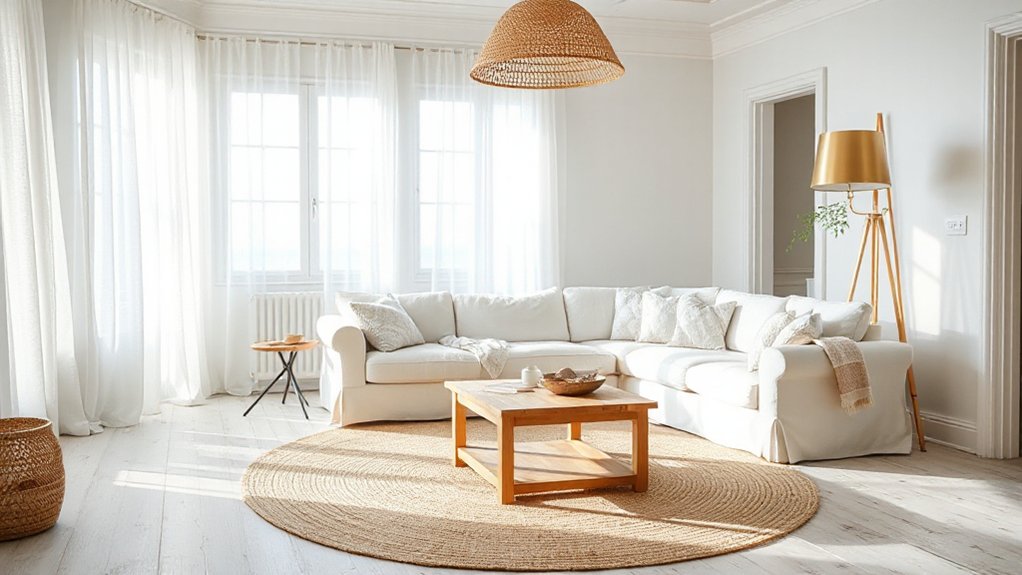
Even if your rooms don’t get great natural light, the right lighting plan can recreate that sunlit, coastal glow by layering warm, diffused sources at different heights. Start with ceiling fixtures that soften glare—think woven pendants, frosted globes, or lantern silhouettes—and choose 2700–3000K LEDs for a Sunlit ambiance.
Add wall sconces to mimic side daylight and reduce harsh shadows, then anchor seating with a slim floor lamp for relaxed, beachy balance.
For Coastal lighting, prioritize textured shades in rattan, linen, or seagrass, and mix in aged brass or matte white finishes for a breezy, modern look.
Use dimmers on every circuit so you can shift from bright daytime energy to golden-hour calm fast. Avoid cool bulbs and exposed filaments.
Window Treatments That Maximize Natural Light
To keep your coastal rooms bright and effortless, you’ll want window treatments that soften glare without stealing daylight. Start with sheer fabrics and voiles to diffuse sun.
Then layer in light-filtering shades for midday control and privacy.
Finish with breezy linen curtains that frame the view, move with the air, and still let the light pour in.
Sheer Fabrics And Voiles
Because coastal interiors thrive on bright, airy rooms, sheer fabrics and voiles make an ideal window treatment when you want maximum daylight without sacrificing softness. You’ll get that breezy, sun-washed look while still softening glare and adding gentle texture.
Choose crisp whites or sandy neutrals to keep views open and your palette light. Hang panels high and wide so you can stack them back and expose more glass, a designer trick that instantly lifts ceilings.
For a current coastal feel, layer subtle slub weaves or tone-on-tone stripes instead of heavy patterns.
- Pick voile curtains with a tight weave for cleaner drape
- Use linen-blend sheers to add coastal texture without weight
- Add simple matte hardware in brushed nickel or natural wood
Light-Filtering Shades
While you want rooms to feel open and sunlit, light-filtering shades give you more control than sheers alone by diffusing harsh glare and protecting privacy without dimming the space. Choose woven textures that mimic rattan or sea grass for a coastal look, or pick crisp solar fabrics for a cleaner, modern take.
Mount them high and wide to maximize glass coverage and make ceilings feel taller. In bright rooms, select a 3%–5% openness factor to cut UV and heat while keeping views soft.
For bedrooms or street-facing windows, layer a privacy liner or opt for top-down/bottom-up styles so you can pull in daylight while maintaining window privacy.
Stick to warm whites, sand, and driftwood tones to keep the palette airy year-round.
Breezy Linen Curtains
Even if you crave that open, sun-washed feel, you still need a soft layer that frames the view without cutting the light, and breezy linen curtains nail that balance. Choose semi-sheer, washed linen and hang panels high and wide so glass stays exposed when they’re open. This is a coastal move that reads tailored, not theme-y, and it pairs easily with Light-Filtering Shades for flexible privacy.
- Pick off-white, sand, or fog gray to echo Coastal fabrics without going nautical.
- Use ripple-fold or pinch-pleat headers for a cleaner, designer finish.
- Add blackout liners only where you sleep, and keep living spaces unlined.
Finish with matte rods in brushed nickel or pale wood, and you’ll keep daylight crisp and flattering.
Coastal Decor That Isn’t Anchors and Rope
If you love the calm, sun-washed feeling of coastal style but cringe at the cliché, you can get the look without a single anchor, rope, or ship wheel.
Start with tactile, natural materials: bleached oak, rattan, seagrass, and matte ceramics that feel windworn, not themed.
Bring in Marine flora through simple glass vessels of eucalyptus, dried palm, or preserved sea grass—think organic shapes, not nautical props.
Layer textiles in sandy neutrals and saltwater blues, then add one modern accent like a sculptural stone bowl or ribbed glass lamp.
Finish with coastal scents: neroli, driftwood, sea salt, or fig.
Keep accessories minimal, grouped in threes, and let negative space read like shoreline air.
Easy Coastal Wall Art: Photos, Prints, and Abstracts
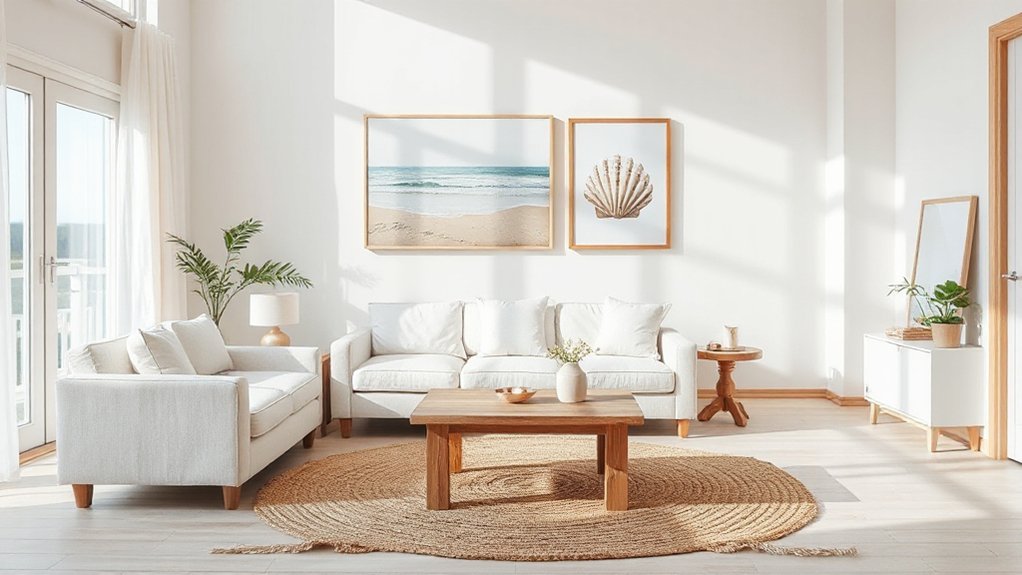
Once you’ve kept accessories pared back, wall art becomes the cleanest way to bring in that coastal atmosphere without tipping into theme. Start with Beach inspired photography: think horizon lines, dune grasses, weathered piers, and sea-glass tones. Choose large-scale prints with plenty of negative space so the room still feels tailored, not touristy.
Mix in Abstract coastal art for a modern layer—soft washes, sandy neutrals, and inky navy marks read oceanic without being literal.
- Pick matte frames in light oak, white, or black for a crisp, gallery finish
- Repeat one coastal hue (salt white, mist gray, deep blue) across pieces
- Balance realism and abstraction: one photo, one graphic print, one abstract
Hang at eye level and keep spacing consistent for a polished look.
Coastal Style in Small Spaces (Without Clutter)
In a small space, you’ll keep coastal style crisp by sticking to light neutrals and building airy layers with linen, rattan, and soft texture.
You can stay clutter-free by choosing space-smart coastal storage—think closed cabinets, baskets that fit shelves, and wall hooks that earn their keep.
Finish with minimal nautical accents (one striped pillow or a single brass detail) so the room reads coastal, not themed.
Light Neutrals, Airy Layers
Although small rooms can feel cramped fast, you can make coastal style read open and intentional by anchoring the space in light neutrals and building “airy layers” instead of adding more stuff. Start with warm whites, sand, and pale gray, then create neutrals contrast with a single driftwood tone or soft navy accent so the room doesn’t look flat.
Keep patterns minimal and scale small so surfaces stay calm.
- Sheer linen curtains that filter light and soften hard edges
- A flatweave jute or cotton rug to add airy textures without bulk
- One oversized seascape print to set a breezy focal point
Finish with matte ceramics, rattan, and glass that reflect light subtly. You’ll get that beach-house ease while keeping sightlines clear and the room feeling bigger.
Space-Smart Coastal Storage
Light neutrals and airy layers set the calm backdrop; now keep that openness by choosing coastal storage that works hard without reading heavy. Opt for wall-mounted shelves in pale oak or whitewashed finishes, and float cabinets off the floor to preserve sightlines.
In tight rooms, swap bulky consoles for slim, closed-front pieces that hide everyday gear while keeping the surface clear.
For Seaside organization, group like items into lidded baskets, stackable bins, and under-bed drawers so visual noise stays low. Choose Beach inspired storage that multitasks: storage ottomans, bench seating with lift tops, and nesting side tables with concealed compartments.
In entryways, add a narrow peg rail plus a shoe drawer to corral bags and sandals. Label discreetly, then edit weekly.
Minimal Nautical Accents
When you keep nautical cues minimal, a small space reads breezy instead of theme-y. Start with one strong focal point, then let negative space do the styling. Choose matte finishes and sun-washed tones over shiny brass, and repeat a color twice to feel intentional, not busy.
Swap knickknacks for elevated, Beach inspired accessories that multitask—think a rope-handled tray that corrals keys or a striped linen pillow that softens a chair. Keep Nautical themed artwork graphic and pared back, like a single line-drawing sailboat or abstract wave print in a thin oak frame.
Aim for a “one of each” rule:
- One framed coastal piece
- One textured natural material
- One functional accent
Rotate seasonally to refresh without adding clutter.
Common Coastal Mistakes and How to Fix Them
Even if you love that breezy, beachy vibe, coastal design can tip into cliché fast if you rely on obvious themes instead of thoughtful materials and balance. Skip rooms packed with anchors, shells, and ocean inspired typography; one refined graphic can work, but repetition reads themed. Trade novelty for texture: linen, rattan, bleached oak, and matte ceramics.
Another misstep is washing everything in bright white and icy blue, which can feel cold. Warm it with sand, clay, and soft sea-glass tones, plus layered neutrals.
Avoid “bathroom lighting” by upgrading to coastal lighting fixtures with natural fibers, aged brass, or ribbed glass.
Finally, don’t ignore contrast—add charcoal, deep navy, or black accents to keep the look modern and grounded.
Frequently Asked Questions
How Do I Make Coastal Style Work With Traditional or Victorian Architecture?
You’ll make coastal style work in Victorian homes by keeping classic trim, then layering Beach inspired color palettes on walls and textiles, adding Nautical theme accessories sparingly, and choosing natural linens, rattan, and aged brass.
What Are Budget-Friendly Coastal Updates That Don’T Require New Furniture?
You’ll get coastal vibes cheaply by swapping textiles, paint, and accents. Like a lighthouse guiding sailors, add Seashell wall art, layer a nautical color palette with pillows, throws, and striped rugs, then refresh hardware and lampshades.
Which Coastal Materials and Finishes Hold up Best in Humid Climates?
You’ll get the best performance from teak, rattan, powder-coated aluminum, and glazed ceramics, paired with marine inspired textiles. Choose low-VOC, weather resistant finishes and moisture-sealed grout; they’ll resist mold, warping, and salt.
How Can I Keep Coastal Decor Kid- and Pet-Friendly?
With pets in 67% of U.S. homes, choose washable slipcovers, performance rugs, rounded furniture, and wipeable paint. Stick to nautical color palettes to hide scuffs, and swap breakables for DIY wall art and baskets.
Where Should I Shop for Authentic Coastal Accents Beyond Big-Box Stores?
Shop coastal towns’ artisan markets, marina chandlers, and vintage nautical salvage shops, plus Etsy makers for authentic pieces. You’ll find Beach inspired color palettes and nautical accent ideas in shells, ropes, maps, and linens.
Conclusion
So yes, you *can* “do coastal” without turning your living room into a souvenir shop that smells like fake coconuts. Stick to the five essentials, keep your base warm and sandy, then layer in sea-glass blues and soft greens like you’re seasoning—light-handed, on purpose. Skip anchors, rope, and anything that screams themed restaurant. You’ll get bright, breezy, modern coastal vibes—even in a tiny space—without the clutter (or the cringe).