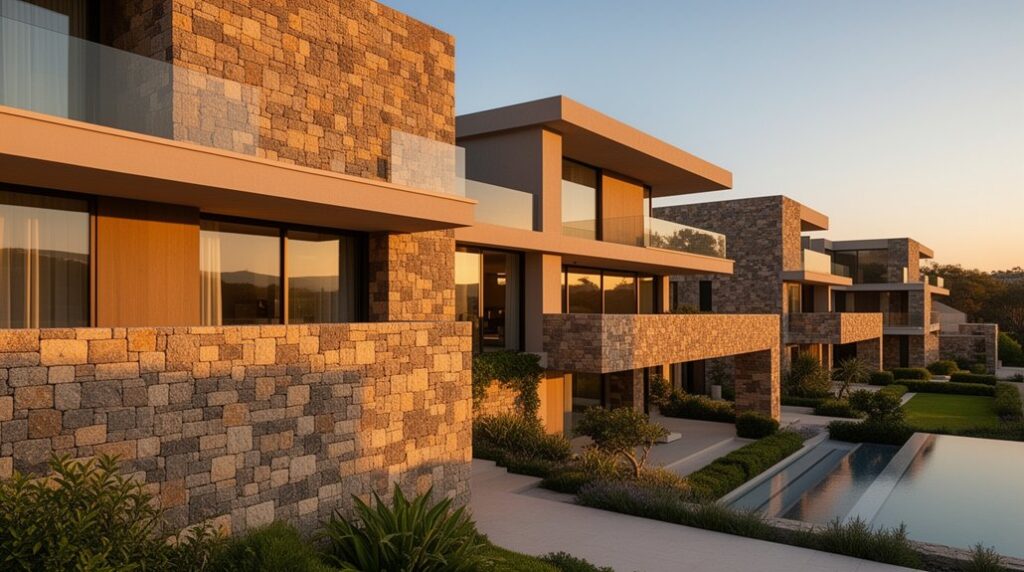

Modern luxury villas showcase architectural stonework by prioritizing material honesty, sculptural form, and regional identity. You’ll see stone’s weight anchor spatial hierarchy, guide sightlines, and stabilize interiors through thermal mass. Exteriors balance performance with authentic patination, joint precision, and durable finishes, while interiors exploit texture, light, and warmth via sculpted walls and curated textures. Design details—cuts, reveals, and lighting—enhance curb appeal and nighttime drama. If you want to explore how this translates to projects, you’ll find targeted insights ahead.
Why Stone Defines Modern Luxury Villas
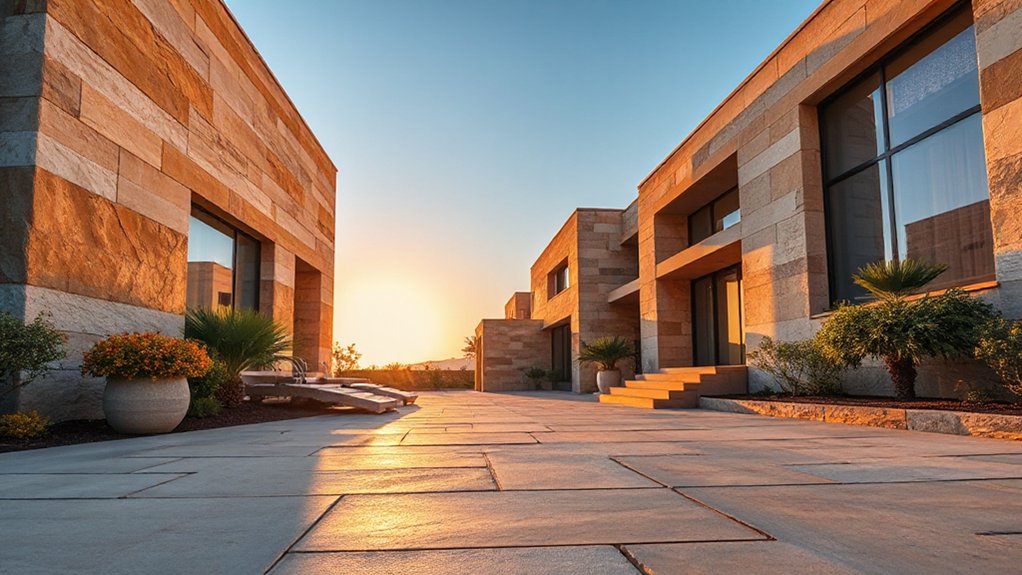
Stone defines modern luxury villas through a material honesty that emphasizes durability, texture, and light. You explore how stone communicates permanence, resisting trends while framing contemporary interiors with tactile depth.
Historical influences emerge as designers revisit classical proportions, masonry patterns, and stately silhouettes, reinterpreted for optimized thermal performance and maintenance. The material’s weight anchors spatial hierarchy, guiding sightlines, acoustics, and sense of provenance.
Cultural symbolism shifts with each quarry, reveals, and finish, inviting occupants to read lineage, craft, and regional identity through surface language. You’ll notice line work that emphasizes precision joints, controlled sheen, and consistency across elevations, creating a curated, legible palette.
In this context, stone becomes a case for longevity, stewardship, and a refined, quiet luxury that ages gracefully.
Choosing Stone Materials for Exteriors
Choosing exterior stone materials hinges on performance, aesthetics, and maintenance cycles you’re willing to manage. You assess climate exposure, freeze-thaw resilience, and wind-driven moisture, selecting stone grades with proven durability.
For exteriors, consider thermal mass, density, and colorfastness to minimize staining and discoloration over decades. You-factor in detailing: joint systems, flashing, and drainage planes that prevent capillary rise and water intrusion.
Historic preservation and cultural significance influence material choice when adjacent to heritage districts or landmark-type contexts, guiding you toward appropriate textures, profiles, and sourcing practices.
You balance weight, quarry accessibility, and installation logistics to optimize lifecycle cost. You document performance expectations, warranty terms, and maintenance regimes, ensuring the final composition supports long-term integrity, aesthetic cohesion, and respect for place.
Sculptural Facades: Defining Architecture With Stone
Sculptural facades leverage stone not merely as cladding but as a defining mass that shapes light, shadow, and organizational logic across elevations. You analyze how articulation of planes creates read sequences, guiding circulation and perception from approach to entry.
Stone’s inherent mass yields thresholds, cantilevers, and ramped profiles that reduce glazing reliance while preserving thermal stability. You prioritize precision in detailing: joints, reveals, and texture alterations that sustain both aesthetic coherence and structural clarity.
Eco friendly materials inform selection, favoring quarrying practices with low environmental impact and durable finishes that minimize maintenance.
Cultural influences emerge as regional typologies translate into contemporary vocabularies, balancing heritage resonance with modern geometry.
You document performance metrics, ensuring facade behavior aligns with energy targets, acoustic requirements, and long-term resilience.
Interiors With Stone: Texture, Light, and Warmth
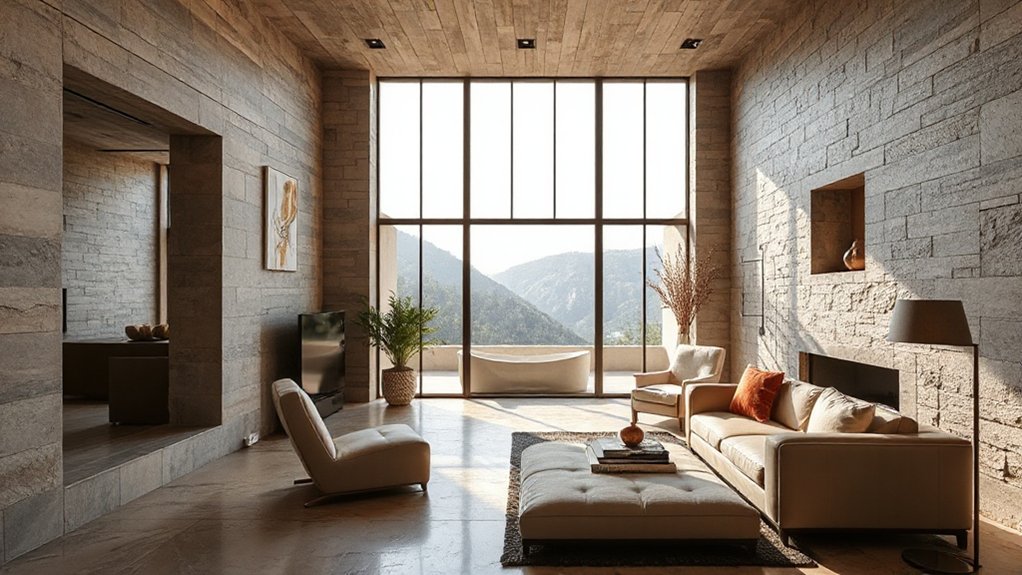
Interiors with stone harness texture, light, and warmth to define tactile ambiance and spatial rhythm. You experience sculpted walls and flooring where natural textures emerge from travertine, limestone, or basalt, subtly reflecting daylight through strategically placed glazing.
You pair matte stone surfaces with brushed metal accents and soft textiles to modulate acoustics and mood, creating a balanced dialogue between permanence and comfort. Light is treated as a material, guided by perforated screens, recessed coves, and warm LEDs that enhance veining without overpowering proportion.
Cultural influences appear as restrained motifs—geometric inlays, regional palettes, and handcrafted mortar textures—that anchor rooms to place while maintaining modern clarity. The result is an interiors strategy that remains legible, durable, and refined.
Stone Details That Boost Curb Appeal
Subtle variation in stone size guides the eye along entry sequences and around landscaping, while precise grout tones minimize visual distraction. Consider setting profiles and mortar for weather resistance, anchoring with dimensional bands that punctuate doors, windows, and cantilevered elements.
Integrate garden pathways with pavers that echo wall stone, reinforcing unity between exterior channels and landscape geometry. Water features are kept discrete, reflecting light without overpowering architecture.
This approach preserves legibility, durability, and a refined sense of restraint.
Seamless Stone Transitions to Outdoor Living
Seamless shifts between stone surfaces and outdoor living spaces create a unified experience that reads as a single material narrative. You design transitions that respect texture, tone, and scale, ensuring sightlines flow without abrupt breaks.
Use continuous pavers or slabs to maintain a tactile hashtag across thresholds, preventing trip hazards while preserving outdoor durability. Align grout or joint treatments to mirror interior finishes, reinforcing a cohesive material language from interior accents to exterior platforms.
Plan drainage and slope to avoid pooling, yet preserve a smooth visual flow. Integrate garden pathways that terminate at, or weave through, terraces with minimal disruption to stone rhythms.
Select finishes with low maintenance requirements and weather resistance, and verify color consistency across in-situ installations for a curated, timeless look.
Sustainable Stone Options for Luxury Villas
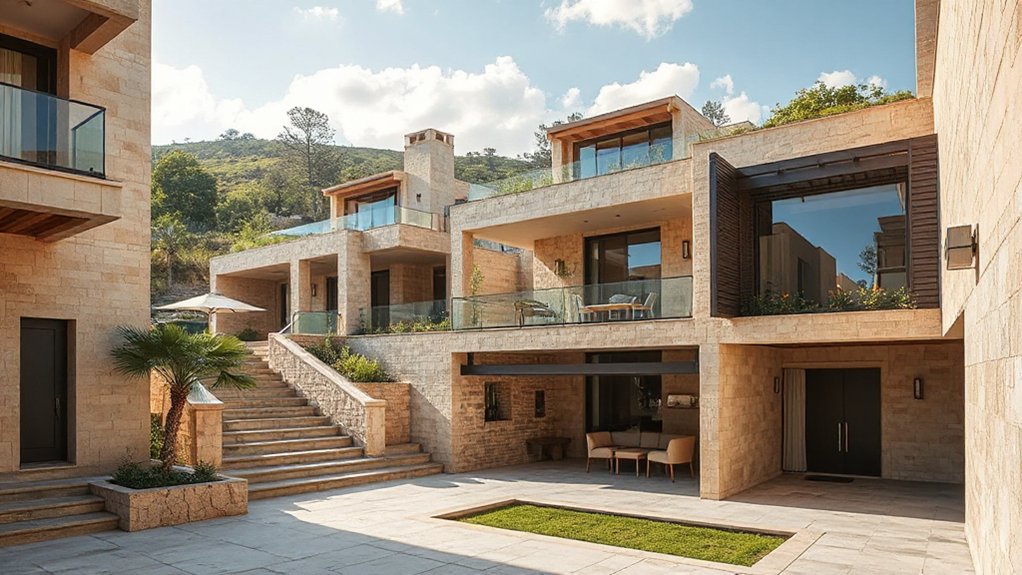
Could sustainability redefine luxury stone choices for modern villas? You evaluate options with a technical lens, prioritizing durability, lifecycle impact, and aesthetic integrity. Sustainable stone choices balance performance with responsible sourcing, ensuring lasting value in high-end contexts.
You optimize material selection by prioritizing Eco friendly sourcing and incorporating recycled materials where feasible, without compromising finish or structural requirements. Precision in grading, color consistency, and installation compatibility remains essential.
You assess supply chain transparency, regional availability, and waste-minimization strategies to reduce embodied energy. The following options align with rigorous standards and curated design intent:
- Recycled aluminosilicate composites for facade accents
- Reclaimed travertine with stabilized resin fill
- Limestone slabs from low-impact quarries
- Recycled glass-aggregate overlays for patios
- Laminated quarried stone with extendable service life
From Quarry to Surface: The Craftsmanship Story
You integrate historical influences to inform tooling choices and patination impulses, documenting how traditions shape contemporary methods without compromising performance. Cultural significance guides presentation decisions, ensuring quarry-to-site logistics respect regional craft heritage and environmental considerations.
Quality control checkpoints measure density, slip resistance, and moisture behavior before installation. The result is a surface that resists weathering, communicates complexity, and aligns with the villa’s architectural intent.
Maintenance Myths vs. Realities for Stone Villas
Stone villas demand clear distinctions between maintenance realities and common myths. You’ll recognize that preventive care—timely cleaning, sealing schedules, and moisture control—drives longevity, not guesswork.
This discussion clarifies where myths mislead and how consistent, documented practices protect stone integrity.
Stone Maintenance Realities
Stone maintenance for villas isn’t about chasing perfection; it’s about debunking myths and applying practical, data-backed care.
- Seasonal cleaning schedules aligned with stone type and finish
- Proper sealing techniques to balance breathability and stain resistance
- Routine imperviousness checks for high-traffic zones
- Targeted repointing and mortar stabilization where applicable
- Documentation of products, intervals, and observed performance
Reality checks you’ll apply: maintain natural patina where appropriate, avoid over-application of cleaners, and validate every step with manufacturer guidelines. You’ll prioritize ventilation and protect adjacent materials during treatments.
You’ll also track environmental factors that accelerate wear, adjusting care accordingly. By separating myths from measurements, you optimize aesthetics, longevity, and cost.
Your approach blends field data with architecture-specific constraints, ensuring stone villas retain clarity, texture, and integrity over time. Seasonal cleaning and sealing techniques become predictable, repeatable parts of your maintenance strategy.
Preventive Care Myths
While myths about preventive care for stone villas persist, evidence-backed practices reveal what actually maintains durability and aesthetics. You evaluate maintenance routines by testing claims against data, not anecdotes.
Common medication misbeliefs about stone sealants lead to unnecessary reapplications; professional-grade products and manufacturer guidance provide real timelines.
Exercise misconceptions suggest frequent, aggressive washing protects stone, but high-pressure practices can cause microcracking and efflorescence; controlled cleaning with appropriate pH-neutral agents preserves pore structure.
Realities emphasize定ical inspections, pore-blockage assessment, and moisture monitoring to prevent hidden deterioration.
You prioritize periodical joint and mortar reviews, drainage optimization, and ventilation as preventive levers.
Documented results rely on diagnostic logs, substrate testing, and traceable service intervals rather than generic schedules.
Your strategy aligns with sustainable aesthetics, minimizes risk, and sustains performance over decades.
Lighting Stonework to Create Drama After Dark
Because stonework can transform a villa after dark, use targeted lighting to sculpt texture and depth rather than simply illuminate surfaces. You’ll apply Lighting techniques that emphasize microtextures and edge definition, creating dramatic contrast with stone color variations.
- Select warm, low-bleed fixtures to preserve natural hues
- Position grazers at 15–25 degrees to exaggerate relief
- Use color-textured LEDs to subtly shift stone color without overpowering it
- Employ dimmers to modulate intensity by zone and time
- Integrate blackout considerations for scale and silhouette
Avoid overlighting; aim for carved shadows and legible massing. Document performance metrics, adjust for seasonal changes, and maintain energy efficiency.
This approach yields cohesive nighttime drama while preserving architectural integrity.
Global Villa Styles: Benchmarking Stonework
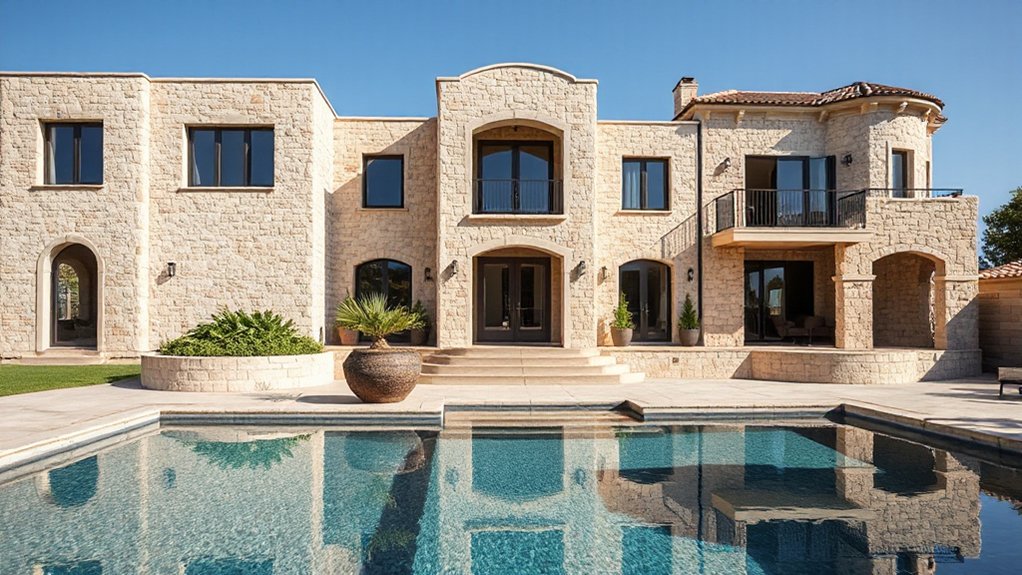
Global villa design demonstrates how regional stone traditions inform modern benchmarks for texture, scale, and durability. You compare global villa styles by benchmarking stonework against established regional grammars, then translate that dialect into contemporary performance criteria.
Texture quality, joint geometry, and weathering resistance become measurable indicators, not vibes. You assess cultural influences that shape panelization, quarry selection, and finish treatments, ensuring consistency across interiors and exteriors.
Historical preservation informs restraint: you prioritize authentic patination, traditional tooling, and durable materials that age gracefully. You document standardization outcomes, such as modulus of rupture, compressive strength, and freeze–thaw resilience, to guide specification.
This benchmarking enables you to balance regional character with modern sustainability targets, enhancing long-term value without sacrificing stylistic integrity or cultural legitimacy.
Budgeting Stone: Costs, ROI, and Value
Budgeting stone hinges on projecting total life-cycle costs, not just upfront price, to reveal true value over time. You perform cost analysis that accounts for installation, maintenance, and eventual replacement, then compare against durability and aesthetic longevity.
Your approach blends data and design intent to quantify ROI strategies, ensuring decisions align with long-term performance and style. You assess material lifespans, glare, and weather resilience to forecast maintenance cycles and budget impact.
With disciplined budgeting, you prioritize value over initial novelty, reducing lifecycle risk and optimizing resale appeal. Consider contingency buffers for workmanship and regional sourcing.
Tools include total cost of ownership models and risk-adjusted ROI frameworks.
- Life-cycle cost assessment
- Material durability metrics
- Maintenance frequency
- Replacement timing
- Value realization over time
How to Choose a Stone-Centric Design Studio
To select a stone-centric design studio, start with a precise brief that foregrounds material philosophy, fabrication capabilities, and project constraints.
Then evaluate portfolios for consistency between stated philosophy and realized outcomes, focusing on how they balance aesthetic intent with structural performance.
Prioritize studios that demonstrate rigorous documentation, from material sourcing and testing to joinery details and finishes, ensuring predictable installation workflows.
Assess client collaboration processes, decision cadence, and responsiveness to design evolution, as these affect timelines and budget adherence.
Favor teams that articulate artistic expression without compromising durability or maintenance realities.
Verify that historical significance is reflected through contextual sensitivity, provenance trails, and respect for site geology.
Finally, confirm a clear, documented plan for risk management, sustainability metrics, and post-installation support.
Frequently Asked Questions
How Long Does Stone Aging Typically Take in Villas?
Stone aging in villas varies; it often takes decades, depending on exposure and finish. You’ll notice subtle changes in stone color variation as installation techniques and climate interact, with surface patination accelerating near moisture-prone zones.
Which Stone Types Perform Best in Humid Coastal Climates?
You’ll find granite and limestone perform best in humid coastal climates, delivering outdoor durability and high aesthetic appeal, with resilience to salt spray and humidity. You’ll choose durable, low-porosity options for long-term, low-maintenance coastal performance.
Can Stone Elements Increase Home Resale Value Significantly?
Yes, stone elements can markedly boost resale value. You’ll enhance interior design and aesthetic appeal, elevating perceived quality, durability, and texture. You invest in timeless materials, precise finishes, and cohesive integration with architecture, improving buyer perception and market appeal.
What Maintenance Routine Minimizes Wear on Interiors With Stone?
You minimize wear on stone interiors by following a strict maintenance routine: implement a durable interior sealing schedule and maintain consistent cleaning schedules, promptly addressing spills, using pH-neutral cleaners, and avoiding abrasive tools to preserve surface integrity.
Are Recycled or Reclaimed Stones Suitable for Luxury Villas?
Yes, recycled or reclaimed stones are suitable for luxury villas, offering unique character and durability. You’ll achieve Eco friendly construction and Sustainable design by sourcing vetted materials, ensuring structural integrity, and maintaining precise specifications for hidden interfaces and finishes.
Conclusion
Stone elevates modern luxury villas with durable beauty, precise detailing, and timeless curb appeal. You’ll balance materiality, texture, and light to craft cohesive exteriors and inviting interiors. Think of stone as a performance surface—transforming mass into sculpture, warmth, and rhythm. Prioritize material selection, joining methods, and maintenance to sustain ROI. Align with a stone-centric studio for technical rigor, calibrated budgets, and design intent. In this cadence, stone defines enduring luxury that ages gracefully.