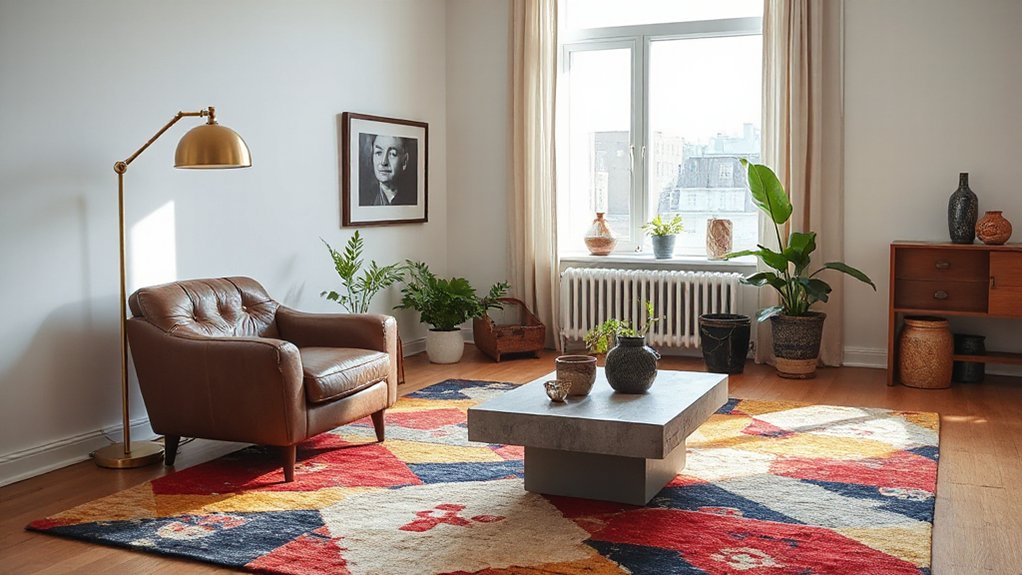

Imagine walking into a rental that feels aged by habit rather than time, and realizing a few purposeful tweaks could rewrite the whole feel. You’ll blend curated art, textured textiles, and warm lighting to sculpt mood without clutter, layer color with intention, and arrange furniture for flow that still speaks to your taste. You’ll want practical, repeatable steps that fit small spaces and long-term upkeep, with just enough texture and contrast to keep things personal. Let’s start shaping that story.
Key Takeaways
- Layer color, texture, and lighting to create depth, warmth, and visual cohesion across spaces.
- Curate meaningful art and accents that tell a personal narrative without overpowering the core palette.
- Choose compact, multifunctional furniture with soft edges to maximize small, modern spaces.
- Use zoning and modular layouts with adaptable textiles and lighting to distinguish areas while maintaining flow.
- Maintain consistent motifs, scale, and restrained accents to unify the design and prevent clutter.
Infuse Color With Purpose in a Modern Space
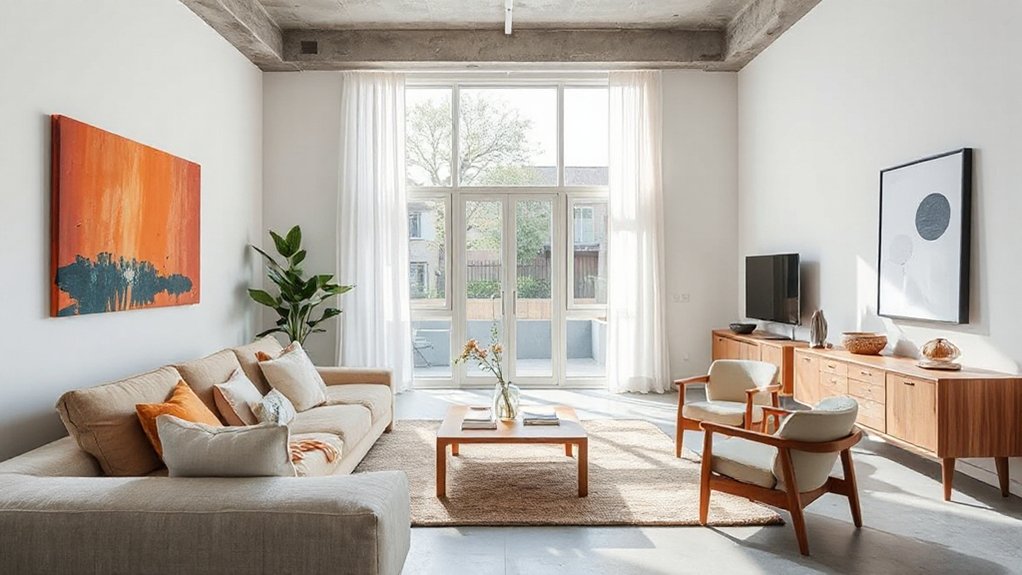
Color in a modern space should serve a function, not just a look. You’ll infuse color with purpose by aligning hues to mood, function, and light.
Begin with color psychology: cool tones calm bedrooms and baths, while warm neutrals ground living areas. Use accent walls or targeted pops to guide flow without overpowering sightlines.
Next, map paint palettes to tasks: a quiet study benefits from desaturated blues or greens, a kitchen thrives on bright, clean whites or lively yellows, and living rooms gain depth with layered neutrals. Limit primary choices to three to maintain coherence.
Test swatches in natural and artificial light across days, then commit. Document your palette digitally, so future touches stay consistent.
This disciplined approach yields intentional, adaptable color that enhances daily experience.
Layer Texture Through Textiles and Surfaces
Layer color and texture start with thoughtful pairing, so you mix fabrics and surfaces that speak in complementary rhythms. Start with a base of solid upholstery and layer in textures—velvet, linen, wool—while introducing contrasting surfaces like a matte wood or glazed ceramic to add depth.
This approach introduces visual weight strategically, guiding the eye through the room without clutter.
Layer Color and Texture
As you layer color and texture, start by selecting a cohesive palette and then build depth with textiles and surfaces that complement it. You’ll guide the room with color psychology, choosing hues that evoke the mood you want—calm neutrals for quiet focus, saturated accents for energy.
Balance is key: pair matte walls with satin or velvet finishes to create Texture contrast that reads as intentional, not busy. Introduce textiles in varying weights: a wool throw, linen drapes, a cotton rug, and a leather pouf to add tactility without crowding space.
Surface treatments matter too: mix ceramic, glass, and timber finished in complementary tones. Keep patterns subtle and scale-consistent, letting the edges of each element anchor the composition rather than compete.
Finish with deliberate lighting to unify color and texture.
Mix Fabrics and Surfaces
Start by pairing fabrics with surface finishes that share a unifying undertone, then let texture create depth without crowding the room. You’ll layer textiles and surfaces thoughtfully, balancing weight, sheen, and pattern to avoid visual noise.
Begin with a medium-weight sofa fabric in a solid or restrained pattern, then introduce a complementary throw or cushions in a contrasting texture to highlight the undertone.
Pair natural fibers with matte finishes and a subtle gloss on accessories to achieve surface contrast without shouting.
Use textile pairing to create rhythm: weave a tactile rug under a sleek coffee table, add velvety curtains for warmth, and choose a ceramic or stone surface with a soft sheen.
Preserve negative space; let each element breathe.
Add Visual Weight
To add visual weight, balance heavier textiles with surfaces that pick up their undertones and deepen the room’s depth. You’ll layer tactile elements to create textural contrast that reads as intentional, not cluttered. Start with a dominant textile—a wool throw or velvet drapes—and echo its sheen or warmth in nearby surfaces, like a leather chair, wood grain, or stone tabletop.
Choose finishes that subtly reflect the fabric’s undertone to enhance visual balance. Introduce varied textures at the same scale to maintain coherence: a nubby rug with smooth upholstery, or a glazed ceramic vase beside a matte ceramic lamp. Keep the palette restrained, using accent colors from the textiles.
Verify proportion by stepping back; the room should feel grounded, yet not heavy. This approach yields tactile sophistication with practical precision.
Curate Art That Tells Your Personal Story
Your art should reflect you, so start with pieces that feel personally meaningful rather than trendy.
Choose frames that unify the story across your wall—consistency in color, finish, and matting helps every piece speak clearly.
Curate meaning by pairing works that share themes or moments from your life, guiding viewers through your personal narrative.
Art That Reflects You
If you want a living space that feels uniquely yours, start by curating art that tells your story. You’ll pair pieces with intent, not impulse, so pick works that echo your routines, tastes, and milestones.
Begin with a focal piece—perhaps an abstract sculpture in a quiet corner—and let its lines guide placement for nearby furniture and lighting. Mix abstract sculptures with context: place them near textures that intensify their form, avoiding clutter that competes with their silhouette.
Choose vintage posters that complement your color palette and era interests, then frame them consistently to unify the wall dialogue. Rotate selections seasonally, documenting reactions to refine future choices. Label where each piece came from and why it matters, maintaining a thoughtful, cohesive collection.
Personal Stories In Frames
Start with a handful of frames that spotlight moments you actually lived, not just what you owned. Choose pieces that tell verifiable stories you can verify at a glance. Pair a single, strong image with a short caption or date to anchor memory in time.
Group related frames to form mini galleries—like a wall of family portraits near the living space, then a separate cluster for travel souvenirs from trips that shaped you. Mix portraiture with candid snapshots for texture, but keep a consistent color or tonal palette to avoid visual noise.
Use varied frame styles sparingly to emphasize contrast, not clutter. Regularly rotate one or two pieces to reflect current milestones, reinforcing a living, evolving narrative you invite guests to read.
Curate Meaningful Pieces
Start with a clear focal area: a single large piece or a trio arranged at eye level, with spacing that feels deliberate. Pair art with small, intentional items—vintage finds amplified by clean frames—to anchor the narrative without clutter.
Choose works that reflect your routines, travels, and passions, ensuring each piece has a place in your routine, not just your shelf. Mix textures and scales to create depth, then balance color momentum across rooms.
Incorporate statement accessories and restrained gallery rails to prevent visual overload. Curate thoughtfully; let your walls tell your story.
Choose Warm, Uncluttered Furniture for Small Rooms
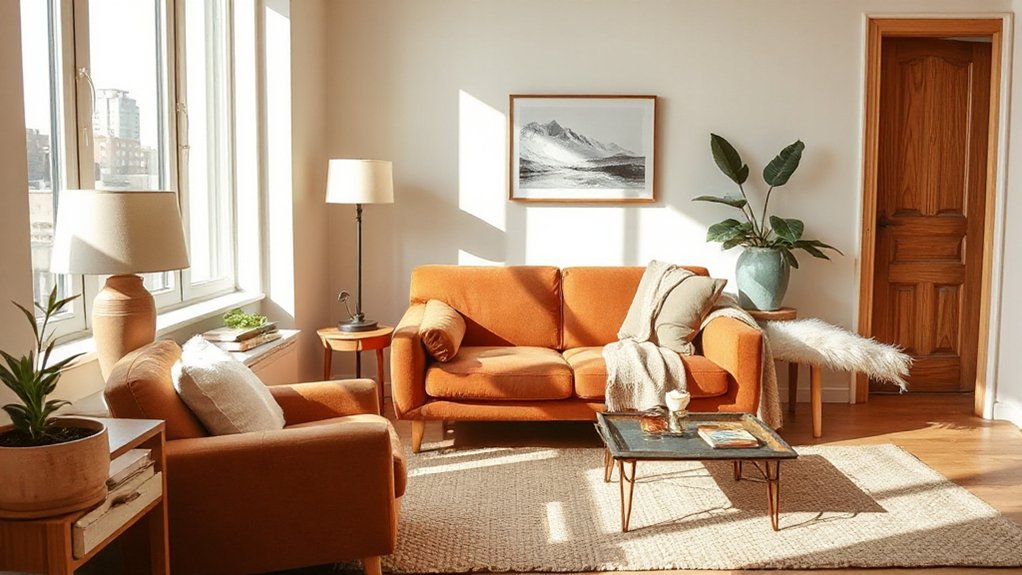
Choose warm, uncluttered furniture to make small rooms feel inviting rather than cramped. You’ll prioritize pieces with soft edges and compact footprints, avoiding oversized silhouettes that crowd walls or windows. Opt for low-profile sofas and armless chairs that expand seating without towering bulk.
Use multifunctional items—ottomans with storage, nesting tables, and slender bookcases—to keep surfaces clean and purposeful. Choose warm tones and textures: wood finishes, creamy linens, and matte upholstery that reflect light without glare.
Integrate vintage textiles and statement rugs to add personality without clutter, letting subtle patterns become focal points rather than excessive accessories. Keep cords hidden and tech tucked away.
Finally, maintain balance by pairing one bold piece with quiet, cohesive surroundings that read calm and organized.
Master Lighting to Sculpt Mood and Space
Layering lighting lets you sculpt a space with depth, from ambient glow to task highlights. Start with a practical plan: place mood-sculpting fixtures at eye level, use dimmable controls, and layer accents to emphasize architecture and texture.
Keep it tight and purposeful—adjust placement and intensity to refine how the room feels in different moments.
Layered Lighting Techniques
To sculpt mood and space in a modern apartment, start with three core lighting layers: ambient, task, and accent. Layering lets you control atmosphere without overloading any one source.
Ambient light should be soft and uniform, avoiding glare; opt dimmable fixtures to adjust as you move from day to evening.
Task lighting targets specific zones—kitchens, desks, vanities—so you work efficiently without casting harsh shadows.
Accent lighting highlights architectural features and artwork, adding depth and personality.
Use an Accent wall with wall sconces or linear LEDs to create a focal plane, while a statement ceiling draws the eye upward and unifies the room’s height.
Balance color temperature across layers to keep spaces cohesive and comfortable.
Mood-Sculpting Light Placement
Creating mood through placement starts with mapping how you move through the space and where you want attention to land. Mood-Sculpting light placement guides the eye, shaping atmosphere without clutter. You’ll prioritize contrasts, layering, and focal points to define zones. Use high-CRI fixtures for accurate color and an ambient glow that softens changeover. Let shadow play add depth along architectural lines, furnishing edges, and artwork frames. Balance brightness with dimmer accents to prevent flatness, then anchor seating with a warm pool of light for intimacy.
- Identify traffic paths and place key lights at eye level for natural focus.
- Layer ambient, task, and accent sources to create subtle depth.
- Use wall washes to sculpt texture and emphasize architecture.
- Reserve dimming for moments requiring mood shifts and conversation cues.
Dimmable Ambience Strategies
Dimmable ambience isn’t just about lowering lights; it’s a practical tool for shaping mood and defining space. You use dimming to carve zones, guiding traffic and focus without changing fixtures.
Start with baseline illumination that’s comfortable for daily tasks, then layer accents to highlight artwork, textures, and architectural details. Smart controls let you program scenes—bright mornings, warm evenings, cinematic weekends—so you don’t fiddle with switches.
Pair dimming with color temperature shifts: cooler tones for work areas wake you up; warmer tones lounge the living room for intimacy. Avoid over-dimming in compact rooms, which can feel claustrophobic; instead, aim for varied levels across zones.
Integrate dimmers with smart lighting hubs for remote, voice, or app control, ensuring reliable performance and quick adjustments.
Define Practical Zones With Scalable Layouts
In designing a modern apartment, define practical zones by prioritizing flow and function; start by mapping high-traffic paths and placing primary living, cooking, and sleeping areas where they’re most accessible.
You’ll create scalable layouts that adapt as life shifts, using open floorplans to keep sightlines clear and modular furniture to redefine zones without walls.
Prioritize multipurpose corners that flex for work, dining, or lounging as needed.
- Map circulation and anchor core zones for daily routines
- Use modular furniture to reconfigure spaces without losing harmony
- Preserve sightlines with low-profile storage and slim profiled partitions
- Introduce flexible textiles and lighting so zones feel distinct yet cohesive
Add Global Accents Without Overpowering the Room
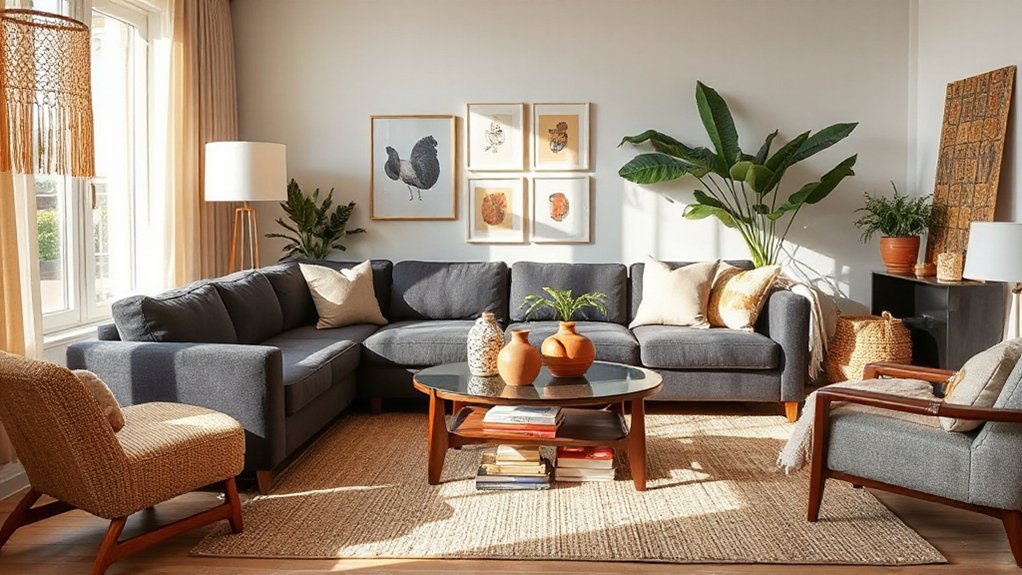
Global accents should enhance—not compete with—the room’s core palette. You’ll keep restraint in mind: pick a few high-impact items, then repeat them thoughtfully.
Global influences read as a cohesive thread—think a single sculpture, textile, or rug in a distinct motif that nods to a culture or place without dominating sightlines. Choose accent accessories with deliberate scale and texture: a woven throw, ceramic vase, or lacquered box that picks up your dominant neutrals.
Limit metallic or bold color bursts to one or two pieces per zone to avoid visual noise. Place these accents where you naturally stand or pause—entry, sofa end, or coffee table—so they’re seen in context with furniture silhouettes.
Regularly reassess to preserve balance while preserving character.
Mix Metals and Finishes for Subtle Contrast
Mixing metals and finishes adds subtle depth without shouting for attention. You’ll create cohesion by choosing a primary metal and weaving others in through accents, hardware, and lighting. Focus on finish contrast to keep surfaces legible and refined rather than chaotic.
Think about scale, texture, and placement so metal pairing feels deliberate, not decorative.
- Pick a dominant metal, then introduce two supporting tones for balance.
- Vary finishes across at least two textures—matte, satin, or brushed—to add depth.
- Use hardware, fixtures, and frames to echo your chosen metals.
- Keep profiles consistent (sleek lines or soft curves) so finish contrast remains intentional.
Bring in Greenery to Soften Sleek Lines
Greenery softens the lines of a sleek apartment by introducing organic texture and color without clutter. You’ll integrate greenery with purpose, selecting indoor plants that fit your space and routine.
Prioritize greenery placement that enhances sightlines and scale: tall specimens beside open corners, trailing varieties along shelves, and compact options on coffee tables.
Choose containers that echo your finishes to maintain cohesion, and group plants in threes to create visual gravity.
Watering routines should be efficient and consistent; drip trays prevent spills and protect surfaces.
Think in layers: a tall plant for height, mid-sized leaves for texture, and a small accent plant to fill gaps.
Label care needs and rotate plants seasonally to maintain vigor and a fresh look.
Create a Simple Maintenance Plan to Sustain Character
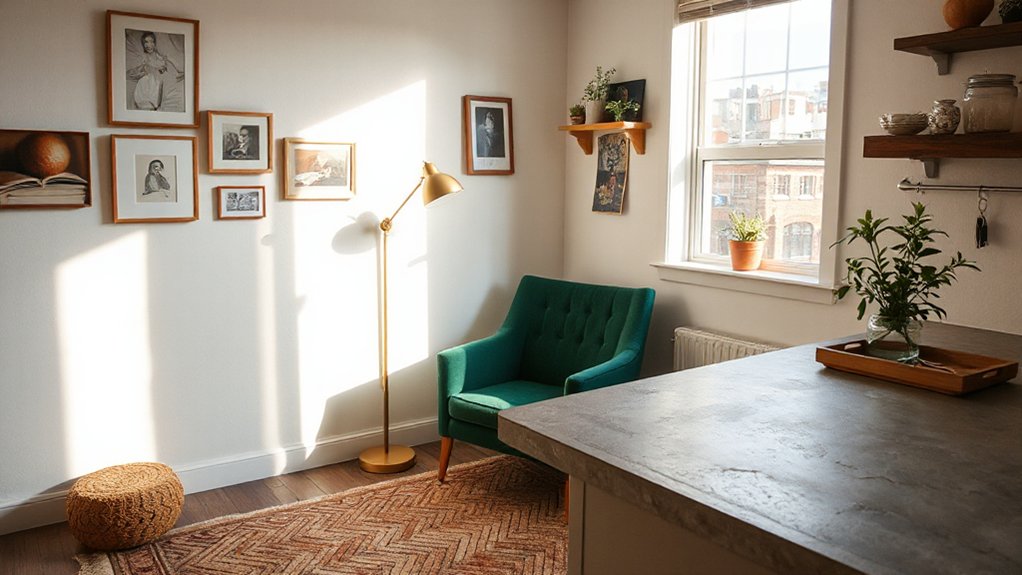
Establish a simple maintenance plan that keeps your space feeling deliberate rather than busy. You’ll sustain character by pairing routine care with mindful decisions, so every detail remains purposeful. Create a clear rhythm, and update it as your layout evolves.
Use a practical maintenance checklist to guide tasks, and an upkeep schedule to prevent gradual clutter or wear from eroding the vibe.
- Schedule weekly surface tidying and dusting to preserve finish and texture.
- Audit furnishings quarterly, tightening joints, mending minor scuffs, and rotating pieces for balance.
- Track lighting and outlets, replacing bulbs promptly and noting upgrades.
- Review textiles seasonally, cleaning or swapping accents to maintain cohesion.
Frequently Asked Questions
How Can I Start Adding Character With a Budget?
Yes—start by budgeting smartly, then prioritize a few high-impact pieces.
Seek vintage furniture to anchor rooms, mixing eras for instant character.
Look for upholstery with rich textures and subtle patina, and reupholster if needed to refresh the piece affordably.
Practice textile layering: add a bold rug, layered throws, and varied pillows to create depth.
Shop sales, flea markets, and thrift stores, and customize finishes yourself when possible for a polished, practical result.
Which Color Accents Feel Timeless in Modern Spaces?
You want timeless color accents in modern spaces, and you’ll love deep blues, warm taupes, and creamy whites. Use Vintage textiles for texture and Metallic finishes to add sparkle without shouting.
Balance bold tones with neutrals, and keep patterns restrained for longevity. Introduce a statement piece, like a velvet cushion or wool rug, then layer with small metallic accessories.
Prioritize consistency in lighting and finishes so the look stays polished, cohesive, and effortlessly adaptable.
What’s the Best Way to Display Personal Mementos?
Use a dedicated display area with varying heights and textures.
Group personal mementos by theme, not random clutter, and rotate pieces seasonally to keep it fresh.
Incorporate vintage accessories alongside contemporary pieces for contrast.
Hang items at eye level and mix framings for cohesion.
Introduce statement lighting—pendants or a sculptural floor lamp—to spotlight your favorites.
Keep cords hidden and maintain a concise, curated shelf or wall gallery for a polished, practical display.
How Do I Balance Bold Art With a Small Footprint?
You’ll be surprised: 60% of people report tiny spaces feel larger once bold art is thoughtfully placed.
To balance bold art with a small footprint, select one or two statement pieces and curate a neutral backdrop. Lean on statement lighting to draw attention without crowding walls.
Hang a single oversized work or a dramatic sculpture, then layer texture with textiles. Use scale-aligned frames, floating shelves, and keep surfaces clear for a polished, practical look.
How Can I Maintain Character Without Clutter Buildup?
To maintain character without clutter buildup, curate thoughtfully: limit new items, rotate pieces seasonally, and keep surfaces clear.
Choose vintage furniture that complements your space and avoid duplicating styles.
Use patterned textiles sparingly—two or three accents max, to anchor a room without overwhelming it.
Invest in quality basics, like a timeless rug or lamp, and store extras out of sight.
Adopt a daily tidy routine and let negative space highlight your curated, well-loved pieces.
Conclusion
You’ve got the tools to transform your space into something unmistakably yours. By infusing purposeful color, layering textiles, curating meaningful art, and choosing warm, uncluttered furniture, you’ll create rooms that feel both current and intimate. Master the lighting, mix metals subtly, and add greenery for softness. Global accents should sparkle without shouting. Keep a simple maintenance plan to sustain character. Like a well-tailored suit, your apartment will balance polish with personality, ready for everyday living and thoughtful moments.