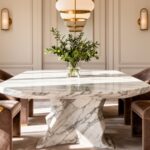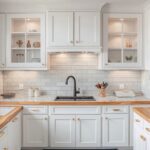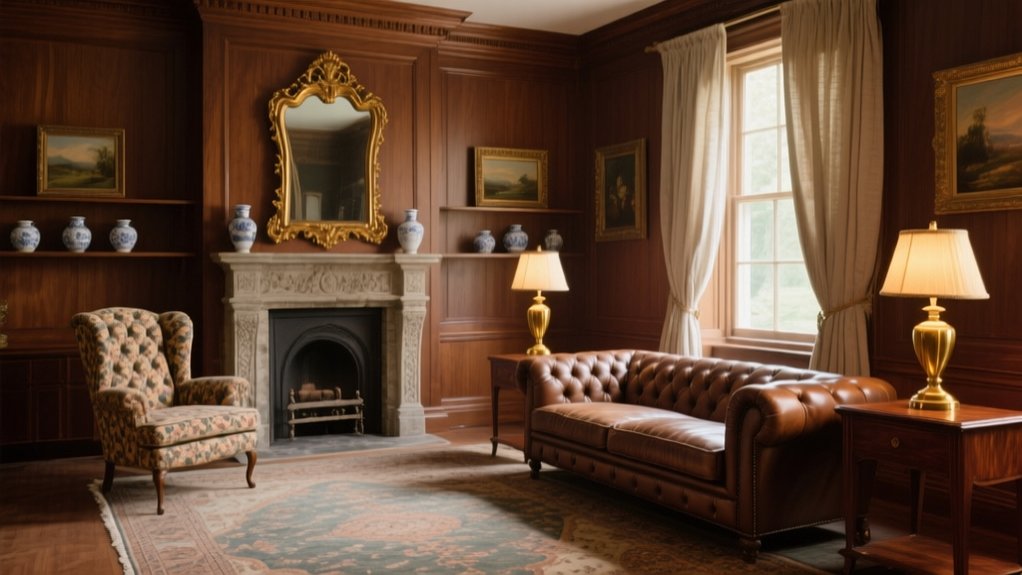

Traditional interiors last because you start with the bones: crisp skirting, architraves, and crown mouldings, plus disciplined symmetry around fireplaces, doorways, and window treatments. You choose period-shaped pieces—roll-arm sofas, wingbacks, cabriole legs—and keep proportions calm with proper reveals and well-made built-ins. You anchor the scheme in warm creams, muted stone, and honey oak or walnut, then layer damask, stripes, and linen. Next, add modern lighting, ceramics, and abstract art for freshness—there’s more ahead.
Key Takeaways
- Start with the home’s original architecture, emphasizing symmetry, proportion, crisp trim, and built-ins that look intentionally designed.
- Choose classic furniture silhouettes—wingbacks, roll-arm sofas, cabriole legs—and keep layouts orderly with clear focal points.
- Build a timeless palette of warm neutrals and heritage tones, then repeat two or three grounded colours across the room.
- Layer durable, refined textiles—linen, wool, velvet—mixing controlled-scale damask, stripes, florals, and subtle textures for depth.
- Refresh tradition with restrained modern accents: sculptural ceramics, abstract art, slim metal tables, and warm dimmable lighting that complements the architecture.
What Is Traditional Interior Design, Really?
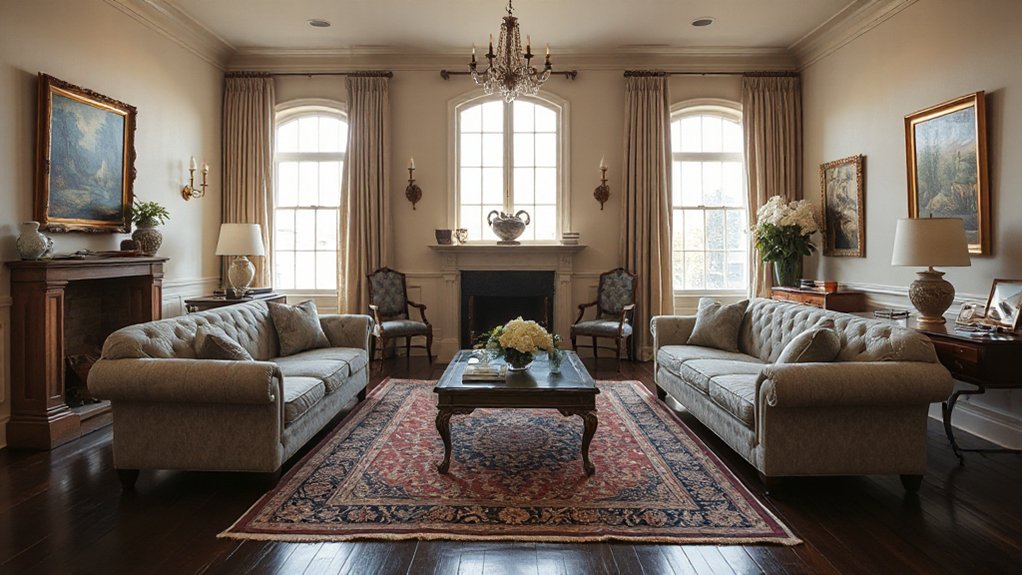
Although it’s often dismissed as simply “classic,” traditional interior design is a disciplined approach rooted in European heritage, where proportion, symmetry, and craftsmanship set the tone.
You prioritize balanced layouts, refined silhouettes, and pieces with provenance, then you edit ruthlessly so the room feels composed rather than fussy. You choose quality joinery, well-made upholstery, and finishes that age gracefully, keeping patterns and colour in a measured hierarchy.
You don’t copy a period room; you translate it for modern life. Use Modern material contrasts—say, marble with darkened steel, or lacquer beside aged oak—to sharpen the scheme without breaking its manners.
Commit to Contemporary art integration to prevent nostalgia, anchoring tradition with confident, current focal points.
Traditional Architectural Details: Trim, Symmetry, Built-Ins
When you want a room to read as truly traditional, you start with its architecture—crisp trim, disciplined symmetry, and built-ins that look designed rather than added on. You’ll specify consistent skirting and architraves, mitred cleanly, then run ornate crown moldings to settle the ceiling line and give the space proper proportion.
You keep symmetry intentional: align doorways, centre fireplaces, and balance window treatments so sightlines feel calm and ordered. If the plan won’t allow perfect mirroring, you’ll create visual pairs with matched niches or twin wall lights.
Built-ins should sit flush, with framed panel doors, bead detailing, and proper reveals. Finish shelves with decorative corbels, not flimsy brackets, so the joinery reads as permanent, well-crafted, and historically grounded.
Traditional Furniture Shapes That Define the Look
To lock in a traditional look, you’ll anchor the room with wingback chairs and settees that frame the seating area with upright, protective silhouettes.
You’ll spot cabriole legs and feet in key pieces, where their gentle S-curve and carved terminals bring period refinement without fuss.
You’ll finish the arrangement with roll-arm sofas and chaises, using their rounded profiles and extended lines to keep the scheme formal, comfortable, and properly proportioned.
Wingback Chairs And Settees
With their high backs and protective side “wings”, wingback chairs instantly anchor a traditional interior and give a room its sense of order. Place one by the hearth or in a reading corner and you’ll create a clear focal point, while the enveloping silhouette offers real comfort and a proper sense of shelter.
Choose Vintage upholstery such as wool check, damask, or leather to reinforce period character without looking fussy. Finish with decorative trims—double piping, bullion fringe, or hand-applied nailheads—to sharpen the outline and signal craftsmanship.
Settees extend the same formal language across a wall or beneath a window. Keep proportions upright, arms substantial, and cushions neatly tailored so the room reads composed. Balance them with a side table and a shaded lamp for evening use.
Cabriole Legs And Feet
Although they look light on their feet, cabriole legs bring a disciplined, historical elegance to traditional furniture, signalling craftsmanship at a glance. You’ll recognise the S-curve: it swells at the knee, narrows at the ankle, then lands with intention. Choose them when you want formality without heaviness.
You should check proportion first. A well-cut cabriole leg carries visual weight through its knee and taper, so the top rail and apron mustn’t feel thin or mean.
Inspect the joinery: you want crisp shoulders, no filler, and a clean shift into the apron. Finish matters too; a hand-rubbed polish flatters the curve, while paint can emphasise silhouette.
Finally, decide on decorative feet—pad, club, or claw-and-ball—each setting the piece’s level of ceremony.
Roll-Arm Sofas And Chaises
When you want a sofa shape that reads unmistakably traditional, the roll arm does the job in one clean gesture: a generous scroll that sits level with, or just below, the back. You’ll get a calm, tailored silhouette that suits both patterned chintz and plain linen, and it frames the seat neatly for Decorative throw pillows without looking fussy.
Choose a tight back for formality or loose cushions for everyday comfort, but keep the proportions stout rather than low-slung.
Add a chaise to extend the line and signal classic lounging; place it by a window or fire for purpose. Ground the arrangement with Upholstered ottomans, which double as footrests and extra seating while keeping the profile coherent.
Mind trim, piping, and skirt depth for polish.
Classic Traditional Colors and Wood Tones
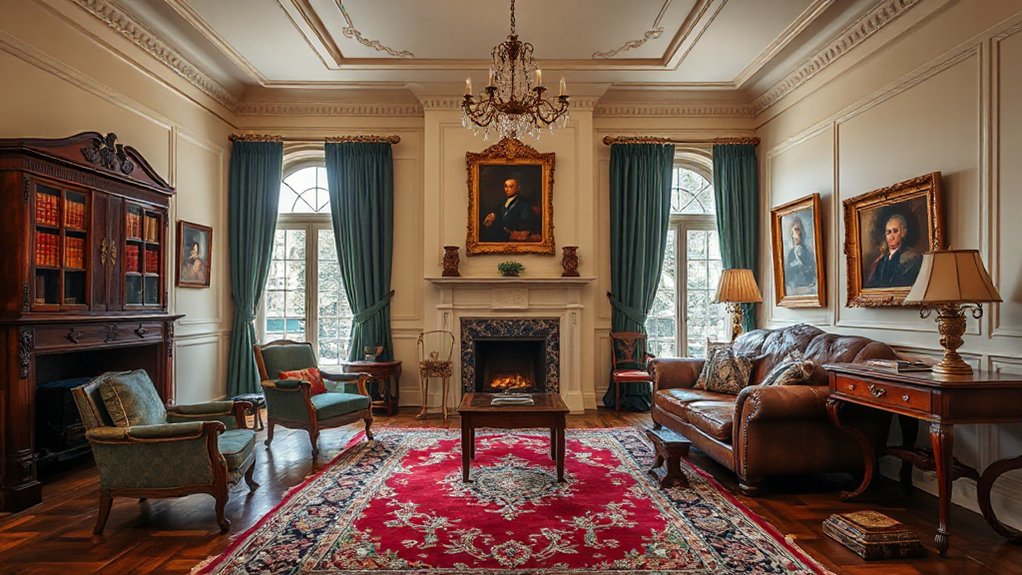
You’ll anchor a traditional interior with a timeless neutral palette—think warm creams, soft greys, and muted stone—so the room reads calm and considered.
Then you’ll reinforce that restraint with classic wood tones, pairing honey oak or mellow walnut with painted cabinetry and heritage textiles.
Get these colour and timber choices right, and every subsequent layer, from metalwork to upholstery, will sit in proper balance.
Timeless Neutral Color Palettes
To achieve a truly traditional interior, start with a timeless neutral palette that balances soft, layered colours with the warmth of natural wood tones. Choose warm ivories, stone, oatmeal, putty, and gentle greige to create depth without fuss. Keep undertones consistent, so walls, trim, and ceilings read as a calm, coherent envelope.
Then build hierarchy with textiles and finishes: linen, wool, and velvet in slightly varied neutrals sharpen definition. Use bold contrasts sparingly through ink-blue piping, charcoal lampshades, or blackened metal to anchor the scheme.
Add Modern accents with restrained brass, ribbed glass, or clean-lined artwork, ensuring they sit quietly within the palette. You’ll achieve formality, comfort, and longevity without chasing colour trends.
Classic Wood Tone Pairings
Although paint sets the mood, wood tones establish the authority of a traditional scheme, so pair them with classic colours that respect their undertones. With warm oak or honey pine, choose creamy off-whites, soft sage, and muted terracotta; they echo the timber’s gold and keep rooms generous.
For red mahogany or cherry, you’ll get better balance from smoky greys, deep bottle green, or navy, which temper the rosiness and sharpen mouldings.
Dark walnut and ebony read formal, so support them with stone, parchment, and oxblood for depth without glare.
If you’re using Antique finishes, keep metals quiet—aged brass or burnished nickel.
Add Rustic accents sparingly: a woven rug, stitched leather, or timeworn ceramics.
Traditional Patterns and Layered Textiles (Done Right)
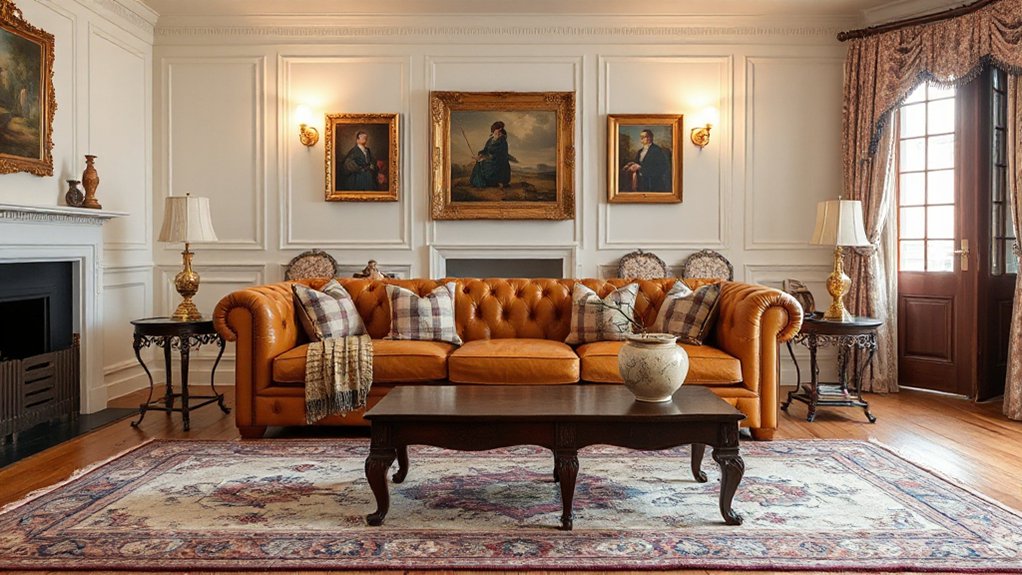
When traditional patterns and layered textiles are handled with intent, they bring depth, warmth, and a quietly tailored richness to a room rather than visual noise. Start with one “lead” motif—say a damask, stripe, or small floral—then control scale so you don’t compete for attention. Keep your palette tight: repeat two or three grounded tones across cushions, curtains, and upholstery to unify the scheme.
Use ornate textiles as accents, not wallpaper: a trimmed cushion, a needlepoint stool, or a lined shade adds character without overwhelm. Build layered patterns by mixing one large-scale print, one mid-scale geometric, and one fine texture such as herringbone or ticking.
Anchor everything with plain wool or linen, and match trims to existing metalwork.
How to Make Traditional Interiors Feel Current
How do you keep a traditional room feeling relevant rather than museum-set? You edit with intent: preserve the architecture, then introduce crisp updates that respect proportion and patina. Swap a few hero pieces, not everything, and let negative space do some work.
- Add Contemporary accents: sculptural ceramics, abstract art, or a slim metal side table.
- Upgrade to Modern lighting with clean-lined pendants and warm, dimmable LEDs.
- Refresh colour: keep heritage tones, but sharpen them with off-black, oat, or chalky white.
- Simplify upholstery: choose plain linen or tight herringbone beside your patterned classics.
- Mix materials: pair mahogany with stone, reeded glass, or brushed brass for tension.
Keep accessories curated, and you’ll retain gravitas without feeling dated.
Frequently Asked Questions
What’s the Average Cost to Furnish a Traditional-Style Home?
You’ll typically spend £15,000–£60,000 to furnish a traditional-style home, depending on room count and quality. Choose Vintage accents and cohesive Color palettes; you’ll pay more for solid wood pieces, bespoke upholstery, and antiques.
How Do You Maintain Antique Wood Furniture Without Damaging the Finish?
You maintain antique wood furniture by dusting with a soft cloth, using mild Antique cleaning solutions only. You avoid water, sprays, and abrasives for Finish preservation. You wax sparingly, keep stable humidity, and lift, don’t drag.
Which Window Treatments Suit Traditional Rooms Best for Privacy and Light Control?
Choose Curtain styles like pinch-pleat or interlined drapes with sheer panels; they’ll deliver privacy and precise light control. Pair them with Blinds options such as timber Venetians or Roman blinds for tidy, tailored adjustment.
Where Can You Source Authentic Vintage Traditional Decor on a Budget?
You can source authentic vintage traditional decor cheaply through Vintage marketplaces, charity shops, and Thrift store finds; check auctions, estate sales, and local antiques fairs. Inspect makers’ marks, joinery, and patina, and haggle politely for value.
How Do You Mix Traditional Interiors With Smart Home Technology Discreetly?
Hide hubs in cupboards, choose vintage-style smart switches, and run cables behind cornices; 65% of UK homeowners prefer invisible gadgets. You’ll achieve Smart integration with Discreet technology using flush sensors, app scenes, and matching faceplates.
Conclusion
Just as you’ve been weighing up a refresh, you’ll notice traditional interiors offer exactly what you need: structure, comfort, and longevity. You align trim, symmetry, and built-ins, and suddenly the room reads calm and considered. You choose classic furniture silhouettes, grounded wood tones, and a restrained palette, and everything settles into place. You layer patterns with discipline—scale, repeat, contrast—so it feels rich, not fussy. Coincidentally, that’s precisely how tradition looks current.