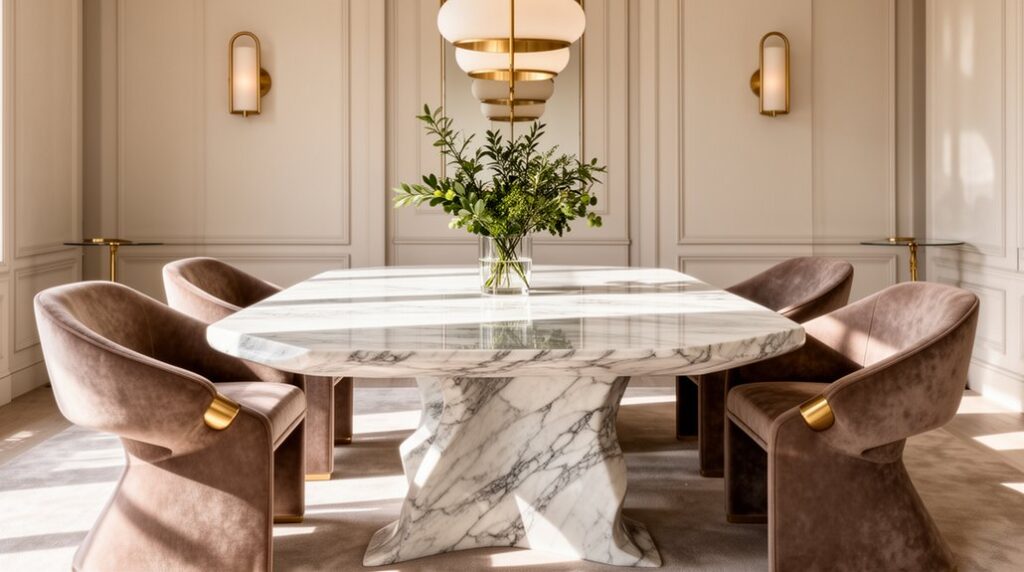

To elevate spaces, you choose high-end, custom marble furniture that showcases timeless luxury and expert craftsmanship. Seek slabs with balanced veining, consistent scale, and cohesive color to build visual rhythm. Pair marble with warm woods or sleek metals, using restrained textures and precise edge treatments to enhance shine without overpowering the room. Plan lighting to reveal depth, and tailor pieces from consoles to coffee tables for a cohesive narrative. If you keep exploring, you’ll uncover how to master this harmony.
Marble Furniture: The Hallmarks of Luxury and Timelessness
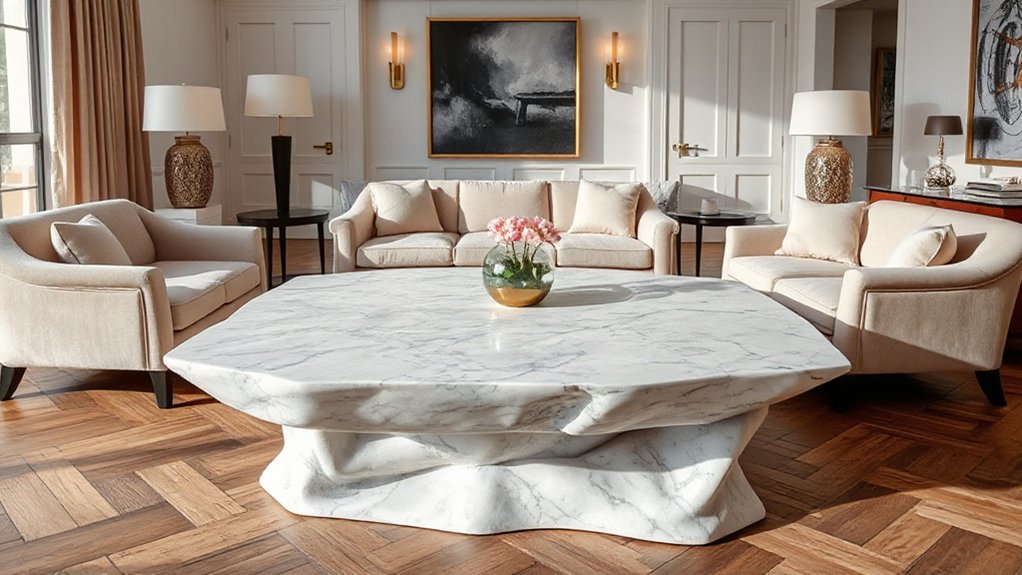
Marble furniture instantly elevates a space, signaling luxury through its natural veining, cool touch, and enduring durability. You recognize marble’s hierarchy of qualities by noting its distinctive Marble color and the craft required to sustain that appearance. The hallmarks are clarity of lines, a restrained palette, and a sense of permanence that anchors design without shouting.
You seek timeless provenance: slabs chosen for consistent veining, proportion, and scale that complement architecture. Marble care becomes a disciplined routine—gentle cleaners, blotting spills promptly, and protective pads for substrates—to preserve surface integrity and gloss.
You’ll value how consistent patina evolves with use, signaling authenticity. In practice, selection, stabilization, and maintenance define luxury, shaping interiors that remain elegant across seasons and trends.
Choosing the Right Marble Slab for Visual Rhythm
To create visual rhythm, select a slab whose veining, scale, and color create a balanced cadence across the space. You’ll judge Marble pattern by its continuity, ensuring the motif anchors dominant furniture while guiding movement through the room.
Prioritize Vein alignment, aligning natural lines with architectural cues and subtle corners to avoid choppiness. Opt for a medium to large scale that reads as a single sculpture from a distance, then up close reveals nuance without distraction.
Contrast matters: a lighter background benefits from darker, deliberate veining; a darker field gains relief from softer, thinner lines.
Consistency across adjoining pieces sustains rhythm, while variations should remain harmonious rather than jarring.
Finishes and Edges: Elevating Marble Texture
Polished marble edges sharpen the tactile and visual edge of your pieces, guiding light and texture across surfaces. Focus on how texture-driven finishes interact with edge detail to reveal depth and sophistication.
You’ll see that subtle variations in polish, along with carefully chosen edge profiles, elevate the marble’s natural character without overpowering other design elements.
Polished Marble Edges
Ever wondered how polished edges transform marble furniture into a statement piece? Polished edges define the line, balance, and light of every surface. You’ll notice how a carefully executed bevel or full polish enhances depth, minimizing visual heaviness while maximizing reflected glow.
This is surface refinement expressed in geometry: a crisp, even contour that catches ambient light and reduces microfracture visibility. In practice, you select profiles that suit scale and purpose—straight, eased, or chamfered—matching leg joins and edge radii to your piece’s silhouette.
Precision grinding and a high-luster seal deliver a consistent, glass-like finish. Consistency across edges guarantees cohesion with surrounding furnishings, elevating perceived value and durability without introducing distracting texture variations.
Texture-Driven Finishes
For countertop skins, a satin or lightly buffed finish invites interaction, yet resists fingerprints. Beveled or chamfered edges emphasize craft without overwhelming the slab’s grain.
When you consider texture, balance is essential: high-contrast veining benefits from restrained edgeridge; uniform patterns gain depth through micro-satin sheens.
Marble provenance informs your choices, guiding you toward finishes that honor source material and quarry context.
Marble ecology also matters: sustainable sealants and low-VOC coatings preserve tone and longevity.
In practice, pair tactile treatments with restrained gloss in lighting schemes to sustain elegance and functional resilience.
Harmonizing Marble With Wood, Metal, and Stone
Marble’s cool, luminous surface pairs best with materials that balance its heft and brightness, so start by identifying three complementary finishes: warm wood, sleek metal, and rugged stone.
In your space, you’ll leverage marble texture and color contrast to create focus without shouting. Pair a matte oak or walnut with veined marble to emphasize warmth, ensuring grain direction respects the slab’s pattern.
Introduce brushed bronze or satin steel to add modern acuity; let metal reveal edges and silhouettes without overpowering the stone.
For stone, select a textured cruciform or chiseled base that echoes natural terrain, while keeping stone weight anchored by wood or metal legs.
Maintain restraint in scale and proportion, letting material honesty guide every decision.
Lighting Marble: How to Make It Glow
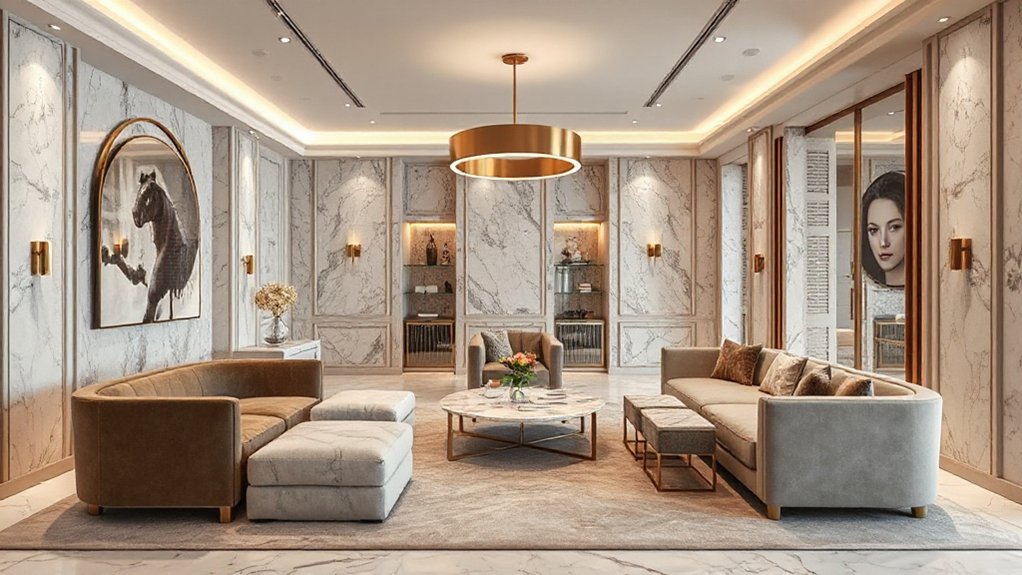
Lighting marble properly is about shaping its glow rather than chasing brightness alone; choose light sources and placements that enhance veining, depth, and translucence. You’ll optimize Marble lighting by selecting fixtures with high CRI, adjustable warmth, and diffusers that reduce glare.
Position uplights to skim surface textures and downlights to reveal subtle translucence in thinner slabs. For vases, consoles, or backlit panels, employ a dimmable layer to control contrast and avoid harsh hotspots.
Confirm installation considers heat tolerance and mounting security to preserve sheen and stability during Marble installation. Avoid excessive wattage that dulls natural veining; instead, blend ambient, task, and accent layers to sculpt ambiance.
Document light coordinates with the piece’s grain to maintain architectural cohesion and material integrity.
Spatial Planning: Marble for Flow, Scale, and Proportion
Master the Marble Flow: use contoured shifts and consistent veining to guide movement through spaces. Keep scale in harmony with room dimensions, balancing furniture footprint with marble’s visual weight and reflections.
Apply proportion rules—repeats, grids, and focal anchors—to guarantee every piece reads cohesive, deliberate, and elegant.
Marble Flow Principles
Marble flow hinges on spatial planning that respects movement, sightlines, and focal points; when you place marble thoughtfully, circulation feels natural and unforced. You align surfaces with pathways, ensuring doors, seating, and screens don’t interrupt cadence.
Choose veining direction to guide the eye along room arcs, creating a cohesive rhythm from entry to focal wall. Balance scale so tabletops feel substantial yet proportionate to surrounding furniture, avoiding heavy blocks that crowd sightlines.
Consider rotation paths when arranging clusters, so marble remains a visual anchor rather than a barrier. Marble sourcing informs finish choice—interplay between matte and gloss affects light bounce and perceived flow.
Use consistent edge detailing to preserve continuity, and deliberate mismatch or alignment of seams to sustain a seamless, premium aesthetic.
Scale and Proportion Guidelines
In spatial planning, scale and proportion set the rhythm of a marble-forward room. You balance dimensions by matching furniture silhouettes to room proportions, avoiding overwhelmed or underwhelmed halls. Begin with a dominant piece in a properly scaled footprint, then sequence secondary elements to maintain visual cadence.
Consider Marble color as a unifying thread; light hues read larger, while deep tones anchor and ground. Use contrast intentionally—pair bold veining with restrained forms to prevent visual chaos.
Proportions hinge on clear sightlines: keep seating aligned with major axes and avoid oversized coffee tables that interrupt flow. Respect radiator and doorway footprints, weaving rugs to anchor zones without clutter.
Marble pattern should repeat subtly across surfaces to reinforce cohesion, not compete.
How to Maintain Veins and Gloss on Marble
To maintain veins and gloss on marble, start with a clean routine that respects the stone’s natural patterns and finish. You train the surface to accept finishes without smearing or altering vein contrast.
Use a pH-neutral cleaner diluted per manufacturer guidance, and apply with a soft microfiber cloth to avoid micro-scratches. Rinse thoroughly and dry with a lint-free towel to prevent water marks that dull gloss preservation.
Key practice: avoid acidic or abrasive products, which disrupt Vein contrast and surface luster.
For routine maintenance, seal only if recommended by the marble type; re-seal sparingly and per schedule to preserve gloss preservation.
When polishing, employ controlled, light mechanical buffing or professional services for uniform sheen without degrading vein structure.
Regular dusting enhances longevity and resists dulling.
Customization Paths: From Coffee Tables to Consoles
Color palette decisions guide vein integration and complement existing décor, while you balance light reflectivity with practicality for daily use. Material durability informs thickness choices, resistance to stains, and maintenance needs, ensuring long-term performance under heavy or nuanced workloads.
You select base materials and support structures that optimize stability without sacrificing elegance. Precise milling, sealing, and polishing protocols translate design intent into durable, cohesive pieces.
Marble in Action: Real-World High-Glam Interiors
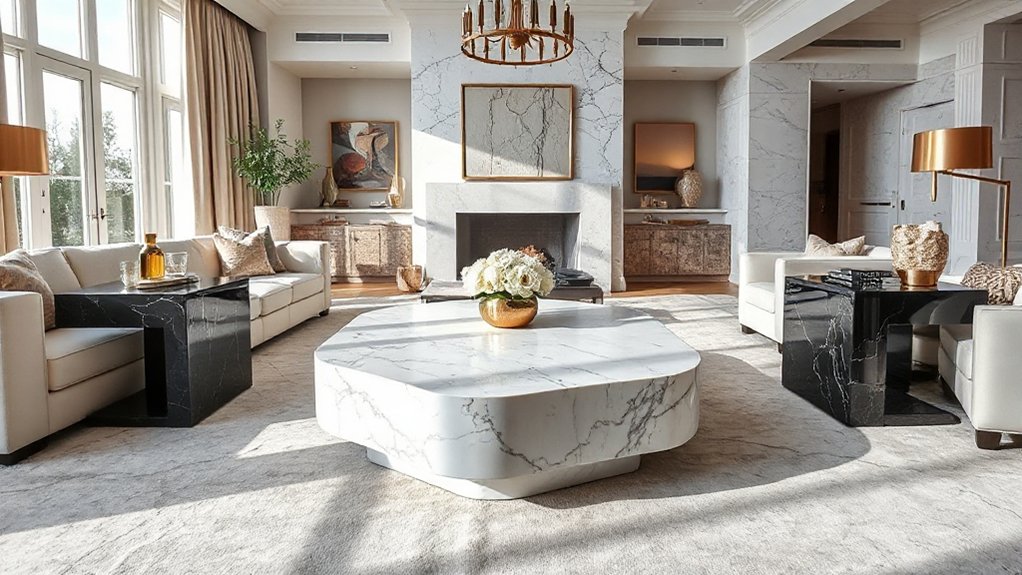
You’ve laid the groundwork for tailored marble pieces; now observe how those choices translate into bold, high-glam interiors. In practice, marble elevates focal points with clean planes, dramatic veining, and tactile cues that signal luxury without shouting.
You’ll see tailored consoles and dining surfaces paired with metallic accents, creating contrast that reads as modern refinement. Marble craftsmanship shows in precise edge treatment, flawless polish, and considered proportion, ensuring every piece anchors the room rather than dominates it.
Artistic carvings add narrative depth—subtle motifs or bold emblems that personalize spaces without clutter. In real-world settings, careful placement and lighting maximize glow, casting soft reflections across walls and fabrics.
The result is cohesive glamour: reserved restraint married to fearless material expression.
Budgeting a Bespoke Marble Project: Timeline and Costs
Budgeting a Bespoke Marble Project requires a clear plan that aligns design ambitions with financial reality. You map scope, milestones, and contingencies before any order, so timelines stay realistic even as decisions evolve.
Marble sourcing influences both schedule and cost: natural variations affect lead times, finish options, and waste, so you lock preferred slabs with clear acceptance criteria.
Create a phased timeline that aligns fabrication stages with your installation window, allowing buffer for seaming, polishing, and transport.
Pricing strategies matter: set a baseline per square meter, then add allowances for specialty finishes, edge profiles, and custom thicknesses. Include contingency (typically 10–20%), and document change processes to prevent scope creep.
Track payments against milestones, maintaining transparency with your atelier to protect quality and timing.
Hiring the Right Atelier: Questions to Ask Before You Buy
Choosing the right atelier matters as much as selecting the marble itself. Before you commit, ask concrete questions that reveal capability, process, and accountability.
Inquire about artistic veining expectations and how they map to your room’s lighting and scale, ensuring consistency across slabs.
Probe material sourcing: request provenance, quarry partners, and sustainability practices, plus how issues like voids or repairs are handled.
Demand a written project brief with milestones, delivery windows, and warranty terms.
Clarify fabrication methods, surface finishing options, and how they protect against cracking or staining.
Seek portfolios with similar projects, and verify references from designers or clients.
Finally, confirm post-installation support, maintenance guidance, and transparent pricing, so assumptions don’t become problems after installation.
Frequently Asked Questions
How Durable Is Marble in High-Traffic Living Spaces?
Marble is durable in high-traffic areas when properly protected. You should schedule marble polishing periodically and apply sealant application to prevent etching and stains, maintaining sheen while resisting wear in kitchens, halls, and living spaces.
What Maintenance Schedule Keeps Veining Vibrant Long-Term?
Vibrant veining lasts when you commit to a steady rhythm: Marble sealing annually, Marble cleaning weekly, and prompt spill blotting. You protect sheen, prevent stains, and preserve color harmony through disciplined maintenance and expert, precise care.
Can Marble Be Repaired if Scratched or Chipped?
Yes, you can repair scratches or chips. Use professional polishing or epoxy fillers for chips, then reseal. Marble cleaning should occur before repairs, and after, apply marble sealing to protect the surface and restore uniformity.
Which Woods and Metals Best Complement Marble Tones?
Marble color coordination hinges on warm woods like walnut or oak and cool metals such as brushed nickel or brass. You’ll achieve balance with complementary material choices, selecting veneers and finishes that harmonize tones for confident, timeless interiors.
Do Custom Slabs Affect Resale Value or Insurance?
Custom slabs can raise resale value and complicate insurance; they’ll influence marble pricing and insurance claims, so document provenance, install robustly, and insure appropriately. You’ll benefit from expert appraisal and proactive coverage to protect your investment.
Conclusion
When you commission marble furniture, you don’t just buy a piece—you invest in a statement that bends space, time, and light to your will. It’s the kind of luxury that makes a room feel impossibly elevated, as if gravity itself stepped back to admire your taste. Expect reactions that verge on disbelief: guests will swear the marble hums with personality, and you’ll wonder how you ever lived without that flawless, perpetual glow. This isn’t décor; it’s destiny.