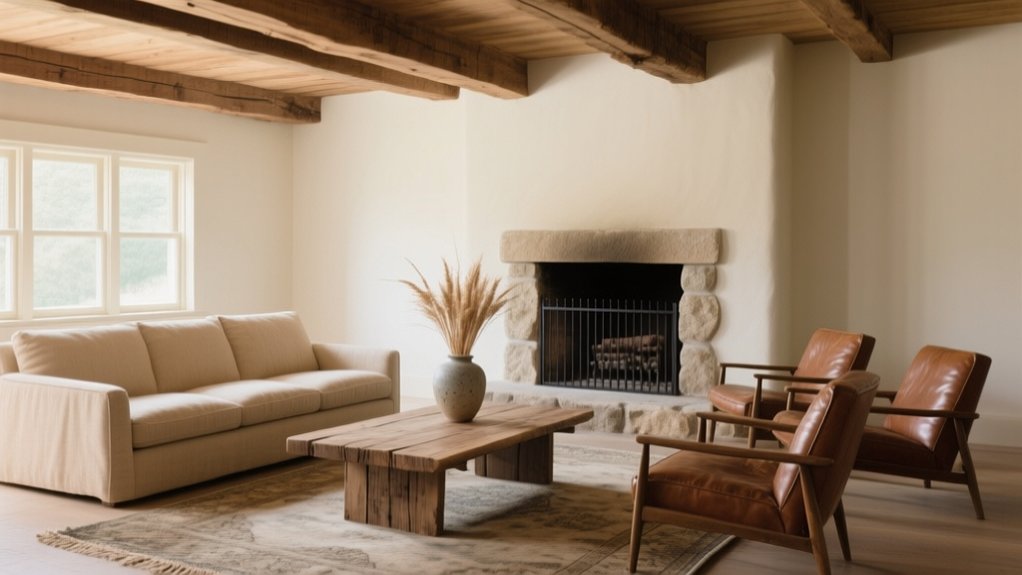

To make rustic feel refined, set three rules: pick one hero natural material (like reclaimed oak) and repeat it three times, balance rough textures with tailored lines, and limit “story” pieces to two per room. Keep a calm palette of warm neutrals plus one muted earth tone. Stick to three core materials—wood, stone, metal—and choose one metal finish, mostly matte. Layer warm 2700–3000K lighting with dimmers. Next, tighten each room’s layout and focal point.
Key Takeaways
- Set three cohesion rules: repeat one hero natural material, balance rough with tailored elements, and limit story pieces to two per room.
- Keep a restrained palette: warm neutrals plus one muted earth tone, using matte or eggshell finishes for calm, refined surfaces.
- Balance textures: pair rugged wood or stone with smooth plaster, linen, or metal, avoiding rough-on-rough layering.
- Choose refined silhouettes: straight-leg furniture, crisp upholstery, visible craftsmanship, and 36-inch walkways to prevent a heavy, cluttered feel.
- Layer lighting and decor: simple fixtures with warm dimmable bulbs, and only a few meaningful objects to maintain clean focal points.
Set Your Refined Rustic “Rules” (3 Must-Haves)
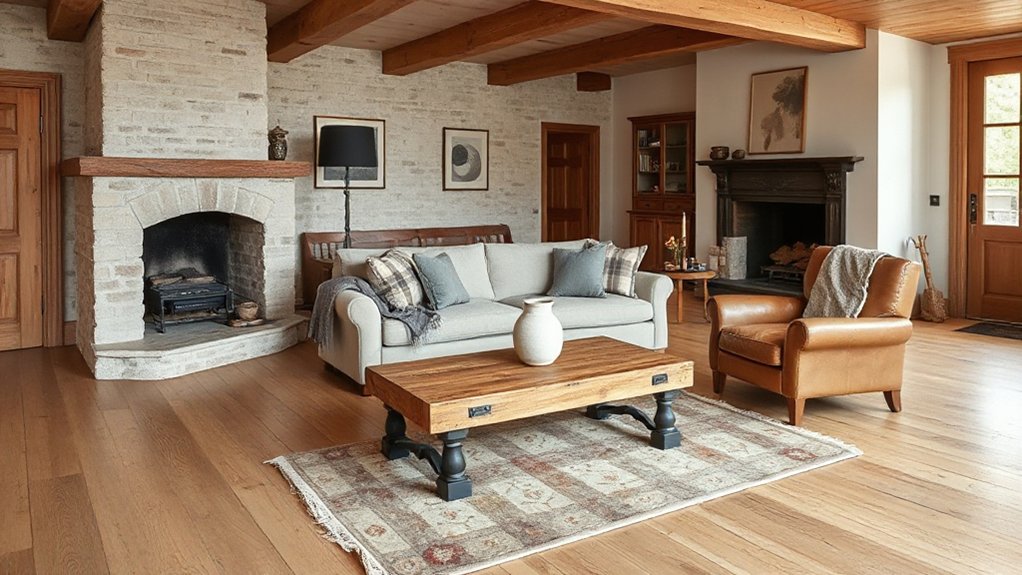
Before you start shopping or rearranging furniture, set three nonnegotiable “rules” that define your refined rustic look.
Rule 1: commit to one hero natural material—reclaimed oak, walnut, or aged stone—and repeat it at least three times (floor, table, shelving) for Rustic elegance without clutter.
Rule 2: balance every rough texture with a tailored counterpoint: live-edge wood pairs with slim black steel, chunky linen pairs with crisp upholstery; that’s Modern rustic, not cabin kitsch.
Rule 3: limit “story” pieces to two per room—an antique trunk, a hand-thrown vessel, a forged sconce—and keep everything else simple-lined.
Write these rules down, then measure your space and buy only what fits them.
Build a Calm Refined-Rustic Color Palette
Although rustic spaces can handle plenty of texture, a calm refined-rustic palette works best when you keep the colors restrained and let materials do the talking. Start with one warm neutral base—soft white, oat, or greige—then add one muted earth tone like clay, olive, or slate.
Use Color psychology: warm neutrals read welcoming, green calms, and blue-gray feels tailored and quiet. Keep contrast low to medium; reserve deep charcoals for small accents so the room doesn’t turn heavy.
Choose finishes deliberately. Matte and eggshell hide wall imperfections and feel relaxed; satin adds subtle polish on trim. Use paint techniques like color washing or a diluted limewash effect to soften gradations and reduce glare.
Test large swatches in morning and evening light before committing.
Choose 3 Core Rustic Materials (Wood, Stone, Metal)
When you limit your rustic interior to three core materials—wood, stone, and metal—you get a cohesive look that feels intentional instead of cluttered. Start by choosing one dominant material (often wood) for large surfaces like floors, ceiling beams, or casework, then repeat it in smaller accents to unify the room.
Use stone as a grounding counterpoint: a hearth surround, backsplash, or tabletop adds weight and natural variation. Keep profiles clean so the stone reads refined, not heavy.
Bring in metal for structure and contrast through furniture bases, brackets, lighting, and hardware. Balance rustic textures with modern finishes by pairing matte, tactile surfaces with crisp edges and consistent scale.
Limit competing grains and veining, and repeat each material at least twice.
Pick Your Metal Finish (Black, Brass, Iron)
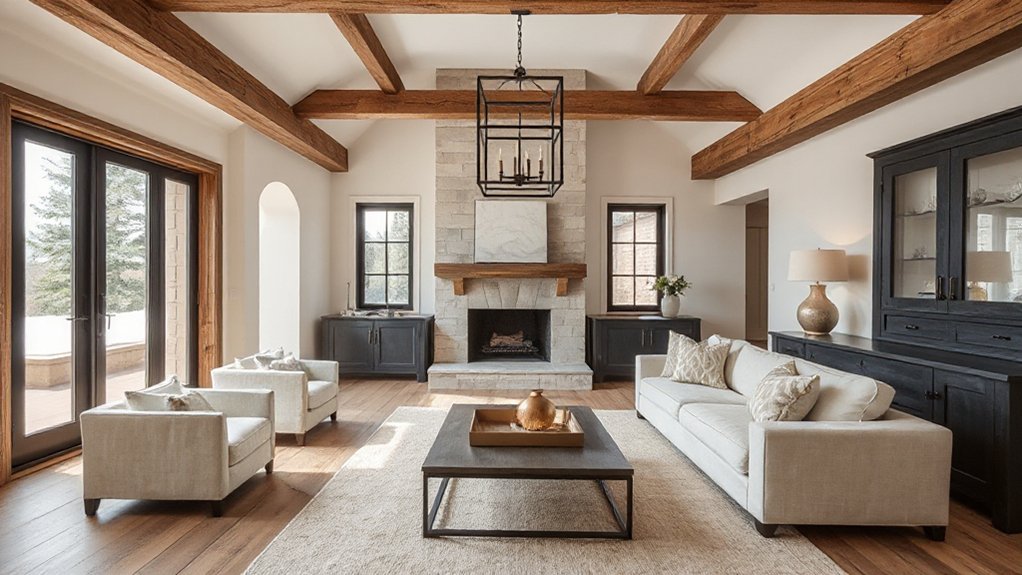
Now you’ll lock in the rustic look by choosing a consistent metal finish—black, brass, or iron—and applying it with intention.
Use black accents on high-impact pieces like lighting, cabinet pulls, and window hardware to sharpen contrast against wood and stone.
If you mix brass and iron, keep one dominant (about 70/30), repeat each finish at least twice in the room, and match the sheen (matte or aged) so it reads cohesive.
Choosing Black Accents
To make rustic interiors feel intentional instead of dated, you should choose a metal finish for black accents that matches your wood tones and the room’s contrast level. In honey oak or warm pine, use softer blackened iron or matte black so the edge feels grounded, not harsh.
With cool or gray-stained woods, choose crisp satin black for cleaner contrast enhancement.
Place black where you need structure: window grids, door hardware, lantern pendants, fireplace screens, and table bases. Keep sheen consistent; mix gloss levels only if you’re deliberately highlighting one focal piece.
Limit black to two or three repeating elements per sightline so it reads like a framework. Balance it with light textiles and natural stone to avoid a heavy, cabin-dark feel.
Mixing Brass And Iron
Although rustic rooms welcome a bit of patina and mismatch, you’ll get a cleaner, more intentional look if you pick one “lead” metal (black, brass, or iron) and let the other play support.
Choose brass as the lead when you want warmth against reclaimed wood, then repeat it in 2–3 high-visibility spots: cabinet pulls, a picture light, and one table lamp. Let brass patina show; just keep the finish consistent (all brushed or all aged).
Choose iron as the lead when your palette runs cooler or your lines feel modern; use iron detailing on stair spindles, window grids, or a chandelier. Limit the secondary metal to small accents, and match undertones so nothing clashes.
Mix Warm Wood Tones With One Unifying Anchor
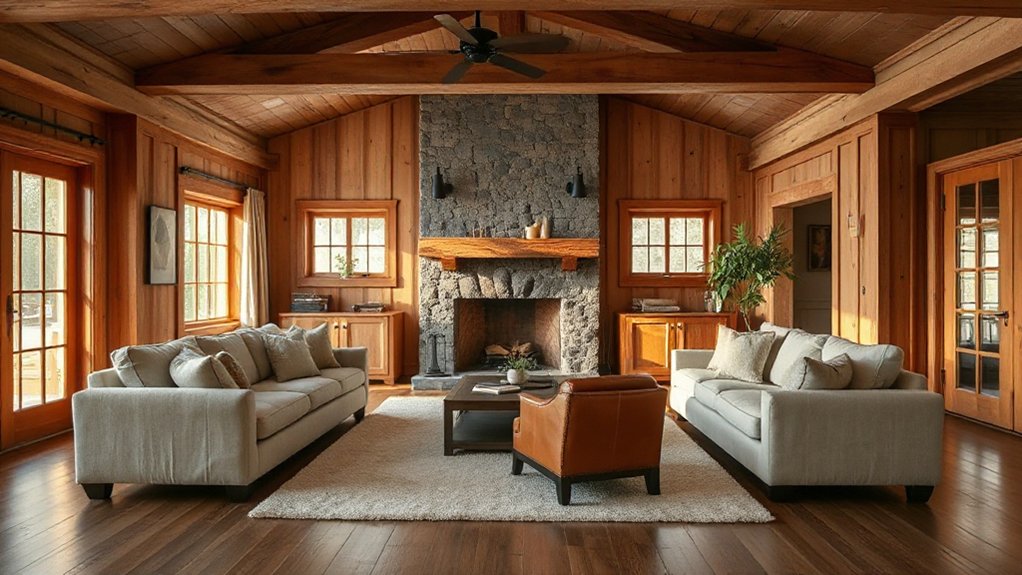
When you mix warm wood tones in a rustic space, you’ll get a richer, more lived-in look—if you tie everything back to one unifying anchor. Pick one constant element, like a dominant wood finish on floors, ceiling beams, or the main dining table, then let other woods play supporting roles.
Keep undertones aligned: pair honey oak with chestnut and walnut, not red mahogany. Repeat the anchor’s tone at least three times through trim, open shelving, or picture frames to lock in cohesive themes.
Balance natural textures by mixing grain scales—wide-plank flooring, tighter-grain cabinetry, and a lightly distressed stool. Finally, control sheen: keep most woods matte or satin, and reserve gloss for one small, intentional piece.
Use Stone as an Accent, Not a Takeover
Pick one stone focal—like a fireplace surround, kitchen backsplash, or entry wall—and let it carry the weight.
Balance it with warm materials you can repeat elsewhere, such as oak, leather, linen, and aged metals, so the room stays inviting instead of cold.
Stick to lightly textured finishes (honed, brushed, or split-face in small doses) to keep the stone tactile without turning every surface into visual noise.
Choose One Stone Focal
- Scale it right: match the stone’s size to the wall and sightlines you see most.
- Edit the edges: use clean terminations, consistent grout joints, and a simple mantel or trim line.
- Repeat subtly: echo the stone’s color once or twice in textiles or art, not more.
You’ll get impact without visual clutter.
Balance With Warm Materials
Although stone brings instant character, it can flatten a rustic room if you let it dominate every surface. Treat it like a strong spice: limit it to your chosen focal, then balance it with warm materials that invite touch and soften the visual weight.
Pair stone with medium-to-dark woods (oak, walnut, reclaimed fir) for immediate warmth and textural contrast. Add leather, wool, or linen on seating to keep the room from reading cold. Use matte metals like aged brass or blackened steel to connect hard and soft elements.
Watch undertones: warm gray stone likes honeyed wood, while tan stone works with deeper, red-brown stains. Prioritize material durability—sealed wood, performance fabrics, and scratch-tolerant finishes—so the room stays refined under real life.
Keep Surfaces Lightly Textured
When every wall and counter goes heavy on rough finishes, the room can feel busy and visually dense instead of rustic. Keep texture present but controlled, and let stone read as a deliberate accent. Choose honed, brushed, or leathered surfaces over deep clefts, and limit high-contrast veining so light can move across the room.
- Use stone once per sightline: a fireplace surround or island face, not both plus full-height backsplash.
- Pair it with textured countertops that stay low-relief, then add matte wood cabinetry to soften edges.
- Finish with lightly patterned textiles—tight weaves, small checks, or subtle stripes—to echo texture without adding bulk.
You’ll get depth, durability, and a calmer, refined rustic finish.
Balance Rugged Texture With Smooth Surfaces
Because rustic rooms rely on strong tactile contrast, you’ll get the best results by pairing rugged textures with clean, smooth surfaces instead of layering rough-on-rough. Use Textural contrast deliberately: set rough-sawn beams against matte plaster, or reclaimed brick beside crisp painted trim.
Aim for Surface refinement by choosing one “polished” element per zone. In kitchens, balance a hammered metal pendants with slab-front lacquered cabinets or a honed quartz backsplash. In living areas, offset a nubby wool rug with a streamlined stone hearth, or pair distressed wood shelving with smooth ceramic vessels.
Keep the ratio simple: let one rugged material anchor the room, then repeat smooth finishes in two to three smaller touches. You’ll control visual noise and keep rustic details feeling intentional.
Choose Rustic Furniture With Clean, Tailored Lines
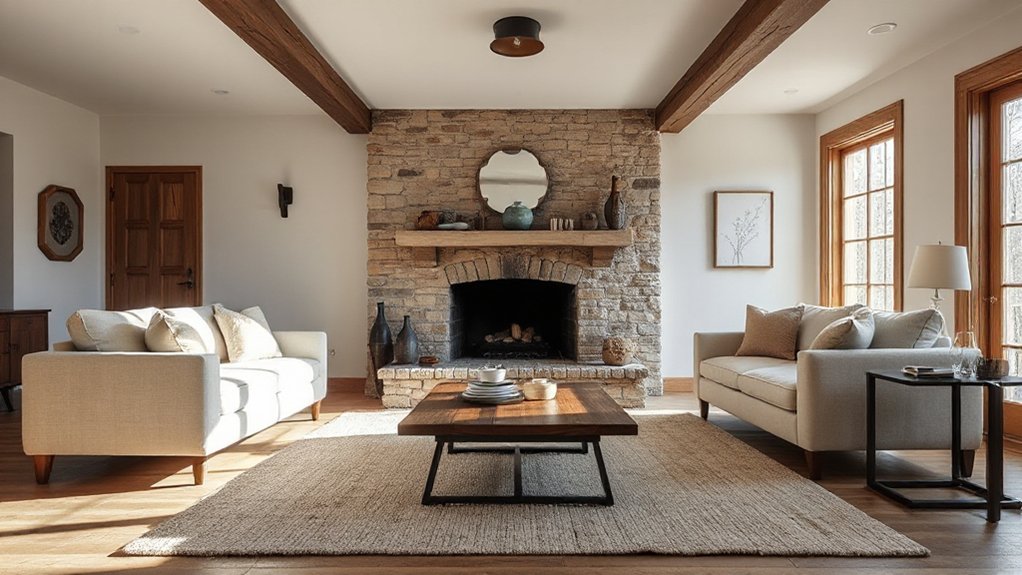
Textural contrast works best when the furniture doesn’t add extra visual noise, so choose rustic pieces with clean, tailored lines. Aim for silhouettes that feel intentional: straight legs, tight arms, crisp profiles, and minimal ornament. You’ll still get warmth from wood grain, leather patina, and forged hardware, but the forms read refined.
- Pick one strong material per piece—solid oak, blackened steel, or saddle leather—then keep edges square and joinery visible.
- Favor low-profile, boxy upholstery in performance linen; layer Vintage textiles as removable throws, not busy slipcovers.
- Add Handmade crafts as accents—turned stool, carved bench, simple trestle table—so craftsmanship shows without fuss.
Edit Your Layout for Breathing Room
Edit your layout so rustic pieces feel intentional, not crowded. Keep open walkways by pulling furniture off main paths. Define clear zones with rugs, and anchor each area with a single focal grouping.
Then right-size key furniture—choose a sofa and coffee table that fit the room’s scale and leave consistent clearance around them.
Prioritize Open Walkways
Even in the coziest rustic room, tight pathways make the space feel cluttered and hard to use, so start by protecting clear walkways before you add anything else. Aim for open pathways that let you move naturally between doors, seating, and work areas, and you’ll instantly get more spacious layouts without losing warmth.
Use these checks to edit fast:
- Keep main routes at least 36 inches wide; don’t let chair backs pinch the lane.
- Float bulky pieces away from entries and corners so sightlines stay open and traffic doesn’t snag.
- Limit “in-between” furniture—extra stools, small tables, and floor baskets that steal steps and trip you.
When you maintain clean circulation, reclaimed wood, stone, and textiles read intentional, not crowded.
Define Zones With Rugs
When your rustic room has to serve more than one purpose, a well-sized rug creates clear zones without adding visual clutter. Start by mapping how you move through the space, then place rugs where you pause: seating, reading, dining, or a work nook. Keep at least one clear border between rugs so each area reads distinct.
Use zoning strategies that feel intentional: align the rug edges with architectural lines, not random angles. Choose natural fibers—jute, wool, or flatweave—for durability, and layer a smaller hide or kilim to add textural contrast without extra furniture.
Size matters: front legs of chairs or benches should sit on the rug, anchoring the zone and preventing a “floating” look.
Right-Size Key Furniture
Because rustic spaces rely on weighty materials and bold silhouettes, you’ll get a calmer room by right-sizing your key pieces and giving them enough negative space to read. Start with furniture proportion: measure wall lengths, door swings, and circulation paths, then pick fewer, better anchors. Aim for 30–36 inches of clear walking space and let one hero piece lead each zone.
- Scale your sofa and bed to the room’s longest wall, leaving at least 6–12 inches of breathing room at each end.
- Choose slimmer side tables or a smaller coffee table if you can’t maintain a clean traffic lane.
- Edit duplicates—two oversized chairs often outperform a sofa-plus-bulk pairing.
This space optimization keeps rustic textures feeling intentional, not crowded, and improves sightlines and light.
Layer Textiles: Linen, Wool, Leather, and Knit
To give rustic interiors depth and comfort, layer textiles that look better as they age—linen for breathable drape, wool for warmth and texture, leather for durable structure, and knits for soft contrast.
Start with a linen sofa slipcover or drapery to keep the room airy, then add a wool rug to anchor seating and cut echo. Drape a chunky knit throw over the arm, not the back, so it reads intentional.
Use leather in high-touch zones—chair seats, ottomans, or pillow fronts—so it patinas instead of pilling. This Textile layering strategy creates Material contrast without clutter: pair matte linen with nubby wool, smooth leather with ribbed knit.
Keep a tight palette, vary weave scale, and repeat each textile twice for cohesion.
Keep Decor Meaningful (The 5-Object Rule)
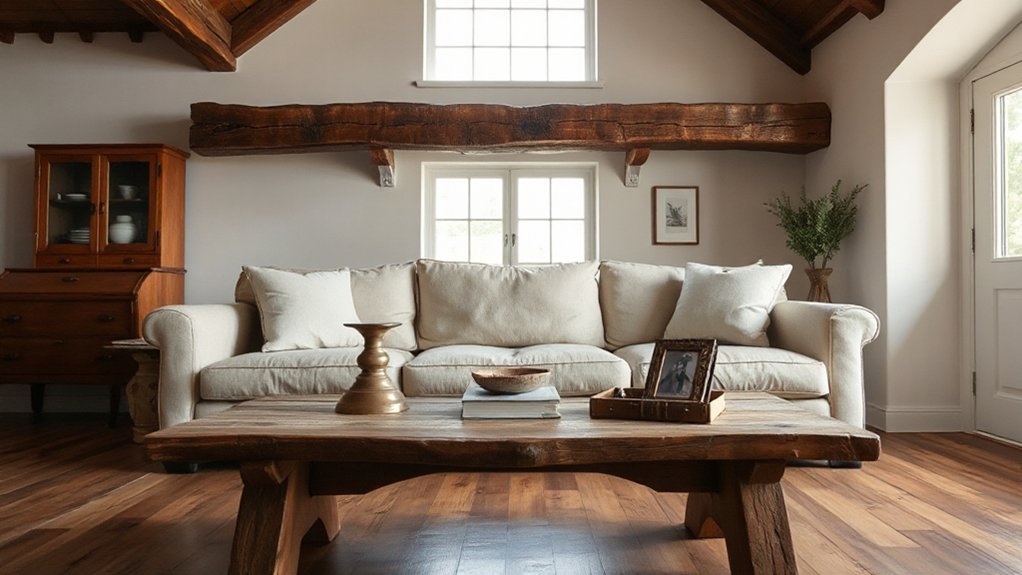
Layered textiles already add warmth and history, so let the hard decor stay equally intentional by following the 5-object rule. Limit each surface to five items max, and you’ll prevent rustic from tipping into clutter. Choose Meaningful decor that earns its spot through function, story, or material integrity.
- Anchor with one utilitarian piece (a wooden tray, iron bowl) to corral smaller items.
- Vary height with one vertical element and one low element, keeping profiles simple.
- Add soul with one personal object and one natural find, then stop.
Edit weekly: remove anything you can’t name, use, or love. Repeat a finish twice (black iron, aged brass) so your intentional accents feel deliberate, not random. Keep negative space visible.
Choose One Hero Piece (Light, Rug, or Art)
Where should your eye land first when you walk into a rustic room? Decide that before you buy anything else. Strong hero piece selection gives the space structure and prevents “too much wood, too many finds” syndrome. Pick one: a statement light, a grounded rug, or a commanding artwork, then let it lead every supporting choice.
Treat focal point importance like a checklist. If you choose a rug, size it to anchor the main seating with at least the front legs on it, and keep patterns limited to two tones.
If you choose art, hang it at eye level and echo one color in textiles.
If you choose a light, match its scale to the room’s width and keep other accents quiet.
Lighting Layers for a Warm Rustic Glow
Even if you’ve nailed the perfect hero piece, rustic rooms still fall flat without lighting in three clear layers: ambient, task, and accent. Build layered illumination so the space feels welcoming, not cave-like, and keep every source on a dimmer for control as daylight shifts.
- Ambient: Use a central fixture or discreet ceiling lights to set an even ambient glow. Choose warm LEDs (2700–3000K) to flatter wood and stone.
- Task: Add focused light at reading chairs, the kitchen sink, and prep areas with swing-arm sconces or under-cabinet strips. Aim beams away from eyes.
- Accent: Wash textured walls, beams, or art with picture lights or uplights. Keep it subtle so shadows look intentional.
Mix Refined Rustic With Modern Accents (Tastefully)
To mix refined rustic with modern accents, you’ve got to balance raw wood with metal so neither one overwhelms the room.
Pair a reclaimed-wood table with matte black or brushed steel hardware, then keep surfaces clean-lined and uncluttered.
Add sleek lighting and glass—like a minimal pendant and a clear-top coffee table—to sharpen the look without losing warmth.
Balance Raw Wood And Metal
Although rustic style celebrates imperfections, you’ll get a cleaner, more intentional look by balancing raw wood with metal in a controlled mix. Aim for Industrial contrast without letting the room feel cold, and keep Vintage charm by choosing finishes that look earned, not flashy.
Use one dominant wood tone, then repeat a single metal finish to avoid visual clutter.
- Pair rough-sawn oak, reclaimed pine, or live-edge surfaces with matte black or brushed steel hardware for crisp definition.
- Limit shiny metals; choose antiqued brass or dark bronze in small doses to warm up heavy timber.
- Match metal profiles to scale: slim legs on thick tables, sturdy brackets on open shelving, and consistent fasteners across the room.
Let texture do the work, not excess decor.
Add Sleek Lighting And Glass
When you add sleek lighting and glass to rustic interiors, you sharpen the room’s lines without stripping away its warmth. Choose Sleek fixtures with simple silhouettes—blackened steel, brushed nickel, or matte brass—to contrast rough beams and knotty planks.
Hang a linear pendant over the dining table, then add a low-profile sconce near textured stone to create layered, controlled brightness.
Use clear or lightly smoked glass accents to lighten heavy wood: swap a bulky coffee table for a glass-top version, or add cabinet doors with ribbed glass to show curated storage.
Keep bulbs warm (2700–3000K) and use dimmers so the modern pieces feel tailored, not stark.
Limit glass to two or three surfaces per room.
Room-by-Room Refined Rustic: Living, Kitchen, Bed, Bath
Because rustic style can slip into cliché fast, you’ll get the best results by tailoring it to how each room actually functions—then refining the materials, palette, and lighting around that purpose.
In the living room, anchor Vintage charm with one honest wood piece, then add Cozy textures through wool throws and tightly edited pillows; keep metals matte and lines clean.
- Kitchen: Choose rift-sawn or painted cabinetry, pair it with stone counters, and use unlacquered brass sparingly; hide clutter with paneled appliances.
- Bedroom: Prioritize quiet: linen bedding, a simple headboard, blackout drapery, and warm bedside lamps over overhead glare.
- Bath: Go tactile yet crisp: tumbled tile, a slab vanity, framed mirrors, and a shower enclosure in clear glass; seal porous surfaces.
Frequently Asked Questions
How Do I Blend Rustic Style in a Small Apartment Without Clutter?
Choose a few rustic statement pieces, not many. Add Vintage accents sparingly, stick to tight color palettes, use wall shelves, hidden storage, and slim furniture. Keep surfaces mostly clear, and repeat textures for cohesion.
What Are Budget-Friendly Ways to Achieve Refined Rustic Without Renovations?
Skip the “wallet workout” by styling, not rebuilding: add Vintage accessories, layer Natural textures (linen, jute, wood), swap hardware, use warm bulbs, repaint thrifted frames, and curate fewer, better pieces for polish.
How Do I Make Rustic Interiors Feel Pet-Friendly and Easy to Clean?
Choose Pet safe fabrics like tight-weave performance linen and washable slipcovers, and prioritize Easy to clean surfaces: sealed wood, matte porcelain tile, and wipeable leather. Add low-pile rugs, covered litter zones, and durable finishes.
Which Window Treatments Best Suit Refined Rustic Rooms Without Looking Heavy?
Choose relaxed linen or cotton Roman shades, woven wood shades, or sheer café curtains to keep refined rustic rooms light. You’ll add Vintage textiles subtly and pair them with Sleek hardware, slim rods, and rings.
How Can I Add Refined Rustic Character to a Rental With No Drilling?
You’ll add refined rustic character without drilling a million holes by using peel-and-stick Wall textures, removable hooks for art, tension rods, and leaning mirrors. Style surfaces with Vintage accessories—brass trays, pottery, linen—then anchor with jute rugs.
Conclusion
When you follow your refined-rustic rules—calm palette, three honest materials, one clear metal finish—you stop decorating and start editing. Keep wood tones warm, but let one anchor shade hold the room steady. Choose a single hero piece, then build lighting in layers until the glow feels intentional. Add modern accents sparingly, like punctuation. Now stand back: if anything feels loud, it’s not rustic—it’s unfinished. Fix that, and the refinement appears.