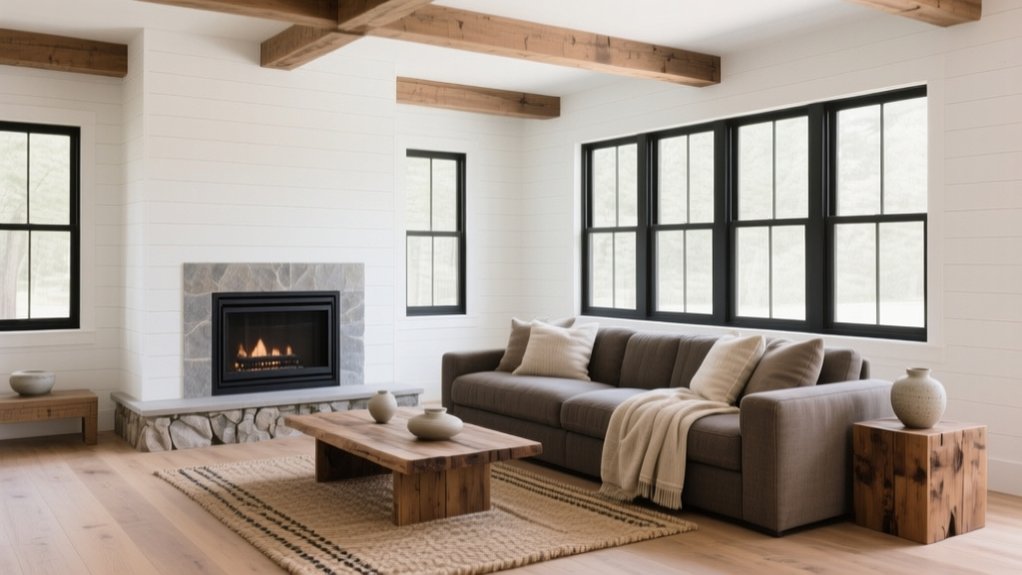

You get modern farmhouse right now by pairing clean-lined, properly scaled furniture with breathable, edited styling. Start with sunlit neutrals (white, greige, muted charcoal), then warm it up with white oak or reclaimed pine and a consistent finish like matte black or aged brass. Balance wood and stone (about 70/30), and layer linen, wool, and cotton for touchable comfort. Add warm 2700–3000K lighting and follow a one-in, one-out décor rule—next, you’ll see how to apply it room by room.
Key Takeaways
- Use a calm neutral base (white, greige, muted charcoal) and add restrained accents like sage, dusty blue, or clay in matte finishes.
- Balance rustic and refined: thick plank woods with Shaker or Parsons silhouettes, plus cool stone surfaces like limestone or honed marble.
- Layer tactile textiles—linen drapes, wool rugs, cotton throws, bouclé upholstery—to create warmth, comfort, and a lived-in feel.
- Keep décor curated and breathable with intentional vignettes, minimal vintage accents, and a one-in, one-out rule to prevent clutter.
- Upgrade lighting with industrial fixtures and layered task lights, using consistent 2700–3000K warmth and repeated finishes for whole-home cohesion.
Nail the Modern Farmhouse Look (Today’s Rules)
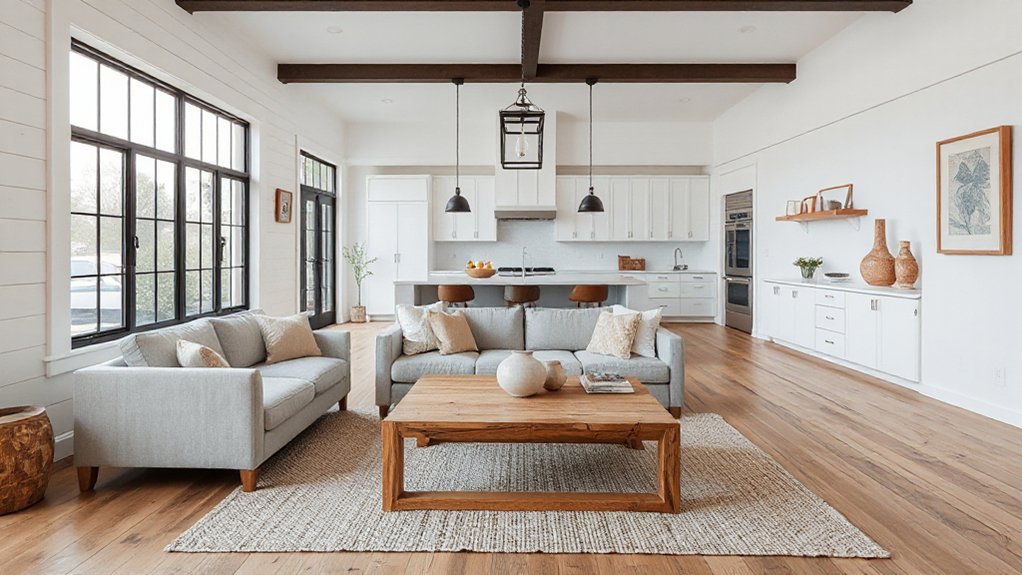
While the modern farmhouse aesthetic still leans on warmth and simplicity, today’s rules are sharper. You’ll skip themed overload and instead curate fewer, better pieces with purpose.
Anchor rooms with clean-lined furniture, then add texture through raw wood, linen, and matte metal finishes. Keep hardware and lighting consistent—think blackened steel or aged brass—so the space reads intentional, not patchwork.
You’ll use vintage accessories as accents, not clutter: a crock on a shelf, a worn tray on an ottoman, a single antique mirror. Treat rustic signage carefully; choose subtle typography, neutral backdrops, and one prime location rather than repeating quotes.
Finish with practical layering: woven baskets, structured pillows, and a restraint-first edit.
Build a Modern Farmhouse Color Palette
You’ll build a modern farmhouse color palette by starting with timeless neutrals—crisp whites, soft greiges, and muted charcoals—that keep every finish looking intentional.
Then you’ll layer in warmth with natural wood tones and metal accents like matte black, aged brass, or brushed nickel to add structure and contrast.
Finally, you’ll use accent colors with restraint—think dusty blue, sage, or clay—so the space feels current without turning busy.
Timeless Neutral Foundations
Because modern farmhouse style thrives on contrast and restraint, your palette needs a neutral foundation that feels calm, sunlit, and lived-in. Start with warm whites, creamy ivories, and soft greiges that read clean, not stark. Layer in muted stone, oatmeal, and pale clay to keep spaces grounded and forgiving under everyday wear.
Choose finishes with subtle undertones so adjacent rooms flow without looking monochrome. Use matte or eggshell on walls to diffuse light, then add a higher-sheen trim for crisp definition. Prioritize sustainable materials like low-VOC paint, limewash, and natural plaster for depth that still feels modern.
Let vintage accents—an aged mirror, enamelware, or faded textiles—introduce gentle patina without shifting the palette. Keep black and deep charcoal as sparing anchors, not dominant fields.
Warm Wood And Metals
Once your neutral base feels settled, warm wood and considered metals give modern farmhouse its character and edge. Reach for white oak, walnut, or reclaimed pine to layer tonal warmth without muddying your palette. Favor matte or wire-brushed finishes; they read current and hide wear, boosting rustic charm while staying refined.
Balance that softness with metals that feel intentional, not shiny. Choose blackened steel for lighting, hardware, and window muntins to introduce crisp structure and subtle industrial accents. Use brushed brass sparingly where you want warmth—cabinet pulls, faucet, or a single statement sconce—then echo it once more for cohesion.
Keep undertones consistent: pair honey woods with warmer metals, and cooler woods with pewter or aged nickel. Mix, but repeat.
Accent Colors With Restraint
After you’ve locked in your neutrals and natural materials, add accent color with a light hand so the space stays crisp, not country-cutesy.
Choose one or two Accent colors and repeat them with intention: a muted sage in textiles, a dusty navy in cabinetry, or an inky black in lighting. Keep saturation low and undertones consistent so your palette reads modern, not themed.
Use accents to create visual contrast where it matters—against warm oak, white paint, or matte metal—without competing with grain and patina.
Aim for a 70/20/10 balance: dominant neutral, supporting secondary, then restrained pop.
If you want trend-forward edge, try clay, oxblood, or smoked teal, but confine it to easily swapped pieces like pillows, art, and ceramics.
Layer Modern Farmhouse Wood, Stone, and Textiles
Once you’ve set your modern farmhouse color palette, you’ll anchor the room by balancing warm wood with cool stone so neither material overpowers the other. You can mix white oak or reclaimed pine with honed limestone or a matte slate surround to keep the look current and tactile.
Then you’ll soften the hard surfaces with cozy textile layers—linen drapes, a chunky wool rug, and cotton throws—so the space feels finished and livable.
Balance Wood And Stone
While modern farmhouse leans on natural materials, it only feels intentional when you balance warm wood with cool stone and soften both with textiles.
Start by choosing a dominant tone: honey oak, walnut, or reclaimed pine for warmth, then counter it with a matte limestone hearth, soapstone counters, or honed marble.
Keep finishes consistent—mixing too many sheens breaks the calm.
Aim for a 70/30 split: if your floors and beams read wood-heavy, specify stone in one anchoring surface, like the backsplash or fireplace surround.
If you’ve got prominent stone, streamline wood profiles and grain variation.
Let rustic charm come through in restrained knots and saw marks, and highlight natural textures with clean, modern edges and simple grout lines.
Add Cozy Textile Layers
Because wood and stone can read crisp and architectural in a modern farmhouse, you’ll want textile layers to bring back the lived-in warmth without adding visual noise. Start with a flatweave or vintage-style rug to soften hard surfaces, then stack a smaller hide or low-pile accent for depth.
Choose textile textures that contrast: nubby linen, chunky wool, brushed cotton, and subtle bouclé. Keep the palette tight—oat, charcoal, and clay—so the room feels edited.
Use layered fabrics on seating: a tailored slipcover, a lumbar pillow in a tight stripe, and a throw with a clean fringe. Finish with window panels in relaxed linen to diffuse light and quiet echoes, especially in open-plan rooms.
Choose Modern Farmhouse Furniture (Scale + Silhouettes)
If you want modern farmhouse to feel intentional instead of theme-y, start with furniture that nails scale and clean, updated silhouettes. Prioritize scale harmony: anchor the room with a properly sized sofa, then balance it with substantial side tables and a coffee table that’s two-thirds the sofa length. Keep walkways clear so pieces don’t feel crammed.
For silhouette simplicity, choose streamlined slipcovered seating, Parsons-style tables, and Shaker or flat-panel casegoods over ornate legs and heavy carving. Mix one rustic element, like a thick plank top, with refined profiles to avoid looking costume-like.
Opt for warm woods, matte finishes, and performance fabrics that read relaxed but tailored. Finally, repeat shapes—rectangles, soft curves, or clean cylinders—to make the layout feel cohesive.
Update the Look With Lighting and Black Metal
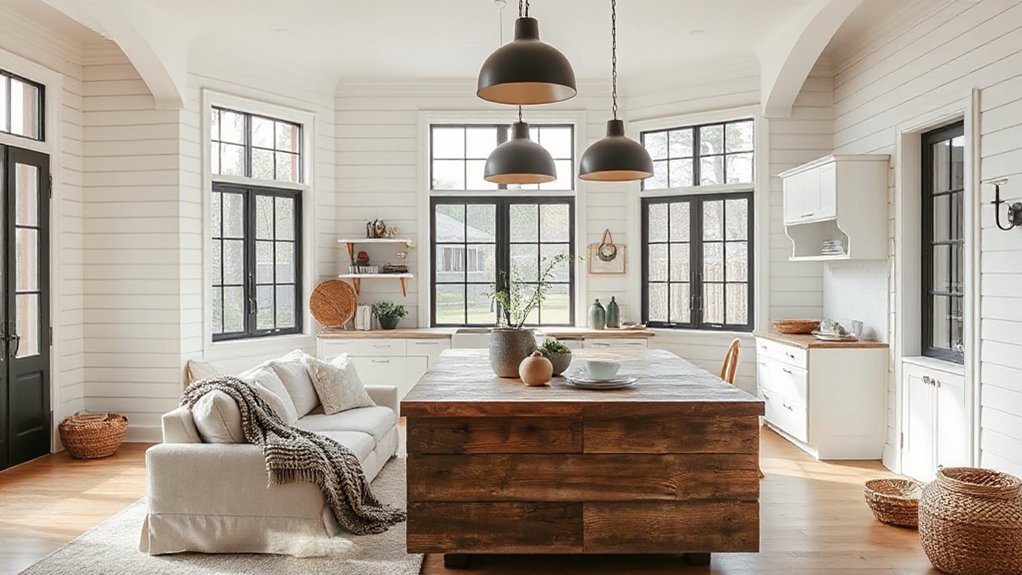
Once you’ve nailed the right furniture scale and clean silhouettes, lighting and black metal do the heavy lifting to modernize the farmhouse mix.
Start overhead: swap dated lanterns for Industrial lighting with crisp geometry—linear chandeliers, cone pendants, or exposed-bulb fixtures with matte finishes. Keep your Kelvin temperature consistent (2700–3000K) so warm woods still read inviting, not yellow.
Layer in task lighting to sharpen function: a swing-arm sconce by the bed, a slim floor lamp at the sofa, or under-cabinet LEDs in the kitchen.
Then thread Black metal accents through the room for continuity—cabinet pulls, faucet, curtain rods, and chair frames. Choose one finish family (matte black or blackened steel) and repeat it at least three times for intentional, contemporary contrast.
Style Modern Farmhouse Decor With One “Edit” Rule
While modern farmhouse thrives on warmth and character, it falls apart the moment you let “cute” clutter take over—so use one edit rule: for every new decor piece you bring in, remove or relocate one existing item. This keeps your vignettes intentional and your surfaces breathable, which is the current antidote to over-styled shelves.
Start with high-visibility zones: coffee tables, mantels, open shelving. If you add a crock, pull a small sign; if you buy a throw, retire a pillow.
Aim for a tight mix of texture and patina—Rustic charm through worn wood, stoneware, and linen; Vintage accents through one or two aged brass pieces, not a dozen. You’ll maintain contrast, reduce visual noise, and let architectural details lead.
Use a Room-by-Room Modern Farmhouse Blueprint
Keep that one-in, one-out edit rule, then apply it with a room-by-room blueprint so modern farmhouse feels consistent instead of collected at random.
Start in the entry: anchor with a matte-black hook rail and a slim oak bench, then add one piece of Rustic charm, like a worn runner.
In the living room, balance clean-lined seating with Vintage accents—a single patinated mirror or antique frame—so contrast feels curated.
In the kitchen, keep counters spare, choose warm metals, and let texture carry the story: oak, linen, stoneware.
In bedrooms, prioritize calm layers: crisp cotton, a quilt, and one reclaimed-wood nightstand.
Use this checklist to stay on trend and disciplined:
- Repeat one finish in every room
- Limit “statement” pieces to one per space
- Edit seasonal décor monthly
Frequently Asked Questions
How Do I Blend Modern Farmhouse With an Existing Mid-Century Home?
Blend modern farmhouse into your mid-century home by keeping clean lines, adding vintage accents, and choosing rustic lighting in warm metals. You’ll balance walnut tones with painted cabinetry, layered textiles, and streamlined hardware.
What’s the Average Cost to Remodel in Modern Farmhouse Style?
You’ll typically spend $100–$250 per square foot for a modern farmhouse remodel, depending on finishes. Rustic elegance, Vintage accents, custom millwork, and plumbing fixture upgrades raise budgets; paint, lighting swaps, and refinishing keep costs lower.
Which Modern Farmhouse Elements Hurt Resale Value or Feel Dated Quickly?
You’ll hurt resale when you overdo Overused shiplap, ultra-high-contrast black-and-white palettes, barn doors replacing solid doors, and cheap Vintage fixtures. You’ll date fast with faux-distressed finishes, farmhouse-word signage, and overly rustic lighting.
How Do I Modern Farmhouse-Style a Small Apartment Without Renovations?
You’ll hit the ground running by layering Vintage textiles, adding Rustic accessories, and swapping in black metal lighting. Choose warm neutrals, simple wood furniture, woven baskets, and framed botanicals; skip word art, lean on texture.
What Are the Best Eco-Friendly Materials for Modern Farmhouse Interiors?
Choose FSC-certified wood, reclaimed timber, low-VOC paints, clay plaster, and recycled metal. Prioritize sustainable flooring like cork or bamboo, and natural fiber textiles—organic cotton, linen, wool, jute. You’ll cut toxins, add warmth.
Conclusion
You’ve built a modern farmhouse that works like a well-hung barn door: it slides effortlessly between warmth and edge. Keep your palette grounded in soft neutrals, then sharpen it with black metal and clean-lined lighting. Let wood grain and stone be your “roots,” and textiles your “harvest,” adding comfort without clutter. Size furniture to the room, edit decor ruthlessly, and follow your blueprint—each space stays intentional, current, and calm.