


You can add built‑in storage to a bungalow by mapping your space for flow, then prioritizing vertical, modular cabinetry that hugs walls and corners. Choose durable finishes that age gracefully, hide clutter with clever compartments, and target low‑maintenance materials that blend with your interior. Start small with nooks, alcoves, and under‑bed options, then plan budget‑friendly installations that preserve your home’s character. The result should feel seamless and spacious, inviting one more practical tweak as you move forward.
Key Takeaways
- Map current clutter and traffic flow to identify high-priority locations for built-in storage in a bungalow.
- Design with vertical, modular components that maximize small spaces while aligning with existing architecture.
- Choose timeless finishes (matte, patina-ready) and durable materials (stone, porcelain) for longevity.
- Favor ready-made, modular systems with soft-close hardware to minimize disruption and cost.
- Plan for ventilation, accessibility, and adaptable zones to support evolving needs and routines.
Assess Your Bungalow for Built‑In Storage
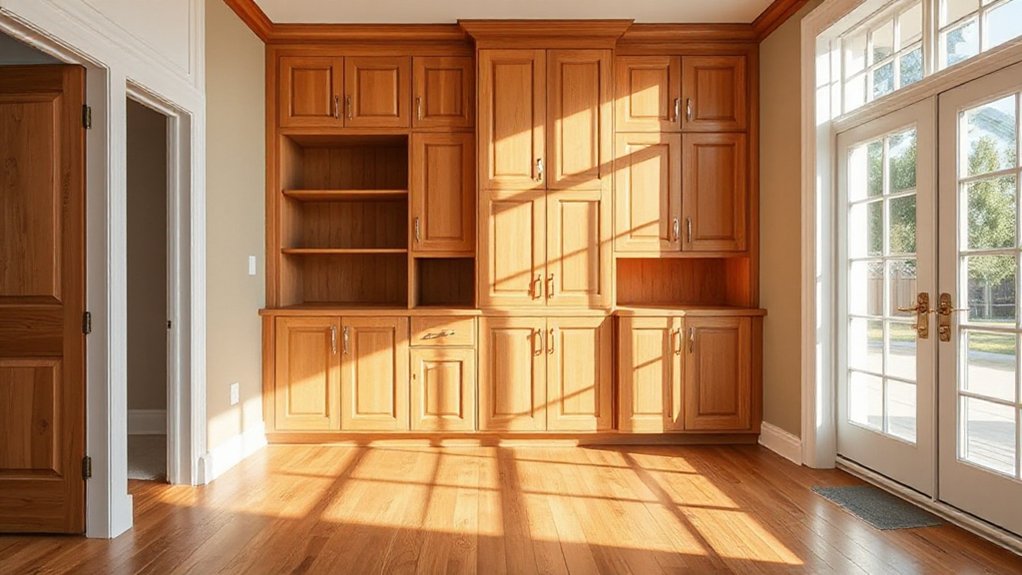
You map function to form, listing current clutter, traffic flow, and underutilized wall space. Call out patterns: doors, corners, alcoves, and ceilings that invite cabinetry or shelving.
Then sketch a vision, prioritizing rooms where storage solves the most friction or supports new routines.
Consider architectural styles and how they guide proportions, materials, and detailing.
Check building codes for limits on height, reach, and ventilation so ideas stay feasible.
From this, create a short scoring system to rank priorities.
The result guides your design brief, aligning storage potential with practical, long-term living goals.
Choose Materials That Age Gracefully
You’ll choose timeless materials that stand up to everyday use, so your built-ins feel intentional from day one.
Let patina develop gracefully, adding character without looking worn, so the pieces age with your bungalow’s story.
Favor low-maintenance picks that stay beautiful with less upkeep, keeping storage practical today and enduring tomorrow.
Use Timeless Materials
Choosing timeless materials means picking finishes that age gracefully and stay relevant as your bungalow evolves. You’ll pair durable, low-maintenance options with a clean, understated look that never dates. Think subtle textures, natural hues, and honest finishes that age with character.
Use materials that harmonize with modern technology and contemporary design, so built-ins feel integrated, not gimmicky.
- Select hardwoods with UV protection and a matte finish for warmth that lasts.
- Choose stone, porcelain, or ceramic for surfaces that resist wear and simplify maintenance.
- Opt for metal accents and concealed hardware to keep lines crisp and timeless.
This approach yields flexible storage that adapts, remains legible, and props up a coherent, future-ready aesthetic.
Patina Over Time
You don’t chase pristine; you curate character, letting scratches, slabs, and grain tell a story. When choosing, consider how modern technology can support longevity—self-healing coatings, UV-stable laminates, and breathable wood veneers reduce unwanted wear while preserving form.
In contemporary design, contrast matte and satin textures to emphasize aging without looking careless. Plan storage modules that accommodate expansion, moisture, and humidity shifts so patina happens evenly.
Your bungalow becomes purposeful, beautiful, and resilient—glimpses of the past informing a practical, future-ready living space.
Low Maintenance Picks
- Use low-maintenance surfaces: quartz countertops, solid-surface panels, and powder-coated metal accents.
- Favor durable frames: plywood cores with real veneer or high-quality laminates, reinforced joints, and minimal seams.
- Integrate practical hardware: soft-close drawers, magnetic catches, and easy-to-clean glass or acrylic panels.
This approach complements modern shelving and sleek cabinets, creating a cohesive, future-ready bungalow.
You’ll enjoy organized failure-free spaces that age with you, not against you.
Maximize Small Spaces With Built‑In Cabinetry
Plan vertical stacks that reach the ceiling for extra storage, while keeping countertops clear for daily tasks. Choose modular components you can reconfigure over time, guarding against clutter with defined zones: daily essentials, seasonal items, and every‑day tools.
Integrate modern appliances within cabinetry to preserve sightlines, and use pull‑out trays for easy access without bulk.
Embrace smart storage: labeled bins, chemise‑sleek baskets, and door‑within‑door solutions to maximize every square inch. The result is a calm, efficient living space that feels larger and more intentional.
Nook and Shelf Ideas for Vintage Charm
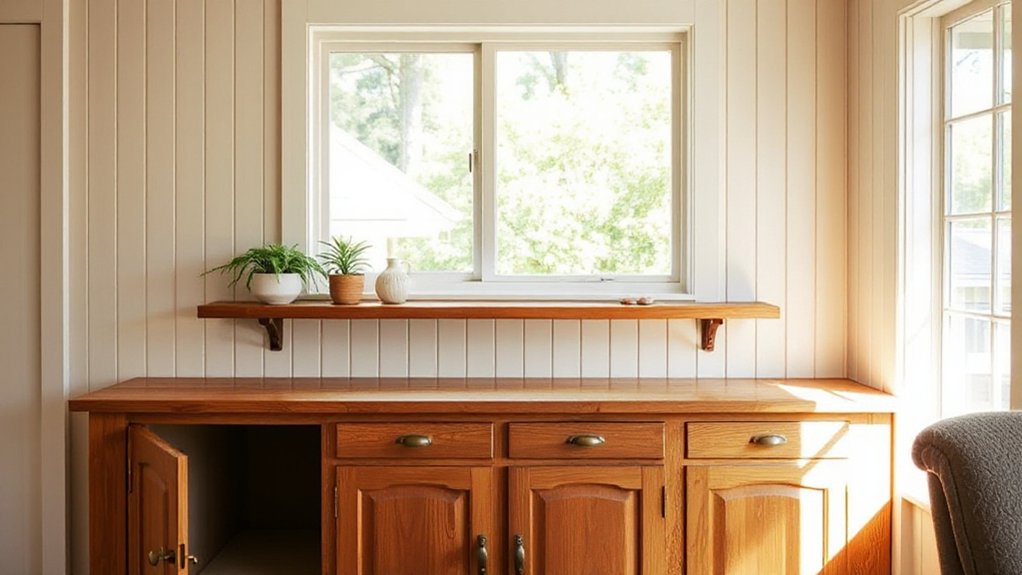
You can craft vintage charm by pairing corner shelves with graceful, wood-grain details that echo era styles. Consider hidden nook storage that blends hidden compartments with display space, so every inch serves a purpose.
Reclaimed wood accents and grain patterns create a cohesive, timeless feel while keeping your shelves practical and visually inviting.
Vintage-Inspired Corner Shelves
- Place slim, floating units in corners you use daily to keep essentials accessible yet unobtrusive.
- Layer items by height and texture—vintage glass, brass accents, and pressed flowers—for that Vintage charm without clutter.
- Use labeled baskets or trays at the lower shelves to contain odds and ends, maintaining clean lines and shelf styling.
These shelves work as visual anchors in living spaces, kitchens, or hallways, delivering practical storage with a visionary touch.
Hidden Nook Storage Ideas
Hidden nooks deserve smart, stylish storage that disappears into the room yet stays within easy reach. You’ll transform tight corners with built-in benches that pull up, revealing hidden compartments for linens, chargers, or seasonal decor.
Think shallow drawers under window seats, lined with felt to protect valuables, and lift-lid bins that tuck beneath upholstery for quick-access storage.
Use slim shelves behind crown molding to hold manuals or obscure cords, keeping surfaces uncluttered.
Integrate secret drawers into cabinetry by routing tiny finger pulls into the grain, so they stay discreet.
For a timeless touch, match finishes to existing wood tones and balance with lightly glazed hardware.
The result is practical, precise, and visually expansive, delivering vintage charm without sacrificing modern organization.
Reclaimed Wood Display Grains
Crisp, reclaimed wood grain brings warmth and character to nooks and shelves, turning practical storage into display-worthy architecture. You’ll layer texture with display grains that catch light and draw the eye, blending vintage charm with modern function.
- Select reclaimed wood boards with varied grain patterns to establish visual rhythm.
- Install shelves at mixed heights to showcase items and create dynamic display lines.
- Treat surfaces with matte finish to preserve authenticity while resisting wear.
Keep the focus on quality over quantity; a few bold grains anchor the space. Use these grains strategically to emphasize architectural features—corners, edges, and trim—so storage becomes a curated gallery.
The result is practical, precise, and visionary: your bungalow gains character, and storage doubles as conversation-worthy display. reclaimed wood, display grains.
Store Under Beds and in Alcoves
Sure. You’ll maximize square footage by honoring existing architecture: store under beds and in alcoves with purpose. Choose low-profile containers that glide, not topple, and opt for clear or labeled bins so you see contents at a glance.
Under bed storage works best with shallow drawers or rolling bins that slide out smoothly on a smooth floor surface. In alcoves, install recessed shelving or custom pull-out organizers that align with baseboard height for seamless integration.
Use uniform bins to reduce visual clutter and keep aisles clear. Prioritize accessibility over capacity; rotate seasonal items to the front.
With thoughtful placement, you gain hidden space without compromising daylight, flow, or wall display. This approach blends practicality with a quietly ambitious, built-in vision.
Optimize Closets for a Single‑Story Home
Why not tailor closet layouts to the flow of a single-story home and gain instant organization? In this setup, you align hang rails, shelves, and bins to high-traffic areas, creating a smooth, one-way drop-through from entry to bedrooms.
Prioritize shallow depths for easy visibility and quick access, and add labeled zones for seasonal gear.
- Optimize reach by grouping found items in clearly defined compartments
- Use tall, slim towers for vertical storage and clear doors for quick scanning
- Integrate low, pull-out bins for slippers, hats, or small accessories
Think beyond clothes: indoor gardening supplies stow neatly near windows, while exterior landscaping tools hide behind labeled doors. This approach keeps living spaces cohesive and ready for daily movement.
Plan a Budget‑Friendly, Low‑Renovation Install
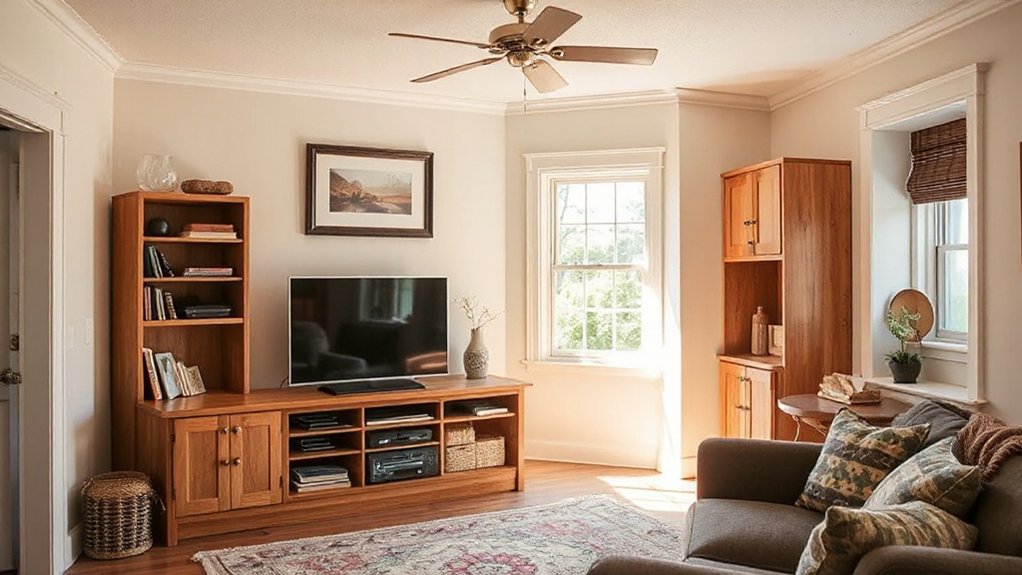
As you plan built-in storage for a bungalow, keep costs and disruption low by choosing ready-made, versatile components and simple mounting methods. Start with modular systems that fit existing walls and ceilings, avoiding custom carpentry wherever possible.
Prioritize components that support modern appliances and compact, efficient layouts, so you gain usable space without invasive wiring or plumbing changes. Select adjustable shelves, pull-out baskets, and magnetic tracks for flexible configuration as needs evolve.
Opt for energy-efficient materials and finishes to reduce long-term costs and maintenance. Plan a shallow, high-utility pantry or wardrobe with passive ventilation to prevent moisture issues.
Use paint and hardware in cohesive tones to create a cohesive, timeless look. With smart planning, you’ll achieve functional storage that feels expansive rather than intrusive.
Frequently Asked Questions
How Do I Measure for Built‑In Storage Accurately?
You measure for built‑in storage by taking precise, on‑site dimensions only, then subtracting hinges, trim, and clearance for doors. Start with wall-to-wall length, ceiling height, and floor level.
Note alcoves, baseboard thickness, and HVAC obstructions. Use a laser or steel tape for accuracy, and add a 1/8–1/4 inch buffer per joint.
Plan for custom shelving and storage compartment design that adapts to varying depths and angles, maximizing function and visual flow.
What Building Codes Affect Bungalow Storage Projects?
Building codes affecting bungalow storage projects vary by location, but you’ll typically face structural, fire, egress, and electrical guidelines. Check setbacks for closets, ceiling height, and ventilation.
Make certain smoke alarms and fire-rated materials meet local standards. For Garage organization and Custom shelving, confirm load limits, anchoring methods, and moisture control.
You’ll also need permit approvals and inspections. Plan with code-compliant, sustainable choices so your vision stays practical, precise, and safely realizable.
Which Finishes Resist Wear in High-Use Areas?
When you want longevity, select durable finishes like satin enamel or polyurethane topcoats that resist wear in high-use areas.
You’ll prefer decorative hardware forged for daily life, not show.
Use hard-wearing materials and finishing techniques that seal against scuffs, fingerprints, and moisture.
You’ll maintain beauty with routine cleaning and proper sanding between coats.
This practical, visionary approach keeps your bungalow looking sharp, while your decorative hardware elevates every functional moment.
Can I Retrofit Wiring or Lighting Into Built‑Ins?
Yes, you can retrofit wiring or lighting into built‑ins. Start with a plan for custom lighting and wiring integration, outlining outlets, switches, and low‑voltage runs.
Use a licensed electrician to guarantee code compliance and safe routing behind panels. Choose discreet fixtures, dimmable LEDs, and battery backups where needed.
Pre‑wire during construction or remodel, leaving access panels. You’ll gain flexible illumination, accent highlights, and practical power, all while preserving your built‑in’s clean, cohesive look.
How Do I Plan Flexible Storage for Future Needs?
You plan flexible storage by prioritizing modular furniture and multi purpose solutions you can reconfigure as needs shift. Start with a scalable framework: adjustable shelves, drawers, and hidden compartments that slide or fold away.
Choose modular pieces that combine into desks, wardrobes, or media walls. Leave space for future tech and seasonal gear.
Label zones clearly, favor clear bins, and design open runs for expansion. You’ll stay practical, visionary, and ready for evolving storage needs.
Conclusion
Think of your bungalow as a quiet ship, and built‑ins as ballast that steadies the voyage. When you add shelves where walls end and floors begin, you’re charting a kinder course for daily life—less clutter, more purpose. Each cabinet is a compass, each nook a harbor. With durable finishes aging gracefully, your interiors become a timeless map you can trust. Sail forward with simple, smart storage, and your home will stay buoyant, efficient, and endlessly inviting.


