
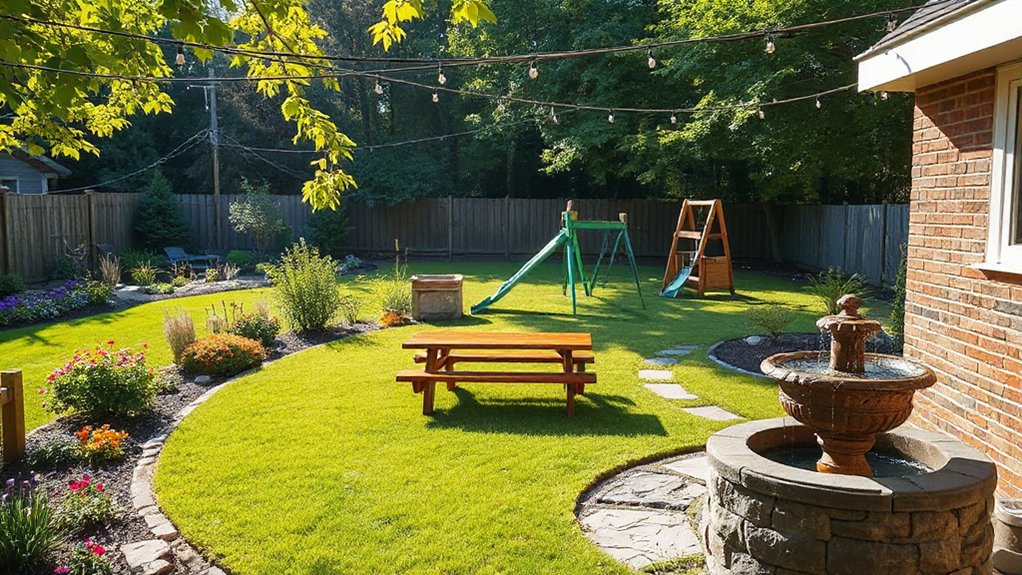

You might stumble on a coincidence: a yard that’s both kid-friendly and low-maintenance is within reach if you map zones, choose durable materials, and plan shaded, slip-free gathering spaces. You’ll want smart storage and weatherproof bins, soft ground covers, and secure fencing, plus lighting that’s functional yet welcoming. As you balance safety with play and relaxation, practical choices will shape how you use every corner—and why you’ll want to keep refining the plan. Let’s start with the essentials.
Key Takeaways
- Plan a zone system separating play, rest, and passive use areas for clear activity boundaries and safety.
- Choose durable, low-maintenance, non-slip materials with modular options for easy replacement.
- Organize storage with vertical bins and clearly defined zones to keep toys and gear accessible yet tidy.
- Prioritize shaded rest spaces, hydration points, and soft ground cover to protect kids during outdoor time.
- Use layered lighting, color-safe furniture, and drought-tolerant plants to extend usability from day to night.
Plan a Safe, Kid‑Friendly Yard in 5 Steps
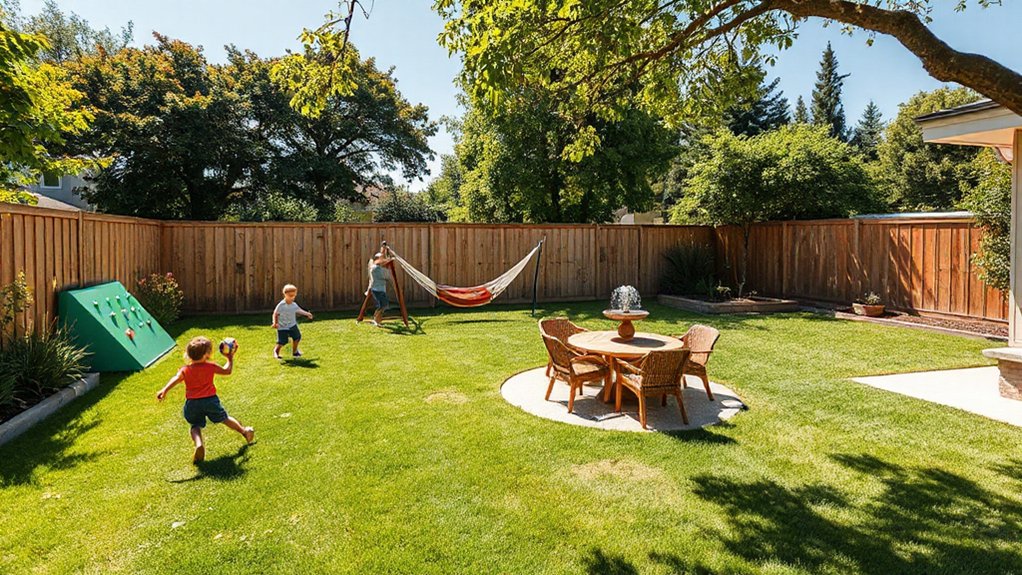
Start by outlining a zone system that separates play, rest, and passive use, so you and your kids know where to go for each activity. You design a clear workflow: define a main play area, a shaded rest zone, and a passive edge for observation and storage.
Prioritize sightlines from the house and paths that minimize trip hazards. For Garden safety, choose non-slip surfaces, secure fencing, and tool storage that’s out of reach. Use durable, smooth edges and low-pivot features to reduce injury risk near equipment.
Implement shade structures and hydration points to maintain comfort. Plan for Play area design with soft ground cover, age-appropriate equipment, and clearly marked boundaries.
Document guidelines and supervision duties to preserve safety through every outdoor session.
Pick Durable, Low‑Maintenance Materials That Last
When selecting materials for a family-friendly yard, prioritize durability and low maintenance to keep upkeep minimal and safety high. You should choose surfaces and components with proven material durability, resisting wear from foot traffic, weather, and spills. Favor sealed or treated options that reduce staining and moisture intrusion, and select non-slip finishes for safety around play zones.
Consider modular systems that can be replaced in sections, limiting disruption and cost. For edging, use solid, rot-resistant materials to prevent weed growth and trip hazards. Implement maintenance tips like periodic cleaning, resealing, and joint inspection to extend life.
Balance cost with life expectancy and warranty terms, and document care routines for quick reference. This approach keeps yards vibrant, functional, and safe for kids.
Create Smart Storage and Distinct Outdoor Zones
Smart storage and clearly defined outdoor zones keep a family-friendly yard organized, safe, and ready for play, work, and relaxation. You design with purpose: allocate a garden furniture zone for seating, shade, and weather protection, and a prep area for tools and cleanup to minimize trips indoors.
Use vertical storage solutions and weatherproof bins to keep toys, sports gear, and seasonal accessories neatly contained, reducing clutter and trip hazards. Define zones with durable edging, contrasting surfaces, or planters to guide traffic and separate activities without walls.
Incorporate outdoor entertainment thoughtfully—secure audio, water features, or lighting—so social spaces stay usable after dark. Label storage access for quick, independent use, ensuring supervision-friendly layouts that adapt to growing family needs.
Budget Wins: Quick, Big‑Impact Upgrades
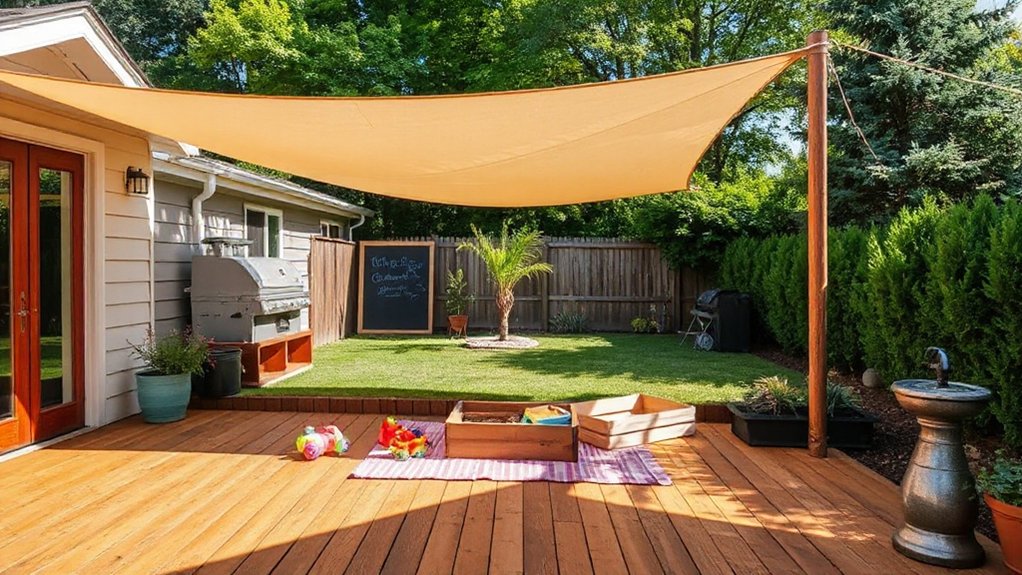
Budget wins start with targeted, high-impact upgrades that deliver noticeable results without a big price tag. You’ll prioritize durable, low-maintenance elements that sharpen landscape design and expand outdoor entertainment value.
Begin with a clear backbone: a defined, multi-use core area that blends play, dining, and relaxation. Solar lighting, weatherproof furniture, and smart irrigation compress costs while boosting usability.
Choose modular, scalable materials—slate pavers, composite decking, or ground-level stepping stones—that simplify installation and future updates.
Install a simple drainage plan to prevent erosion and mud after rain events, protecting play zones and gardens.
Reclaim unused edges with native plantings to reduce upkeep while adding visual structure.
Finally, align budget choices with long-term durability to maximize return on investment and safety.
Color, Lighting & Nature Access for Cozy Outdoor Living
Color and lighting set the mood for cozy outdoor living, while easy-access nature elements reinforce a tranquil, inviting backdrop. You choose color palettes that resist fading and match your existing exterior tones, then layer lighting to extend usability after sundown.
Begin with task lighting for paths and dining areas, add ambient fixtures along eaves, and incorporate dimmers to modulate intensity without glare.
Nature access should be practical: bring in hardy, drought-tolerant plants in containers for flexibility, and guarantee view corridors to yards or gardens.
Integrate garden art and outdoor furniture as focal points that anchor seating zones.
Maintain contrast between shaded and sunny spots to support children’s play and adults’ relaxation.
Prioritize simple maintenance, weather protection, and safe wiring for long‑lasting comfort.
Frequently Asked Questions
How Can I Involve Kids in the Design Process?
You can involve kids in the design process by giving them clear roles and hands-on tasks. Let them choose garden decor themes, sketch scaled ideas, and help select plantings.
Use age-appropriate steps: younger kids brainstorm motifs, older ones draft layouts.
Collaborate on outdoor lighting placements to guarantee safety and ambiance.
Document decisions, adjust together, and celebrate milestones.
This approach boosts ownership, while you guide with practical constraints and measurements.
What Safety Features Are Best for Sloped Yards?
You should prioritise sturdy handrails and non-slip surfaces for slope safety. You’ll reassure hesitant kids by detailing garden lighting along steps and pathways, plus clear drainage solutions to prevent puddling.
Install gradual changes, secure edging, and proper mulch to reduce slips. Use low-voltage lighting for visibility at dusk, and maintain a defined play area away from steep drops.
Regular checks and signage complete the safety plan, keeping everyone confident and protected.
How Do I Build a Pet-Friendly Outdoor Space?
You should design a pet-friendly outdoor space by zoning for safety, comfort, and easy cleanup. Install resilient garden lighting along paths and entry points to deter escapes and enhance visibility at night.
Choose outdoor furniture with pet-safe finishes and sturdy construction. Place raised, chew-resistant feeding stations away from play zones.
Use durable, non-slip surfaces and accessible trash/release bins. Add shaded turf or ground cover, plus a dedicated digging area to channel energy away from plantings.
Which Plants Are Non-Toxic for Children and Pets?
Many common plants are toxic; you should choose safe options first. For example, a grandma’s garden anecdote teaches caution: one nibble can trigger reactions, so you’ll prioritize non-toxic plant selection.
For garden maintenance, stick to labeled, pet- and child-safe varieties like bamboo, spider plant, and Boston fern.
Plant selection focuses on low-odor, non-stinging species, avoiding caladiums and oleanders.
Keep mulch and tools out of reach to guarantee safe, practical garden maintenance.
How Can Outdoor Spaces Be Accessible for All Ages?
You design outdoor spaces so everyone can enjoy them safely, across ages and abilities. Use accessible paths with gentle slopes, non-slip surfaces, and wide entryways.
Install garden lighting along walkways and step edges for visibility, and place outdoor furniture at varied heights for seating flexibility.
Include reachable storage and a shaded, quiet zone.
Choose durable, low-maintenance materials and guarantee grips on rails.
Plan for rotation of activities to keep engagement high for all family members.
Conclusion
You’ll notice how the yard aligns with your family rhythms—play, rest, and easy cleanup—almost by coincidence, like the fence lining up with the gate on cue. As you plan zones, shade, and storage, durability quietly supports every burst of laughter and late-night sips. When a weatherproof bin appears where you need it, you’ll smile: practicality met with comfort, safety, and color. Your outdoor space becomes a seamless extension of home, inviting, organized, and truly lived in.


