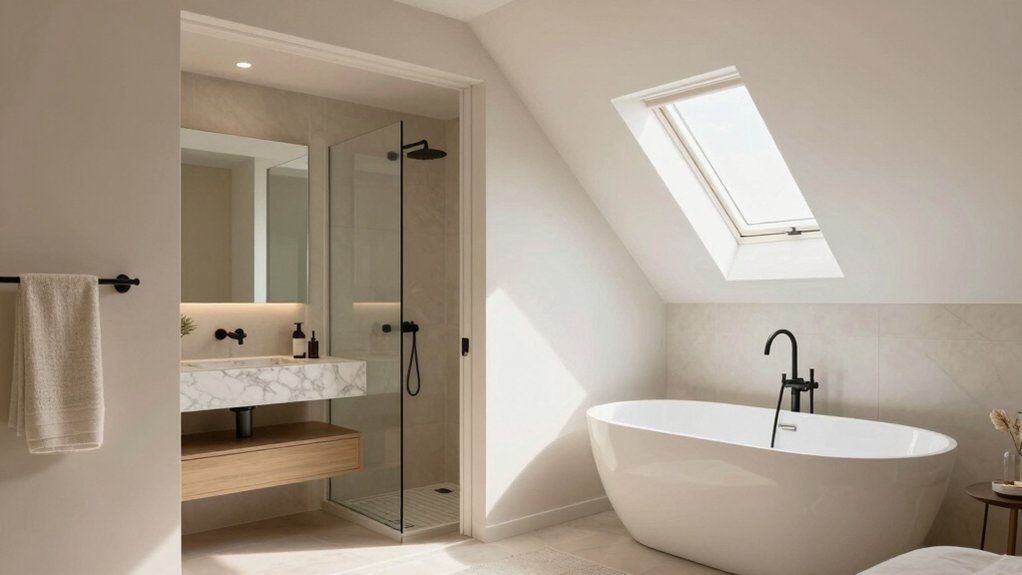

Think of your bedroom ensuite like a well-tuned machine: a 12×12 room can feel as spacious as a 15×15 with clever zoning and pocket doors. You’ll balance sleep, shower, and storage with measured layouts, from corner vanities to modular enclosures, so every square foot earns its keep. Large suites benefit from open wet zones, while smaller spaces gain from folding fixtures and smart lighting. The next step unblocks options that fit your space—and your budget—without sacrificing style or flow.
Maximizing Space With Pocket Doors
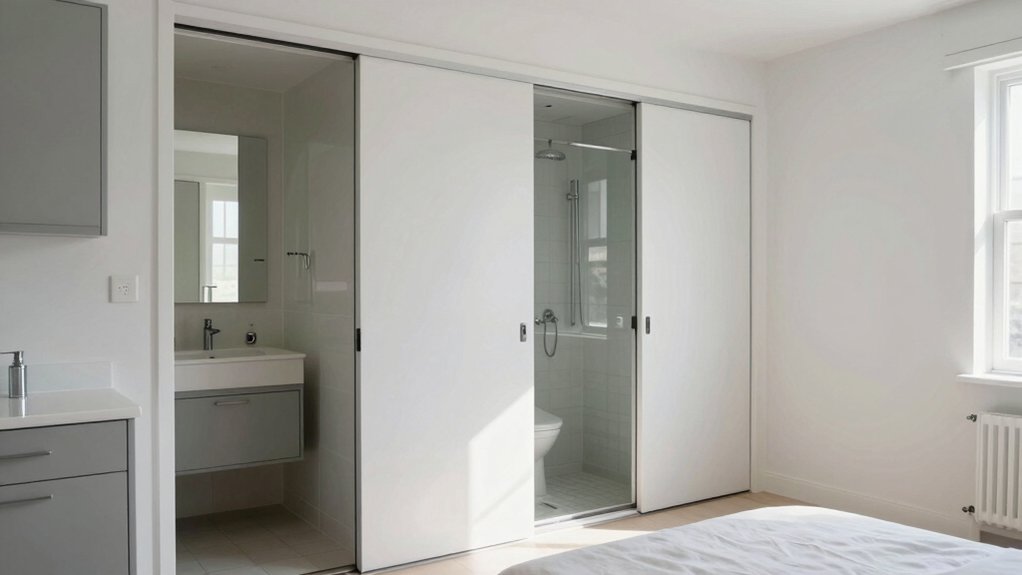
Pocket doors are a smart, space-saving choice for bedroom en-suites. You’ll gain floor area without bulky swing paths, making your layout feel larger and more fluid.
Install a pocket door with a high-quality track and solid panel to minimize gaps and keep noise out, improving privacy. In compact spaces, choose recessed handles and door finishes that blend with surrounding walls to maintain a seamless look.
For lighting design, position fixtures to illuminate both sides of the doorway, preventing dark corners as you open or close the door.
Color schemes matter: light, cohesive tones reflect more light and visually widen the room, while subtle contrast accents add depth. This approach delivers practical separation without sacrificing layout efficiency.
Zoning 101: Sleep, Shower, and Storage
To create an efficient bedroom ensuite, start by clearly delineating zones for sleep, shower, and storage. You’ll maximize flow by aligning these areas with doorways and natural sightlines, avoiding overlap that disrupts function.
Sleep zones benefit from soft lighting design and muted color schemes, which promote rest without encroaching on the wet or closet areas.
Shower zones should be watertight and separated with a glazing wall or curtain that still preserves openness.
Storage zones must be accessible yet visually restrained to reduce clutter—think recessed niches, tall wardrobes, and under-bench drawers.
Use contrasting finishes sparingly to cue progressions, not overwhelm them.
Plan lighting layers—ambient, task, and accent—to reinforce zones, while color schemes maintain cohesion across spaces.
Finally, verify that ventilation and moisture controls support each defined zone.
Corner Vanities for Small Footprints
Corner vanities can dramatically boost efficiency in tight bathrooms by aligning function with footprint. In small bedrooms ensuites, you’ll gain width where it matters by placing a compact, corner-centric unit that minimizes intrusion. Choose a shallow depth and a single‑drawer configuration to maintain flow toward the door and shower.
Vanity placement should prioritize symmetry with doors and mirrors, so you don’t disrupt circulation or visual balance. Opt for a corner sink and a slim, wall‑hung cabinet to preserve floor space and create under‑sink storage.
Lighting considerations matter: install layered lighting at eye level and above the mirror to reduce shadows and improve grooming accuracy. Keep outlets above the vanity for practical use without clutter.
Open Plan Wet Rooms: Pros and Cons
Open plan wet rooms offer a sleek, unified bathroom feel but require deliberate planning to avoid moisture, noise, and circulation issues.
You’ll gain visual space and a modern vibe, yet you must manage splash zones, drainage, and ventilation to prevent mold and humidity creep into adjoining bedrooms. Design cues like matched flooring, recessed shower niches, and discreet drainage keep edges calm and reduce trip risks.
Soundproofing is essential when the wet area adjoins sleeping zones; specify solid partitions or acoustic doors to preserve privacy. For a luxury spa feel, integrate high-quality fixtures, underfloor heating, and proper sealing.
If vintage charm matters, balance timeless hardware with contemporary drains and tiling. Budget for professional waterproofing and a smart ventilation plan to sustain long-term durability.
Sliding Wall Solutions for Flexible Layouts
Sliding wall systems let you tailor bedroom ensuite layouts on the fly, balancing privacy with openness without sacrificing aesthetics. You gain instant adaptability: rooms feel larger when opened, and truly intimate when closed.
Start with track-mounted panels or folding components that minimize intrusion while maximizing height clearance. Choose materials and hardware that resist humidity and match interior finishes to keep a cohesive look.
For a practical flow, position panels to create a flexible corridor, wardrobe alcove, or shower annex without permanent partitions. Consider acoustic seals and soft-close mechanisms to reduce noise and prevent slamming.
Implement a simple color story and consistent hardware to maintain perceived space. Use sliding wall ideas and flexible room dividers to validate reuse of space, efficiency, and evolving needs.
Light and Privacy: Glass Partitions and Screens
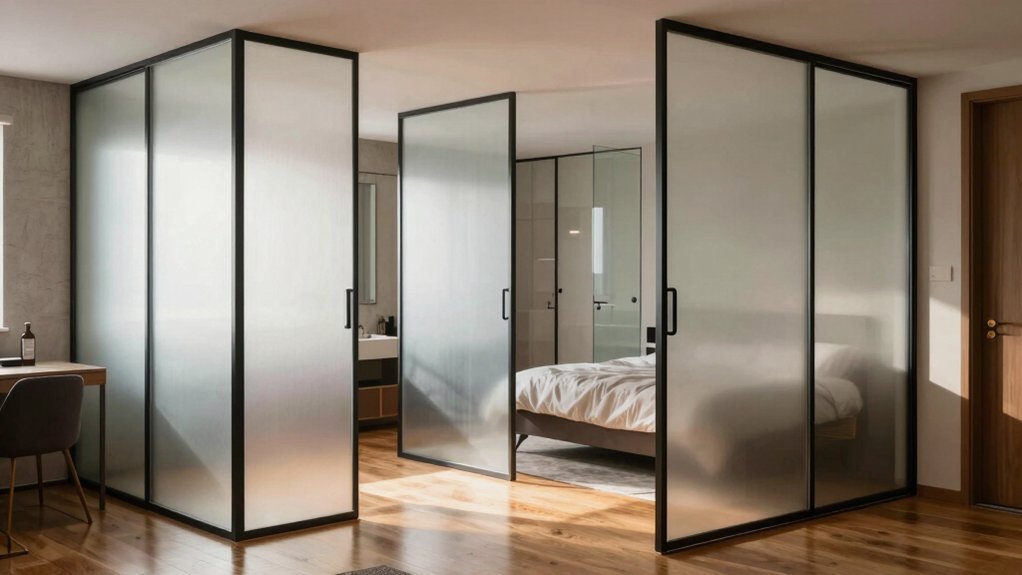
Glass partition options let you control light flow without sacrificing space, while screens add adjustable privacy where you need it most. Consider frameless or slim-profile panels for a seamless look, and pair with frosted or patterned glass to balance brightness and confidentiality.
Glass Partition Options
Glass partitions offer a flexible way to separate a bedroom and ensuite without sacrificing light or style. Choose between translucent, frosted, or clear panels to balance openness with privacy.
You gain visual connection while containing moisture and noise, which is essential for a compact footprint. Consider tempered or laminated glass for safety and durability, with optional UV coatings to prevent glare.
Framing matters: slim metal or minimal timber profiles reduce bulk and maintain airiness. For privacy screens, pair fixed panels with movable screens or sliding doors to adapt to daily needs.
Integrate built-in shelves or vanity reflections behind glass to maximize perceived space.
Finally, coordinate with hardware finishes and door swings to ensure seamless operation and a consistent design language.
Privacy With Screens
Screens offer a practical balance of light and privacy by letting you tailor visibility with movable or adjustable panels. When you choose privacy screens, you gain flexible zones without committing to solid walls, preserving airflow and depth perception.
Consider height, opacity, and material to match your space and light level; frosted or tinted panels reduce glare while maintaining a sense of openness. Use visual barriers to delineate wet zones, dressing areas, or dressing tables without creating visual heaviness.
Mounts should be easily retractable or portable for seasonal shifts or cleaning access. Pair screens with soft, diffuse lighting to enhance privacy without sacrificing ambiance.
In tight rooms, opt for slim profiles and clear or translucent frames to minimize perceived bulk while delivering effective privacy screens.
Compact Ensuite for Studio Apartments
A compact ensuite for studio apartments demands smart zoning and space-efficient fixtures that still feel separate from the living area. You’ll want a clear dry zone using partial screens or a glass partition to preserve light while defining boundaries.
Choose compact fixtures: a corner shower, a wall-hung toilet, and a slim vanity to maximize floor space without sacrificing function. Use vertical storage to keep counters clutter-free, and install recessed shelves in the shower for essentials.
Prioritize moisture management with proper ventilation and a low-profile door. For aesthetics, opt for luxury fixtures and cohesive color schemes that visually unify the space, making it feel bigger.
Plan lighting that layers task and ambient tones, enhancing perception of depth and function without crowding the room.
Walk-In Closets and Dressing Nooks Integrated
Integrate your wardrobe with a seamless flow that keeps clothing accessible without crowding the space. Consider Dressing Nook Zoning to create distinct zones for hanging, folding, and accessory storage, so you move efficiently from dressing to grooming.
We’ll explore practical layouts that balance open sightlines with targeted storage to maximize everyday usability.
Integrated Wardrobe Flow
Designed as a seamless corridor between sleeping zones and dressing zones, integrated wardrobe flow combines walk-in closets with dressing nooks to minimize steps and maximize organization. You gain immediate access to clothing, accessories, and footwear without crossing rooms, boosting efficiency in morning routines.
Prioritize a linear layout that keeps the primary wardrobe zone near the bed and the dressing nook within reach of mirrors and seating. Use clear zones for hanging, shelving, and drawer storage to improve closet organization without clutter.
Choose wardrobe design elements that reflect your daily needs: adjustable rod heights, modular cabinetry, and hidden electrical outlets for charging stations.
Maintain sightlines with glass or mirrored fronts to enhance perceived space. Ensure proper ventilation and lighting to preserve garment condition and ease of use.
Dressing Nook Zoning
Dressing nook zoning blends walk-in closets with intimate dressing spaces to streamline daily routines. You design it as a connected, purpose-driven zone that reduces rummaging and wasted steps. Begin with clear zones: wardrobe storage, mirror precincts, and a seating or stepping area for changes.
Prioritize closet organization by grouping items by type and frequency, then implement adjustable shelving, labeled bins, and motion-activated lighting to minimize search time. Use a compact vanity or wall-mounted mirror with integrated power for grooming without clutter.
Guarantee doors or curtains separate the dressing nook from sleeping areas to maintain temperature and privacy. Position a full-length mirror where it’s accessed naturally from the wardrobe.
This approach delivers efficiency, style, and a seamless daily routine. dressing nook zoning, closet organization.
Modular Enclosures: Customizable Zones
Modular enclosures let you tailor bathroom zones quickly and cleanly, so you can create dedicated areas for shaving, showering, and storage without overhauling the entire layout. You’ll gain flexibility by pairing prefabricated panels with compact fixtures that fit your space.
Use modular enclosures to segment wet and dry zones, reducing splash risk and simplifying maintenance. For tight rooms, stack storage inside slim enclosures and slot a fold-away mirror nearby for routine grooming.
In mid-sized suites, combine glass or acrylic modules to visually expand the area while keeping lines crisp. Focus on durable hardware, water resistance, and easy access.
This approach supports rapid reconfiguration as needs shift, delivering consistent performance without costly renovations. customizable zones, modular enclosures enhance adaptability and efficiency.
Overcoming Traffic Flow Challenges in Large Suites
Large suites offer more layout options, but without careful planning, heavy traffic can bottleneck routines and slow daily use. You tackle this by shaping circulation first, then placing fixtures and fixtures paths. Use a clear primary corridor to connect sleeping, bathing, and dressing zones, minimizing cross-traffic through the centerpiece of the suite.
Lighting design guides perception of space and reduces moments of confusion during peak times; position switches and ambient layers to shorten reach and anticipation. Material selection matters for durability and ease of maintenance in high-use areas—choose low-slip floors near wet zones and durable, wipe-clean surfaces where traffic concentrates.
Integrate vanities, wardrobes, and doors with swing-free clearances, and consider pocket doors or offset openings to preserve flow. Enduring layouts emphasize rhythm, accessibility, and predictable progressions.
Budget-Friendly Layout Tweaks for Any Size
Budget-friendly tweaks can dramatically improve a bedroom ensuite layout without breaking the bank. You can optimize space with smart furniture choices: wall-mounted vanity, slim-profile storage, and a foldaway bench.
Prioritize clear circulation paths; keep traffic lines unobstructed to prevent bottlenecks. Use lighting design strategically—layer ambient, task, and accent lighting to alter perceived size and function without major remodeling.
Choose neutral color schemes with one bold accent to add depth without overwhelming the room. Mirror placement matters: a full-height mirror across from the entry doubles visual space and reflects light.
Emphasize accessible layout by grouping wet zones and dry zones, minimizing cross-traffic. Finally, select durable materials in cohesive hues to maintain a cohesive, low-maintenance aesthetic.
Frequently Asked Questions
How to Choose Doors That Don’T Reduce Ceiling Height Visually?
Yes—opt for minimalist door styles with slim frames and alignment to wall planes, creating seamless lines that lengthen your space; emphasize door styles that mirror ceilings, and use ceiling illusions like light tones and recessed panels.
What Are Cost-Effective Materials for Durable En Suite Surfaces?
“Count on cost-effective tiles, durable countertops,” you tell yourself, then choose porcelain or ceramic tiles and high-density laminate countertops. You’ll get long wear, easy maintenance, and budget-friendly options that resist moisture while still looking stylish.
How to Balance Water Closet Placement With Privacy Needs?
You should balance water closet placement by pairing it with privacy screens and strategic sightlines, prioritizing door swing, doorless options, and partial walls. This keeps the WC discreet while maximizing accessibility and natural layout flow.
Can Lighting Plans Affect Perceived Room Size Effectively?
Yes, lighting impact can subtly enlarge a space by brightness, contrast, and reflections, shaping room perception. You’ll maximize perceived size with layered, warm fixtures and strategic placement, avoiding harsh shadows while guiding attention and emphasizing verticality.
Which Ventilation Solutions Work Best for Small En Suites?
Air exchange is best achieved with compact ventilation fans matched to room size, plus a continuous crawl-space or window trickle vent. You’ll minimize humidity buildup, odors, and mold risk by balancing intake and exhaust efficiently.
Conclusion
You’re the captain steering a ship through a sea of space. Each layout option is a compass point: pocket doors as your tacking, corner vanities as your bow, open plans as your wide horizon. When traffic eyes the door, you chart a smoother course with zoning and modular zones. If budget is the current, you reef it with simple tweaks. Stay solution-focused, keep flow steady, and your bedroom ensuite becomes a balanced, stylish harbor for every size.