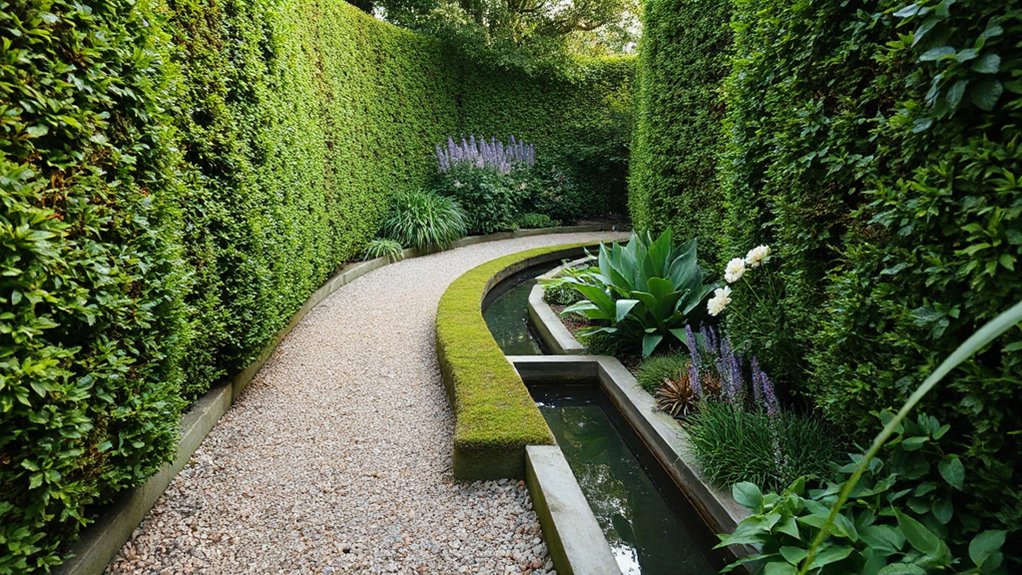

When you’re working a narrow plot, you optimize by thinking vertically, zoning smartly, and choosing compact, multi-use features. Prioritize layered layouts, like linear or courtyard schemes, with zigzag pathways and terraced plantings that stretch perception. Use trellises, living walls, and tall plantings to free ground space without sacrificing airflow or privacy. You’ll see how thoughtful borders, color blocks, and minimal furniture can transform tight spaces—yet the outcome still invites further refinement as you plan your next move.
Key Takeaways
- Use a central spine path to guide movement and drainage, with modular planting that creates width through vertical accents.
- Employ courtyard-style layering of walls, screens, and tall greens to frame views and maximize perceived space.
- Implement zigzag or terraced layouts to add depth and sunlight, while keeping edges narrow and purposely defined.
- Maximize vertical space with trellises, living walls, and tall plantings to expand usable area without widening footprints.
- Convert narrow strips into multifunctional zones (seating, herb beds, trellises) for asset-efficient, repeatable layouts.
Assess Your Narrow Plot: Light, Privacy, and Sun
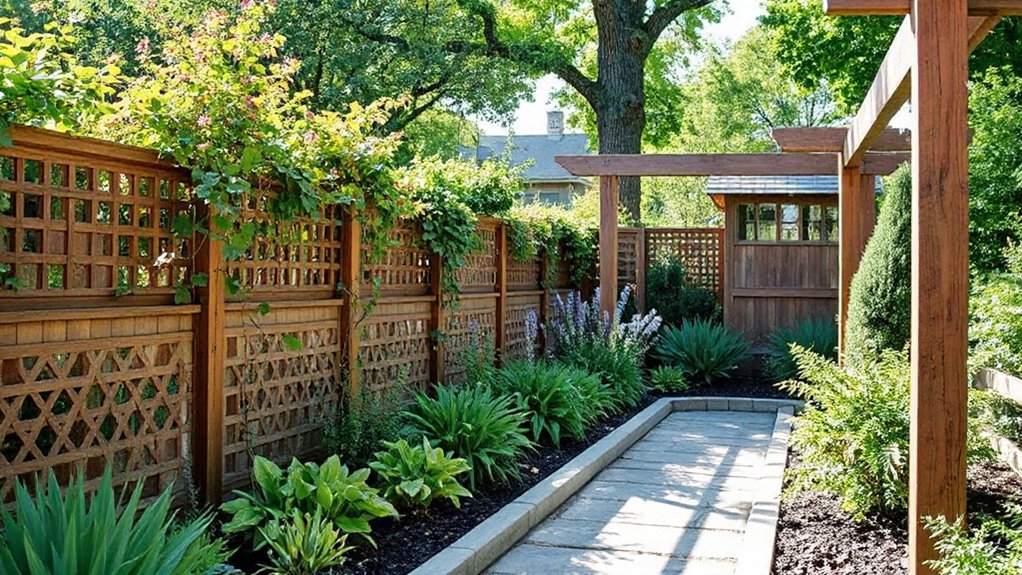
Assess your narrow plot by mapping light, privacy, and sun patterns across the day. You’ll identify zones where daylight shifts, shadows lengthen, and glare reduces comfort. Mark morning, noon, and late-afternoon sun angles to spot hot spots and cool retreats.
Prioritize private corners for seating or water features, avoiding direct sightlines from neighboring windows. Align dining or garden furniture with the sun path to minimize shade complaints and maximize usability.
Use vertical planters and trellises to reclaim privacy without sacrificing airflow. Reserve budget for durable, space-saving pieces and modular arrangements that adapt as needs evolve.
Consider integrated water features as focal points that don’t overwhelm narrow dimensions. Keep circulation clear, storage accessible, and lighting low-profile to preserve sightlines.
Linear Garden Concepts for Narrow Plots
Start with a central spine path that guides movement and doubles as a drainage channel; narrow, flat pavers keep attention on length.
Use verticals—trellises, espaliered fruit trees, and tall grasses—to draw the eye upward, maximizing perceived width through strategic layering.
Plant in tight, repeatable modules: low, dense groundcovers at the edges, taller vertical accents in the middle.
Choose compact, drought-turable specimens and seasonal color shifts to sustain interest.
Integrate garden art and subtle water features as focal anchors that enhance serenity without crowding pathways.
Prioritize maintenance access, modular containers, and smart irrigation to protect long-term value.
Courtyard-Style Layouts for Privacy and Illusion of Space
Courtyard-style layouts prioritize privacy and the illusion of space by layering walls, screens, and planting to frame glimpses and deepen perceived depth. You design with purpose: define microzones, then compress circulation, so every square inch serves a function.
Use tall, slim greens to block sightlines without closing vistas; place shorter perennials along edges to widen the feel at eye level. Opt for compact garden furniture that folds or nests, freeing floor space while preserving seating versatility.
Introduce water features that reflect light and multiply space perception without dominating the yard’s footprint, such as a narrow trough or a recirculating fountain.
Select materials with cohesive color and texture to unify walls, screens, and plantings. Maintain clean sightlines, precise grading, and well-timed maintenance to sustain the illusion and privacy.
Zigzag Paths: Create Depth Without Widening Your Yard
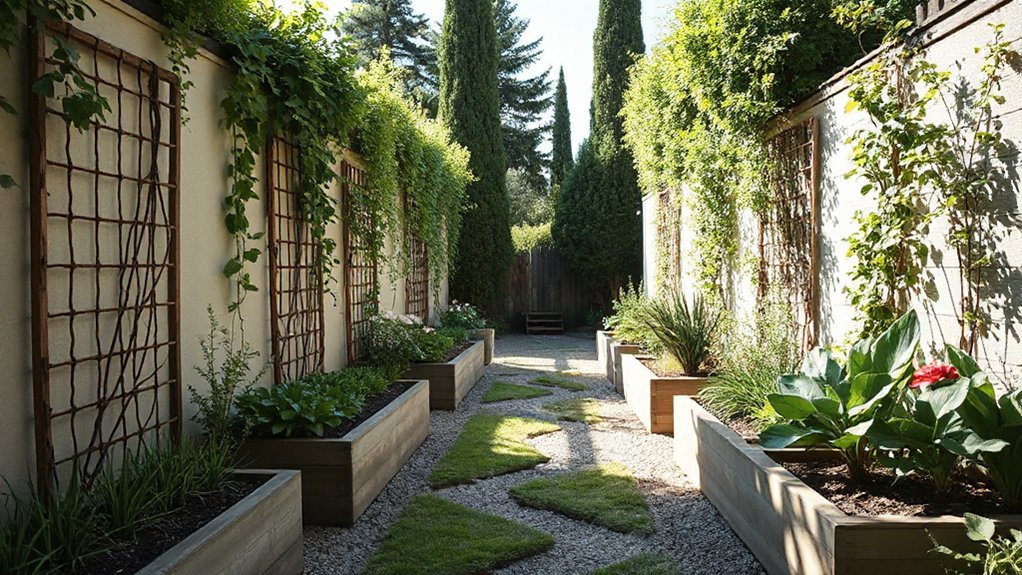
Zigzag paths increase depth and texture without widening your yard by drawing the eye along multiple shorter segments rather than a single long run. You’ll gain perception of space while preserving footprint, using careful alignment and material contrast to guide movement.
- Path materials: choose compact pavers or decorative gravel that resist wear and minimize maintenance while defining line and rhythm.
- Curve logic: place slight turns to create visual surprise without wasting space; keep radii tight for maximum impact.
- Water features: install a narrow linear fountain or recirculating pond to add sound and reflection without broadening the layout.
- Edging and lighting: use low-profile edging and discreet lighting to enhance safety and depth after dark while staying space-efficient.
Terraced Planting for Light, Air, and Access
Terraced planting increases light, air, and accessibility on narrow plots by layering vegetation and pathways into distinct, level steps that maximize sun exposure and ventilation. You structure beds on graduated tiers, keeping each tier compact and purposeful to reduce shading on lower levels.
Use short, layered plantings along edges to maintain sightlines and ease maintenance, while placing taller specimens at the back of each terrace. Choose structural materials that are lightweight, durable, and weather-ready to minimize foot traffic disruption and optimize space.
Implement efficient irrigation like drip lines run along the terrace joints to conserve water and sustain vigor. Prioritize garden sustainability with native species, pollinator-attracting blooms, and soil-building captures.
This approach creates Wildlife habitat while preserving accessibility and function in tight quarters.
Border Planting to Free Center Space
Border planting on narrow plots frees center space by pushing foliage to the edges, creating an open beeline for movement and maintenance.
You optimize with verticals and low spreads along borders, keeping midline clear for access. This approach maximizes light, reduces shade on central beds, and speeds weeding and harvests.
Use anchor plants at corners to define path width, then repeat with compact, tidy specimens that won’t overgrow into the center. Rank plant heights to maintain sightlines and ease of upkeep.
Choose durable, drought-tolerant varieties to lower maintenance costs.
- Select border-friendly plants that stay compact
- Layer heights for a clean edge without crowding
- Use continuous edging to keep center open
- Schedule regular pruning to prevent encroachment
Border planting, Free center space.
Color Blocks for Width in Small Yards
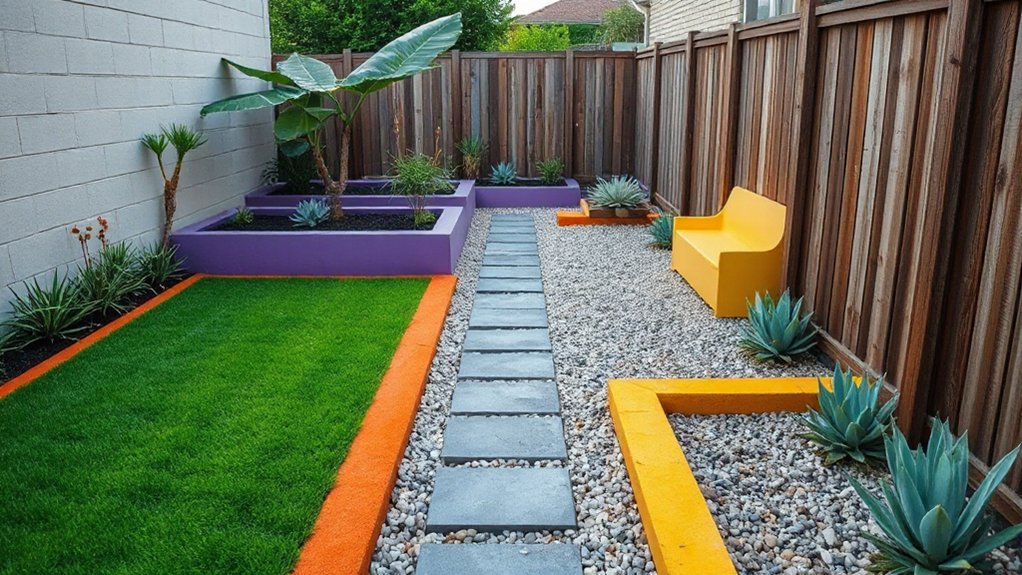
You’ll use color blocks to visually extend width, choosing a narrow-yard palette that reads large at a glance.
Pair bold, light, and mid tones in defined blocks to create depth without crowding margins.
This approach keeps your assets organized, maximizes perceived space, and guides movement along the yard’s length.
Narrow Yard Color Blocks
Color blocks in a narrow yard should be planned as a series of compact, high-impact swaths rather than broad swaths of one hue; this approach creates visual rhythm and defined zoning without crowding the space.
You optimize color blocks by pairing sharp contrasts with mindful planting density, ensuring each swath reads clearly at a glance.
- Prioritize color contrast to delineate zones without expanding footprint.
- Align planting density to maintain gap-free sightlines and crisp edges.
- Use repeated accents along borders to guide movement and perception.
- Reserve solid blocks for evergreen understory to stabilize seasonal changes.
Width Emphasis Palette
Width emphasis in small yards hinges on tight, purpose-driven color blocks that read as width-enhancing cues rather than broad swaths. You’ll apply a Width Emphasis Palette by selecting narrow, high-contrast color blocks that visually extend along paths and planting lines.
Favor cooler, light-toned hues near edges to bounce light and draw the eye outward, while grounding with deeper accents at focal points to anchor the space. Use color blocks with repeated rhythm to create implied width without widening overall footprint, preserving usable area for planting and circulation.
Achieve color harmony by balancing cools and neutrals, and inject texture contrast through leaf shapes, surface materials, and plant heights. This focused approach prioritizes space efficiency, predictable maintenance, and intentional asset protection while delivering perceived breadth.
Vertical Solutions: Trellises, Walls, and Tall Plantings
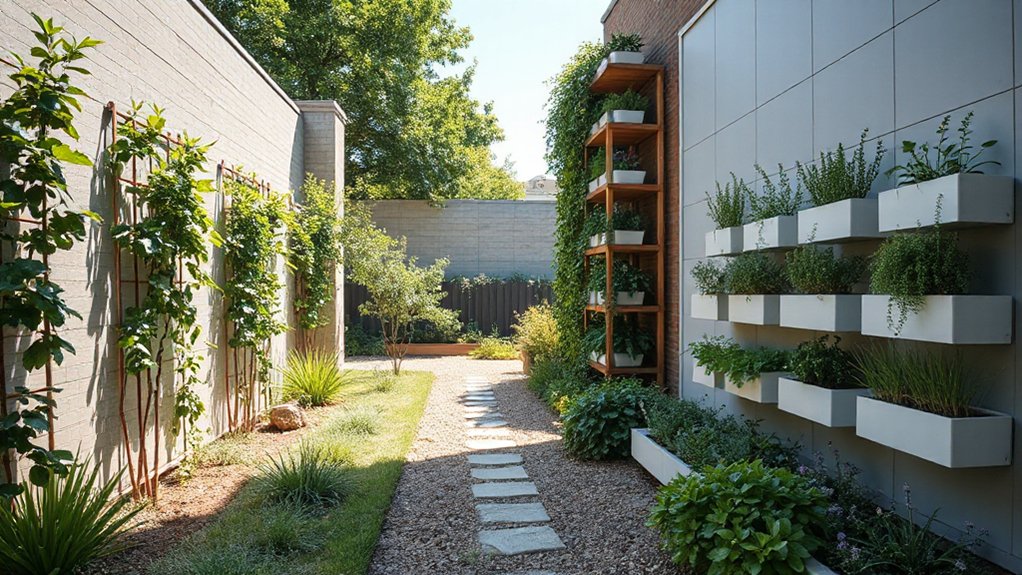
You maximize vertical space with sturdy trellises and living walls, turning unused height into productive area.
Tall planting strategies concentrate yields upward rather than outward, freeing ground for stepping paths and careful access.
Focus on height, stability, and plant compatibility to optimize every square foot.
Vertical Space Maximizers
What if you could reclaim ground on a narrow plot by growing up instead of out? Vertical Space Maximizers use height to maximize yields without widening footprints. You’ll pair sturdy trellises, living walls, and compact tall plantings to create dense, productive layers.
This approach emphasizes durable materials, precise spacing, and accessible maintenance, so every inch counts.
- Trellis designs that support high-density crops
- Living walls with modular panels for quick swaps
- Tall plantings spaced to avoid shade conflicts
- Integrated irrigation to minimize waste and maximize uptake
Vertical garden art and rooftop planting concepts blend aesthetics with function, turning walls into productive features. Choice materials and thoughtful placement reduce prep time, boost sun exposure, and protect crops.
Use these tactics to transform narrow plots into resilient, scalable food systems.
Tall Planting Strategies
Choose sturdy trellises, fixed to walls or freestanding frames, and align supports with sun exposure for even growth. For containers, stack plants with compact root zones and climbers that reach outward rather than upward at random.
This approach boosts yield per square foot while maintaining tidy lines and easy maintenance. Plant selections should favor rapid vertical climbers, compact herbs, and fast-growing greens.
You’ll also create wildlife-friendly gaps through diverse plant textures, supporting wildlife habitats. Container gardening remains practical, and vertical layouts transform small lots into functional, productive landscapes.
Real-World Narrow-Plot Transformations: Case Studies and Takeaways
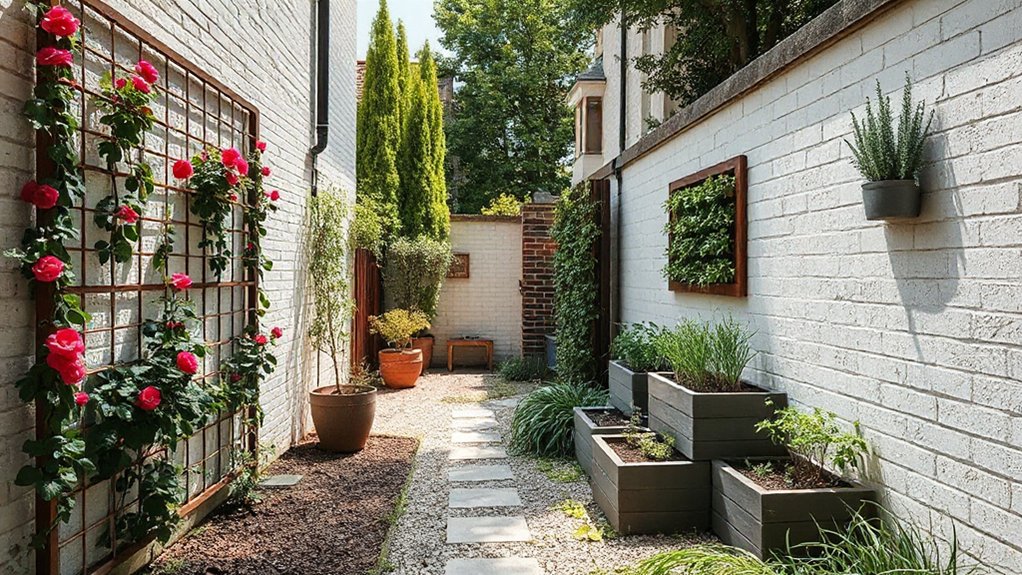
Real-world narrow plots reveal how thoughtful zoning, shared utilities, and layered planting schemes open usable space without sacrificing privacy or character. You’ll see real, scalable tweaks you can apply: prioritize verticals, consolidate paths, and treat edges as functional rooms. Every decision centers on asset efficiency and repeatable layouts, not random greenery.
1) Case-driven zoning shows how to convert a 6–8 ft strip into a multifunctional corridor with seating, compact herb beds, and vertical trellises.
2) Shared utilities are masked by permeable screens, keeping access open while reducing clutter and maintenance.
3) Layered planting combines groundcovers, mid-height shrubs, and climbers to maximize privacy without crowding.
4) Soil preparation and garden furniture placement sync for durability, ease of rotation, and long-term productivity.
Frequently Asked Questions
How Do I Measure Usable Space on a Narrow Plot?
To measure usable space on a narrow plot, start by marking boundaries with stakes and string. Then measure length and width at multiple points and average them.
Subtract walkways, fixed features, and required setback widths.
Visualize vertical gardening and container planting to maximize height and flexibility.
Use a grid or perimeter notebooks to map zones, noting sun exposure.
Prioritize movable containers, trellises, and tiered beds to optimize every square foot—efficient, actionable space planning.
What Soil Issues Commonly Affect Narrow Yards?
When I started gardening on a thin lot, I learned soil issues matter most: soil compaction and nutrient deficiency can choke growth. You’ll notice water pools, roots stay shallow, and plants stumble.
Address compacted soil with aeration and organic matter, then test and amend to fix nutrient deficiency.
You’ll maximize space by raised beds and verticals, conserve nutrients, and keep roots healthy for a tight, productive yard.
Can Drainage Be Improved Without Major Reshaping?
Yes, drainage can be improved without major reshaping. You’ll install rainwater harvesting barrels or a drip-fed system to redirect excess moisture, and raise beds with smart, narrow layouts to keep water away from foundations.
Use vertical gardening to maximize space, installing trellises and wall-mounted planters. Add permeable mulch, gravel paths, and proper soil mix to enhance drainage.
Monitor with a simple soak test, adjust grading, and maintain consistent moisture for steady plant health.
Are There Budget-Friendly Irrigation Options for Narrow Plots?
Affordable sprinklers and drip irrigation are great budget-friendly options for narrow plots. You’ll save water, stretch every inch, and keep plants thriving without clutter.
Start with a compact sprinkler in the center and line small drip emitters along rows for precise moisture. Use a timer, group zones by plant needs, and opt for adjustable sprays to curb waste.
You’ll maximize efficiency, minimize labor, and keep costs low while you optimize space.
How Can I Ensure Maintenance Fits a Tight Layout?
To keep maintenance tight, you implement a routine and smart tools that fit a narrow space. Choose compact, low‑maintenance plant selection and rely on vertical garden decor to maximize interest without crowding.
Use drip irrigation timers to reduce water waste and scheduling, and group tasks by zone to streamline upkeep.
Keep tools organized in wall-mounted stations. Garden decor accents should be durable, while plant selection favors natives.
This compact approach sustains beauty with minimal effort.
Conclusion
You’ve got the tools to turn a narrow plot into a lush, high-yield oasis. Focus on verticals, smart zoning, and compact features that free center space for play and air. An eye-catching stat to share: vertical gardens can add up to 20–40% more usable growing area in the same footprint. Apply terraced planting, zigzag paths, and color blocks to maximize perceived width. Stay disciplined with planters, trellises, and water features for efficient, durable space optimization.