
You’re drawn to spaces with quiet depth, where reclaimed wood, textured plasters, and natural stones age with intent. These underrated materials carry history in grain, patina, and subtle flaws, offering warmth, texture, and durability that conventional finishes often miss. They reward careful selection and maintenance with a personality that evolves. If you’re after character that isn’t loud but resonates, you’ll want to explore how these choices pair and endure—and where their stories begin to show themselves.
Key Takeaways
- Choose materials with warmth, texture, and durable aging potential, like reclaimed wood, brick tile, and patina-ready metals for character that evolves over time.
- Favor breathable plasters and lime-based finishes that age gracefully, delivering depth without cracking.
- Use cork and basalt to add tactile warmth and robust performance, reducing energy use and maintenance concerns.
- Pair textures and finishes to create quiet drama: matte coatings, brushed textiles, and restrained geometric patterns for cohesive character.
- Plan for maintenance and patina preservation from the start, using modular installations and lighting to highlight texture and authenticity.
How to Evaluate Underrated Materials: Warmth, Texture, and Durability
Underrated materials deserve a closer look because their warmth, texture, and durability often surprise you. You approach evaluation with a clear, criteria-driven mindset: essential properties, practical limits, and long-term performance.
Start by testing tactile warmth and acoustic dampening, noting how texture contributes to comfort without sacrificing function. Assess durability through real-world scenarios—abrasion, moisture, load.
Question installation complexity and maintenance needs, balancing upfront effort against lifecycle cost. Consider environmental impact considerations alongside aesthetics, mapping embodied energy, recyclability, and disposability.
Compare material families using a standardized scoring rubric to avoid bias and identify true value. Track compatibility with existing systems, moisture control, and air quality.
Look for innovative installation techniques that reduce waste and improve seal, then validate performance with small-scale samples before scaling.
Reclaimed Wood: Character Through History, Grain, and Patina
You’ll feel history in the grain, as each line tells a tale of past lives and uses.
Patina becomes the character you trust, shifting with light and time to reveal unique texture and warmth.
History in Grain
What stories does a single board tell when its grain runs deep with decades of weather, wear, and use? You read the lines as evidence of time, not ornament. Grain patterns reveal how a tree grew, faced wind and sun, and paused at scars that became bearing strength.
Each ring interval marks a season, a choice, a function, a purpose—and those choices converge into a usable history for today’s space. Reclaimed wood carries historical significance through texture, density, and contrast, offering a narrative that’s both scientific and poetic.
You assess board quality by uniformity of grain, knot density, and the depth of patina already earned. The material’s value lies in its provenance, resilience, and the tangible window it provides into past craft.
Patina as Character
Patina isn’t mere surface; it’s the signature of time etched into reclaimed wood, turning history into tactile character you can see and feel. You evaluate patina as evidence of material aging, not decoration. Each hue shift, watermark, or patinated edge signals provenance, usage, and environmental history, translating into a legible material biography.
Patina preservation becomes a design choice, balancing wear with stability to maintain legibility without abandonment. You measure integrity by how surface changes resist further decay while maintaining contrast between new and aged zones. The grain’s subtle roughness under a worn finish communicates durability, refinement, and restraint.
In practice, you curate contrast—between original patinated surfaces and rested, refinished areas—to preserve the character while ensuring practical performance, clarity, and longevity.
Brick Tile and Plaster: Tactile Surfaces That Age Gracefully
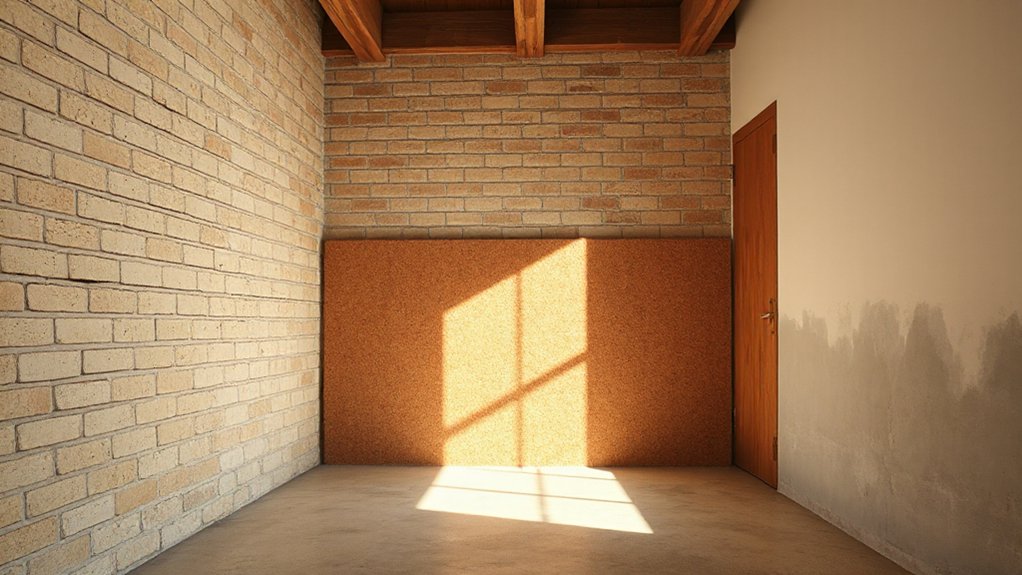
Brick, tile, and plaster bring texture and warmth to spaces, offering tactile cues that invite touch and reveal a room’s history as it ages. You’ll notice how brick tile creates granular depth, while plaster’s subtle mottling absorbs light differently from smooth walls, yielding a restrained character that evolves with use.
In practice, these surfaces pair durability with expressive restraint, aging to patina rather than fade. Modern manufacturing enables consistent brick-tile yields and plaster admixtures that reduce cracking while preserving tactile granularity.
Material innovation pushes the envelope: breathable plasters that regulate humidity, and pre-sealed bricks that balance moisture resistance with a natural, weathered look. The result is a low-maintenance texture algorithm you can tune, using color, joints, and finish to craft a timeless, richly legible space.
Cork and Basalt: Sustainable Options for Floors and Walls
Cork floors deliver warmth and resilience with a low environmental footprint, combining comfort underfoot with natural sound dampening.
Basalt walls offer a sleek, durable surface that adds tactile contrast while supporting long-term maintenance.
Together, they invite a parameter-driven discussion of cost, acoustics, and lifecycle benefits in sustainable design.
Cork Floors Benefits
Cork floors offer a standout combination of warmth, resilience, and eco-friendliness, making them a smart choice for both living rooms and high-traffic spaces. You’ll notice comfort underfoot from natural cushioning that reduces fatigue and softens footsteps.
The material’s cellular structure provides excellent thermal insulation, improving energy efficiency without added thickness. You’ll also gain sound dampening, creating calmer rooms with less noise intrusion.
Durability hinges on correctly sealed surfaces and proper maintenance, but wear patterns tend to be even and repairable, which supports long-term value.
Cork’s renewability matters: the bark regenerates after harvest, ensuring a sustainable flooring option.
For design, it accepts stains and finishes well, aligning with contemporary palettes.
Cork floors benefits include reduced environmental impact and versatile aesthetics, reinforcing sustainable flooring choices.
Basalt Wall Applications
In practice, its reduced porosity minimizes staining and maintenance, while its thermal mass stabilizes interior climates when paired with cork insulation. This material supports precise craftsmanship, allowing clean joints and minimalist profiles that align with contemporary layouts.
For aesthetics, basalt’s charcoal to ash tones anchor varied palettes, enhancing neutrals or bold accent colors. From a design stance, basalt embodies material innovation without trendy gimmicks, enabling sustainable, long-lasting installations.
In short, basalt supports modern design goals with durable, graceful versatility.
Concrete and Plaster Finishes With Lived-In Patina
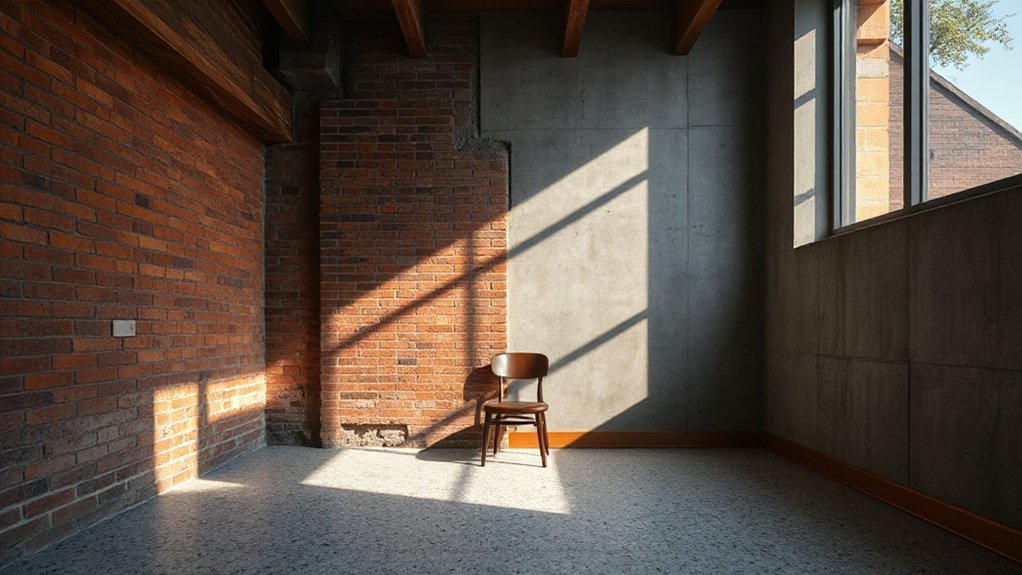
Concrete and plaster finishes with a lived-in patina fuse history with modern craft: you don’t coat these surfaces so much as invite them to tell their story. You’ll notice how subtle irregularities become a design feature, not flaws, signaling deliberate restraint.
In practice, the patina emerges through honest textures—dusty crevices, micro pitting, and softly varied tones—creating depth without distraction. This approach aligns with Modern aesthetics and Minimalist design, where warmth and character temper purist forms.
Application favors lime-based plasters or cement blends that breathe, age, and respond to light. You should embrace controlled aging: matte sheens, protective waxes, or limewash to slow wear while preserving authenticity.
The result is a tactile, resilient surface that feels honest, calm, and intentionally imperfect.
Metal Accents and Zinc: Quiet Sophistication With Depth
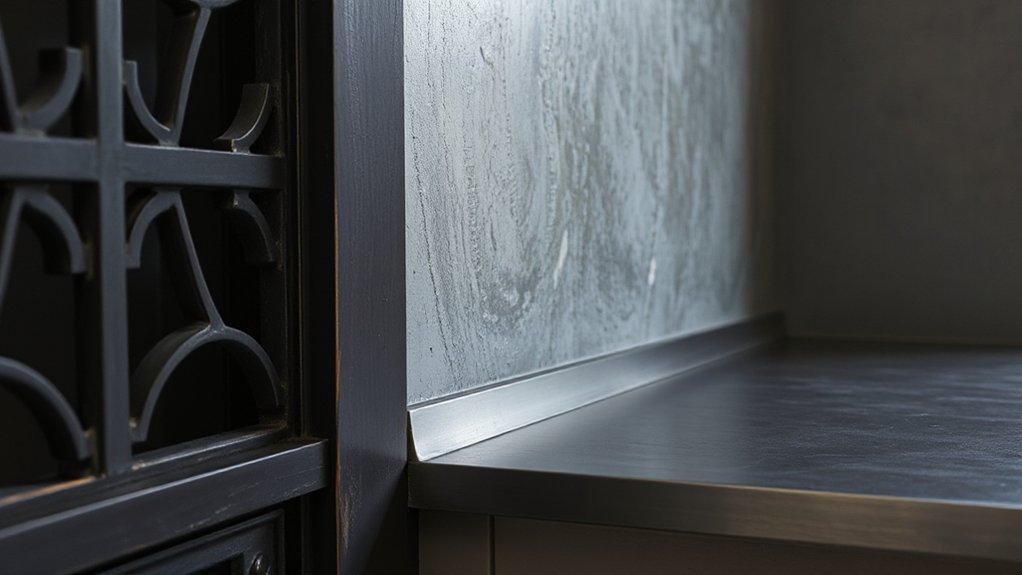
Metal accents and zinc bring quiet sophistication with real depth, elevating a space without shouting for attention. You’ll notice how metallic tones anchor rooms, infusing industrial chic without overpowering other textures.
Zinc’s matte patina evolves, inviting a subtle narrative that reads as quiet luxury rather than flash. In practice, you pair zinc with timber or concrete for contrast, or let it stand alone as a restrained statement.
You won’t chase trend; you cultivate longevity through patina and form. The material’s durability supports high-traffic zones while aging gracefully, drawing the eye with depth rather than glare.
The result: Vintage charm emerges from restrained detail, not ornament. Your design decision becomes a quiet signature—modern essence with timeless, understated character.
Texture-Forward Textiles and Coatings That Complement These Materials
Texture-forward textiles and coatings build on the restrained, enduring vibe of zinc and metal accents by adding tactile depth without competing with their quiet drama. You select textiles whose hand feels reveal subtle grain, brushed surfaces, or matte sheens that echo metal’s cadence.
Textile patterns should align with the metal’s geometry, favoring restrained repeats, linear motifs, or tactile weaves that read as material extensions rather than decor. Coating techniques matter as much as fabric choice: matte lacquer, soft wax, or breathable varnish can modulate light, while preserving texture.
The goal is cohesion—textures that reinforce the metal’s durability and quiet presence. Avoid glossy contrasts; instead, pursue restrained variation that amplifies material honesty and spatial calm.
The result is tactility without visual chaos, a refined, unified palette.
How to Select, Pair, and Maintain Underrated Materials for Lasting Character
When selecting underrated materials for lasting character, start by evaluating durability, provenance, and patina potential rather than popularity alone. You’ll assess how a material ages, its sourcing ethics, and the story it carries.
Then, map these factors to your space’s function and climate. Pairing requires contrast and cohesion: mix rough textures with smoother surfaces, or temper bold tones with quiet neutrals, ensuring a deliberate hierarchy where each element supports the others.
Maintenance becomes a design constraint, not a chore—plan sealants, cleaning regimens, and repair methods that preserve authenticity without erasing character.
Innovative installation choices, like modular panels or hidden fasteners, reveal craft while preserving line and light.
Lighting enhancements should highlight texture, depth, and patina, transforming modest materials into lasting focal points.
Frequently Asked Questions
How Do We Budget for Unconventional Building Materials?
You budget for unconventional materials by treating it as a cost estimation exercise, starting with a thorough feasibility check.
You identify upfront quantities, unit costs, and contingencies, then build a phased budget to absorb sourcing challenges.
You compare suppliers, anticipate lead times, and lock in prices where possible.
You track changes weekly, adjust scopes, and document deviations.
You weigh risk vs. reward, and communicate findings clearly so stakeholders understand the financial implications of sourcing challenges and final material choices.
Which Underrated Materials Age Best in Humid Spaces?
You’ll want materials that age gracefully in humidity, like hardwoods with historical authenticity and certain metals that patina thoughtfully.
Look for teak and tropics-grade woods treated for moisture, plus copper or brass that develop a living finish. These offer historical authenticity while preserving aesthetic versatility, resisting distortion with proper sealing.
In humid spaces, choose breathable, stabilized options, and optimize ventilation. You’ll gain character over time, with a precise, analytical edge and creative texture that stays resilient.
Can These Materials Be Used Outdoors Without Maintenance?
Yes, some can handle it, but you’ll want careful planning. Outdoor durability varies, and maintenance frequency matters.
You’ll likely face fading, moisture, and temperature swings, so yes, certain underrated materials survive, but not forever without upkeep.
If you choose concrete, brick, or treated wood, expect periodic sealing and inspection.
Stay vigilant: test, reseal, and replace damaged sections promptly to maintain performance and appearance, or you’ll see cracks mount and colors dull.
Do These Options Affect Indoor Air Quality or Allergies?
Yes, these options can affect indoor air quality and allergies, but it depends on materials and finishes. You should monitor volatile compounds and choose air purifier recommendations that target VOCs while avoiding high-emission finishes.
Opt for allergy friendly finishes, low-VOC paints, and natural sealants. You’ll want to test a small area first, confirm good ventilation, and watch for odors.
Combine air purifier recommendations with thoughtful material choices for healthier, character-rich spaces.
What Maintenance Routines Preserve Patina Over Time?
Patina preservation comes down to consistent, careful care. You’ll minimize damage by sealing surfaces sparingly and avoiding harsh cleaners, which addresses maintenance challenges.
Clean gently with pH-neutral solutions, dust regularly, and control humidity to slow oxidation or darkening.
You should document shifts in color or texture, adjust your approach accordingly, and use breathable coatings where appropriate.
You’ll inspect joints, reseal when necessary, and schedule routine maintenance to keep the material honest and character intact.
Conclusion
You seek warmth, texture, and durability, and these underrated materials deliver. You’ll embrace reclaimed wood’s history, brick tile’s tactile aging, cork and basalt’s sustainable quiet, and honest concrete or plaster patinas. You’ll pair metals and zinc with texture-forward coatings, then finish with carefully chosen textiles to harmonize surfaces. You’ll select thoughtfully, pair thoughtfully, maintain thoughtfully, building spaces with character that endure, improve with time, and tell stories of craft, sustainability, and authentic presence.