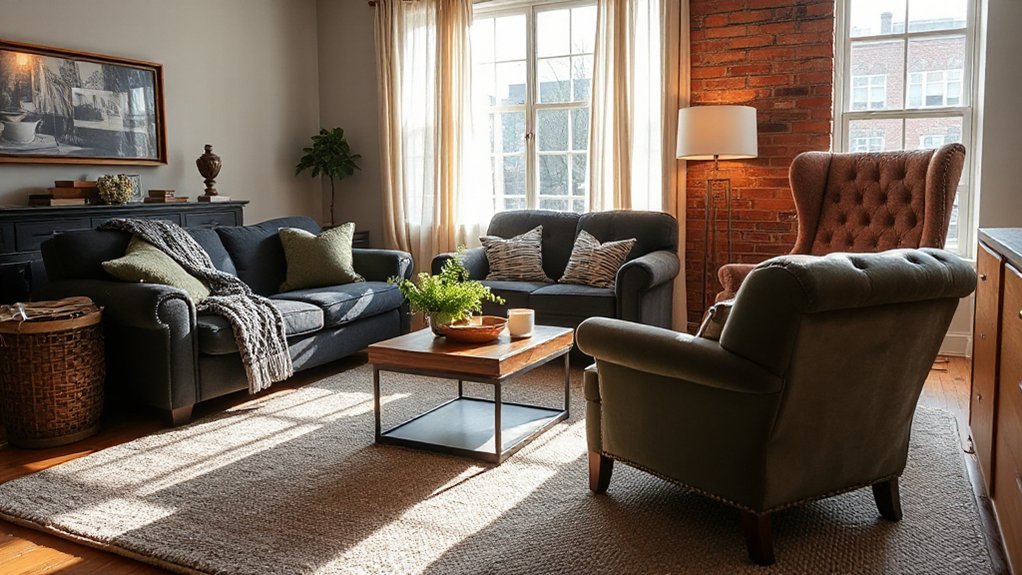

You’ll find that a good plan often arrives by coincidence—a favorite throw unexpectedly matching a paint swatch and suddenly guiding your whole vibe. Start by defining a clear cozy vision for your townhouse, then map compact, smart furniture that keeps pathways open. Layer textures, choose warm lighting, and balance color with intentional simplicity. With multi-functional nooks and personal touches, you’ll quietly transform your space—and the next detail could be the key to your best setup yet.
Key Takeaways
- Define a warm, cohesive vision with clear goals for each room, balancing architecture, function, and charm.
- Use open, modular furniture and hidden storage to maximize sightlines and flexibility in small townhouse spaces.
- Layer textures and warm materials (wool, velvet, wood, plants) for tactile comfort and organic warmth.
- Create soft, inviting lighting with warm tones (2700–3000K), dimmers, and reflectors for depth and coziness.
- Budget-friendly strategies: durable finishes, strategic layering, seasonal refreshes, and DIY/upcycling to maintain low maintenance.
Define Your Cozy Townhouse Vision for a Small Space
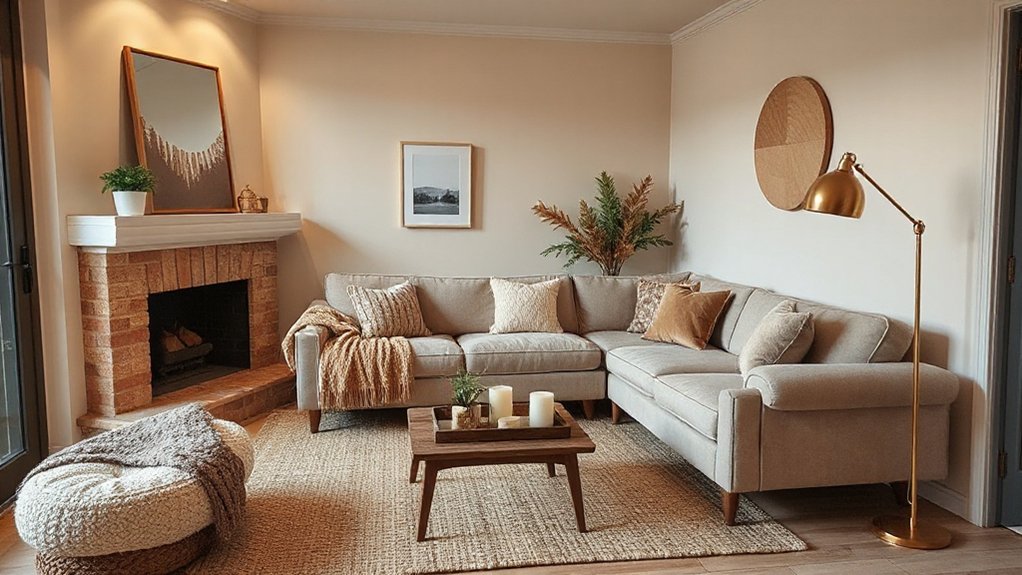
To define your cozy townhouse vision for a small space, start with a clear, practical goal: what rooms most need warmth, and what mood should each carry? You’ll balance Townhouse architecture with your daily rhythms, prioritizing function alongside charm.
Map every corner against a color and texture plan that preserves light and flow, avoiding clutter that dulls personality. Decide on focal points—fireplace, built-ins, or window seating—and guarantee materials feel durable yet intimate.
Consider acoustics, insulation, and heating in tandem with aesthetic choices to sustain comfort year-round. Visualize how urban living spaces will feel unchanged by guests yet still feel personal.
Your vision should translate into measurable choices: layout, textiles, and lighting that consistently deliver serenity, cohesion, and practical warmth.
Map Smart Furniture for a More Open Floorplan
Smart furniture is your ally for an open floorplan: choose pieces that define zones without breaking sightlines. You’ll map layout with purpose, selecting items that carve living, dining, and work areas while preserving flow.
Prioritize scalable surfaces, low profiles, and modular forms that can reconfigure as needs shift.
- Pick slim, leggy seating to maintain visibility between zones and keep sightlines uninterrupted.
- Use modular tables that can expand or contract, preserving flows without crowding.
- Choose neutral upholstery with a cohesive finish to unify disparate areas.
- Integrate hidden storage in furniture to reduce clutter and preserve open feel.
Layer Warm Textures and Materials for Comfort
Layer in layered textile comfort by pairing soft throws with plush cushions to invite touch from every seating area.
Use warm material pairings like wool, cotton blends, and velvet accents to create a tactile hierarchy that stays cohesive under lighting.
Aim for texture-rich surfaces—oversized weaves, tactile wallpapers, and rug textures—that anchor the space without clutter.
Layered Textile Comfort
Ever feel how the right textiles transform a room? Layered textile comfort relies on durable, thoughtfully chosen pieces that work together, not in isolation. You’ll balance warmth, texture, and light reflection by mixing weaves, weights, and finishes.
Focus on textile durability without sacrificing softness, ensuring long-term cohesion under daily use. Consider color psychology to guide mood: soothing neutrals, accent tones, and controlled contrasts that don’t overpower architectural lines. Align fabric families so maintenance is predictable and easy.
- Pair sturdy upholstery with plush throws for seasonal variation
- Use varied weaves (velvet, bouclé, linen) to create tactile depth
- Layer underlays and rugs to anchor zones
- Select machine-washable textiles for practicality and longevity
Warm Material Pairings
Pair warm textures and materials to invite comfort without sacrificing cohesion. You’ll balance tactile variety with a restrained palette: choose a soft wool rug, a linen throw, and a leather-trimmed sofa in complementary tones.
Pair warm woods—oak, walnut—with brushed metals for subtle contrast. Introduce vintage accents as focal points, like a carved coffee table or an antique lamp, to add character without visual clutter.
Textural repetition across cushions, throws, and upholstery reinforces unity. Include indoor plants to soften angles and boost air quality; place a tall plant beside seating and smaller varieties on shelves to echo organic warmth.
Limit glossy finishes; favor matte surfaces to maintain coziness. Maintain intentional spacing to prevent overcrowding and preserve clean lines.
Texture-Rich Surfaces Layering
Texture-rich surfaces invite tactile warmth without clutter, so you’ll layer warm textures and materials in deliberate, overlapping ways. You’ll create a cohesive mix by balancing textural contrast and surface finishes, ensuring each layer enhances comfort without crowding sightlines.
1) Pair smooth leather with brushed wood and a woven textile for measurable textural contrast.
2) Introduce a velvet throw and linen upholstery to accentuate depth in finishes.
3) Use a felted rug underfoot to anchor warmth without dominating the floor.
4) Add a matte ceramic lamp and a glossy ceramic vase to diversify surface finishes while maintaining clarity.
This approach emphasizes deliberate selection, precise pairing, and repeatable texture rules to sustain comfort.
Design a Soft, Inviting Lighting Plan
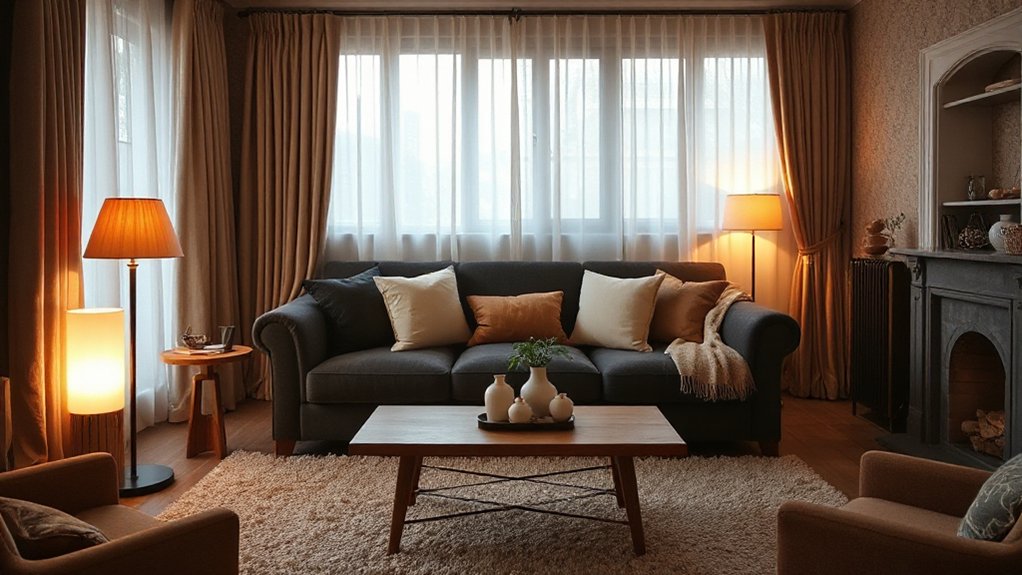
To design a soft, inviting lighting plan, start by mapping every functional zone in the living room and pairing each with a primary light source that yields warm, diffused illumination.
Then layer secondary sources for depth: add task lighting near seating, ambient glow from wall sconces, and unobtrusive ceiling fixtures for even coverage.
Specify color temperature around 2700K to 3000K for cohesion and warmth.
Use dimmers on major fixtures to modulate mood without glare, and position lamps to avoid direct eye contact with bright bulbs.
Consider reflectors, like light-colored walls or mirrors, to amplify softness.
Prioritize lighting layers that balance function and atmosphere, ensuring progressions between zones feel seamless.
Document exact wattages, placements, and control schemes for precise execution.
Aim for comfortable, inviting spaces. ambient glow, lighting layers.
Balance Color and Pattern Without Clutter
To balance color and pattern without clutter, start by pairing bold accents with quiet neutrals in equal measure.
Layer patterns by scale and texture—think a geometric rug with solid cushions and a textured throw—so each element reads clearly.
Regularly prune and reassess; remove anything that doesn’t serve the room’s focal point or increase visual noise.
Balance Bold With Subtle
Balancing bold color and patterns with subtle, clutter-free styling keeps a townhouse living room cohesive and inviting. You’ll create contrast without chaos by pairing bold accents with calmer surfaces, letting each element earn its place. Use a restrained palette for large pieces, then introduce bold accents to spark interest.
- Choose a dominant neutral foundation and add bold accents sparingly to highlight architectural details.
- Limit pattern counts to two focal areas, ensuring subtle accents maintain calm.
- Keep surfaces free of extras; declutter verticals to let colors breathe.
- Test scale and repetition to avoid visual overload and preserve flow.
Layer Patterns Thoughtfully
Track visual weight like a designer, balancing large-scale florals with microprints and solid planes to prevent clutter. Choose a cohesive color story—three to four hues max—and repeat them across cushions, throws, and upholstery.
Introduce texture through weave, fringe, or velvet to add depth without competing tones. Pace pattern introductions, keeping one focal print anchored beside a calm field.
Test in daylight and lamplight, adjusting contrast and saturation until the room feels unified, calm, and inviting.
Control Visual Noise Regularly
As you refine the room, keep visual noise in check by actively filtering color and pattern until the ensemble reads cleanly. You’ll achieve harmony by prioritizing cohesion over repetition, reducing competing motifs, and choosing purposeful accents. Focus on deliberate contrast, not volume, to prevent visual clutter while preserving personality.
Implement a measured approach to light sources, textures, and furniture scale so each element supports the whole.
- Limit palette to 3–4 hues; repeat tones across textiles and decor.
- Pair bold patterns with solid counterparts to reduce visual noise.
- Attribute one dominant pattern per zone, with supporting neutrals.
- Regularly reassess: remove or relocate items that fail the noise reduction test.
Maximize Nooks With Multi-Functional Solutions
To maximize every inch of your townhouse nooks, pair compact storage with smart surfaces that pull double duty. You’ll design zones that seamlessly blend function and visibility, avoiding clutter’s pull.
Start with shallow, doorless cabinets at seating height, paired with lift-top coffee tables to reveal hidden storage. Choose multi-use furniture that doubles as charging hubs, study space, or display niches, so every piece earns its keep.
Integrate cable grommets and soft-close hardware to reduce noise and disruption. Use modular units that reconfigure for guests or daily routines, maintaining clean sightlines.
Prioritize nook organization by labeling sections and employing color-coded bins, ensuring quick access. The aim is tight, efficient design where every surface serves a purpose without sacrificing style or comfort.
Add Personal Touches That Feel Like Home
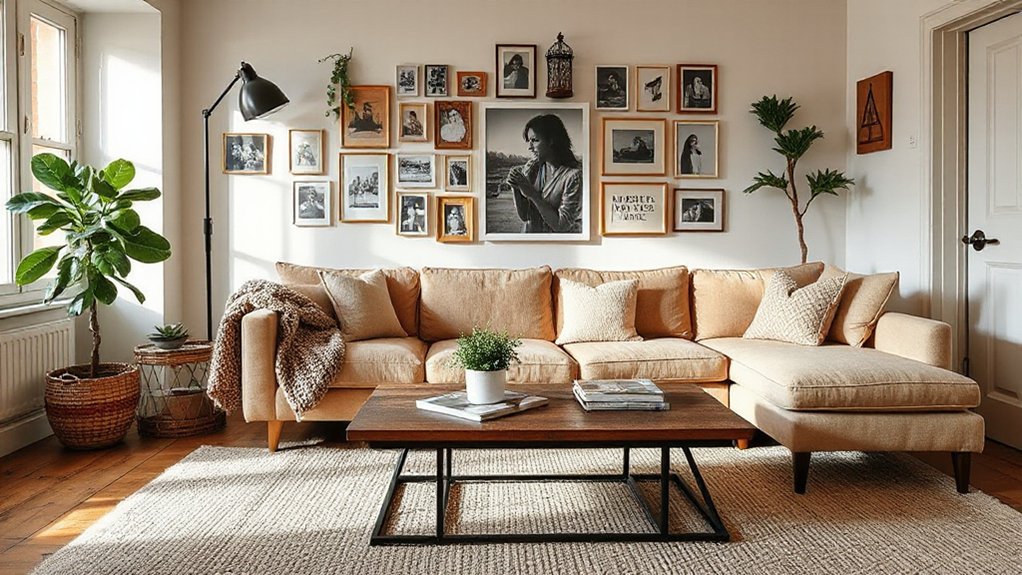
Personal touches make a townhouse feel like home by showcasing your daily life in a cohesive, curated way. You’ll create a sense of continuity with carefully arranged items that tell your story, without clutter. Focus on select pieces that resonate emotionally and align with your color palette and furniture. Use purposeful placement to anchor zones and guide movement, not distract.
1) Curate a small rotation of Personal memorabilia to reflect milestones, travels, and family moments.
2) Integrate sentimental decor into shelves and mantles at eye level for daily visibility.
3) Group related items in pairs or triplets to create intentional vignettes.
4) Swap out seasonal accents so the room evolves while preserving cohesion.
Optimize Flow and Acoustic Comfort in Small Rooms
When space is tight, smart layout changes matter: prioritize clear sightlines, door swing clearance, and defined zones that support movement without crowding. You’ll map traffic paths first, then place furniture to maintain open corridors and instant focal points.
Use compact, low-profile pieces to minimize visual clutter, and angle seating to encourage natural conversation without blocking flow. For acoustic comfort, start with soundproofing techniques such as heavy curtains, rug layers, and underfloor mats to dampen footsteps and chatter.
Position acoustic panel placement thoughtfully: mount panels at primary reflection points on walls and above seating zones to reduce echo without drawing attention. Avoid excessive hard surfaces in adjacent areas by adding textiles and wood finishes that absorb sound and soften transitions between spaces.
Check sightlines after each adjustment and refine accordingly.
Maintain Cozy Vibes on Budget and With Minimal Upkeep
Maximize the cozy factor without blowing your budget by choosing fabrics, finishes, and layouts that earn their keep. You’ll maintain warmth with durable textures, easy-care materials, and modular furniture that adapts to seasons.
Focus on low-maintenance decor that still feels intentional and layered, using switches in color and texture rather than quantity. Implement a routine: rotate seasonal decorating accents, vacuum or wipe surfaces weekly, and simplify storage to reduce clutter. This keeps the space inviting without demanding excess time.
Embrace DIY decor ideas that leverage ready-made components and clever upcycles, preserving charm with minimal effort.
- Prioritize multipurpose pieces that hide storage inside
- Rotate 2–3 seasonal accents for fresh vibes
- Choose washable fabrics and easy-clean finishes
- Use interchangeable textiles to refresh mood cheaply
Frequently Asked Questions
How Can I Maximize Coziness Without Crowding Small Spaces?
Yes, you can maximize coziness without crowding small spaces by smartly layering elements. Use decorative lighting to create warm zones, avoiding harsh overheads.
Add a few compact indoor plants to soften corners without taking floor space.
Choose furniture with dual purposes and slim profiles, plus cozy textiles like throws and plush cushions.
Keep surfaces clear, store clutter, and place mirrors to expand depth.
Finally, calibrate lighting to switch from bright tasks to intimate glow.
What Small Tweaks Boost Perceived Space in a Townhouse Living Room?
A quick win is to shrewdly use vertical tricks: pull the eye upward with color blocks and slim shelves, so your space reads larger.
You’ll boost perceived space by pairing light color schemes with layered lighting options—soft ambient, task, and accent—while keeping furniture low-profile and spaced.
Use mirrors sparingly to reflect light.
Choose neutral tones with a few cool accents, and avoid clutter to maintain clean lines and focused flow.
Which Budget-Friendly Textiles Feel Luxurious and Warm?
You should choose budget-friendly textiles that feel luxurious and warm: chenille throws, velvet cushions, and brushed cotton blankets.
For textile maintenance, opt for machine-washable options and use fabric protectors to extend their life.
Prioritize fabric durability by checking denier, weave, and pile height, and avoid delicate silks or ultra-light linens.
Pair textiles with dense weaves for warmth, and rotate them seasonally.
This keeps surfaces inviting, comfortable, and long-lasting while you stay budget-conscious.
How Do I Choose Lasting, Space-Saving Furniture for Corners?
You slide into the corner and find the answer: choose lasting, space-saving furniture by prioritizing multifunctional pieces with solid construction and easy maintenance.
Pick modular seating that can reconfigure as you need, with low-profile frames and reinforced joints.
Look for compact footprints, depth-in cushions, and stain-resistant fabrics.
Verify drop leaves, corner units, and modular options to maximize every nook.
Trust durable materials, thoughtful dimensions, and seamless assembly to keep your room calm and adaptable.
What Simple Acoustic Tweaks Reduce Echo in Tight Layouts?
You can reduce echo in tight layouts with simple acoustic tweaks: place soft furnishings where reflections occur, like 1–2 cozy rugs and plush cushions, and hang lightweight curtains near problem walls.
Use wall panel options that absorb sound without bulk, and install sound-diffusing shelves if possible.
Consider Soundproofing techniques like panels at first reflection points. This approach delivers measurable gains, keeps space functional, and targets reverberation precisely without crowding corners.
Conclusion
You’ve laid a solid blueprint: cozy textures, warm lighting, modular furniture, and clutter-free shelves. By layering soft cushions, warm woods, and intimate hues, you create an inviting heartbeat that breathes through every corner. Keep your flow smooth with multi-functional pieces and smart storage, so nothing disrupts the mood. Personal touches matter, but resist overstuffing. When you step into the space, you should feel home simmering under the surface—a kettle about to whistle, ready to welcome guests with open arms. It’s a snug, locking in comfort.