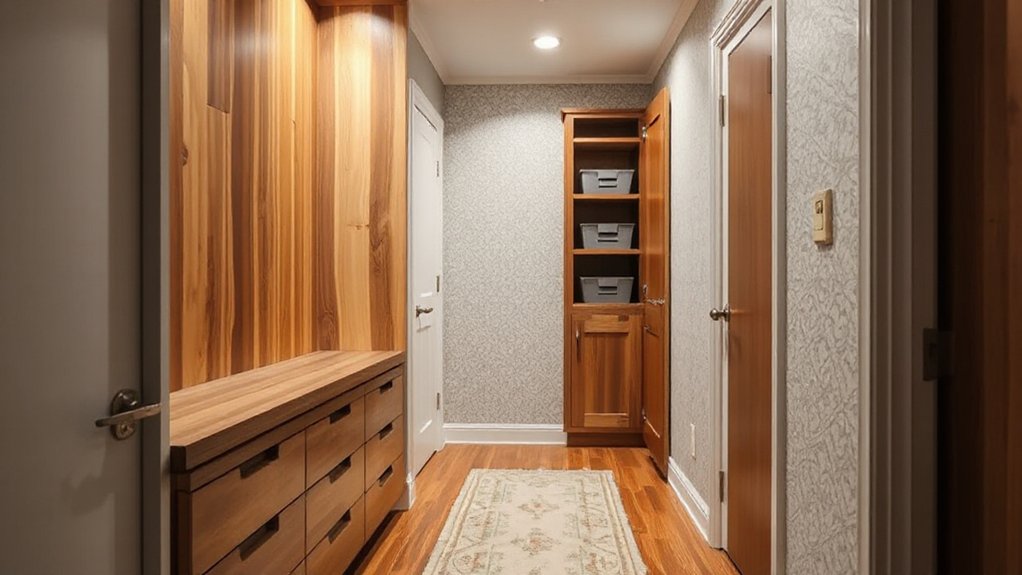

A narrow hallway calls for smart, wall-driven solutions you can trust. Think slim consoles, wall-mounted shelves, and hooks at every usable height, plus hidden storage in slim benches and modular units that flex with your needs. Prioritize vertical and corner options to keep floor space clear, and pair with thoughtful lighting and clean cable management. Build with purpose, then tune for flow—there’s more to optimize than you might expect, and your next move matters.
Key Takeaways
- Use narrow wall-mounted shelves, hooks, and slim cabinets to add storage without encroaching on walking space.
- Choose multi-functional, slim furniture (console, bench with storage) to maximize storage while maintaining flow.
- Employ vertical and corner solutions (floating shelves, tall slim units, corner nooks) to gain cubic footage.
- Implement modular, reconfigurable systems for easy adjustments as needs change, with tool-free assembly.
- Optimize lighting and cables with raceways, dimmers, and labeled runs to keep hallways safe and tidy.
The Case for Smart Storage in Narrow Halls
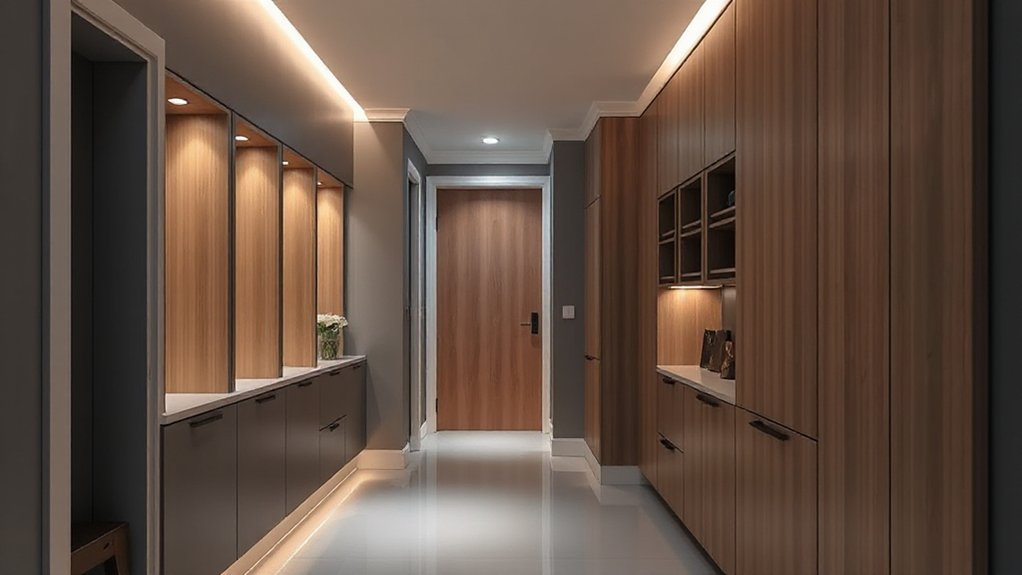
In narrow hallways, smart storage isn’t a luxury—it’s a necessity. You gain efficiency by choosing compact solutions that maximize floor space without crowding. Think modular bins, shallow cabinets, and wall-mounted organizers that keep everyday items visible yet tucked away.
Prioritize pathways and accessibility, so you won’t trip over clutter during foot traffic. Smart storage supports household organization, reducing random piles and misplacements, while preserving a clean flow through the corridor.
An aesthetic enhancement emerges when storage pieces match your décor, using neutral tones or sleek finishes that feel integrated, not invasive. With careful planning, you transform a narrow passage into a purposeful zone: functional, stylish, and easy to maintain.
Your hall becomes orderly, inviting, and visually cohesive.
Slim Console and Wall-Mounted Solutions
Slim consoles and wall-mounted solutions are your go-to for compact storage that doesn’t crowd the hallway. Choose slim profiles with shallow depth to preserve clearance while adding surface for essentials.
A wall-mounted console provides hidden storage behind doors or drawers, keeping clutter out of sight and the corridor tidy. Pair it with a slim mirror or small art piece to reflect light and visually expand space, using decorative accents that echo your style.
Install floating shelves above the console for extra capacity without crowding floor space, and opt for soft-close hardware to minimize noise and movement.
Consider integrated charging stations or cable management to reduce exposed cords. With clean lines and purposeful placement, you gain function without sacrificing flow.
Vertical and Corner Storage for Narrow Halls
Consider vertical stacks and a slim profile that keep traffic clear while adding storage.
Corner nook solutions make use of underutilized angles, and floating wall shelves offer easy access without crowding the hall.
Together, these options optimize wall space, balance storage with style, and set the stage for a more efficient corridor.
Vertical Stacks, Slim Profile
Vertical stacks and a slim profile let you reclaim hallway real estate without crowding the path. You’ll organize vertically with compact shelving, slim consoles, and wall-mounted cubbies that don’t intrude on foot traffic.
Choose modular systems that slide or hinge, so you can access items without wiggling around a bulky unit. Prioritize depth under 12 inches to keep sightlines open and light flowing.
Install floating shelves at varying heights to create defined zones for keys, mail, and everyday essentials, then pair with slim hooks for jackets or bags. Use neutral finishes and integrated lighting to enhance perception of space.
Keep cables managed behind discreet covers, and label containers for quick retrieval. Vertical stacks save space, maintain flow, and elevate hallway style.
Corner Nook Solutions
Corner nook storage turns awkward angles into high-functioning space. You’ll transform tight corners with built-ins that hug the wall and maximize depth where it matters. Think quarter-circle or triangular shelves that nest beside doorframes, paired with shallow drawers for coins, keys, and mail.
Opt for integrated lighting to reveal every inch without glare, and use soft-close mechanisms to keep noise down in busy hallways. When selecting materials, favor durable finishes that resist scuffs and coordinate with adjacent colors to avoid visual clutter.
Historical design cues, like beveled edges or brass hardware, can add character without overwhelming the footprint. Color coordination matters: match cabinet tones to trim or prefer a unified neutral palette with a bold accent for interest.
Floating Wall Shelves
- Choose slim, sturdy brackets and shallow shelves to preserve walking space.
- Align shelves at varying heights to create visual interest and accommodate decor, books, or small plants.
- Coordinate with decorative accents and color schemes to unify the corridor’s look.
- Install with a level and anchors suited to your wall type, then test weight before loading.
Tips: group items by function, not just display, so clutter stays minimal. Use light finishes or glass fronts to maintain an airy feel and a cohesive, stylish vibe.
Modular Systems for Flexible Hallway Layouts
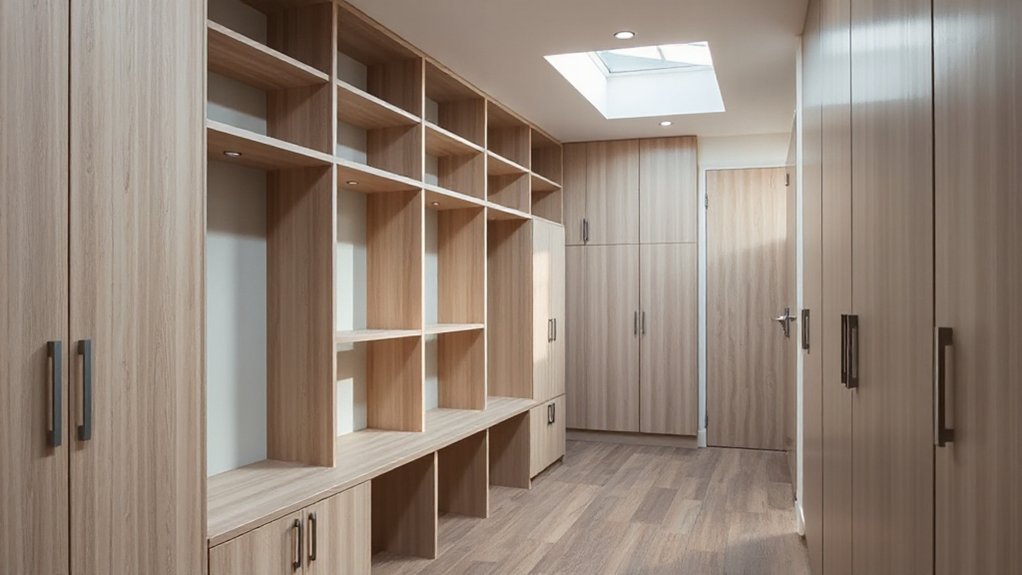
Think modular systems let you tailor a hallway on the fly with Flexible Hallway Modules. You can reconfigure Configurable Storage Littings as your storage needs shift, keeping traffic clear and access easy.
This approach blends practicality with style, letting you adapt the layout without redoing the walls.
Flexible Hallway Modules
- Choose lightweight, durable panels for effortless reconfiguration.
- Incorporate quiet, smooth hardware to minimize disruption.
- Use modular brackets that snap together without tools.
- Select finishes that harmonize with existing decor for a cohesive look.
With these steps, you gain flexible storage that’s visually restrained, tactically precise, and easy to maintain.
Your hallway becomes a responsive, stylish workspace rather than a confined passage.
Configurable Storage Littings
Configurable storage fittings open a flexible hallway layout by letting you mix, match, and reposition components without tools. You’ll tailor a module set to your space, supporting tall, shallow, or curved walls without crowding.
Start with a base frame, then add shelves, drawers, or hooks as needed, reconfiguring in minutes when priorities shift. The system favors clean lines and compact profiles, so you preserve sightlines and travel space while expanding capacity.
Use vertical layers to maximize cubic footage without widening the corridor. For furniture arrangement, choose pieces that echo the hall’s width and height, creating a balanced rhythm along the wall.
Integrate decorative accents sparingly to highlight storage zones without clutter, keeping the route clear and visually refined. Practical, precise, stylish—your hallway adapts as life evolves.
Safe Lighting and Cable Management
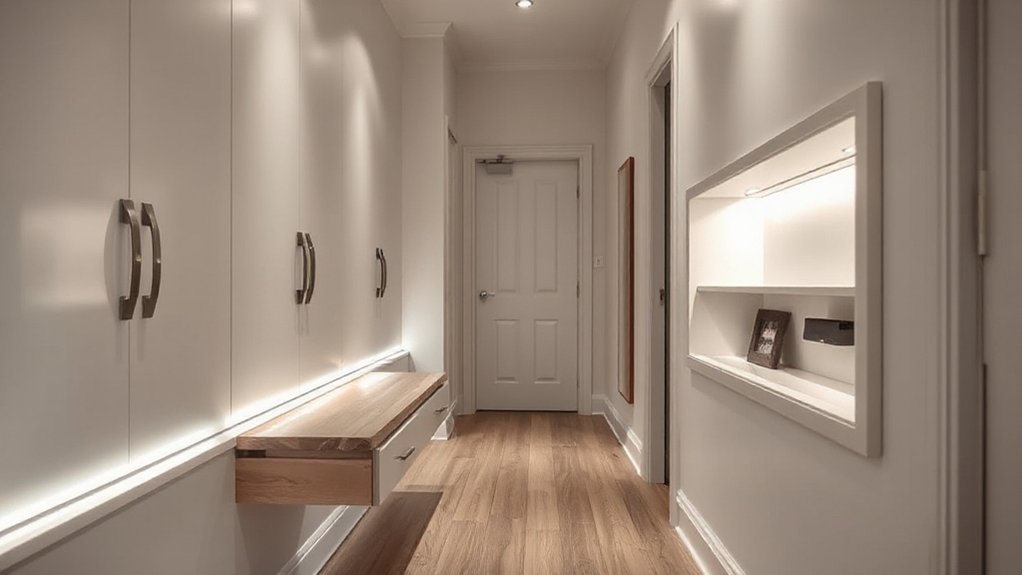
Good lighting and tidy cables keep a narrow hallway safe and usable; start by planning a lighting layout that eliminates shadows and highlights every turn. You’ll want ambient lighting at a steady level, minimal glare, and switches reachable without stepping into the walkway. Cable concealment should be discreet but accessible for maintenance.
- Position wall sconces or a slim recessed strip to create even illumination along walls.
- Run cables through cable raceways or behind baseboards, then secure with clips.
- Use dimmers to adapt brightness for tasks or ambiance.
- Label each run and create quick access panels for future changes.
This approach keeps traffic clear, reduces tripping, and maintains a sleek, cohesive look.
DIY Tweaks to Transform Your Hallway
These DIY tweaks will instantly elevate a narrow hallway without a full remodel. Start by choosing a cohesive color scheme that lightens walls and reflects nearby light. Pair pale neutrals with one bold accent wall or door to add depth without crowding your space.
Install slim shelving at ankle to eye level, keeping clear sightlines and avoiding clutter. Use decorative accents—lamps, mirrors, and a gallery of small frames—to create focal points without overwhelming the corridor.
Choose furniture with compact profiles: a narrow console, wall-mounted hooks, and a fold-down seating nook for practicality. Opt for consistent hardware finishes and subtle texture through rugs or runner tiles.
Finally, guarantee safe transit by maintaining at least 36 inches of free width, keeping cords secured and visible. Color schemes and decorative accents unite function with style.
Frequently Asked Questions
How to Measure Clearance for Hallway Storage Without Door Interference?
To measure clearance for hallway storage without door interference, you start by noting door swing and hinge placement.
Then use measurement techniques like a 3D template or swinging-door simulation.
Check vertical space at multiple points and record floor-to-wall gaps.
Make certain cabinet depth won’t collide with the door arc.
Use a laser or tape measure for precision, and verify clearance with the door halfway open.
Keep your notes concise, practical, and stylish.
Which Materials Resist Scuffing in High-Traffic Narrow Halls?
You’ll want hard-wearing materials that shrug off traffic: vinyl, ceramic tile, and high-AB grade laminate resist scuffs in narrow, busy halls. Durability considerations favor dense composites and real tile over soft finishes, while texture hides marks.
You’ll find material maintenance is simpler with sealed surfaces and matte finishes that hide fingerprint smudges. Choose practical, stylish options that keep lines clean and unobtrusive, and you’ll retain space feel even after daily wear.
Can Storage Affect Hallway Acoustics and Echoes?
Yes, storage can affect hallway acoustics and echoes. You’ll notice improved sound absorption when you choose materials with texture and mass, like soft panels or fabric-wrapped shelves.
You’ll achieve echo reduction by interrupting sound paths with varied surfaces. You’ll want strategically placed units, rugs, and wall-hung organizers that break up reflections.
Focus on practical materials, keep it stylish, and you’ll maintain function while quietly softening the noise. Sound absorption helps; echo reduction follows.
Are There Height Limits for Wall-Mounted Storage in Hallways?
Wall-mounted shelves have basic height limits you’ll want to respect, usually leaving at least 60 inches to prevent head bumps. You’ll find safety and clearance improve when you balance with ceiling storage above eye level.
Coincidentally, you’ll notice the hallway feels taller as you add purposeful storage. You use wall-mounted shelves for accessibility, then ceiling storage for bulkier items, keeping materials sturdy, anchors solid, and lighting bright enough to navigate confidently.
What Are Budget-Friendly Hidden Storage Ideas for Slim Spaces?
Hidden compartments are your budget-friendly secret, blending into slim spaces with barely-there bulk. You’ll love furniture hacks like ottomans with lift lids, wall-mounted desks that fold away, and hidden drawer dividers inside slim consoles.
Opt for multi-use pieces—benches, beds, or entry seats—that conceal clutter while keeping flow. Use accents and mirrors to widen perception.
You’ll get practical, stylish storage without sacrificing floor space or budget.
Conclusion
You can turn a slim passage into smart storage with vertical shelves, slim consoles, and wall hooks that kiss the wall, not the floor. Choose modular pieces for flexibility and keep cables tucked away. Let lighting brighten every corner, and pick hidden compartments for a tidy feel. Remember: less is more — “a place for everything, and everything in its place.” With practical upgrades, your narrow hallway becomes stylish, functional, and oh-so-easy to navigate.