


Ready to renovate your Midlands bungalow with a contemporary edge? Focus on a light-first approach: optimize window placement, continuous glass, and reflective surfaces to brighten interiors while maintaining energy efficiency through low-emissivity finishes and shading. Emphasize open layouts with subtle zones, non-permanent partitions, and durable, low-maintenance materials. Prioritize Midlands-ready heating and insulation, airtight detailing, and smart controls. Integrate heritage cues with modern detailing, and use modular storage to keep spaces flexible. If you keep exploring, you’ll uncover practical phasing and ROI insights.
Key Takeaways
- Emphasize energy-efficient envelopes and smart controls to balance Midlands climates with modern comfort and long-term running cost savings.
- Prioritize light-forward design using continuous glazing, reflective surfaces, and flexible, non-permanent partitions to define space without heavy walls.
- Align heritage cues with contemporary detailing, using sustainable materials and discreet upgrades that preserve façade dignity and neighborhood character.
- Incorporate modular, adaptable layouts with built-ins and screens to create versatile living, dining, and work zones in compact bungalows.
- Install durable finishes (quartz, porcelain, engineered wood) and targeted insulation upgrades to ensure timeless interiors and low maintenance.
Midlands Bungalows Today: Challenges, Opportunities, and Goals
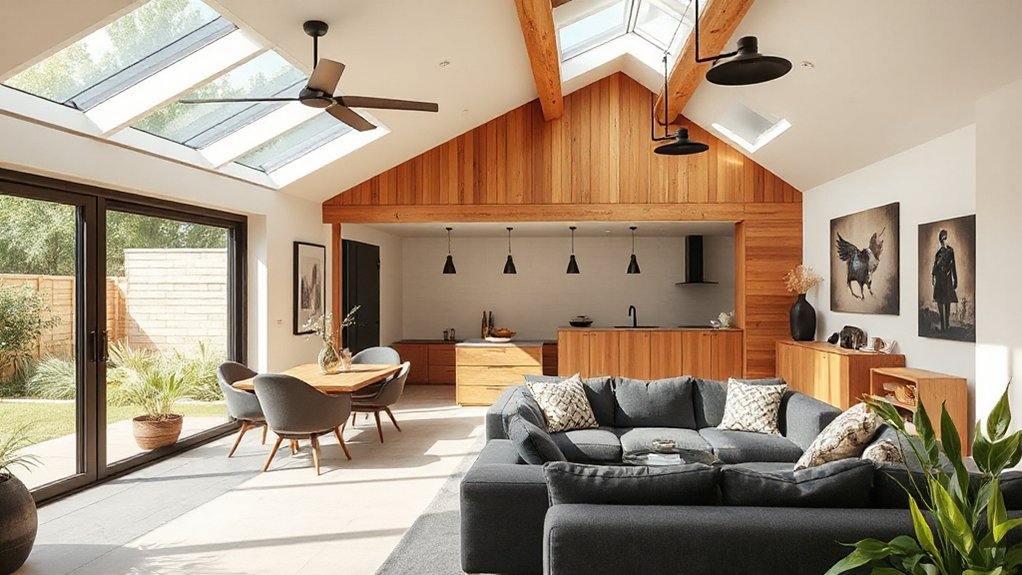
Midlands bungalows today face a delicate balance of resilience and opportunity. You assess market demand, regulatory constraints, and aging infrastructure to set clear renovation goals.
Sustainable efficiency tops the list, with high-performance envelopes, heat recovery, and smart controls driving lifecycle value.
Historic preservation informs façade dignity and neighborhood character, while interior modernization prioritizes adaptable layouts and durable materials.
Garden landscaping becomes a leverage point for microclimate control, drainage management, and perceived space expansion, enhancing curb appeal without excessive capital risk.
You quantify risks through depreciation curves and replacement timelines, pairing them with staged ROI milestones.
Align your project brief with zoning codes, tenant expectations, and financing criteria, ensuring design-forward choices maintain authenticity.
Priority actions: preserve heritage elements, optimize outdoor spaces, and implement scalable upgrades for long-term resilience.
Key Features Modern Midlands Bungalows Need
Modern Midlands bungalows demand a compact set of features that balance durability, efficiency, and adaptability. You’ll prioritize load-bearing efficiency, airtight envelopes, and modular spaces that flex with evolving needs.
Structural integrity, low-maintenance materials, and serviceability influence long-term performance, while thermal performance underpins year-round comfort.
Heritage-aware design respects historic architecture cues, yet stays forward-looking with contemporary detailing and sustainable detailing.
- Compact, insulated shell with high-performance windows
- Flexible floorplans that reconfigure without major disruption
- Low-maintenance materials paired with durable finishes
- Integrated outdoor zones and garden interfaces using careful gardening techniques
This combination delivers scalable value, precise budgeting, and market appeal, ensuring retrofit potential aligns with upgrade cycles.
You’ll communicate clear timelines, predictable costs, and measurable energy gains to buyers and investors alike.
Light-First Renovation: Maximize Natural Illumination
Maximize natural illumination from the outset by prioritizing strategic window placement and glass ratios that align with your bungalow’s layout and Midlands light conditions.
Consider room-by-room daylight paths, glazing choices, and shading that preserve clarity without sacrificing energy performance.
This light-first approach sets the benchmark for future design decisions and market appeal.
Natural Light Strategies
How can you harness natural light to elevate a bungalow’s performance and feel? You optimize daylight depth and quality through calculated glazing, reflective surfaces, and controlled daylighting strategies. Emphasize continuous bands of glass where structure permits, pairing with high-contrast interiors to amplify brightness without glare.
Integrate shading solutions to modulate sun exposure seasonally, preserving thermal comfort while preserving views. Prioritize natural ventilation by designing operable fenestration and stack effects that support cooling without auxiliary systems.
Calibrate window-to-wall ratios to balance daylight with privacy and energy targets. Employ materials with low emissivity to minimize heat transfer. Monitor window finishes and trims for minimal visual intrusion while maximizing skylight performance and material longevity.
- Wide glazing with low-E coatings
- Operable vents and clerestories
- Reflective interior palettes and finishes
- Strategically placed skylights and light shelves
Window Placement Ideas
By prioritizing window placement, you can illuminate the bungalow’s core living zones while maintaining privacy and energy targets.
For light-first renovation, map daylight paths across seasons, focusing on rooms with high occupancy. Use window styles that balance glare control, thermal performance, and acoustics, such as double-glazed casements or fixed skylights in corridors for visual connectivity without heat loss.
Implement placement strategies that align with furniture layouts, views, and egress requirements, ensuring operable units for ventilation. Consider glazing ratio, curtain wall accents, and low-profile frames to preserve sightlines.
Use high-performance framing and weather seals to minimize drafts. Sequence upgrades to prioritize operability, then finish quality.
Document performance metrics for retail-ready marketing, highlighting energy savings and enhanced daylighting as core value drivers.
Open Layouts Without Overstepping the Footprint
You can achieve open plan flow by subtly merging zones while preserving proportional footprint, using clear sightlines and consistent materials.
Follow Structural Lightness Guidelines to keep walls and partitions visually slim, so you gain spaciousness without adding bulk.
Define zones with furniture, lighting, and architectural cues—Open Plan Flow meets Zoned Space Definition for a coherent, market-forward layout.
Open Plan Flow
To create open plan flow in Midlands bungalows, start by connecting public spaces along a single sightline and alignment to maximize natural light while preserving the footprint.
You’ll establish zones with shared ceilings, consistent materials, and deliberate sightlines that prevent crowding. Use subtle passages rather than walls to retain edge definition, and couple storage with seating to maintain a lean footprint.
Prioritize scalable seating ranges, integrated tech, and durable finishes that support high-traffic use without visual clutter.
- Clear sightlines from entry to living and dining
- Unified materials and color palette for cohesion
- Hidden storage that reduces visual bulk
- Integration of outdoor access and artistic landscaping
This approach respects Historical preservation while delivering modern, market-ready appeal.
Structural Lightness Guidelines
Structural lightness in open layouts hinges on deliberate mass reduction at the human scale while preserving spatial clarity. You implement this by selecting framing systems that carry load efficiently with minimum bulk, then detailing connections that read as refined rather than heavy.
Prioritize continuous sightlines and transparent fluidity, using slim joists, engineered lumber, or steel with minimal intrusion. Maintain tactile, legible structure—every member earns its keep, every junction proves why it’s there.
Address structural reinforcement early in the design to avoid late changes, and specify fasteners, brackets, and anchors that disappear visually. Foundation stability remains paramount; opt for treatments that resist settlement and curb vibration without sacrificial add-ons.
Informed material choices and precise detailing yield open, breathable spaces that feel spacious yet secure, aligning with market expectations for contemporary bungalow renovations.
Zoned Space Definition
How can you define zones within an open bungalow plan without inflating the footprint? You achieve precise zoned space through deliberate functional division that preserves flow while signaling use. Use low-profile partitions, material shifts, and furniture alignment to carve intent without bulk. Strategic lighting, acoustics, and rug boundaries reinforce function, not obstruction. Keep sightlines intact to maintain perceived openness while establishing distinct areas.
- Zoned space is defined by subtle transitions, not walls
- Functional division relies on scale, texture, and color cues
- Furniture choreography creates micro-areas for dining, living, and work
- Built-ins and screens offer flexible, non-permanent separation
This approach delivers market-ready versatility: open layout certainty with clear, efficient zones, optimized for midlands bungalow footprints.
Midlands-Ready Heating and Insulation for Comfort
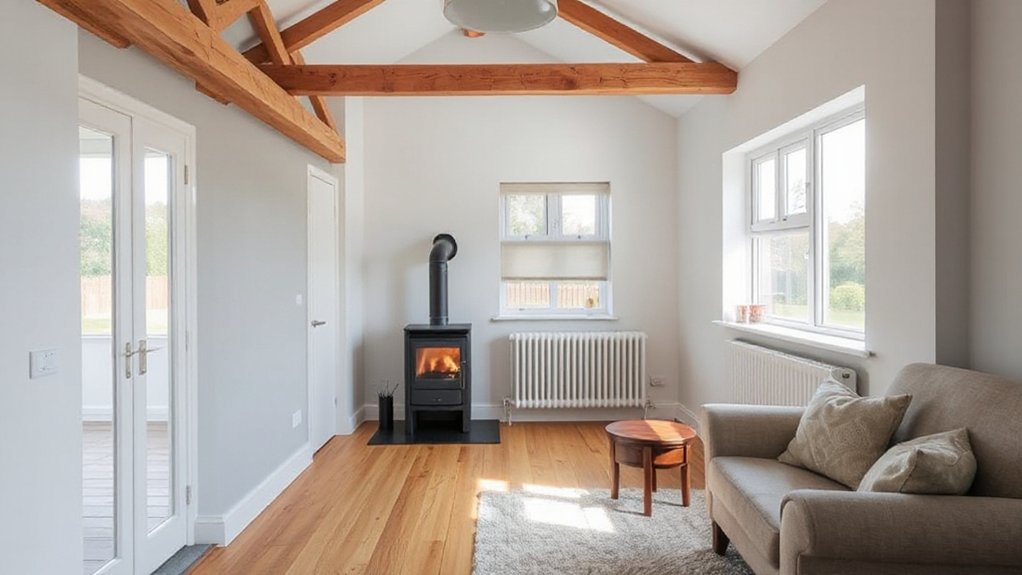
Midlands-ready heating and insulation prioritize consistent comfort and energy efficiency for bungalows. You choose a system that pairs targeted heating with high-performance insulation to reduce heat loss and balance temps across rooms.
Start with Midlands heating strategies that favor zoned control, low-mass radiators, and heat-recovery ventilation to maintain stable indoor conditions without oversizing equipment.
For insulation upgrades, specify continuous cavity or external wall insulation, plus roof and floor treatments that minimize thermal bridges.
Integrate smart thermostats and occupancy sensing to optimize runtime and reduce waste.
Guarantee airtight detailing around doors, windows, and service penetrations for predictable performance.
Material selection should align with retrofit feasibility, system compatibility, and long-term maintenance, delivering consistent comfort while lowering operating costs.
Budget-Friendly Energy Upgrades You Can Implement Now
Upfront, you’ll prioritize insulation this season to curb heat loss and reduce drafts, pairing thickness and drafting solutions for steady comfort.
Next, a smart thermostat gains payback credibility as you map zoning and occupancy patterns to optimize energy use without sacrificing convenience.
Finally, LED lighting upgrades amplify efficiency with clear lumen targets and color accuracy, supporting a cohesive, design-forward Midlands bungalow aesthetic.
Insulation This Season
Ever wonder how you can trim bills and boost comfort this season without a full retrofit? You’ll tighten a bungalow’s envelope with targeted insulation choices that sharpen thermal performance and moisture control. Prioritize airtight gaps, batt or blown-in insulation, and continuous exterior sheathing to minimize heat flux.
Choose materials with low vapor permeability where appropriate, and seal penetrations around ducts and outlets to prevent drafts. Balance is key: retrofit in zones that suffer most from cold snaps, then validate with a blower door test.
- Targeted cavity fill and attic insulation for rapid payback
- Air sealing at joints, penetrations, and framing
- Exterior rigid foam or high-R sheathing for continuous insulation
- Vapor management and moisture barriers aligned to climate
This approach blends performance metrics with market-ready, design-forward choices.
Smart Thermostat Gains
Smart thermostats aren’t just trendy; they’re a low-cost upgrade that cuts energy use and elevates comfort in bungalow climates. You’ll gain precise control over heating and cooling, with adaptive schedules that align to daily routines and seasonal shifts.
Design-forward models integrate with discreet wall plates and intuitive apps, keeping aesthetics intact while streamlining operation. Installers can program zoning in compact layouts, ensuring bedrooms, living spaces, and common areas maintain target temperatures without overshoot.
Energy analytics reveal consumption patterns, enabling iterative tweaks to maximize energy savings. Smarter thermostats respond to occupancy, external weather data, and boiler efficiency, reducing runtime and heat loss.
In market terms, this upgrade delivers rapid payback, scalable integration, and measurable energy savings for Midlands bungalows.
LED Lighting Upgrades
Prioritize uniform lighting design that reduces glare and shadows, deploying dimmable drivers for flexibility in living zones. Choose tunable white options to shift moods from bright work light to warm evening ambience, aligning with architectural features and natural light.
Plan for easy retrofits, focusing on recessed downlights in hallways, adjustable task lighting in kitchens, and understated fixtures in living rooms.
- High-CRI LED luminaires with dimmable drivers
- Recessed or track lighting for even spacing
- Tunable white controls integrated with smart home platforms
- Energy dashboards to monitor consumption and ROI
Durable, Timeless Materials for Midlands Interiors
Midland interiors demand materials that endure with style, so prioritize options that balance performance and beauty. You’ll pair durable surfaces with timeless appeal, focusing on low-maintenance finishes that resist wear without shouting trends.
Prioritize materials with proven resilience: engineered stone countertops, high-density hardwoods, and porcelain slabs that handle moisture and impact. Favor neutral palettes and tactile textures that age gracefully, while selecting finishes with UV stability to prevent patina loss.
Implement Durability testing early in specs to validate performance under typical Midlands climates and daily use.
For Material sourcing, vet suppliers for consistency, warranty coverage, and local availability to reduce lead times and transport risks.
Finally, document lifecycle costs to compare upfront expense against long-term value and replacement cycles.
Kitchen Refresh: From Compact to Command Center
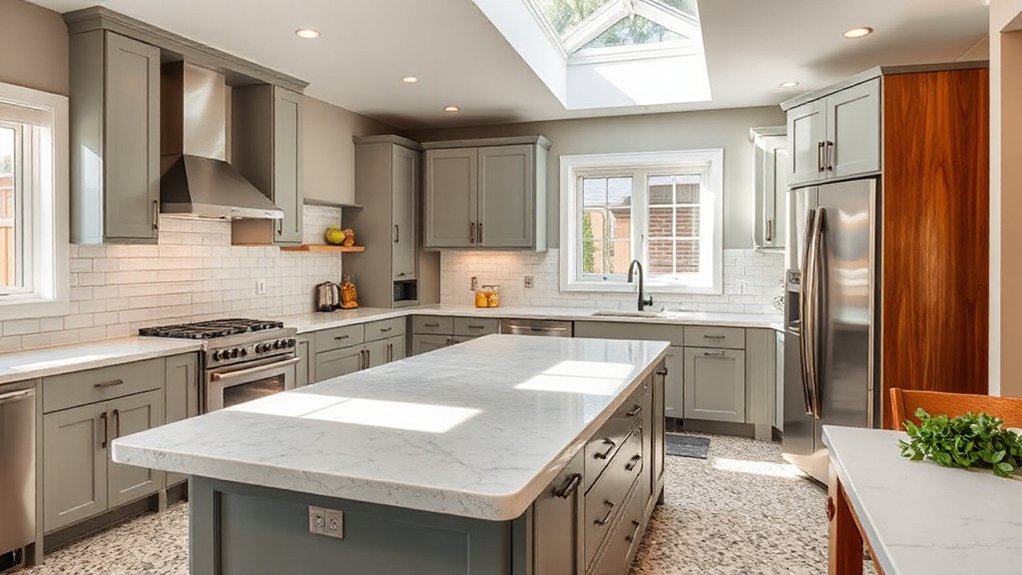
You’re transforming a compact Midlands kitchen into a true command center, prioritizing layout efficiency, storage engineering, and service flow.
We’ll explore how essential upgrades—from appliance selection to smart storage and lighting—drive both performance and market appeal.
This discussion introduces the core ideas of Compact to Command Center and Kitchen Refresh Essentials, setting a precise framework for practical, design-forward choices.
Compact to Command Center
To elevate a compact kitchen into a true command center, you start with a smart layout that prioritizes workflow, storage, and multifunctional surfaces. Precision planning reduces clutter while maximizing usable space, enabling quick task switching and clean lines.
Integrate compact appliances, vertical storage, and extendable surfaces to maintain a seamless work triangle. Material choices should emphasize durability, ease of maintenance, and a market-ready aesthetic that scales with the bungalow’s character.
Consider urban farming pathways for herb growth and integrated lighting, plus discreet tech hubs to support smart controls. Preserve historical preservation cues in hardware finishes, trim, and layout rhythm to honor the Midlands context.
- Smart layout with optimized work triangle
- Vertical storage and extendable surfaces
- Compact, efficient appliances
- Subtle nods to historical preservation in details
Kitchen Refresh Essentials
A kitchen refresh transforms a compact space into a streamlined command center by prioritizing efficiency, clean lines, and durable, market-ready finishes. You’ll optimize layout for workflow, selecting handle-free cabinetry, soft-close hardware, and integrated appliances that minimize bulk without sacrificing performance.
Prioritize high-contrast surfaces and consistent edge detailing to read as contemporary while controlling maintenance. Materials should resist wear in high-use zones, with quartz or solid-surface countertops and porcelain backsplashes for longevity.
Lighting, including layered task and ambient options, enhances precision work and mood. Introduce vintage charm through carefully chosen hardware, fixtures, or accent tones that don’t disrupt modern pragmatism.
Garden integration can be achieved via tasteful, compact herb displays or window-box planters that support fresh ingredients and sustainability. The result is a resilient, market-ready kitchen that elevates daily routines.
Spa-Style Bathrooms in a Small Footprint
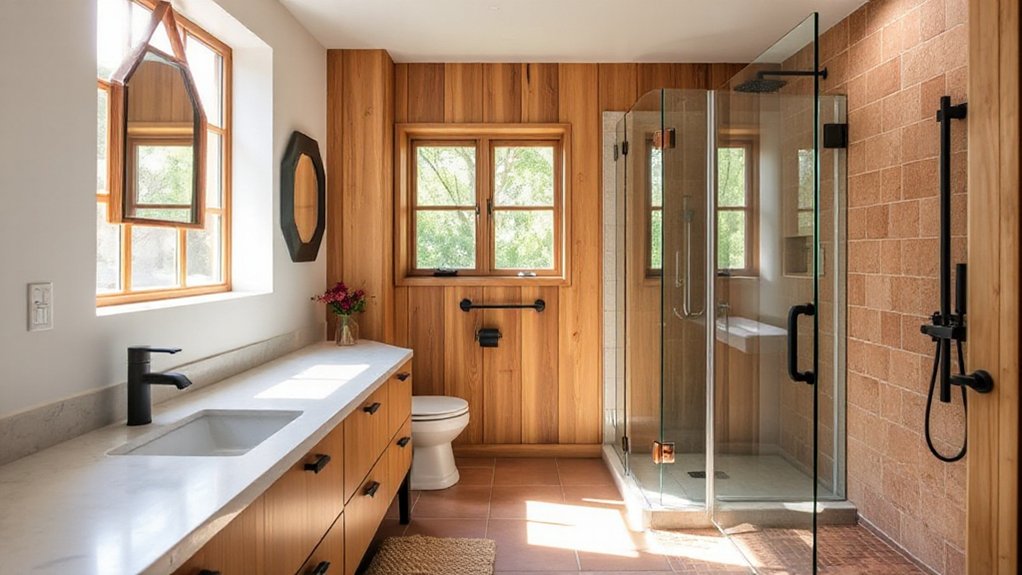
Spa-style bathrooms on a small footprint hinge on maximizing surface efficiency while delivering hotel-grade tranquility. You’ll optimize layout, select compact fixtures, and integrate seamless glass to visually expand the room. Precision drainage, wall niches, and recessed shelving keep surfaces uncluttered, while vibration-free plumbing preserves calm.
Material choices prioritize moisture resistance, low maintenance, and tactile quality, forming a spa sanctuary within a compact footprint. You’ll pair linear basins with wall-mounted vanities to reclaim floor space and enhance accessibility. A focused color palette and strategic texture deliver depth without noise.
Storage remains hidden yet reachable, supporting a clean, restorative vibe in every direction.
- Compact shower with linear drain and frameless glass
- Wall-mounted fixtures and built-in niches
- Slim vanities, recessed lighting, and moisture-resistant finishes
- Noise-minimized plumbing, sealed panels, and anti-microbial surfaces
Softening the Space: Lighting, Textiles, and Color
Softening the space hinges on deliberate lighting, textiles, and color choices that balance warmth with clarity. You’ll optimize lighting ambiance by layering sources: ambient ceiling fixtures, task lights at work zones, and accent lumens to sculpt depth without glare. Select dimmable options to adapt mood during different uses and times of day.
Textile textures matter as tactile cues that read visually rich yet calm; pair wool blends with linen sheers and velvet trims to modulate reflectivity.
Color strategy centers on temperature control: warm neutrals as anchors, cool accents to sharpen focus, and low-saturation palettes to maintain cohesion across rooms.
For performance, test samples under daylight and artificial light, ensuring continuity in furniture footprints and rug scales. The result is a legible, inviting space that feels intelligently engineered.
Outdoor-Indoor Living: Sunrooms, Patio Areas, and Transitions
To maximize seamless flow between interior and exterior, prioritize climate-controlled sunrooms with engineered glazing, integrated shades, and operable walls that create true expansion when the weather allows. You’ll unlock year-round use by pairing sunroom design with tight sealing and thoughtful ventilation, reducing seasonal temperature swings while preserving views.
Transition zones should blend flooring, lighting, and climate control to avoid abrupt shifts. Furniture choices balance form, function, and moisture resistance, with patio furniture selected for durability, ease of cleaning, and stackability.
Proportions matter: wide thresholds, mullioned glazing, and concealed drainage prevent water intrusion. Plan flexible layouts that accommodate dining, lounging, and remote work.
Elevate the edge with pergola shading, integrated planters, and scalable privacy.
- Climate-controlled sunrooms and operable walls
- Engineered glazing, integrated shades, and transitions
- Durable patio furniture with weather resistance
- Flexible layouts for dining, lounging, and work
Storage That Fits Small Footprints Without Clutter
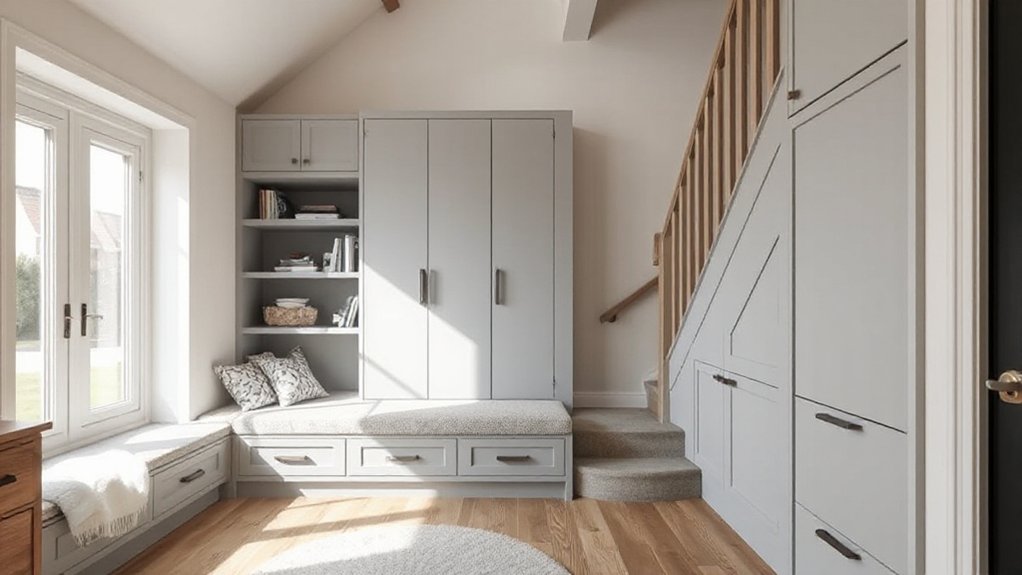
Maximize storage in tight bungalow footprints with purpose-built solutions that prioritize accessibility and clean sightlines. You’ll implement modular cabinetry, floating units, and pull-out systems that minimize floor clutter while maximizing reach.
Prioritize depth-limited shelves and vertical-dividers to keep items visible and easily retrievable. Use multi-functional furniture with hidden compartments and integrated charging hubs to reduce accessories’ footprint.
For closets, choose adjustable hanging rods, riser shelves, and boot trays to optimize every inch. In kitchens and utility zones, opt for toe-kick drawers and corner carousels to avoid dead space.
Embrace creative storage that blends with architecture, preserving floor flow and sightlines. These space-saving solutions deliver tidy aesthetics, measurable value, and a market-ready edge.
Windows and Doors for Brighter, Breezier Living
Bringing in more daylight and airflow starts with thoughtfully sized windows and door systems that fit brick-and-batten bungalow geometry while preserving clean sightlines from the living space to the outdoors. You’ll optimize orientation, framing, and glazing to maximize natural light without glare, while balancing thermal performance and security.
Window styles matter: consider wide casements, fixed lite configurations, and low-profile transoms to sustain proportions and clear exterior silhouettes.
Door materials should combine durability with slim profiles and weather sealing for year-round comfort. Integrate operable panels with automated shades to regulate brightness.
Emphasize airtight joints and thermal breaks to minimize heat loss. Choose hardware that respects scale and maintenance needs.
- Window styles: casement, fixed, transom
- Door materials: fiberglass, steel, wood-clad
- Glazing: low-E, triple-pane options
- Framing: slim profiles, durable finishes
Personalizing With Midlands Character: Materials and Finishes
Midlands character comes through in material choices and finishes that balance authenticity with performance. You select finishes that grip the eye and endure daily wear, pairing tactile woods with durable laminates and low-maintenance stone alternatives.
Prioritize regional craftsmanship, sourcing locally milled timber, hand-finished iron accents, and brick or tilework that echoes local vernacular.
Contrast warmth with restraint by mixing pale plaster with charcoal detailing and brushed metals for a contemporary edge.
Consider heritage preservation in detailing: restoring original cornices, preserving visible joists, and exposing brick with careful repointing.
Use finishes that age gracefully, not aggressively trend-driven, to maintain resale appeal.
Document provenance for clients, emphasize serviceability, and align material choices with energy performance and indoor air quality.
Planning Your Renovation: Phases, Priorities, and a Realistic Timeline
Planning your renovation begins with a clear roadmap: define objectives, establish a realistic budget, and map a phased sequence that aligns with your daily life and market timing. You’ll sequence tasks by priority, align permits and lead times, and reserve buffers for inevitable changes. Stay disciplined on scope to avoid drift that inflates cost and extends duration.
Consider Historical preservation and legal considerations upfront to prevent retrofits that trigger rework or penalties. Align design decisions with available trades and material cycles to minimize downtime.
- Objective-driven milestones with clear owners
- Budget windows, contingency, and procurement timing
- Permitting, approvals, and compliance checkpoints
- Phase boundaries, risk flags, and review cadence
Frequently Asked Questions
How Can Bungalow Renovations Respect Historic Midlands Character?
You’ll honor heritage conservation by restoring original features and using sympathetic materials, while architectural preservation guides massing and rhythm. You optimize plans with modern efficiencies, ensuring market appeal, durability, and design-forward detailing that respect historic Midlands character.
What Are Affordable Roof-To-Floor Energy Improvements?
You can install solar panels and perform insulation upgrades to achieve affordable roof-to-floor energy improvements, cutting heat loss and costs while boosting efficiency, performance, and resale appeal; prioritize high R-values, vented roofing, and smart control systems for rapid payback.
Which Compact Kitchens Maximize Storage and Flow?
You maximize storage and flow with compact layouts that feel open: use open shelving paired with multi functional furniture, integrated appliances, and vertical storage. You’ll optimize space, reduce clutter, and keep pathways clear for effortless movement and repeatable workflows.
Are Council Permits Required for Midlands Bungalows?
Yes, you typically need building permits for Midlands bungalows, and you must comply with zoning regulations. You’ll submit plans, guarantee approvals, and secure permits before work, aligning with building permits processes and zoning regulations to avoid penalties and delays.
How Long Should a Phased Renovation Realistically Take?
A phased renovation should realistically take 6–12 months, depending on scope and permits. Think of it like a garden bed: Outdoor landscaping and interior lighting staggered, you maintain momentum, budget buffers, and minimize disruption while delivering design-forward, market-ready spaces.
Conclusion
In the Midlands’ bungalow tale, you’re the quiet architect steering a ship through a glassy harbor. Think of your home as a lighthouse: light, airflow, and warmth guiding every decision. Your plan, like a precise map, aligns with needs, budgets, and timelines, while finishes echo regional character. As you renovate, markets respond to clarity and craft. Sail toward brighter spaces, smarter storage, and cozy efficiency—and let each halyard and beam reveal a bolder, enduring home.


