


Upgrade your Southwest home with durable materials, low-water landscaping, and shaded year-round outdoor rooms. Focus on concrete, brick, slate, and metal paired with plaster for contrast, plus warm, weathered tones. Choose drought-tolerant natives, well-drained soil, and smart irrigation to cut maintenance. Create cooling zones with pergolas and breezes, then add a functional outdoor kitchen and fire feature for all seasons. Ready for practical steps that blend comfort with resilience? There’s more to explore below.
Key Takeaways
- Prioritize drought-tolerant landscapes with native plants, xeriscaping, and mulch to minimize irrigation in the Southwest climate.
- Create shaded outdoor rooms using pergolas, lattices, and awnings to lower surface temperatures and boost comfort.
- Use durable, low-maintenance materials (concrete, brick, slate, metal) with warm earthy tones for lasting Southwest aesthetics.
- Design outdoor kitchens and entertaining areas with wind protection, weatherproof surfaces, and year-round lighting.
- Incorporate rainwater harvesting, permeable paving, and smart irrigation to reduce water use and maintenance costs.
Southwest Outdoor Design Principles
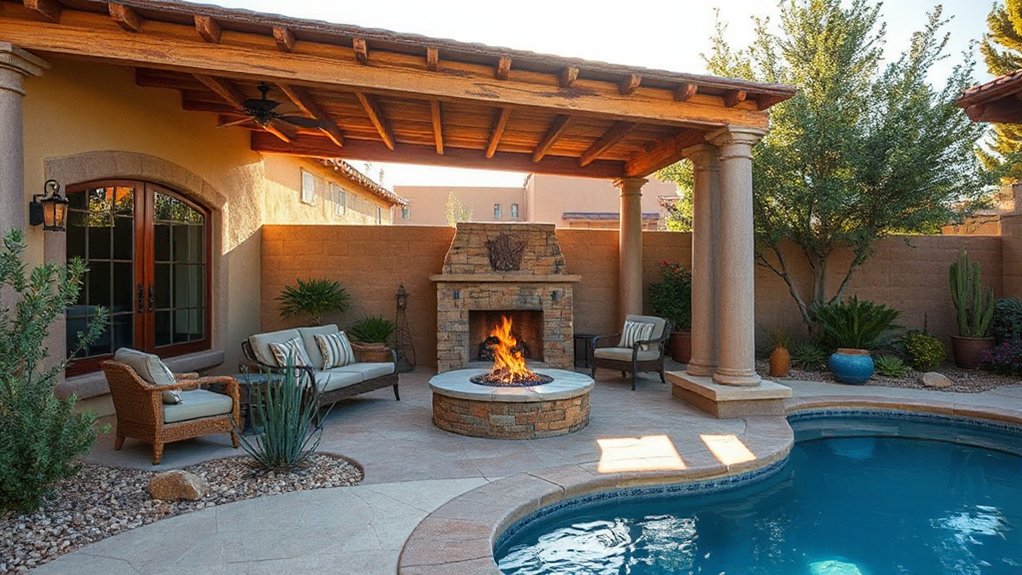
Southwest outdoor design centers on harmonizing durable materials with warm, earthy tones that weather gracefully in sun and wind. You approach spaces with a calm, practical mindset, choosing textures that endure—concrete, brick, slate, and metal—paired with plaster or stucco walls for contrast.
You prioritize low-water planning and simple lines that reduce maintenance while boosting resilience. Native plants anchor the landscape, offering structure, color, and seasonal interest without demanding intensive care.
Desert aesthetics guide you toward pared-down silhouettes, shaded courtyards, and ambient lighting that enhances evenings without overpowering daylight views. You design with wind, sun, and thermal comfort in mind, using patios and seating that invite use year-round.
The result is cohesive, functional outdoor rooms that feel regionally authentic and thoughtfully composed.
Drought-Tolerant Landscaping That Lasts
Drought-tolerant landscaping lasts when you choose plants and materials that thrive with minimal water and steady sun exposure. You’ll create resilient beauty by prioritizing efficiency, durability, and low maintenance across your yard.
- xeriscape design principles guide your plant choices and watering schedules.
- native plant selection reduces irrigation needs and supports local ecosystems.
- well-drained soil and mulch conserve moisture while suppressing weeds.
- smart zoning pairs sun exposure with drought-tolerant varieties for year-round color.
With these steps, you’ll minimize waste, cut bills, and enjoy reliable performance through hot spells.
Emphasize textures, contrasts, and low-growth groundcovers to keep lawns sparse but inviting.
Keep irrigation concise: deep, infrequent cycles, early in the morning, and measure results with simple tools.
Your landscape stays vibrant, enduring, and sustainable.
Cooling Strategies: Shaded Zones and Airflow
Shading and airflow cut cooling costs and boost outdoor comfort by turning your yard into inviting, usable spaces even on hot days. You’ll optimize natural ventilation by placing seating and paths to channel breeze through shaded zones, reducing reliance on mechanical cooling.
Use shade structures—pergolas, awnings, or lattice canopies—to lower surface temperatures and create microclimates that feel cooler without extra energy. Align outdoor rooms with prevailing winds and install operable vents or fans only where needed to enhance airflow without noise.
Choose light-reflective materials for decks and furniture to minimize heat buildup. Groundcovers, gravel, and pavers under shade stay cooler, supporting comfortable gatherings.
Outdoor Kitchens for Year-Round Entertaining
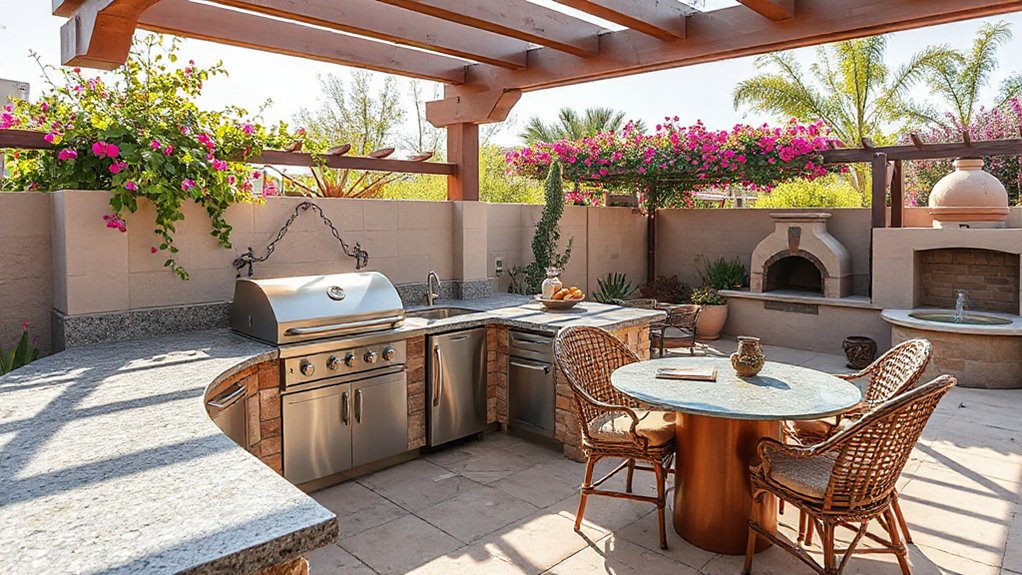
Design your outdoor kitchen with year-round use in mind: heat and cold can be managed with thoughtful layout, durable materials, and weather-ready equipment. You’ll create a space that serves from cool evenings to crisp winters, with practical zoning and efficient equipment.
- Plan a weather-smart layout that minimizes wind exposure and optimizes heat retention.
- Choose durable surfaces and insulated cabinetry to withstand sun and rain.
- Integrate weatherproof appliances and a flexible lighting plan with outdoor lighting for ambiance and safety.
- Include a fire pit ideas accent corner to extend entertaining into cooler months.
A well-lit, inviting kitchen becomes your hub, where cooking, dining, and socializing blend seamlessly.
Budget-Smart Materials and Irrigation for Longevity
When you plan budget-smart materials and irrigation for longevity, start with durable, cost-efficient choices that pay off over time. Choose weather-resistant surfaces like concrete pavers or composite decking, and select irrigation components designed for low water use and minimal maintenance.
Prioritize rainwater harvesting systems to reduce utility bills while keeping landscapes hydrated during dry spells. Integrate permeable paving to manage runoff and support healthy soil beneath.
Match irrigation scheduling to seasonal needs with moisture sensors and drip lines that minimize waste. Opt for eco-friendly furnishings and durable shade structures that resist sun exposure.
Commit to simple, modular upgrades you can repair rather than replace. This practical approach preserves value, lowers upkeep, and creates a resilient, comfortable outdoor living space.
Frequently Asked Questions
How Can I Maximize Outdoor Lighting Without Increasing Heat Load?
Increase outdoor lighting with low-heat, energy efficient fixtures and smart controls; choose shielded, warm-spectrum LED lights, and point them downward. This preserves landscape aesthetics, reduces glare, and minimizes heat load while you enjoy safer, energy-smart evenings.
Which Drought-Friendly Grasses Tolerate High Foot Traffic?
Drought-resistant lawns that tolerate high foot traffic exist; choose hardy grasses with proven foot traffic resilience and deep root systems. You’ll maintain green, durable turf by selecting drought-resistant varieties and following proper mowing, irrigation, and soil management practices.
What Materials Deter Dust and Glare in Southwestern Climates?
Dust control and glare reduction are essential; use light-colored, matte finishes, shaded surfaces, and low-reflectivity screens. In fact, studies show textured, permeable pavements cut dust by significant margins. You’ll minimize glare and improve comfort outdoors.
How Can I Zone Outdoor Spaces for Seasonal Temperature Shifts?
To zone for seasonal temperature shifts, map your outdoor spaces by temperature zones and create microclimates with shade, windbreaks, and sun exposure. Use seasonal planting strategies and rotate plants across zones to optimize resilience and flow.
What Are Low-Maintenance Fire Pit or Heating Options?
Fire pit safety first: opt for propane pits or electric heat, and keep ember-free zones. For low-maintenance warmth, consider heat lamps or radiant panels; explore heating alternative options, then schedule regular checks and protective covers for longevity.
Conclusion
So you’ve mapped out Southwest-worthy outdoor upgrades—cooling, drought-tolerant plants, shaded nooks, and kitchens that chase the sun away. Don’t pretend it’s magic; it’s smart planning, budget-aware choices, and a dash of grit. If you actually implement durable irrigation, durable materials, and thoughtful design, you’ll get year‑round delight instead of a dusty summer shrug. Remember: satire aside, practical work beats wishful thinking every time. Now go build something that lasts without breaking the bank. You’ve got this.


