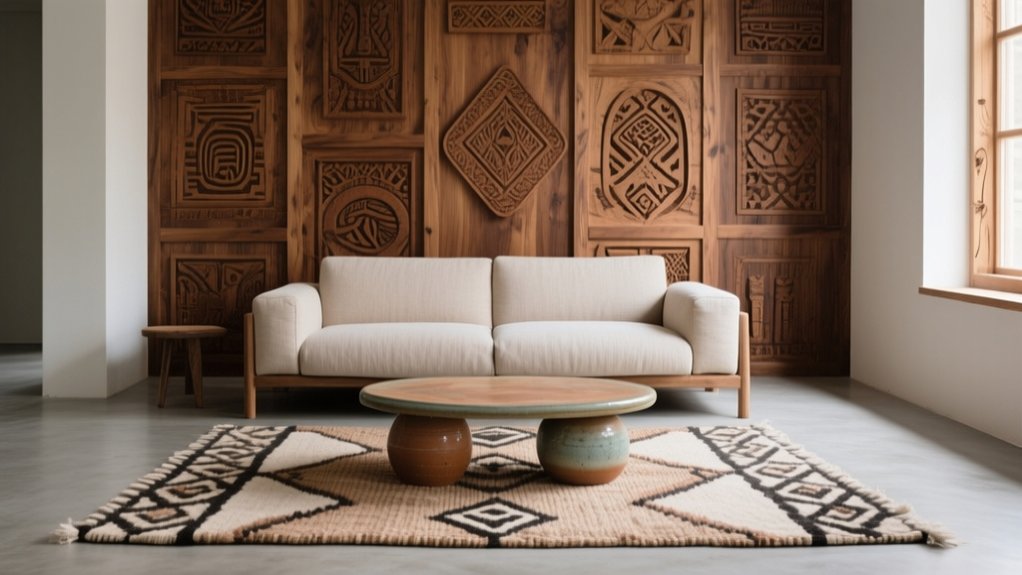

Craft heritage influences contemporary interior design by letting you build spaces around place-specific materials, visible handwork, and maker-led details that feel modern, not nostalgic. You’ll see it in hand-planed millwork, honest joinery, plaster walls, woven shades, regional stone, and handmade ceramics with intentional variation. It’s trending because you want longevity, traceable sourcing, and tactile proof of skill. Balance motifs with solid fields and a quiet palette, and you’ll see how to source it right.
Key Takeaways
- Craft heritage grounds contemporary interiors in place-based techniques, materials, and motifs, adding cultural meaning beyond style.
- Designers integrate handmade elements as architecture—millwork, hardware, plaster, tile—so craft is functional, not just decorative.
- Visible irregularities like tool marks, dye variation, and imperfect glazes signal authenticity and human skill, creating tactile richness.
- The movement favors longevity, repairability, and local sourcing, responding to disposable décor culture and supply-chain uncertainty.
- Contemporary balance comes from pairing heritage patterns with minimal fields, controlled palettes, and edited focal pieces to avoid nostalgia.
What Does “Craft Heritage” Mean in Interiors?
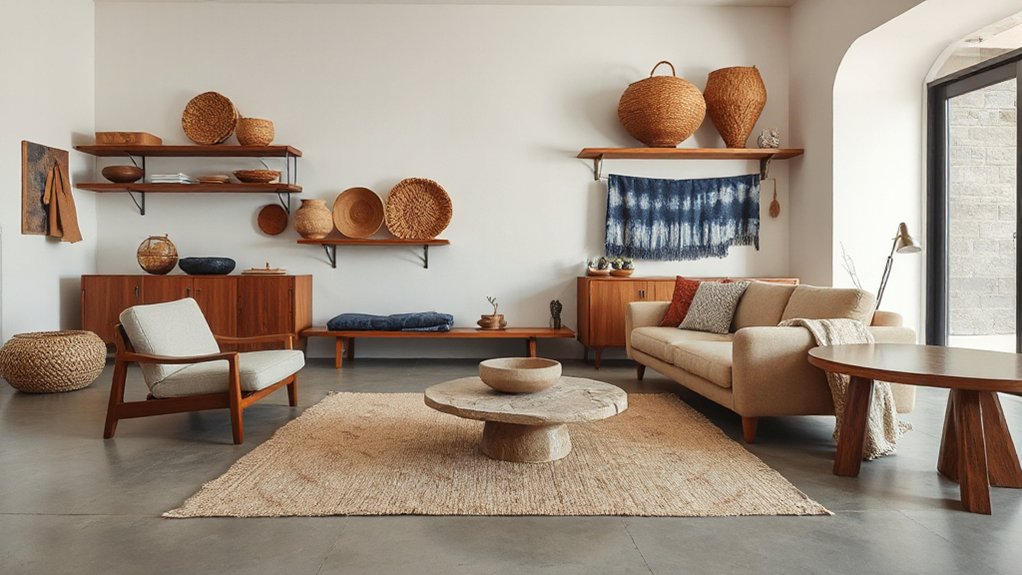
Where does “craft heritage” show up in a modern interior—beyond a few handmade accents? You’ll find it in the disciplined use of techniques, materials, and motifs tied to a place and its makers.
Craft heritage means you specify objects that carry Cultural significance: a hand-loomed textile that reflects regional weaving structures, or a carved timber detail based on vernacular joinery. You treat these elements as functional architecture, not décor—integrating them into millwork, lighting, hardware, and surface finishes.
You also preserve process visibility: tool marks, natural dye variation, and intentional irregularity that signal authenticity. When you curate craft this way, you balance durability, ergonomics, and maintenance with Artistic expression, creating interiors that feel contemporary yet rooted.
Why Are Craft Heritage Interiors Trending Now?
A major reason craft heritage interiors are trending now is that you’re designing for longevity in a culture tired of disposable “fast décor.” Clients increasingly want spaces that feel personal and credible, and heritage craft delivers that through traceable materials, visible process, and forms tied to regional know-how.
You’re also responding to supply-chain volatility by prioritizing local makers and reparable, modular pieces. Social media has shifted taste toward tactile proof of human skill, so you can justify premium budgets with Artistic authenticity and measurable impact.
When you specify heritage work, you signal Cultural preservation without preaching, and you build trust through transparency.
You’ll feel the pull because it offers:
- Belonging
- Pride
- Calm
- Continuity
Where Craft Heritage Shows Up in a Room
Even if you’re working with a clean, modern shell, craft heritage shows up fastest in the touchpoints and thresholds you specify: the entry’s hand-planed bench or tiled plinth, a living-room rug with irregular knot density, kitchen millwork with visible joinery and hand-finished pulls, lighting with blown-glass variance, and a bath clad in regional stone or zellige that refuses perfect repetition.
You’ll also see it in quieter layers: a woven shade that softens glare, a plaster wall that catches raking light, or a dining table edge that keeps tool marks. These cues carry Cultural symbolism without feeling theme-parked, because they sit where you interact daily—grips, edges, floors, and focal sightlines.
When you let slight variation remain visible, you make room for artisan storytelling, and the room reads current, not nostalgic.
How to Choose Craft-Led Materials and Finishes
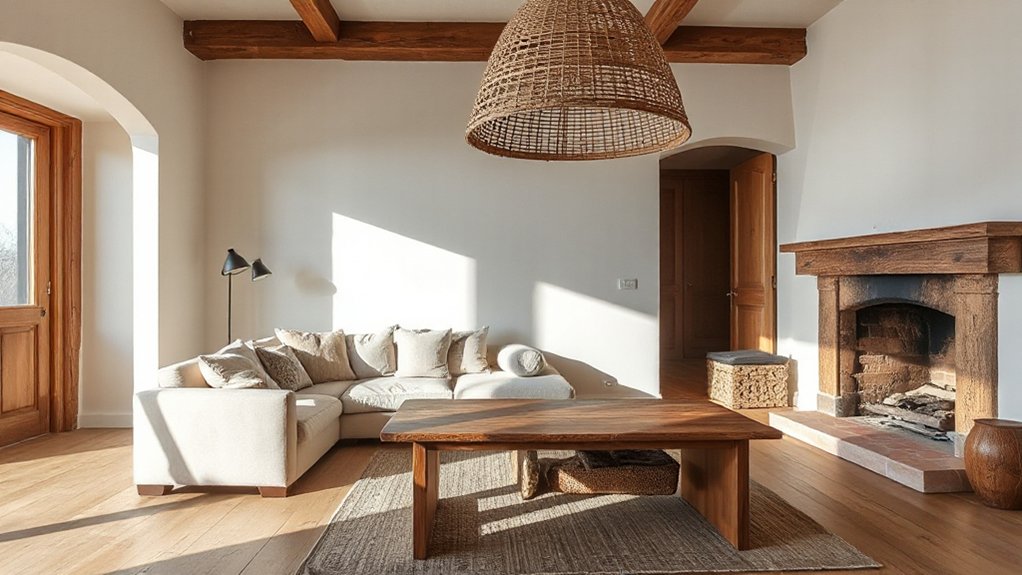
Start by verifying provenance: you should know where the material comes from, who made it, and what processes—hand, low-impact, or industrial—shaped it.
Then you’ll balance texture and patina, pairing tactile, craft-forward surfaces with cleaner elements so the room reads intentional, not busy.
Finally, you’ve got to test durability in context—seal, wear rating, and maintenance—so the finish ages beautifully and performs like a modern spec.
Evaluate Provenance And Process
Where does that timber, clay, or metal actually come from—and what happened to it before it reached your project? You can’t specify craft-led finishes without interrogating provenance authenticity and the process behind them. Ask for chain-of-custody documents, maker profiles, and batch records; verify species, quarry, or mill; and confirm labor standards and safe chemistry.
Today’s clients expect traceability, and you should treat it as a design metric, not marketing.
- Request origin evidence so you feel confident, not complicit.
- Visit workshops to witness hands-on skill and honest tolerances.
- Read tooling marks and joinery like craftsmanship storytelling, not décor.
- Specify small-batch trials so you protect budgets and reputations.
Choose partners who can prove, not promise.
Balance Texture, Patina, Durability
Because craft-led surfaces carry both story and risk, you’ve got to balance texture, patina, and durability like a three-way spec—one you can defend to clients, installers, and future maintenance teams.
Start by mapping touchpoints: entries, countertops, pull zones, and wet areas demand sealed, repairable systems.
Use textural contrast intentionally—pair a honed stone with raked plaster, or ribbed oak with smooth metal—so wear reads as design, not damage.
For aged finishes, ask how patina develops: oxidation, oiling, limewash burnish, or mechanical distressing, and whether it can be rebalanced on site.
Request samples in the actual light and run stain, scratch, and cleaning tests.
Then document care: approved products, recoat cycles, and acceptable variation thresholds.
Textiles: Rugs, Throws, and Handwoven Warmth
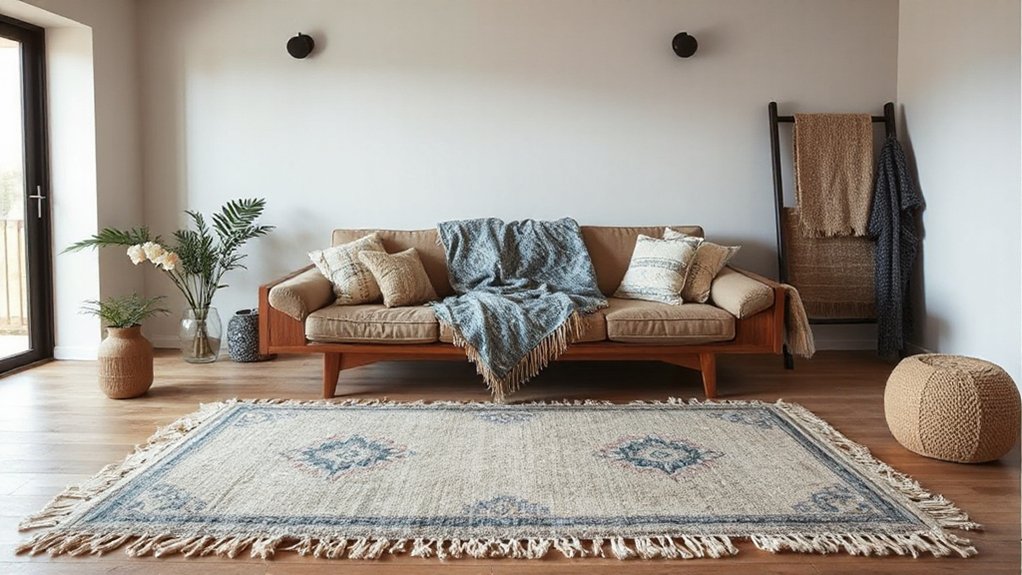
While hard surfaces set the architecture of a room, textiles set its temperature, acoustics, and emotional pull. You anchor spaces with rugs that reference lineage through pattern, dye, and knot density; you also signal Cultural symbolism without turning it into décor cosplay.
In contemporary homes, layered flatweaves over plush piles feels current, while hand-thrown throws and woven cushions soften minimal lines and cut echo.
Use textiles to trigger feeling with intent:
- Let a corridor runner guide you like a path.
- Drape a throw where you want conversation to linger.
- Choose imperfection to invite touch, not caution.
- Keep one heirloom piece to steady the room.
Commit to Textile maintenance—rotate, vacuum, spot-clean fast—so warmth stays crisp, not tired.
Ceramics: Tiles, Vessels, and Tactile Surfaces
You can anchor a modern room with handcrafted tiles that read like a narrative—shifting linework, regional motifs, and intentional variation that makes every installation unique.
You’ll sharpen the look with ceramic vessels as functional sculpture, using scale and silhouette to punctuate shelves, consoles, and dining tables.
You can also lean into tactile glazes—matte, crackle, ash, or speckled finishes—to add touch-first depth that aligns with today’s warmer, more material-forward interiors.
Handcrafted Tile Narratives
- You feel steadied by repeat patterns that behave like ritual.
- You notice joy in a single “wrong” tile that proves it’s real.
- You watch light skim relief and animate quiet walls.
- You remember home whenever the story meets your feet.
Vessels And Tactile Glazes
Where does a room’s warmth really come from—color, or touch? You feel it when ceramic vessels carry tactile glazes that invite your hand to linger. Choose satin-matte celadons for calm, or volcanic ash blacks for contrast; both catch light softly and make surfaces read as crafted, not manufactured.
You can anchor open shelving with a trio of wheel-thrown forms, varying neck height and shoulder width to create rhythm without clutter. Prioritize Tactile textures: finger-grooved slip, crackle glaze, or sanded engobe, and place them where you’ll brush past daily.
Let Cultural symbolism guide selection—tea bowls, amphora profiles, or regional motifs—so objects function as quiet storytelling. Pair them with oak, linen, and warm LEDs to amplify depth.
Woodwork: Carving, Joinery, and Wall Details
Although modern interiors often favor clean planes and minimal ornament, fine woodwork still sets the baseline for craftsmanship—through crisp carving, tight joinery, and intentional wall detailing. You feel it in the way a chamfer catches light, how a rail meets a stile without filler, and how paneling guides the eye.
Today’s trend leans warm, tactile, and honest: visible tenons, bookmatched veneers, and quiet rhythm in slatted walls.
- You run your hand over Wood carving and sense patience, not polish.
- You trust Joinery techniques when doors close with a soft, exact click.
- You frame rooms with wainscoting and reveal lines that calm busy plans.
- You choose timber species deliberately, letting grain tell the story.
Metalwork: Lighting, Hardware, and Accents
Wood sets the tactile baseline, but metalwork sharpens the edges of a modern interior—literally and visually—through light, touchpoints, and restrained shine.
You can specify hand-forged pendants with hammered shades to cast focused pools, or choose spun brass sconces that read sleek yet rooted.
Prioritize metalwork techniques like patination, blackening, and brushed finishing to control reflectance and hide fingerprints.
Upgrade daily contact points: knurled pulls, solid levers, and precision hinges give doors and cabinetry a crafted snap.
Mix finishes with intent—warm bronze against cool stainless, or matte black to outline pale stone—so progression feel designed, not random.
Keep decorative accents functional: a welded console frame, a riveted mirror clip, or a minimal rail system.
How to Use Traditional Patterns Without Clutter
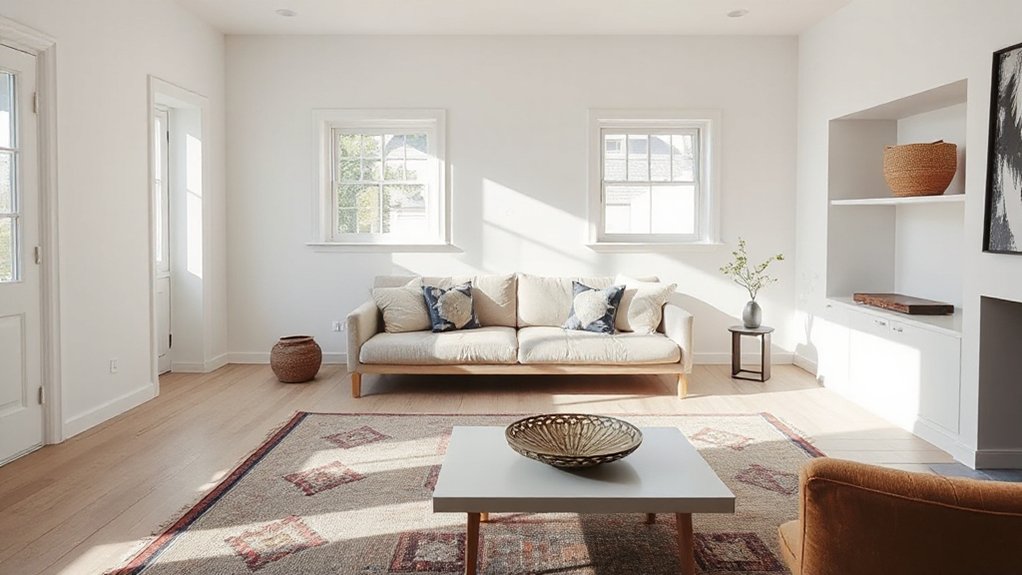
To keep traditional patterns looking modern, you balance heritage motifs with solid fields—think one statement textile against clean-painted walls and streamlined upholstery.
You’ll get a calmer, more current result when you limit pattern scale variety to two sizes, such as a large repeat on the rug and a tight micro-print on cushions.
You control visual noise by repeating one motif or colorway across pieces instead of layering competing patterns.
Balance Motifs With Solids
When you layer traditional motifs into a modern room, you’ll get the best result by treating pattern like a strong seasoning rather than the whole meal. Anchor the space with solid upholstery, calm wall colors, and clean-lined casegoods so the motif reads intentional, not noisy. Let furniture craftsmanship do the talking—grain, joinery, and hand-finished edges count as visual texture without adding print.
Then use color integration to link motifs to solids: pull one hue from the pattern into paint, piping, or a throw, and repeat it sparingly.
- Choose one statement textile and feel instant heritage.
- Pair it with matte solids and breathe easier.
- Add one crafted wood piece and sense quiet confidence.
- Edit accessories, and the room looks collected, not crowded.
Limit Pattern Scale Variety
After you’ve balanced motifs with solids, the next lever for a clean modern look is controlling scale—because too many pattern sizes competing in one sightline reads busy fast.
Choose two scales per zone: one dominant (large repeat) and one supporting (micro or tight repeat). Keep the third scale absent, or push it into texture-only materials like ribbed wool or cane.
Use Scale considerations to map hierarchy: anchor the room with a single bold heritage pattern on a rug or drapery, then echo it in a smaller scale on a pillow or shade.
Limit Pattern diversity by repeating the same motif family across finishes, not introducing new prints. If you want more energy, shift color, not scale, and keep negative space intentional.
How to Pair Craft Heritage With Minimalism
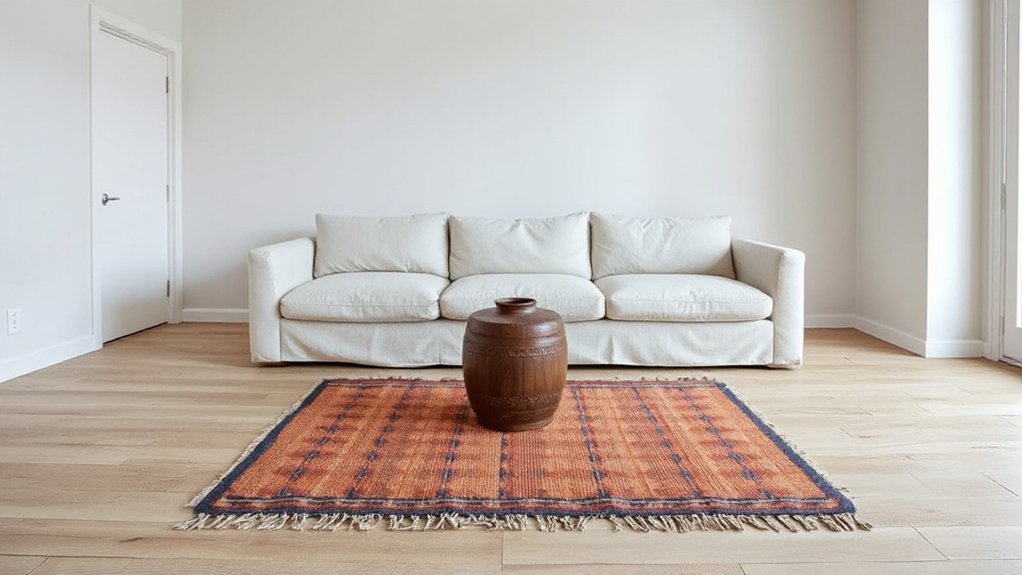
Although minimalism favors restraint, you can still showcase craft heritage by treating handmade pieces as focal points rather than background décor. In modern minimalism, choose one artisan anchor per sightline—a hand-thrown vase, woven runner, or carved stool—then give it negative space and clean lighting to let texture speak.
Build vintage contrast through honest materials: oiled oak, unlacquered brass, and imperfect glaze against matte plaster and crisp lines. Keep the palette quiet, but let touch and provenance carry the drama.
- Edit ruthlessly so the piece feels earned, not staged.
- Layer tactile neutrals to invite calm, not clutter.
- Highlight joinery and tool marks to spark awe.
- Use repetition of one craft motif to create belonging.
Craft Heritage in Restaurants, Hotels, and Retail
Minimal, craft-forward styling gets even more powerful in hospitality and retail because guests don’t just see handmade work—they move through it, touch it, and post it. You can turn craft heritage into a brand signal by anchoring key moments: a reception desk faced in hand-cut tile, a banquette backed with woven rush, or a checkout wall lined in carved timber.
In restaurants, you use Artistic techniques to guide flow—glazed ceramics at the bar for sparkle, matte plaster in dining zones for calm.
In hotels, you layer Cultural symbolism through motifs on screens, headboards, and corridor runners, creating wayfinding with meaning.
In retail, you spotlight makers through modular displays and durable finishes that age well under high traffic.
How to Source Authentic Pieces (and Avoid Mistakes)
When you source craft pieces for a modern interior, you’re not just buying an object—you’re validating provenance, materials, and the maker’s process, because that’s what keeps “artisan” from turning into a marketing label. Ask for workshop photos, material specs, and a clear chain of custody; if they can’t provide it, walk away.
Prioritize living makers and cooperatives, and confirm Artisan techniques through tool marks, joinery, glazing, or stitch structure—not vague “handmade” tags. Vet Cultural symbolism with the maker or community voice so motifs aren’t stripped into décor.
- Trace origin to feel trust, not doubt.
- Pay fair rates to honor hands, not hype.
- Request care guidance to protect patina and soul.
- Avoid mass “heritage” drops that erase identity.
Frequently Asked Questions
What Is the Difference Between Craft Heritage and Vintage Decor?
Craft heritage centers on artisan techniques and cultural significance you preserve through making traditions; vintage decor features older, era-specific items you source for style and patina. You’ll prioritize provenance in craft, while you chase nostalgia in vintage.
How Can I Incorporate Craft Heritage on a Tight Budget?
Use budget friendly techniques: source handmade textiles at thrift markets, buy seconds, and frame small artisan pieces. Practice DIY craft integration by stenciling borders, weaving wall hangings, and updating hardware with locally made pulls.
How Do I Maintain and Clean Handmade Surfaces Without Damaging Them?
Treat handmade surfaces like silk in a storm: you’ll keep them pristine with surface protection and gentle cleaning. You’ll use pH-neutral soap, soft cloths, quick drying, avoid abrasives, and reseal finishes seasonally.
How Can I Verify the Provenance or Maker of a Handmade Piece?
You can verify provenance by requesting certificates, receipts, and high-res process photos, then cross-checking signatures, tool marks, and materials against archives for authenticity verification. For maker identification, contact guilds, galleries, and the artist directly.
What Are Eco-Friendly Ways to Ship and Store Fragile Artisan Items?
You’ll ship fragile artisan items greener by choosing sustainable packaging: molded pulp, recycled paper, paper tape, and right-sized boxes; avoid plastic fill. Store with reusable storage like fabric wraps, padded crates, silica packs, and labeling.
Conclusion
You step into a room like a traveler entering an old workshop: every hand-finished edge is a compass point, every weave a map. When you choose craft heritage—honest timber, natural stone, handloom textiles—you don’t just decorate; you anchor. Let traditional patterns speak in one clear “hero” moment, then let minimal lines hold the silence around it. Source directly, verify provenance, and you’ll get trend-proof interiors that age with dignity.