Keep your steel-and-concrete look warm by swapping stark greys for earthy neutrals like taupe, clay, and off-white, then add texture with wool rugs (with dense underlay), linen curtains on ceiling tracks, and plush upholstery to cut echo. Use layered lighting—dimmable pendants, wall lights, and warm 2700–3000K LEDs—to avoid a clinical feel. Mix in real wood, muted metals, plants, and a few vintage pieces, and you’ll see simple upgrades make the biggest difference.
Key Takeaways
- Balance concrete and steel with warm woods, tan leather, and earthy neutrals like taupe, clay, and off-white.
- Add acoustic-softening textiles: thick wool rugs with underlay, ceiling-track curtains, and plush upholstery to reduce echo and chill.
- Use layered, warm lighting (2700–3000K) with dimmers: ambient pendants, task lights, and accent uplighters to avoid a clinical feel.
- Define zones in open plans with rugs, shelving, or sofa backs, keeping storage closed to prevent a cluttered warehouse look.
- Introduce character through curated vintage art, reclaimed pieces, and indoor plants in chunky planters for warmth without losing industrial edge.
A Quick Plan for Cozy Industrial Style

Although industrial interiors can feel stark at first, you can make the style genuinely cosy by starting with a simple, UK-friendly plan. Begin by mapping your room’s zones: seating, dining, and work, even if you’re doing open space design in a flat or terrace.
Use a large rug to anchor the lounge area and stop sound bouncing off brick or concrete. Next, plan industrial lighting in layers: a dimmable pendant over the table, wall lights for reading, and warm LED strips under shelving to soften metal edges.
Keep storage closed where possible so visual clutter doesn’t feel like a warehouse. Finally, add one statement texture—chunky knit throws, linen curtains, or a reclaimed timber coffee table—to balance steel and glass.
Pick a Warm Industrial Color Palette (Not Stark Gray)
Start by swapping harsh greys for earthy neutrals like warm taupe, clay, and off-white, so your space feels lived-in rather than cold.
Bring in warmth with brushed brass, blackened steel, and mid-tone woods to balance concrete and exposed services.
Finish with muted accent pops—sage, rust, or navy—kept to small areas like joinery, soft furnishings, or feature panels for a controlled, industrial look.
Earthy Neutrals Over Gray
When you’re designing an industrial space, swapping stark gray for earthy neutrals keeps the look tough but far more livable, especially under the UK’s often flat natural light. Start with warm off-whites, putty, clay, and stone tones on larger planes like walls and ceilings so the room doesn’t read like a warehouse.
Use industrial lighting with warmer lamps (around 2700–3000K) to stop neutrals from turning muddy in winter. Diffuse with opal globes or linear frosted covers to soften shadows on brick and concrete.
For metal finishing, choose muted, low-sheen options so pipes, frames, and fittings don’t glare against pale backgrounds. Test samples under daytime and evening light before committing.
Warm Metals And Woods
Because industrial interiors lean hard on steel and concrete, you’ll get a warmer, more “finished” look in UK homes by pairing those hard surfaces with warm metals and real wood instead of defaulting to stark grey.
Choose brushed brass, aged bronze, or copper for taps, pendants, and cabinet pulls; they soften black steel frames without losing that warehouse edge. Keep metal finishes consistent across the room so it reads intentional, not mismatched.
Bring in oak, walnut, or reclaimed scaffold boards as shelves, a breakfast bar, or window boards; wooden accents add grain and depth that paint can’t.
If you’ve got polished concrete or LVT, balance it with a timber rug-underlay zone and a solid-wood coffee table.
Use matte sealers, not high gloss, for UK light.
Muted Accent Color Pops
Although industrial style loves a monochrome base, you’ll get a more liveable UK look by building on warm neutrals—soft greige, putty, clay, and off‑black. Then adding muted accent pops instead of defaulting to cold concrete grey.
Keep the accents dusty, not loud: sage, inky teal, oxblood, or tobacco. Use them in repeatable, small doses so the space feels intentional—cushions, a wool throw, a painted internal door, or a single run of kitchen tiles.
For rentals, swap in colour through art with warm mats and timber frames, or a washed linen curtain rather than bright prints. Aim for subtle color accents that soften brick, steel, and concrete while still reading industrial.
Stick to three accents max overall.
Balance Metal and Concrete With Soft Textures
If your space leans on steel, brick, and concrete, you’ll need soft textures to stop it feeling cold and echoey. You can layer textiles—wool rugs, linen curtains, and cushioned seating—to add warmth underfoot and improve acoustics.
Bring in warm wood and leather through a dining table, shelving, or an armchair to soften the hard edges without losing that industrial look.
Layered Textiles And Rugs
When you’ve filled a space with steel, exposed brick, and polished concrete, layered textiles stop it feeling cold and echoey. Use Textile layering to add warmth without hiding the industrial bones, and plan Rug placement to define zones in open-plan UK flats and converted warehouses.
- Start with a large, flatweave rug under the sofa front legs; it anchors seating and reduces footstep noise on concrete.
- Add a second, smaller rug (sheepskin or low-pile) near a reading chair for tactile contrast and comfort.
- Layer curtains or linen blinds to soften hard window reveals; choose off-whites, charcoal, or rust to suit brickwork.
- Finish with cushions and a throw in mixed weaves; keep a limited palette, but vary texture for depth.
Warm Wood And Leather
Layered rugs and curtains take the edge off concrete and brick, then warm wood and leather bring that softness up to eye level without losing the industrial feel.
Choose oak or walnut shelves, a reclaimed scaffold-board table, or timber wall panelling to break up hard planes and add visual warmth.
Bring in leather through a sofa, dining chairs, or bar stools; in UK homes, mid-brown or tan hides age well and mask scuffs. Keep silhouettes clean so you don’t drift into rustic.
Pair the warmth with blackened Metal finishes on frames, handles, and brackets to stay grounded.
Place Industrial lighting above key timber pieces so the grain reads at night: use warm-white LEDs (2700–3000K) and dimmers for control.
Finish with a waxed or matte seal for easy upkeep.
Use Layered Lighting for Cozy Industrial Warmth
Although industrial interiors lean on hard edges and raw materials, you can make them feel inviting by building a layered lighting plan that balances task, ambient, and accent sources. Start by choosing warm-white LEDs (2700–3000K) to soften concrete and steel, then control glare with shades and diffusers.
In UK homes, dimmable circuits and smart bulbs help you shift mood from workday to evening without changing fittings.
- Fit task lighting over worktops and desks: under-cabinet strips, swing-arm wall lights, or track heads.
- Create ambient ambiance with ceiling pendants on dimmers, bounced off pale walls or ceilings.
- Add accents: picture lights, uplighters behind plants, or shelf strips to highlight texture.
- Layer control: use zones, timers, and lamps on plugs for flexible scenes.
Choose Plush Seating and Warm Wood Furniture
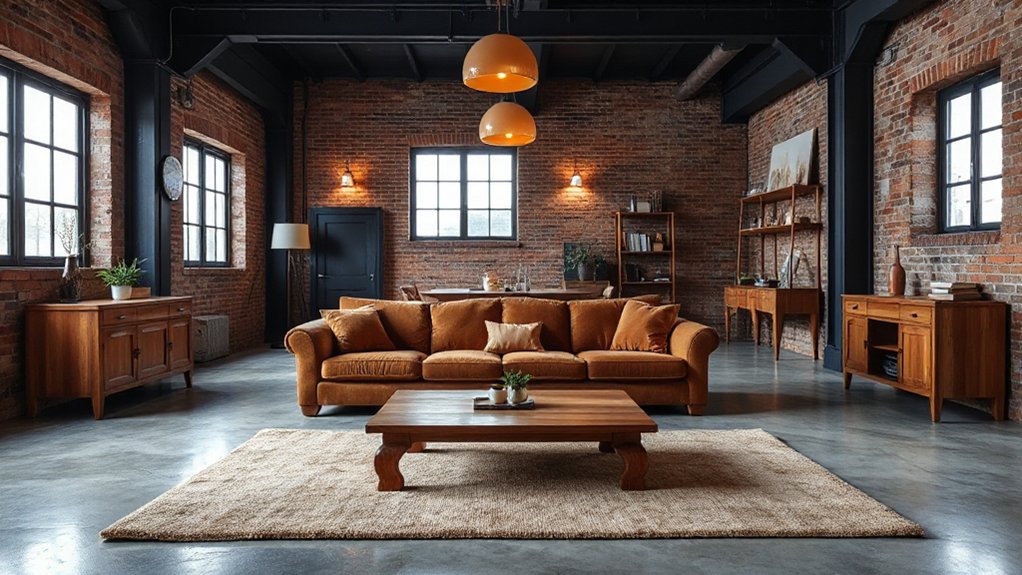
Even if you love exposed brick and black steel, you’ll get a far more liveable industrial look by grounding it with plush seating and warm-toned wood furniture.
Start with a deep sofa in velvet, brushed cotton, or quality leather; choose feather-wrapped or high-resilience foam cushions so it feels inviting, not showroom-stiff. If you’ve got an open-plan London flat, go for a compact chaise or a snug armchair pair to keep circulation clear.
Balance the hard edges with warm wood furniture: oak, walnut, or smoked ash coffee tables, sideboards, and dining tops. Pick pieces with visible grain and rounded corners to soften the lines.
Keep the palette earthy—tan, rust, and olive—so metalwork looks intentional, not harsh.
Stop the Echo With Rugs, Curtains, and Upholstery
Plush seating and warm timber stop an industrial room feeling cold, but you’ll still notice the sound if you’ve got hard floors, high ceilings, and bare brick. You need targeted sound absorption to kill slapback and make conversations easy.
- Lay a thick wool rug with dense underlay; it’s simple acoustic treatment that also softens footsteps on concrete.
- Hang full-length curtains on a ceiling track, even over glazing; choose lined, heavy fabric and let it puddle slightly for better damping.
- Pick upholstered dining chairs or a fabric sofa rather than all-leather; textured weaves absorb more mid and high frequencies.
- Add a padded headboard or upholstered bench on large walls; it acts like a discreet panel without looking “studio”.
Add Plants, Art, and Vintage Pieces for Lived-In Character
Once you’ve sorted the hard finishes and acoustics, bring the space to life with plants, bold art, and a few well-chosen vintage finds that take the edge off all that steel and brick.
Start with indoor plants that cope with UK light levels: snake plant, ZZ, pothos, and peace lily. Group them in threes, vary heights, and use chunky terracotta or enamel planters to suit the industrial palette.
Hang one oversized print rather than lots of small frames; black metal or dark oak frames keep it cohesive.
Mix in vintage artwork from local markets, auction houses, or charity shops, and let the patina show.
Add a worn leather chair, factory stool, or reclaimed sideboard for warmth, then keep surfaces edited.
Industrial Design Mistakes That Make a Home Feel Cold

Because industrial style leans hard on steel, concrete, and stark lines, a few common choices can tip your home from “warehouse chic” into feeling cold and unwelcoming. Avoid these frequent missteps, especially in typical UK terraces and converted flats where comfort matters as much as edge.
- Overdoing grey-on-grey: Too much concrete, charcoal paint, and bare steel kills warmth. Break it up with oak, tan leather, or warm textiles.
- Unzoned open floor plans: If everything flows, nothing feels cosy. Use rugs, bookcases, or a sofa back to define areas.
- Harsh lighting: Cool LEDs and exposed bulbs feel clinical. Choose 2700K lamps, dimmers, and shaded pendants.
- Echoey, hard surfaces: Add curtains, upholstered seating, and felt pads to soften sound and touch.
Frequently Asked Questions
How Can I Improve Insulation in a Loft With Exposed Brick Walls?
Add internal stud walls with Loft insulation and a vapour control layer over Exposed brick, then plasterboard. Seal draughts around windows and floors, fit thermal curtains, and consider secondary glazing. Check damp, comply with UK regs.
Which Industrial-Style Materials Are Best for Soundproofing a Room?
You’ll tame noisy neighbours with mass-loaded vinyl behind plasterboard, dense mineral wool, and rubber underlay—your room’s “chatty” edges quieten. Add Acoustic panels on walls and Soundproof curtains over windows/doors; seal gaps with acoustic mastic.
What Budget-Friendly Upgrades Warm up an Industrial Rental Without Renovations?
Add decorative lighting with warm LEDs, then layer cozy textiles like wool throws, rugs, and velvet cushions. Use peel-and-stick wall art, plants, and timber accessories. Swap chrome for brass, and choose UK-market blackout curtains.
How Do I Prevent Condensation on Metal-Framed Windows in Winter?
Condensation can turn your metal frames into indoor rain, so you’ll cut metal window condensation by running a dehumidifier, boosting trickle-vent ventilation, and adding winter window insulation: draught strips plus thermal film; keep radiators unblocked.
What’s the Best Way to Hide Industrial Clutter While Keeping the Style?
Use Industrial decor storage that doubles as features: steel lockers, wheeled tool chests, and lidded crates. Build a UK-style ply-and-metal cabinet wall, label bins, and run cable trays for tidy clutter concealment.
Conclusion
You can keep the steel-and-concrete look without your home feeling like a warehouse. Start with warmer paint tones, then balance hard finishes with rugs, curtains, and upholstered pieces to cut echo. Layer lighting (ceiling, task, and table lamps) so evenings feel inviting, not harsh. Add warm wood, plush seating, and a few plants or vintage finds for character. Get these basics right and you’ll be cooking on gas in any UK space.