
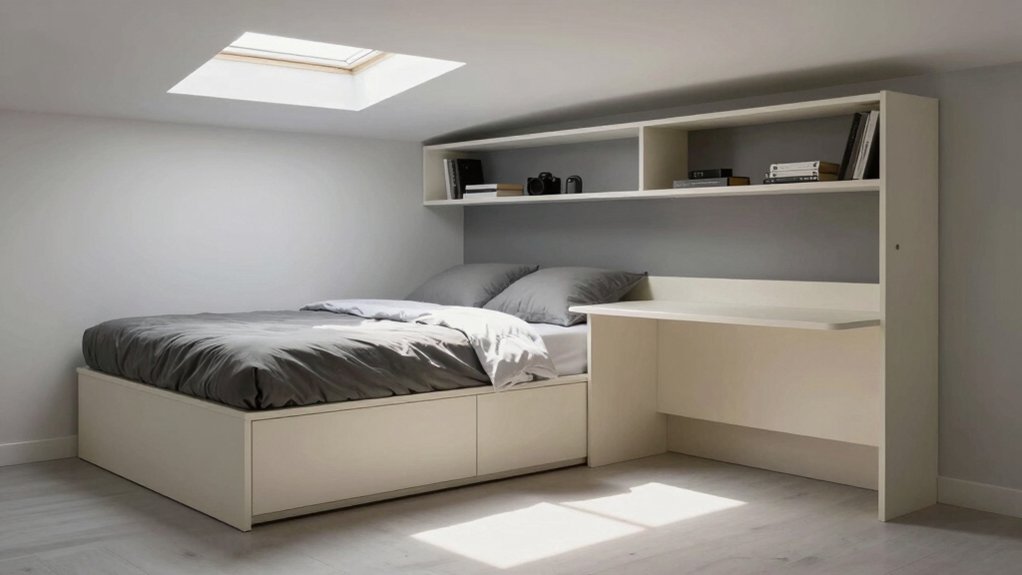

You discover a tiny box room and realize the same tricks work for you as they do for pros, often by coincidence—built-ins can free floor space you didn’t know you had. You’ll want a practical plan: think walls, not just the floor, with clever storage, selective color, and multi-purpose pieces. But the best setups hinge on knowing what to prioritize first, so you’ll want to map your options before you commit to furniture and finishes. Wonder what to tackle first?
Maximizing Floor Space With Built-Ins
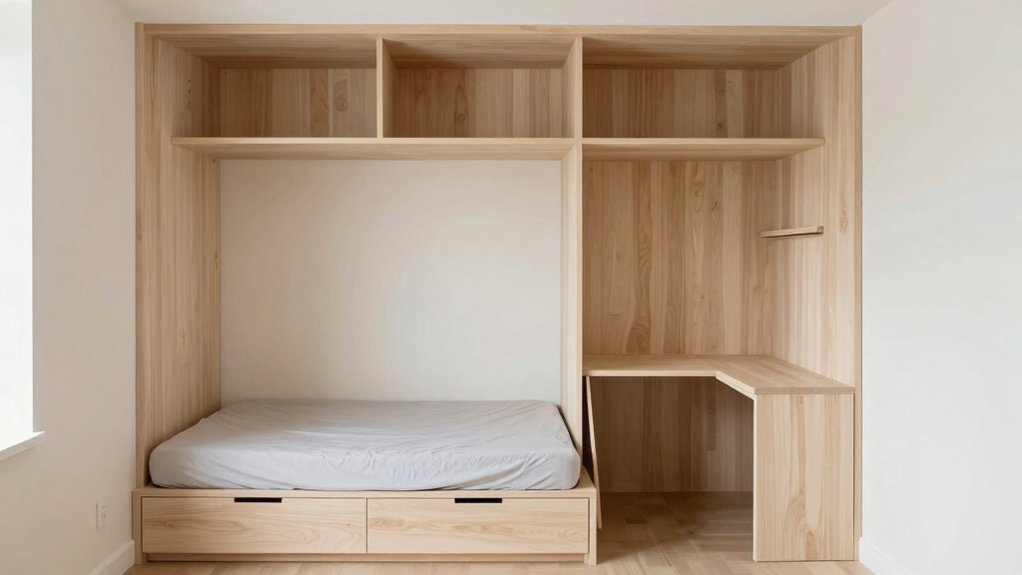
Maximizing floor space with built-ins starts with smart planning. You map out essential zones first: sleeping, storage, and workspace, then tailor units to fit without crowding.
Choose low-profile furniture and integrated storage to reduce visual bulk. Opt for wall-mounted cabinets and shelves that run full height, freeing precious floor area for movement.
When placing elements, consider furniture arrangement that creates clear pathways and multiple sightlines, avoiding dead corners. Use slim, tailored wardrobes or storage alcoves to tuck gear out of sight, and pair them with a bed that has built-in drawers to minimize furniture clutter.
Prioritize linear layouts over scattered pieces, and ensure color coordination across cabinetry and textiles to maintain a cohesive, calm feel. You’ll gain breathing room while keeping functionality, accessibility, and flow intact.
Choosing a Light Color Palette for Small Rooms
Choosing a light color palette is your first step to a brighter box room. Use light tones and a consistent palette to create a cohesive space.
Mirror that with reflective surfaces to balance lighting. Keep the look practical and precise by aligning colors across surfaces for a brighter, more spacious feel.
Light Tones, Brighter Feel
Light tones help small rooms feel more expansive, so start with a bright base and add subtle accents. You’ll select light neutrals as core walls, ceiling, and larger furniture pieces to reflect natural light without washing the space. Incorporate very pale cool or warm undertones to prevent a flat look.
Then, introduce color with controlled, purposeful pieces. Use decorative accents to create focal points—think a softly colored throw, a framed print, or a rug that ties the scheme together. Keep contrast limited to avoid visual clutter; you want air, not heaviness.
Your personalized touches should be curated and repeatable, reinforcing the palette across textiles and storage. Test samples in daylight, then finalize with a cohesive, practical plan that supports movement and function.
Reflective Surfaces Balance Lighting
Reflective surfaces can balance lighting in small rooms by bouncing natural and artificial light around the space. In practice, choose finishes with subtle sheen on walls, ceilings, and furniture to maximize reflection without glare.
Opt for light-neutral backgrounds that reflect daylight toward corners, while avoiding pure white if it risks harsh contrasts. Introduce decorative accents with metallics or glass to sprinkle highlights without overpowering the palette.
Consider wall mirrors to amplify daylight from windows, but place them thoughtfully to prevent crowded reflections. For artificial light, choose fixtures with diffusers and warm-to-neutral color temperatures that harmonize with the room’s base tone.
Maintain color contrast where you need depth, using varied textures instead of saturated shifts. This approach keeps the room feeling larger, cohesive, and calm.
Consistent Palette, Cohesive Space
A consistent light color palette ties the room together and makes small spaces feel larger. You choose a base light shade and employ 1–2 complementary hues for accents, avoiding busy contrasts that close in the eye. Prioritize color coordination by mapping each zone—sleep, work, storage—to a unified family (cool neutrals or warm pastels) so progressions feel seamless.
Use brighter whites for ceilings and trim to reflect more light, while walls remain subtly tinted to prevent a clinical look. Apply lighting techniques that reinforce the palette: layered sources, wall washing, and task lighting aligned with color warmth.
Keep finishes consistent across furniture and textiles to minimize visual noise. Test samples under both daylight and artificial light, adjusting until the palette reads calm and cohesive.
Smart Storage Solutions for Tiny Bedrooms
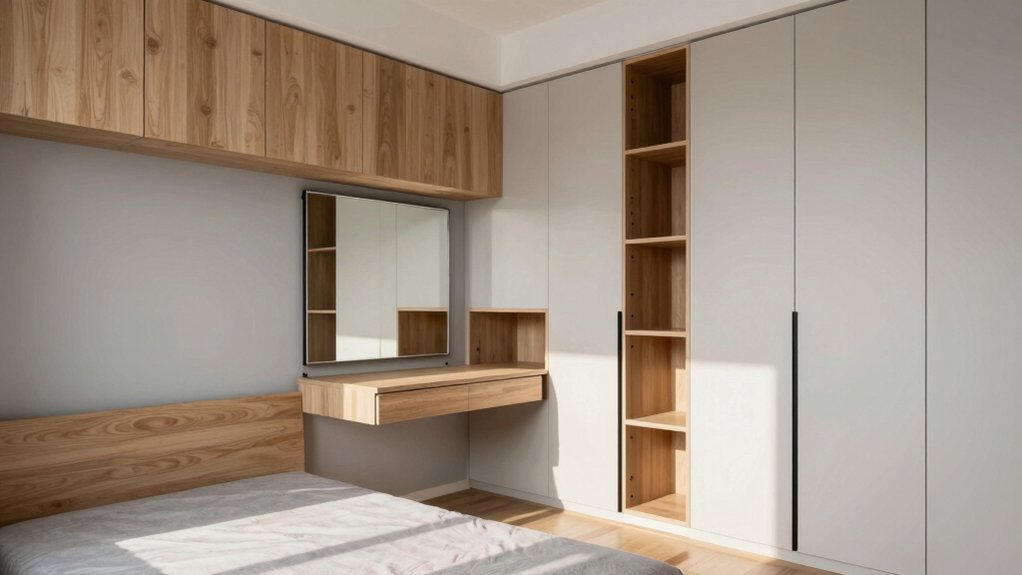
In tight spaces, consider hidden wall storage to keep surfaces clear without sacrificing function. Explore lofted bed solutions to gain valuable floor area while tucking essentials into built-in nooks. These approaches pair practicality with efficient design, helping you maximize every inch of a tiny bedroom.
Hidden Wall Storage
Hidden wall storage is a smart way to reclaim floor space in tiny bedrooms. You can use recessed shelves, framed niches, or shallow cabinets that align with wall planes, so nothing intrudes into the room’s footprint. Choose concealed cabinetry with doors that blend into trim or wallpaper for a seamless look, minimizing visual clutter.
Plan locations around bed ends, entryways, and seating nooks to maximize accessibility without tripping hazards. Build with solid backs, adjustable shelves, and robust hardware to support everyday use. Prioritize materials that resist humidity and stains, especially in high-traffic zones.
Label bins or use clear fronts to simplify retrieval. Install lighting inside options to improve visibility; ensure hinges, slides, and gaps stay tight for a polished finish.
Lofted Bed Solutions
Lofted bed solutions release dramatic storage gains in tiny bedrooms by freeing floor space and creating defined zones for sleeping, work, and gear. You’ll leverage vertical space with a sturdy frame and integrated drawers or shelves, turning under-bed nooks into practical storage.
Choose bed height to balance accessibility and ceiling clearance, ensuring you can sit up comfortably without hitting the sloped or low portions of the room. Use the area beneath for a compact desk, seating, or wardrobe access, keeping pathways clear.
Consider window placement to maximize natural light while maintaining safe clearance for mattress height and ladder use. Select a ladder that’s easy to access and secure, and add guard rails for safety.
Keep hardware hidden for a clean, roomier look.
Multi-Purpose Furniture Ideas
Multi-purpose furniture is the smart way to maximize a small box room. You’ll save space and simplify daily routines by choosing pieces that serve more than one function.
Start with a bed frame that includes built-in drawers or a lift-up mattress for under-bed storage, freeing closet space.
Opt for a compact desk that doubles as a vanity or folding wall table to reduce clutter.
Use a storage ottoman that doubles as seating and a discreet spot for blankets or accessories.
Prioritize modular seating that can reconfigure for guests or study time.
Integrate decorative accessories and color accents thoughtfully to avoid visual chaos.
Measure doorways, ensure clean lines, and maintain easy access to every zone.
Zoning a Box Room for Comfort
To maximize comfort, start by defining Smart Storage Zones that keep essentials within easy reach without cluttering the floor. Plan Traffic Flow to minimize bottlenecks, ensuring clear paths between seating, work surfaces, and storage.
We’ll discuss how these elements intersect to create a balanced, functional box room.
Smart Storage Zones
Smart storage zones transform a box room into a comfortable, functional space. You’ll design compartments that render every inch usable, prioritizing accessibility and tidy sightlines.
Begin with a core spine: a built-in wardrobe or shelving run that divides sleeping and work zones without closing the room. Use vertical storage to free floor space, and incorporate drawers, baskets, and modular bins for quick organization.
Choose furniture with integrated storage, such as a bed with drawers or a window-seat with lift-up storage. Plan for decorative accents and color coordination that keep the eye centralized and calm, avoiding visual clutter.
Label systems clearly and maintain a simple, repeatable order so daily routines stay efficient and stress-free. Avoid overstuffed corners; keep pathways clear.
Traffic Flow Planning
Traffic flow in a box room hinges on clear zoning and accessible paths; if you map entry, sleeping, and work zones as separate but connected areas, movement stays smooth.
You’ll prioritize routes that avoid crossing between zones, keeping doorways and storage clear. Start with a simple grid: place the bed along a wall to maximize central floor space, then locate a compact desk near natural light without blocking circulation.
Reserve one clear path from door to desk and another from bed to storage. Choose furniture with slender profiles to minimize obstruction. Use vertical storage to reduce floor clutter, and keep under-bed space for rarely used items.
Regularly reassess: a minor rearrangement can dramatically improve traffic flow planning and furniture arrangement efficiency.
Reflective Surfaces and Lighting Techniques
Reflective surfaces and thoughtful lighting can transform a small space by enhancing depth and brightness. You’ll want a plan that minimizes glare while maximizing perceived room size.
Start with a couple of strategically placed light sources: a slim floor lamp near a wall to bounce light, plus a compact ceiling fixture to avoid clutter. Use warm, consistent color temperatures to keep atmosphere calm and readable.
Mirrors amplify area without crowding, so position mirrored furniture where it reflects natural light from a window or the main lamp. Glass decor, chosen sparingly, adds sparkle without heaviness.
Choose frameless or slim-framed pieces to keep lines clean and open. Finally, dimmers give you control, letting you adjust mood for different activities without sacrificing efficiency.
Bed Placement to Free Up Space
Placing the bed wisely instantly frees ceiling-to-floor space in a small room. You want bed placement that maximizes usable area without crowding doors or windows.
Start by aligning the headboard against the longest wall to keep pathways open and surface clutter minimal. If doors swing inward, consider a low-profile frame or a wall-mount option to avoid wasted floor space.
Use under-bed storage or drawers to reduce visible clutter while preserving floor area for movement. Place the bed away from the room’s primary traffic corridor, allowing a clear path to the wardrobe or desk.
Consider a twin or platform height that complements vertical storage above. This approach supports space optimization with practical, precise positioning and reduces visual bulk.
Focus on efficiency, not ornament.
Door and Window Treatments That Save Space
Could you save space with the right door and window treatments? Yes. Start with slim profiles and hidden hardware to reduce visual bulk. Choose compact door leaves or sliding options to free floor space when you enter.
For windows, select treatments that mount outside the frame to avoid protruding edges and trap less light. Curtain styles should be lightweight, single-layer fabrics that hang flat, minimizing bulk and aiding airflow. Use window blinds with a recessed headrail to stay flush against walls, or consider adjustable roller shades for tight cuts of sun.
Mount hardware high to maximize light and ceiling height perception. Favor mechanical simplicity, easy operation, and minimal maintenance to keep a room feeling calm and uncluttered.
Hidden Storage Behind Headboards and Panels
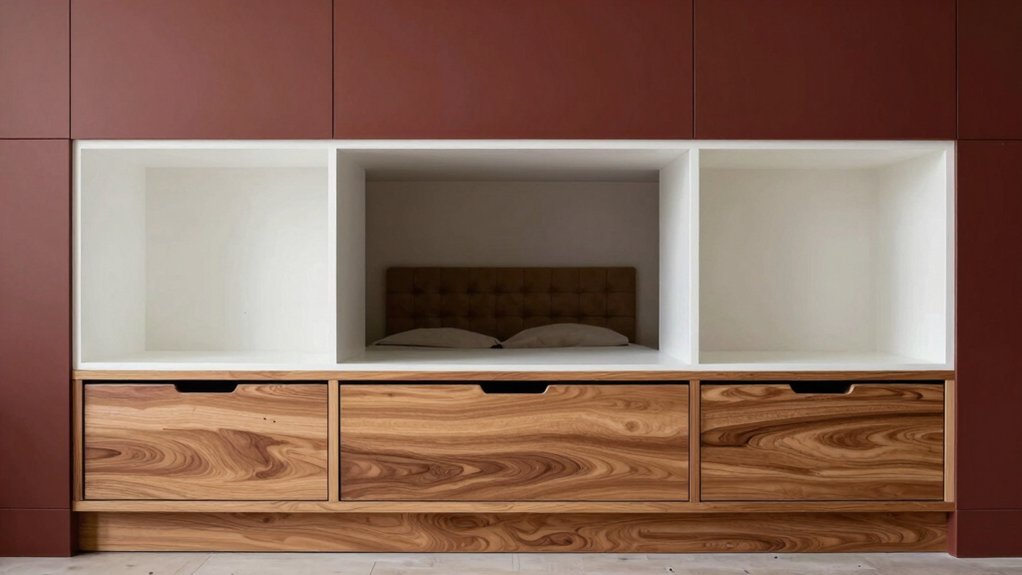
Hidden storage behind headboards and panels can dramatically free floor space without sacrificing style. You’ll gain discreet compartments by designing or buying beds with built‑in drawers, under‑panel cavities, or lift‑top mechanisms.
Choose headboards and panels that conceal storage without protruding; flat, flush fronts keep the room looking sleek. Consider dividers or zippered pouches inside the unit for small items, and use labeled containers to maintain order.
Install soft‑close hinges or gas springs to reduce noise and wear. Measure available space precisely, then prioritize frequently used items near the bed for quick access.
Materials should be durable, easy to clean, and resistant to moisture. Hidden storage works best when integrated with the room’s color scheme and overall storage goals.
Hooks, Rails, and Wall-Mounted Organization
Hooks, rails, and wall-mounted organizers are a smart way to reclaim floor space without sacrificing accessibility. You’ll want a simple system that suits your room’s measurements and daily routines.
Begin with wall mounted hooks for everyday items: keys, bags, coats, and hats, placed near entry points at appropriate heights.
Plan rail organization to maximize vertical space: install a shallow rail for adjustable hangers, plus a secondary rail for shorter items like towels or accessories.
Use modular brackets so you can reconfigure as needs shift.
Labeling or color-coding keeps everyone aligned, reducing rummaging.
Leave open wall margins for visual balance; avoid overloading a single rail.
Prioritize accessibility, not complexity, and test reach from a typical seating position to confirm practicality.
Minimalist Decor to Avoid Visual Clutter
Minimalist decor keeps visual clutter at bay by prioritizing function, simplifying textures, and sticking to a tight color palette. You’ll gain clarity when every item serves a purpose, so choose pieces thoughtfully and avoid duplications.
Opt for smooth finishes and restrained patterns to keep surfaces calm, then introduce warmth with a single natural material or soft accent. Use decorative accents sparingly, selecting one or two textures and letting them repeat across textiles or a small collection of pieces.
When you position artwork, apply deliberate placement rules: align with sightlines, balance with negative space, and avoid crowding the wall. For decorative accents and artwork placement, practice restraint, revise regularly, and remove items that no longer support your room’s essential function.
Layout Patterns for Different Box Room Shapes
When you’re designing a box-shaped room, start by mapping the door, windows, and fixed features to identify the best flow and focal points. In this layout patterns discussion, match shape to function, then pick a clear circulation path.
For a narrow box, position a long bed against one wall and use a slim dresser at the foot to keep sightlines open; consider a wall-mounted desk to conserve floor space.
In a square room, create zones with color coordination—swap bold accents across the seating, workspace, and bed areas so each zone reads distinctly.
For an unconventional L-shape, anchor with a central rug and modular furniture that can reconfigure, preserving flexible movement.
Prioritize furniture arrangement that minimizes clutter while maximizing usable area.
Frequently Asked Questions
How Do I Measure Room Dimensions Accurately?
To measure room dimensions accurately, you start by noting wall lengths, ceiling height, and door positions, using a tape measure and laser tool. Guarantee walls are plumb, record wall mounted storage space, and account for ceiling height variations.
What Budget Tips Save the Most Space?
Use multifunctional furniture and space saving decor, because you’ll maximize every inch. Choose foldouts, wall mounts, and modular pieces; declutter ruthlessly; buy only essential items. Prioritize compact storage, scalable layouts, and budget-friendly, durable finishes.
Can Lighting Affect Perceived Room Size?
Yes, lighting can affect perceived room size. Use bright, shadow-free ambient lighting and wall-washing fixtures. Avoid heavy curtains. Lighting effects heighten openness, while heightened contrast reduces it. Perception tricks come from color, scale, and even distribution of light.
Are There Safety Concerns With Hidden Storage?
Hidden compartment safety is a real concern; concealed storage risks include sharp edges, structural instability, and hidden pests. You should seal, label, and inspect regularly, maintain accessible emergency exits, and follow standards for safe, childproof, purpose-built compartments.
How to Choose a Bed Size for Small Rooms?
Choose a bed size by room dimensions and clearance, prioritizing you comfortably moving around. Consider next: bed frame styles and mattress thickness for stability, storage access, and height. Make certain practical clearance, under-bed storage, and balanced proportions.
Conclusion
You can turn a box room into a welcoming, functional retreat by embracing built-ins, smart storage, and versatile furniture. Prioritize light colors, reflective surfaces, and clean lines to maximize brightness and perceived space. Plan traffic flow, use wall-mounted solutions, and hidden storage to keep clutter at bay. Think in zones and multi-use pieces to suit daily needs. As the room evolves, this practical approach proves that small spaces can feel spacious and serene, with elegance born from efficiency.


