


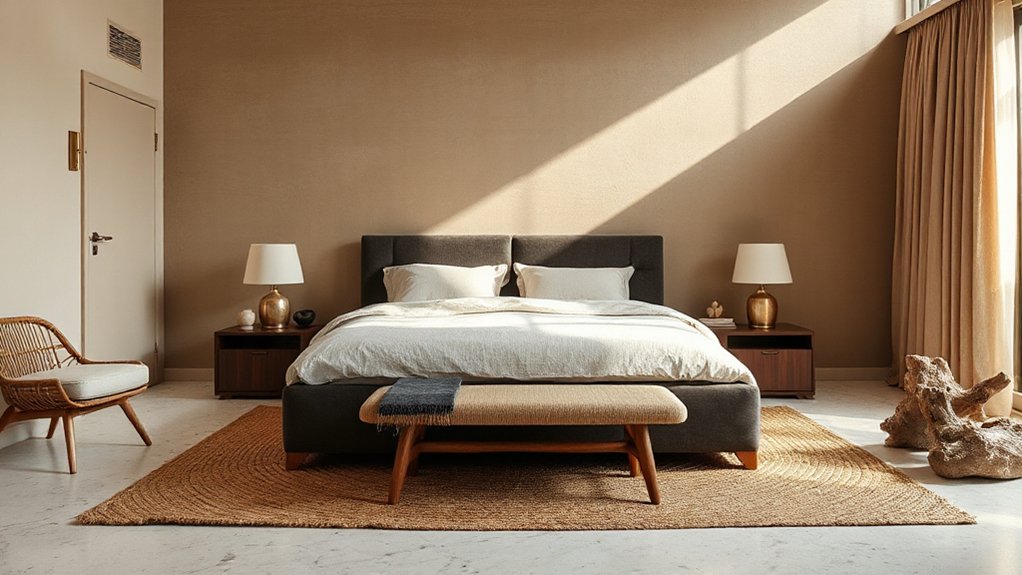
You can achieve a high-end bedroom by layering textured, natural finishes with precise craftsmanship. Integrate stone, wood, linen, and plaster for tactile depth, using hand-applied plasters for subtle depth and warmth. Favor restrained color with coordinated neutrals, and spotlight material integrity through clean edges and honest joins. Employ warm, layered lighting to enhance textures without glare, and choose durable, eco-friendly finishes. Maintain the room with gentle care and phased procurement; you’ll discover how to elevate texture further as you explore more.
What Texture Adds to a Luxury Bedroom
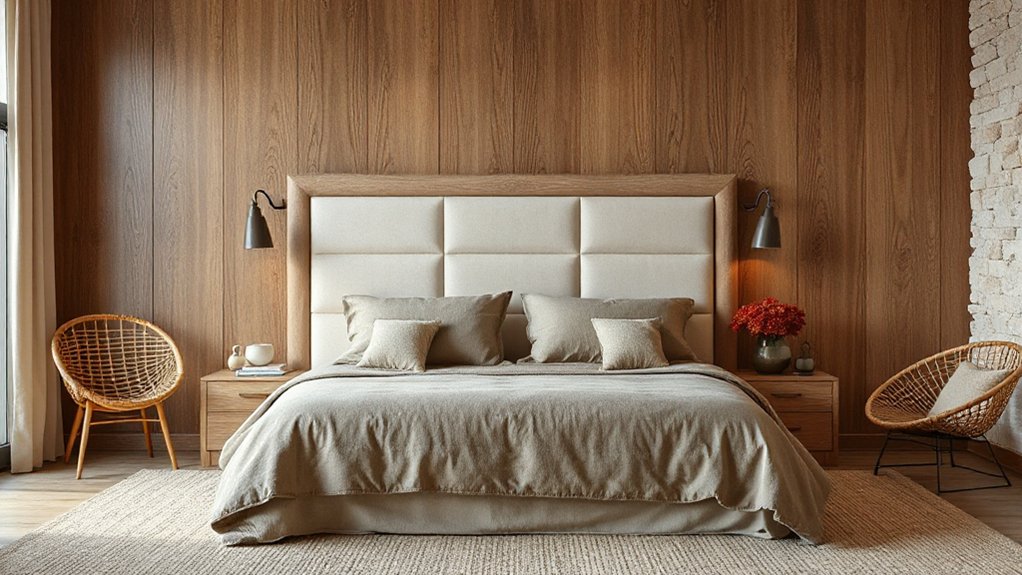
Texture is the deliberate counterpoint to form in a luxury bedroom, shaping depth, warmth, and tactility with purposeful choices. You understand that texture defines how spaces read visually and feel underfoot, influencing perceived quality and restraint.
Textural contrast becomes your tool for hierarchy: a crisp linen headboard against a suede bench, a velvet throw layered over a woven rug, and a satin side table subtly reflecting ambient light. You balance scale, weave, and finish to create a coherent sensory experience that remains understated yet rich.
Natural Materials That Elevate the Bed Zone
Natural materials sculpt the bed zone with tactile precision, grounding a luxury scheme in warmth and longevity. You select finishes that balance durability with sensory appeal, prioritizing materials that age gracefully. Opt for solid timber bed frames with low-void joinery, and pair them with wool or linen upholstery that resist pilling while staying breathable.
Consider stone or ceramic accents for grounded contrast, but guarantee they remain cool under touch to maintain comfort. Prioritize Eco friendly materials and responsible sourcing, such as FSC-certified woods and naturally dyed textiles, to align with Sustainable design trends.
Keep hardware minimal and precise, using metal or composite components that resist staining. Integrate natural fibers in bedding and window treatments to reinforce a cohesive, serene nocturnal zone.
The Subtle Impact of Hand‑Applied Plasters
Hand-applied plasters bring a subtle, tactile refinement to the bedroom, replacing flat finishes with nuanced depth and warmth. You’ll notice how surface irregularities catch light, creating a refined microtexture that reads as crafted authenticity rather than composited decor.
The technique allows controlled variation in thickness and pattern, producing calm, uniform shadows that enhance perceived room scale. When executed properly, hand applied plasters resist cracking and maintain breathability, contributing to long-term dimensional stability.
Consider lime-based or gypsum mixes for appropriate humidity response and durability, selecting finishes that align with your wall glare, color nuance, and architectural vocabulary.
For textured wall finishes, insist on consistent application standards, tested acceptance criteria, and professional curing protocols to ensure even tonal balance and archival quality.
Linen, Weaves, and Tactile Fabrics for Layering
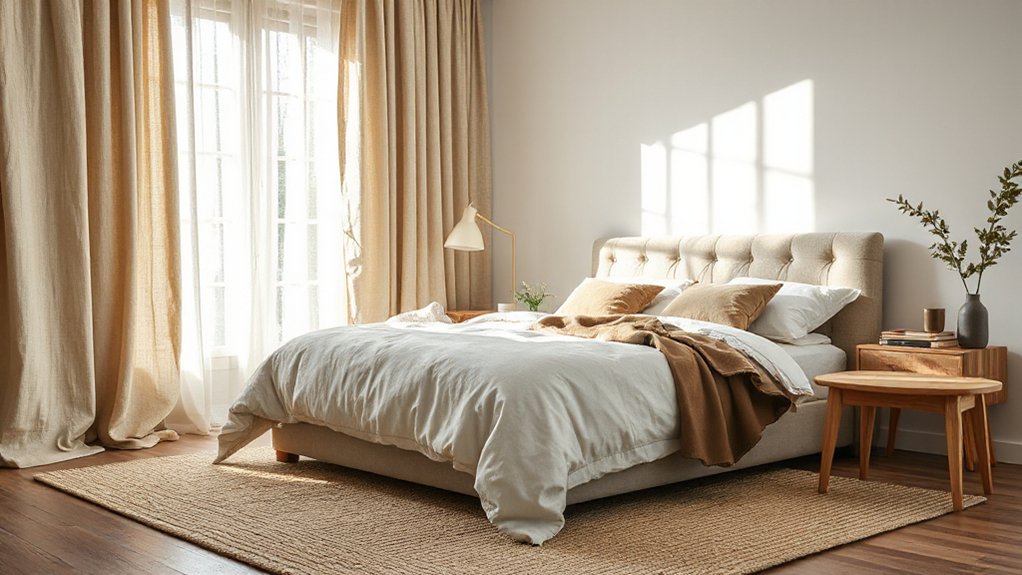
Linen textures set the foundation for layered elegance, with tactile fabrics enhancing depth through subtle variations in weave and finish. You’ll notice how linen’s breathability and natural anomalies contribute to comfort.
While weave-touched fabrics introduce visual and sensory interest without bulk. This discussion centers on Linen Texture Layering and Weave-Touched Comfort as guiding concepts for precise, high-end layering strategies.
Linen Texture Layering
Texture layers built from linen textiles introduce tactile depth and visual interest to a high-end bedroom. You curate linen textures by mixing fine flax weaves with compact satin and heathered bouclé, creating a controlled spectrum of surface textures.
The fabrics are selected for deliberate textural contrast, ensuring each layer contributes a distinct tactile signature while maintaining overall harmony. You pair crisp percale sheets with looser, puckered linens to emphasize structure without sacrificing softness.
Ribbed twills and herringbone weaves add dimensionality that reads as refined rather than rustic. Align colors in a restrained palette to preserve sophistication, letting natural fiber character speak.
The result delivers a sensory experience that enhances ambience while supporting functional sleep performance and enduring aesthetic resonance.
Weave-Touched Comfort
Despite its softness, linen remains structurally responsive, shaping a layered comfort system that relies on varied weaves and tactile fabrics to modulate warmth, weight, and drape. You evaluate weave tactility as a core control, selecting open, dobby, or jacquard structures to balance airflow and insulation.
Linen blends amplify durability while preserving breathability, enabling precise layering without bulk. You prioritize eco friendly textiles, emphasizing lifecycle impact from cultivation to finish, and you chart how texture cues influence perceived temperature and comfort.
Contemporary art curates the visual tempo of textiles, guiding subtle contrasts in sheen and hand. In practice, you compose a tactile hierarchy: base sheets, mid-layer throws, and tactile accents that read as a cohesive, refined system, delivering quiet luxury through material honesty and measured texture.
Stone and Concrete Elements in Soft Masterpieces
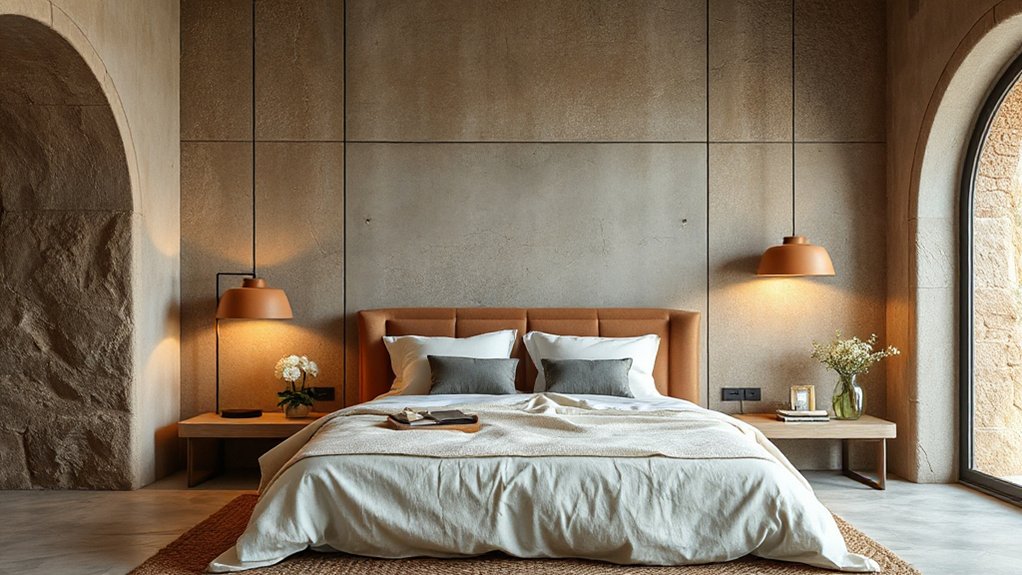
Stone and concrete elements inject a grounded, modern logic into soft master bedrooms, balancing tactile warmth with architectural rigor. You’ll notice how poured surfaces and modular blocks establish a disciplined baseline, anchoring textiles, lighting, and furniture with restrained texture.
In practice, mixed material integration occurs through deliberate contrasts: a cool concrete headboard paired with warm linen upholstery, or a stone accent wall offset by matte plaster. You’ll optimize space by mapping sightlines and ensuring seamless flow between tactile finishes and light-reflective finishes.
Prioritize color palette coordination, selecting neutrals that harmonize stone’s cool undertones with warmer warm-grays and taupes. Maintain clean edges and consistent graining to avoid visual clutter, letting precise joints and surface treatments communicate sophistication without noise.
Wood Grain Mastery: Nightstands to Headboard
Wood grain is the throughline that unites nightstands and headboards into a coherent, high-end bedroom palette. You assess species, grain pattern, and finish at a glance, ensuring tonal harmony across pieces.
Select veneers or solid planks with consistent figure to avoid visual noise when you pair elevated nightstands with a defining headboard. Prioritize straight, ribbon, or book-mrown textures that read clearly under ambient lighting, then apply protective finishes that deepen color without masking character.
Integrate vintage accents through hardware, inlays, or contrast feet to anchor the ensemble. Embrace a modern minimalist mindset: keep lines clean, margins restrained, and grain the sole expressive element.
Achieve cohesion by aligning edge details, thickness, and finish gloss, so the collection reads as one engineered composition.
Lighting That Highlights Texture Without Glare
You’ll achieve Subtle Glow with lighting that enhances texture while keeping glare off the surfaces you touch.
We’ll emphasize Texture-Prioritized Layering and Lux Lighting Balance to deliver depth without harsh reflections.
This approach prioritizes No Glare, precise control, and a technical, polished ambiance that guides the room’s tactile experience.
Subtle Glow, No Glare
Subtle glow that avoids glare hinges on the right balance of indirect and task lighting, which reveals texture without washing it out. You’ll design lighting to sculpt surfaces, enhancing depth while preserving ambient ambiance and minimalist decor.
Use layered sources that refract off textured finishes, avoiding hotspots and harsh reflections. Select fixtures with low glare optics, dimmable controls, and warm color temperatures to maintain clarity without fatigue.
Position wall grazers and concealed cove lights to emphasize grain, plaster, or fabric without overpowering the room. Pair these with task lighting at the bedside for reading without glare on screens or glossy finishes.
Maintain consistency in材equality, ensuring the glow remains subtle, refined, and evenly distributed across textures.
-Indirect/Task balance
-Glare-minimizing fixtures
-Warm, consistent color temp
-Layered wall grazing
-Responsive dimming
Texture-Prioritized Layering
In practice, you deploy directional, low-glare fixtures paired with gobo or grid filters to sculpt passively lit planes and sculptural surfaces. The approach foregrounds textural contrast, shaping shadows to define edge and grain without washing color or form.
You’ll align lighting with material terms—stone, wood, fabric—to enhance tactile layering while maintaining visual calm. Avoid overbright hotspots; instead, cultivate a graduated luminance map that travels across surfaces, revealing subtle irregularities.
This method preserves atmosphere, supports detail recognition, and ensures the room communicates sophistication through subtle, disciplined illumination.
Lux Lighting Balance
- Use dimmed ambient layers for baseline tone
- Introduce task accents sparingly
- Choose eco friendly textiles as luminance partners
- Employ diffusers to soften reflections
- Calibrate color temperature consistently
Color Stories That Complement Textured Finishes
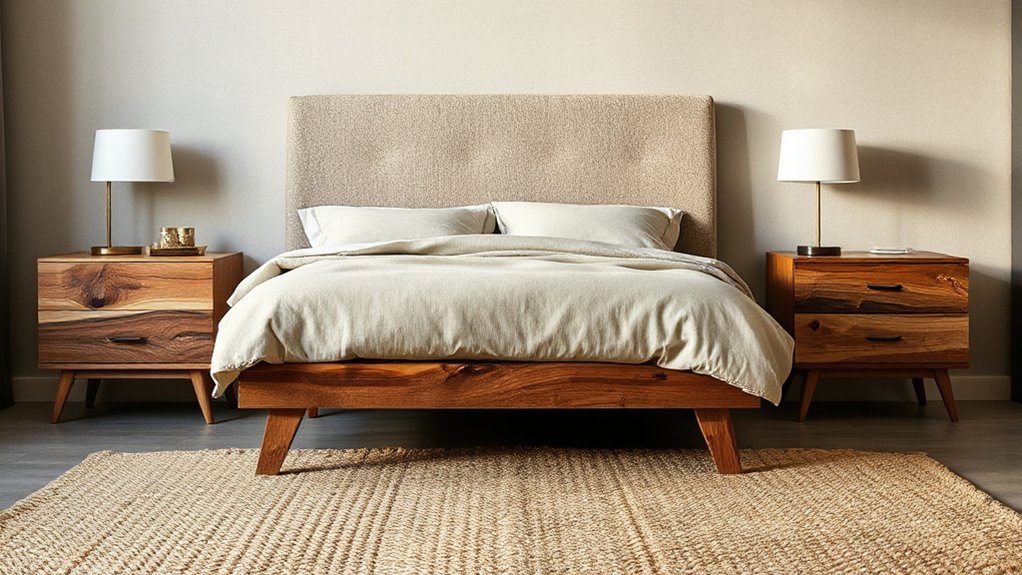
Color psychology guides emphasis: calming neutrals read as grounding, while restrained accents energize without dominance. Begin with a dominant base—ash, taupe, or graphite—that anchors architectural lines and reveals texture through subtle shifts in light.
Then introduce complementary palettes that enhance depth: cool whites with warm timber; mid-tone greens against charcoal; or ochre notes paired with pale plaster. Maintain saturation discipline; avoid competing chroma at texture junctions.
Use material-forward lighting to modulate perceived color, reinforcing texture without flattening contrast. The result: a refined, lasting harmony.
Layouts That Showcase Material Integrity
To showcase material integrity, layouts should place surfaces and joinery in clear dialogue, emphasizing honesty of material without concealing seams or edges. You’ll design rhythms that expose grain, edge lines, and mating planes, letting textures read as authored details rather than disguises.
Prioritize precise alignments, solvent-free adhesives, and continuity between wall, floor, and furnishings. Integrate Eco friendly finishes that age gracefully, resisting varnish buildup while maintaining tactile honesty.
Employ acoustic treatments that protect sound quality without muffling raw material character. Evoke a disciplined hierarchy where joinery remains legible and intentional, not hidden or carved to compromise authenticity.
- Visible joints and grain continuity
- Edge treatments that honor material edges
- Sustainable finishes and low-VOC performance
- Thoughtful acoustic strategy for daylighted rooms
- Seamless material dialogue throughout the suite
Care and Longevity of Natural Finishes
Natural finishes demand a measured care routine that honors their honesty and aging potential. You establish a consistent cleaning schedule using a soft, lint-free cloth and a mild cleanser suited to the finish type, avoiding harsh solvents that can degrade texture. Regular dusting prevents micro-scratches that compromise surface integrity.
When spills occur, blot—don’t rub—until moisture is removed, then recondition with a product approved for natural finishes. Humidity control and stable temperatures reduce warping and finish separation, preserving the tactile quality of the textures.
Schedule periodic re-waxing or oiling per manufacturer guidelines to maintain depth and sheen without buildup. Natural finish maintenance supports the durability of textures, ensuring long-term appearance and resonance with high-end bedroom design.
Avoid aggressive abrasives and test any new product in an inconspicuous area first.
Budgeting for a High‑End Textured Bedroom Retreat
Anchor your project with a clear cost framework that accounts for textures as a design foundation. You’ll allocate realistically for materials, labor, and contingencies, prioritizing texture-driven elements that impact both aesthetics and acoustics.
Set targets for Eco friendly finishes and durable surfaces to maximize value over time. Then quantify allowances for acoustic treatment integrated within wall and ceiling planes.
Use a floor-to-ceiling approach to balance tactile materials with budget constraints, avoiding over-saturation while preserving high-end feel.
- Establish a line-item budget for key textures (wood, fabric, plaster, stone) and their installation
- Plan for eco-friendly finishes that pair with performance claims
- Include dedicated funds for acoustic treatment that blends with finishes
- Schedule phased procurement to capture price movements
- Build in contingency tied to design refinements and sourcing
This disciplined method delivers a luxurious, durable retreat.
Frequently Asked Questions
How to Balance Texture With Minimalist Bedroom Furniture?
You balance texture with minimalist furniture by choosing restrained silhouettes and a single, bold decorative wall accent, while layering organic fabric choices. Maintain contrast through subtle warmth, and let decorative wall accents guide focus without overwhelming the space.
Which Textures Feel Warm in Winter Versus Cool in Summer?
Warm textures feel cozy in winter, while cool fabrics stay breathable in summer. You’ll implement seasonal texture swaps, layering Cozy fabric layers with performance textiles, ensuring you maintain warmth and climate control through smart material choices and precise insulation.
Can Textured Finishes Affect Room Acoustics and Soundproofing?
Textured finishes dramatically affect room acoustics, boosting sound absorption and acoustic enhancement you’d think impossible. You’ll notice clearer speech and less echo, as materials dampen reverberations, delivering studio-like accuracy and comfortable, balanced sonic performance throughout your space.
What Maintenance Schedule Preserves Natural Textures Longest?
Natural patina develops with time; you should follow a strict maintenance schedule to preserve it. Re-seal surfaces every 2–3 years, and use breathable sealants. Clean gently, avoid harsh chemicals, and reapply surface sealing when sheen fades.
How to Mix Textures With Smart Lighting for Depth?
Can you visualize ambient layering? You mix textures with smart lighting by balancing warm and cool tones, layering shadows and highlights, and ensuring color coordination across materials; you’ll create depth with strategic fades, shifts, and synchronized dimming for ambiance.
Conclusion
As you weave texture into your sanctuary, you’re not just decorating—you’re engineering a sensorial environment that ages gracefully with you. The tactile cues from linen, plaster, and natural stone guide your gaze, while layered fabrics and honest finishes preserve warmth and durability. The result is a chamber that breathes luxury without shouting. Remember: texture is the method, restraint the precision, and elegance the outcome—much like a well‑indexed blueprint, you feel it before you fully see it. (Device: metaphor)


