


In a spare bedroom, you balance a productive workspace with a welcoming guest retreat by zoning the space, choosing multi-functional furniture, and using cues like rugs and color that cue different moods. You’ll need smart storage, ergonomic setup, and thoughtful lighting to avoid compromise. Stay mindful of acoustics and personal touches that keep the room calm and inviting. The next steps give you concrete moves to implement without losing guest comfort.
Maximizing Flex Space: Key Layout Strategies
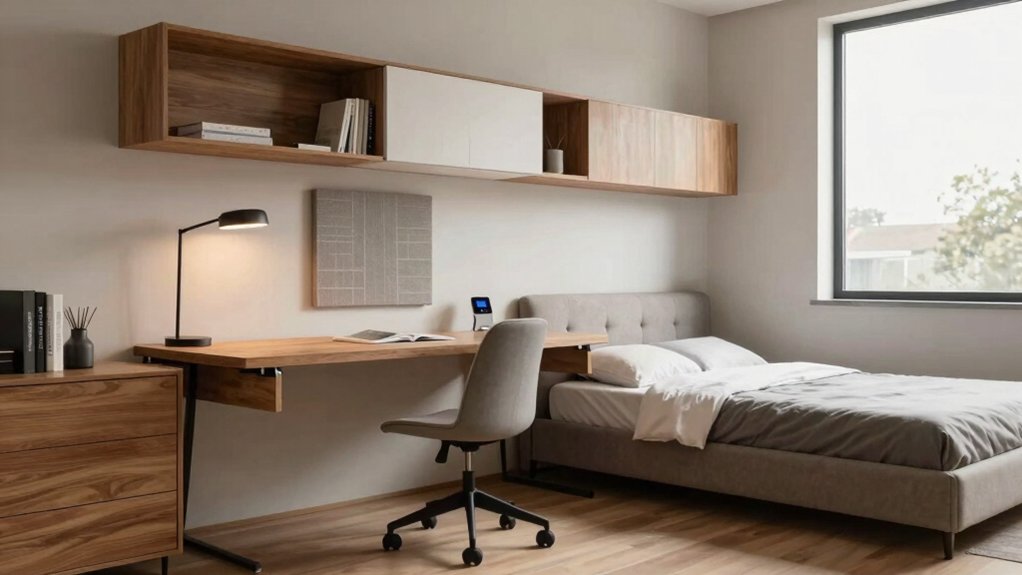
Maximizing flex space starts with a clear plan: identify your must-haves, then design around them. You map zones first, pairing work surface, storage, and seating into cohesive groups.
Prioritize multifunctional decor that serves two roles, like a dresser that doubles as a desk or a bench with hidden bins. Use flexible room dividers to sculpt paths and visual boundaries without rigid walls, allowing you to reconfigure on demand.
Align lighting, power outlets, and data access to each zone, so you never chase cables. Choose compact, stackable seating and a fold-down desk to preserve floor area.
Plan discrete alternation points: moveable screens for privacy, a rolling cart for supplies, and a removable rug to redefine spaces. Maintain a consistent color and material palette to unify zones while preserving mobility.
Dual-Purpose Furniture: Pieces That Do More
Dual-purpose furniture is the backbone of a compact spare-bedroom office, turning tight footprints into flexible workflows. You select pieces that earn their keep through integrated storage, expandable surfaces, and convertible forms. Prioritize multifunctional furniture that serves at least two tasks without cluttering the room.
A desk with built‑in shelving or hidden drawers keeps essential gear within reach while preserving clean sightlines. Consider a wall bed that folds into a compact cabinet, freeing floor space for focused work during the day. Modular seating doubles as attendee seating or a guest lounge, with ottomans containing charging stations.
Choose finishes and hardware that unify the look, reinforcing a single, purposeful environment. These space saving solutions optimize efficiency without compromising comfort or acoustics.
Color Psychology for Sleep and Focus
Color choice drives both sleep quality and focus in a spare-bedroom office, so start with a calm base and layer in accents that sharpen attention. You’ll achieve balance by selecting cool neutrals for walls and flooring, then introduce color harmony with restrained, intentional pops.
For sleep enhancement, choose muted blues or soft greens in textiles and storage fronts, avoiding high-saturation tones near the bed.
To boost focus, add small, high-contrast accents—an ink desk chair, charcoal frame, or a citrus cue in a lamp shade—sparingly.
Maintain consistent undertones across furniture and textiles to reduce visual noise. Test combinations under natural light at different times of day, and adjust hues so the room feels cohesive, serene, and purposefully energizing where you work.
Lighting Plans to Support Work and Rest
Balanced lighting supports both work and rest. Start with ambient lighting for overall visibility, then layer task lighting at your desk to reduce eye strain.
Using a day-night plan that shifts from cooler tones during work hours to warmer tones in the evening can aid wind-down. This approach keeps your spare bedroom adaptable, energy-efficient, and ready for both productivity and relaxation.
Ambient Task Lighting
Ambient task lighting acts as the backbone of a productive, restful spare-bedroom office by pairing focused illumination with ambient glow to reduce eye strain and support long work sessions.
You configure a bright, adjustable desk lamp at keyboard height to illuminate papers without glare, and you place it on a dimmer to modulate intensity as tasks change.
Add subtle wall washers or under-shelf LEDs to lift shadows on documents and screens, preserving color accuracy.
Create zones with a cozy reading nook nearby, using a pair of warm, indirect fixtures to cushion passages between work and rest.
Choose bulbs at 2700–3000K for consistency, avoid flicker, and guarantee cords are hidden.
This disciplined lighting plan reinforces comfort, focus, and efficiency.
Day-Night Lighting Plan
A practical day-night lighting plan blends the focused needs of work with the softer cues that ease winding down, using a clear sequence of lighting changes that you can control with ease.
You establish daylight integration during work hours with bright, neutral LEDs at desk height and wall washes to reduce contrast. As the day shifts, gradually adjust color temperature toward warmer tones to minimize eye strain and signal progression.
For night lighting, disable harsh task illumination and rely on dimmed ambient fixtures and a dedicated bedside glow to maintain safety without disruption. Use programmable scenes to switch at set times, or depend on motion sensors for low-activity periods.
Prioritize consistency, avoid glare, and verify that night lighting preserves sleep-ready melatonin cues.
Sound Management for a Calm, Productive Room
Good sound management starts with measuring the space and choosing fixtures that quietly do their job. You’ll identify dominant noise paths—door gaps, window drafts, and desk-generated chatter—and seal them first.
Prioritize low-profile solutions that don’t crowd your setup, like compact door seals and weatherstripping at frames. For soundproofing techniques, install solid-core doors or door sweeps, and add mass-loaded vinyl where walls feel thin.
Treat reflections with acoustic treatments placed at first-reflection points on walls and above the desk to tame midrange chatter without darkening the room. Use under-desk cable management and a rug with dense fibers to dampen footfalls and keyboard thumps.
Choose headphones or a white-noise option for sporadic interruptions, balancing isolation with ambient awareness. Regularly reassess to preserve focus and productivity.
Smart Storage Solutions for a Clean Look
Hidden drawers keep your desk essentials out of sight while preserving surface space. Wall-mounted systems free up floor area without sacrificing capacity.
Start with a discreet hidden drawer design for small, today-used items. Expand to vertical, wall-mounted storage to maintain a clean line throughout the room.
This approach balances accessibility with a clutter-free look, so you can work confidently without visual noise.
Hidden Drawer Design
Are you maximizing space without sacrificing function? A hidden drawer design delivers hidden drawer versatility without clutter. Start by selecting shallow drawers integrated into desks, bed frames, or seating; these concealed storage options keep essentials out of sight yet easily accessible.
Fit soft-close slides to prevent noise and tamper-proof edges to protect fingers in tight spaces. Prioritize materials with consistent finishes to maintain a cohesive look, and align drawer fronts with surrounding surfaces for an intentional, seamless appearance.
Consider labeling only inside the drawer or using RFID compartments for quick access, preserving clean lines. Install pull-out trays under countertops for documents or charging hubs, ensuring cords stay managed.
This approach minimizes visible bulk while maximizing organized, ready-to-use space.
Wall-Mounted Systems
Wall-mounted systems offer streamlined, scalable storage that keeps essentials within reach without occupying floor space. You’ll prioritize items by daily use, anchoring them to sturdy studs and using weight-tested brackets.
Install floating shelves at varying heights to create a visual flow that doubles as a workspace edge or display for tech accessories. Keep cords concealed with cable channels or clip-and-grommet routes to preserve the clean line.
Use a slim pegboard panel above the desk for quick, modular organization of small tools, chargers, or notes. Pair wall mounted systems with a low-profile cabinet beneath the desk for ink, paper, and spare supplies.
This approach minimizes clutter while preserving surface area for productivity and focus.
Zoning the Room: Work Zone and Guest Zone
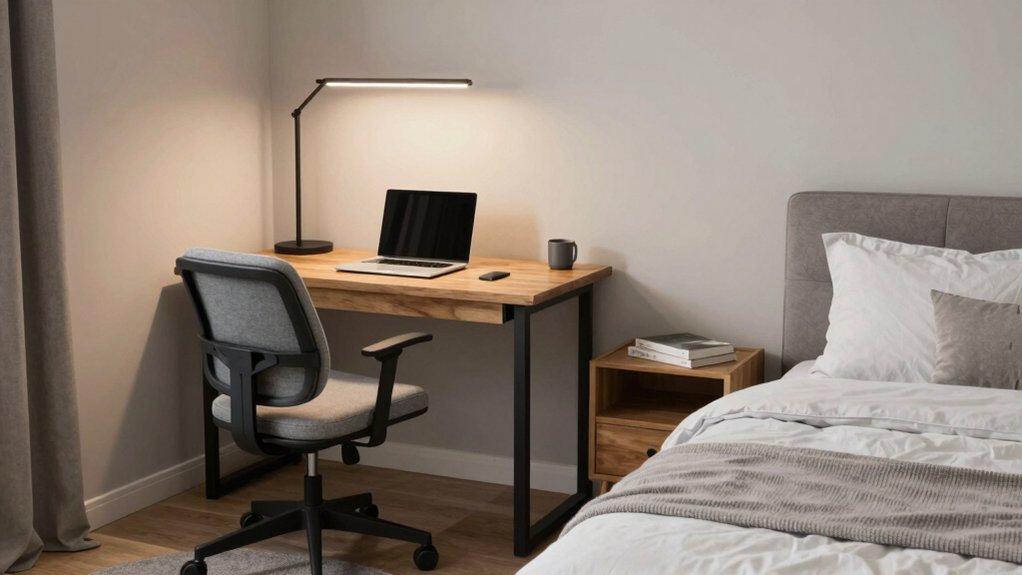
To create a functional split between work and guest areas, start by defining clear boundaries: designate a work zone with a compact desk, task lighting, and accessible outlets, and separate it from the guest zone with a visual cue like a divider, rug, or screen.
You’ll gain rhythm and flow when each zone has distinct cues and storage. Use artificial lighting that supports tasks without glare, and dimmable options to shift from daytime work to evening guest comfort.
Choose eco-friendly materials for desks, screens, and rugs to reduce costs and environmental impact. Keep pathways clear and furniture scaled to the room to avoid crowding.
Label zones visually with color or texture to reinforce separation and ease of use.
Desk Setup and Ergonomics in Small Spaces
A small-space desk setup demands precision: prioritize a compact desk with a stable surface, a supportive chair, and layout that keeps your legs and tech within easy reach. You optimize footprint by selecting a depth under 30 inches and a width that fits your daily tasks, not dreams.
Position monitors at eye level, use a monitor arm if possible, and keep peripherals within arm’s reach to reduce neck strain. Implement cable management to prevent clutter and to preserve surface space.
Choose office furniture that supports posture: an adjustable chair with lumbar support, a footrest if needed, and a sit-stand option for longer days. Leverage ergonomic accessories like keyboard trays and document stands to maintain neutral wrists and eyes throughout work sessions.
Focus on consistency, accessibility, and sustainable comfort.
Personal Touches: Styling a Dual-Function Space
In a dual-function space, your personal touches do more than decorate—they define how you move between work and relaxation. You’ll want intentional styling that signals shift rather than clutter.
Start with a restrained color base and select decorative accents that unify both zones, such as a neutral rug that grounds the desk area and a calming throw for the chair. Add personal artwork to anchor mood without dominating sightlines; hang pieces at eye level where they won’t distract during tasks.
Use storage that doubles as display, like a slim cabinet with a few curated objects. Rotate items seasonally to keep the space fresh yet purposeful.
Maintain balance by limiting accessories to essentials, ensuring each piece supports focus, comfort, and personal expression.
Frequently Asked Questions
How Can I Convert a Spare Room Into a Temporary Guest Space Quickly?
To convert quickly, you’ll set up a temporary guest space with a comfy sofa bed, simple bedside, and blackout curtains. Prioritize furniture arrangement for easy flow, and install privacy solutions like room dividers or curtains at sleeping nooks.
What Is the Best Desk Height for Short-Stature Users?
You should set your desk at elbow height, about 1–2 inches below your forearms. Choose an ergonomic chair with adjustable height to match. You’ll stay comfortable, supported, and focused, thanks to precise, solution-driven, adjustable-height setup.
Which Neutral Colors Reduce Eye Strain for Long Work Sessions?
Neutral tones reduce eye strain during long sessions, you should lean toward soft grays, taupes, and muted blues. Pair high-contrast text on light backgrounds carefully, use consistent lighting, and take micro-breaks to sustain focus and comfort.
How Do I Manage Cables Without Compromising Guest Comfort?
You can manage cables by routing wires along baseboards, using cable trays, and securing with Velcro ties; position power strips under the desk and label cords. Wire management minimizes clutter, keeps guests comfortable, and enhances safety.
What Storage Solutions Keep a Dual-Function Room Uncluttered Daily?
You’ll keep a dual-function room uncluttered daily with hidden compartments and multifunctional furniture that tuck away essentials, so you don’t trip over cords or clutter, and you’ll stay organized with streamlined, purposeful storage solutions.
Conclusion
In this room, you’ll feel the shift the moment you enter: a calm dawn of white drawers, a soft rug absorbing chatter, a fold-away desk tucking neatly into the wall. You’ll see color blocks that cue sleep after clients leave, and a desk chair that hums with ergonomic support. With smart storage and careful zoning, your space breathes—productive by day, welcoming by night—without compromises. Comfort, clarity, and function converge in one purposeful, dual-purpose haven.


