
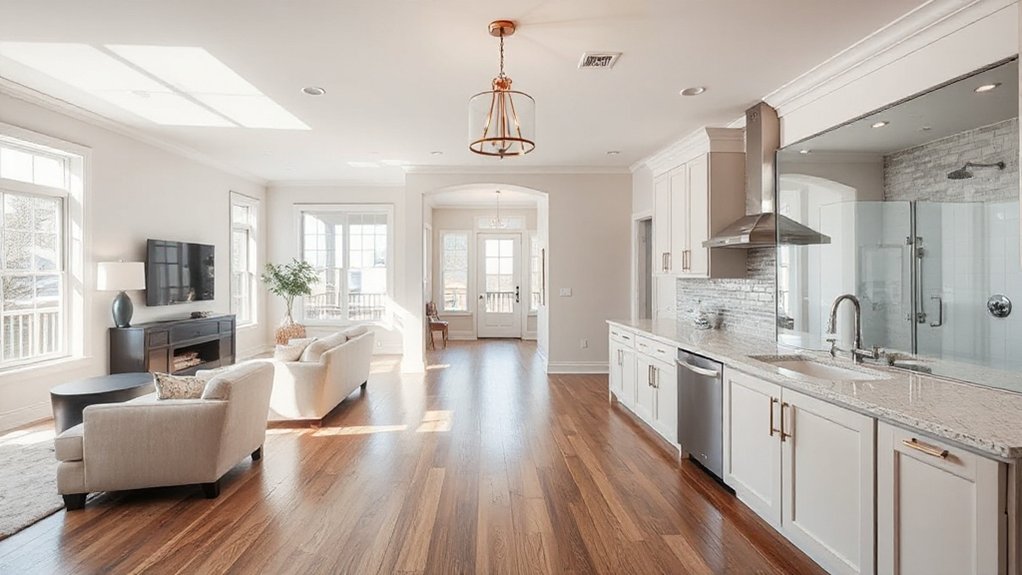

Juxtapose calm, timeless finishes with smart, high-impact updates to avoid style fatigue while boosting value. You’ll gain more from layered lighting and natural daylight than from flashy trends, and space-saving storage can release real flow without expanding square footage. Practical choices—neutral palettes, durable materials, and budget-friendly flooring—keep costs predictable. If you focus on the kitchen, baths, and curb appeal, the impact compounds in ways buyers notice first, but the next detail could be the deciding factor.
Key Takeaways
- Prioritize layered, dimmable lighting and strategic layout to enhance safety, flow, and perceived space.
- Use timeless neutrals, durable finishes, and subtle textures to create lasting appeal and easy maintenance.
- Optimize space with hidden storage, compact multi-use furniture, and thoughtful traffic patterns.
- Defend against trends with quality, water-resistant bathroom finishes, and luxury appliances that save time.
- Define zones with area rugs and affordable textures, ensuring cohesive design and high usability across rooms.
Lighting That Transforms Small Spaces
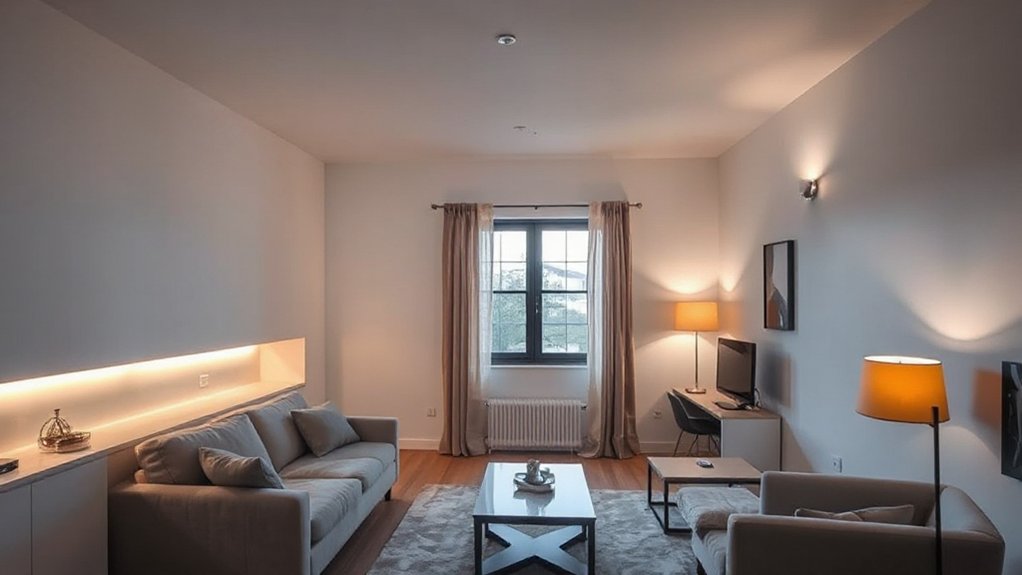
Lighting can make small spaces feel larger and more inviting. You optimize each fixture to maximize perception of space, using layered lighting that balances function and mood.
Start with ambient illumination to create a soft, even base, then add task lighting where you perform activities, like a slim desk lamp or under-cabinet LED strips. Avoid heavy fixtures that crowd ceilings or walls; opt for unobtrusive designs that don’t cast bulk shadows.
Consider walls and mirrors to reflect light and enhance depth, producing ambient shadows that feel deliberate rather than accidental. Use natural illumination when possible—position furniture to exploit window daylight without glare.
Dimmers help you adjust scenes for work, relaxation, and entertaining, ensuring you consistently sustain brightness without sacrificing comfort.
Timeless Color Palettes That Sell
Color choices persist beyond trends, shaping buyer perception as much as layout or lighting. You’ll prefer timeless palettes that feel cohesive across rooms, minimizing risks of buyer hesitation. Start with neutrals—warm beiges, greys, and taupes—then layer with subtle accents to keep spaces calm yet inviting.
Color psychology guides where to emphasize mood; use softer tones in living areas to promote flow, and slightly richer hues in kitchens or baths to convey durability. Choose paint finishing carefully: matte hides minor wall flaws, eggshell balances durability with a gentle sheen, and satin adds clean reflections in high-traffic zones.
Maintain tonal harmony between walls, trim, and ceilings to reduce contrast fatigue. Test samples under varied lighting, ensure consistency across batches, and document brand codes for seamless repainting post-sale.
Smart, Space-Saving Furniture for Better Flow
You can optimize flow with compact dining nooks that seat efficiently without crowding the room. Incorporate hidden storage solutions to keep surfaces clear while preserving accessible everyday use.
Start by pairing slim profiles with smart organization to reclaim floor space and drive room-to-room function.
Compact Dining Nooks
- Seating arrangements that maximize legroom and sightlines
- Multi-use surfaces and under-seat storage for clutter control
- Coordinated decor accents to maintain visual harmony
Hidden Storage Solutions
Hidden storage isn’t an afterthought—it’s a design driver. You’ll gain flow by choosing smart, space-saving pieces that conceal clutter without sacrificing function.
Look for furniture with concealed compartments and hidden drawers that blend with existing lines, not disrupt them. A storage ottoman, for example, adds a usable surface while keeping essentials out of sight.
In tight rooms, lift-top desks and dual-purpose consoles turn daily tasks into compact routines, reducing visible mess and improving circulation.
Choose mechanisms that feel solid and operate quietly to avoid visual noise. Favor neutral finishes with clean hardware to maintain cohesion.
Plan placements where access is convenient, yet discreet, so every room reads calm and organized. This approach elevates perceived size and overall property appeal.
Flooring and Texture Upgrades on a Budget
If you’re upgrading your floors on a budget, start by prioritizing durability and ease of maintenance over aesthetics alone. You’ll maximize value by choosing materials that withstand traffic and clean easily, then layering texture with budget-friendly options.
Use area rugs to define zones, add warmth, and protect core flooring, especially in high-traffic paths. Consider laminate or vinyl plank for cost-efficient, durable surfaces that mimic hardwood without the upkeep.
Plateaus of wall textures can visually extend rooms and reduce the feel of repetition.
- Pick water-resistant laminates or vinyl planks for busy areas
- Layer area rugs to create contrast and comfort
- Introduce subtle wall textures to add depth without major remodels
Kitchen and Bath Tweaks Pros Will Pay For
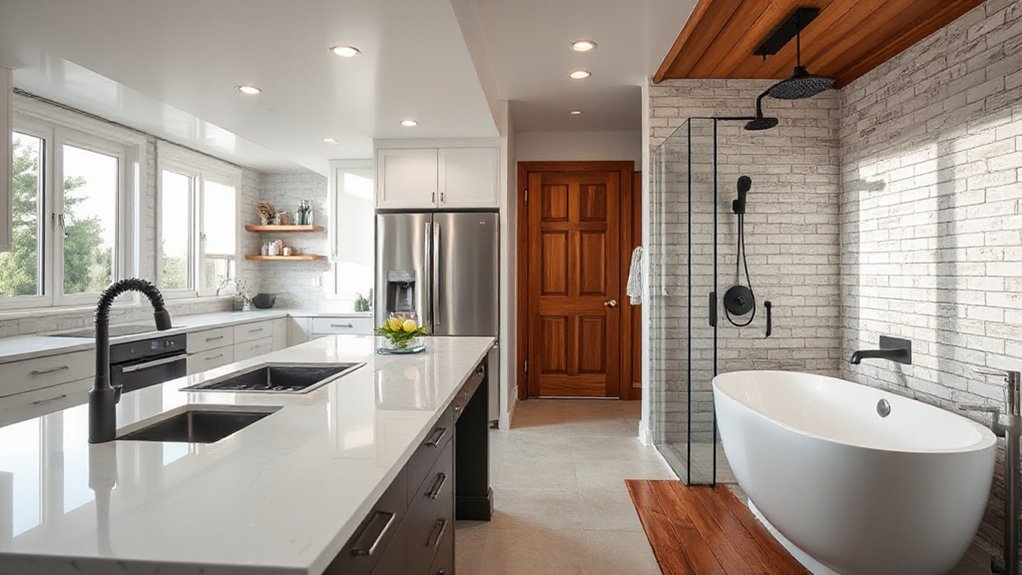
Upgrading your kitchen and baths pays off fast, especially when you target tweaks that boost daily usability and resale appeal. You’ll gain value by prioritizing reliable, widely appealing updates over trend-chasing fluff.
In kitchens, prioritize efficiency: solid sinks, ergonomic workflows, and energy-conscious lighting that brightens work zones without glare. Consider integrating luxury kitchen appliances where a premium model meaningfully saves time or elevates experience, but avoid overinvestment in features you won’t use daily.
In baths, focus on durable finishes, proper moisture control, and easy-clean fixtures. Spa-inspired bathrooms help buyers imagine daily retreat vibes without overdoing it.
Strike a balance between updated aesthetics and lasting practicality, so improvements feel purposeful, not speculative, when you list.
Tech Essentials That Modernize Without Clutter
Tech essentials should streamline daily living without stealing space or personality. You’ll want smart lighting that adapts to tasks and moods, plus hidden tech solutions that stay out of sight yet stay reliable.
Start with a clear plan for placement, power needs, and future-proofing to keep your home uncluttered and genuinely modern.
Smart Lighting Essentials
Smart lighting isn’t just about bright rooms; it’s about controllable, efficient illumination that fits daily routines without clutter. You’ll gain precision with setups that adapt to tasks and time of day, reducing waste and boosting perceived space.
Focus on ambient controls that create cohesive lighting scenes and on mood lighting that subtly elevates atmosphere without glare. Choose fixtures with dimming, tunable white, and occupancy sensing to minimize manual fiddling.
- Ambient controls that sync with windows and shading
- Mood lighting presets for work, relaxation, and entertaining
- Wireless, centralized controls that you can override instantly
In practice, you’ll map zones, test scenes, and label controls for quick use. This keeps tech invisible yet impactful, delivering consistent comfort and property appeal.
Hidden Tech Solutions
Hidden tech shouldn’t shout; it should slip into daily life with near-invisible polish. You’ll lean on solutions that streamline routines without demanding attention, keeping spaces calm and cohesive.
Start with smart hubs that centralize control, then pair them with discreet sensors and outlets so lighting, climate, and security adjust automatically.
Innovative gadgets should feel almost invisible: mounts and wire channels that vanish, speakers tucked into ceilings, and displays that blend into cabinetry.
Prioritize compatibility and updates to avoid obsolescence, and choose devices with local control alongside cloud options for reliability.
Maintain a clean aesthetic by concealing cables and using matte finishes that reduce glare.
The goal is tangible convenience—fewer steps, faster responses, and a home that works without drawing focus.
Staging and Curb Appeal: Finishing Touches That Win
Staging and curb appeal aren’t just about looks; they set buyers’ first impressions and can influence their perceived value of the home. You’ll win attention by delivering a clean, cohesive presentation that signals care and function from the street to the doorway.
- Prioritize a cohesive entry: fresh door color, uniform signage, and visible path lighting to guide the eye.
- Invest in garden landscaping and outdoor lighting that highlight architecture and create inviting silhouettes after dusk.
- Declutter exterior spaces, add purposeful accents (pots, seasonal blooms, a simple bench), and maintain sightlines for safety and flow.
Focus on quality over quantity, guarantee consistency, and test lighting at dusk to confirm balance. Small, well-executed details outperform heavy, inconsistent upgrades.
Frequently Asked Questions
How Long Does It Take to See a Return on Interior Upgrades?
A typical return shows in 1 to 6 months, depending on market, budget, and upkeep.
You’ll see faster results if you prioritize neutral color schemes and clean furniture arrangements that maximize space and light.
Plan for staged showings, bright lighting, and cohesive accents to boost perceived value.
You mightn’t recoup every dollar, but you’ll shorten time on market and attract stronger offers when you keep updates targeted, practical, and well-executed.
Which Upgrades Add the Most Resale Value per Dollar?
Color schemes deliver the most value per dollar, and smart furniture arrangement follows closely.
You’ll maximize resale by choosing cohesive, neutral tones and timeless contrasts, then place key pieces to enhance flow and room perception.
You’ll boost appeal with fewer, higher‑quality accents, not clutter.
You’ll make the most of every dollar by testing layouts, measuring sightlines, and prioritizing as‑is usability.
Color schemes guide mood; furniture arrangement ensures function, value, and buyer confidence grow together.
Are DIY Upgrades as Effective as Professional Ones?
DIY upgrades can be effective, but they aren’t always equal to professional work. You’ll save money upfront, yet DIY pitfalls often crop up—poor measurements, imperfect finishes, or safety oversights—that undercut value.
For critical areas, lean on professional craftsmanship to guarantee durability and polish.
You’ll gain confidence by tackling smaller tasks, yet reserve major renovations for pros to protect resale appeal and avoid costly mistakes.
If you mix approaches, document quality and warranties.
What Budget Is Realistic for Top Value Interiors?
Budget planning for top value interiors usually lands around 5–15% of your home’s value, with Renovation costs optimization keeping you under that ceiling.
You’ll want to prioritize durable, high-impact updates: lighting, paint, flooring, and kitchen essentials, then scale up if needed.
Yes, you can DIY portions, but budget for professional help on structural, plumbing, and wiring.
Track every expense, expect overruns, and lock in quotes early to avoid surprises.
You’ll maximize return without draining savings. Budgeting done smartly.
Do Lighting Changes Impact Perceived Square Footage?
Yes—lighting changes do impact perceived space. Lighting design can make rooms feel larger by bright, even illumination and layered layers (ambient, task, accent).
Use cooler temps for open vibes and eliminate heavy shadows near corners. Proper placement, sconces on walls, and ceiling washes emphasize height and depth, while dimmers preserve versatility.
You’ll notice enhanced perceived space when color temperature, glare control, and contrast are balanced, guiding eyes and reducing clutter perception.
Conclusion
Think of your home as a well-tuned orchestra. Each upgrade is a instrument: lighting brings daylight to the room’s melody, neutral colors keep tempo calm, space-saving furniture lets every note breathe, and durable finishes guarantee the chorus lasts. Small budget moves layer texture, floor choices ground the harmony, and kitchen/bath tweaks add the show-stopping crescendos buyers expect. With mindful staging and curb appeal, you conduct a space that sounds right to the market and resonates with every prospective buyer.


