

Demister bathroom mirrors work by using a thin, low‑voltage electric heating pad bonded to the back of the glass, gently raising its temperature above the dew point so humid air can’t condense into mist. You usually switch it on with a wall switch, pull‑cord or touch sensor, and it runs safely on a fused, RCD‑protected 230V circuit. You’ll see how this simple resistive heater, zoning and IP ratings all tie together next.
Why Do Bathroom Mirrors Fog Up?
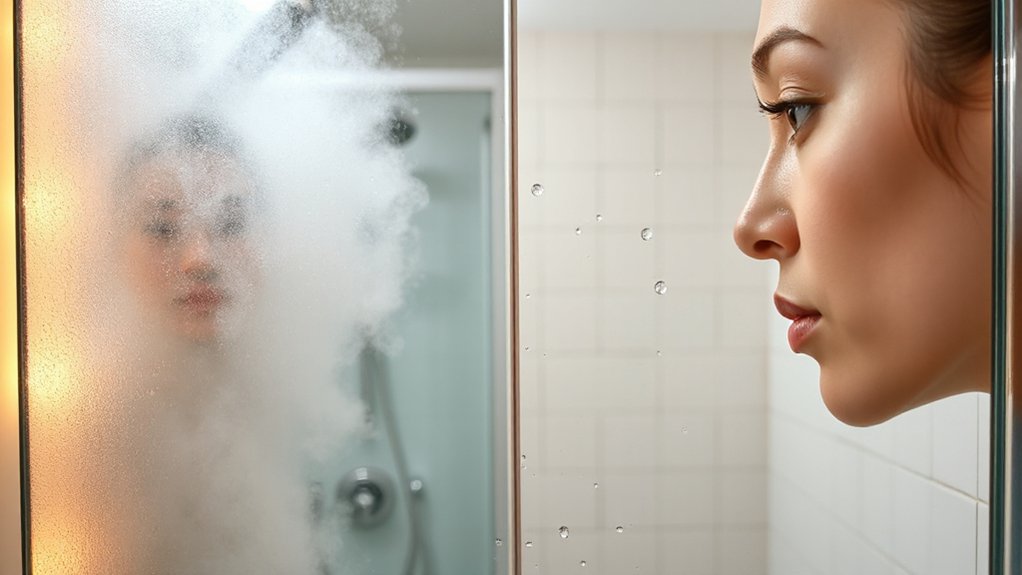
When you step out of a hot shower, your bathroom mirror fogs up because warm, moisture-laden air comes into contact with the mirror’s relatively cooler glass surface, causing water vapour to condense into tiny droplets. You’re witnessing basic psychrometrics in action: humid air reaches its dew point at the glass interface, so vapour changes state to liquid.
In the historical development of domestic bathrooms, poorly insulated walls, minimal extraction, and compact layouts made this effect especially pronounced in UK homes. Even today, efficient sealing and double‑glazing often trap humidity, so your mirror becomes a prime condensation surface.
As you choose aesthetic designs—framed, bevelled, or backlit—you’re still contending with the same thermodynamic reality that unites everyone stepping into a steamy British bathroom.
What Is a Demister Bathroom Mirror (And How Does It Help)?
Instead of accepting a steamed‑up mirror as inevitable, a demister bathroom mirror integrates a low‑voltage heating element behind the glass to keep its surface above the dew point, so condensation can’t form there. You still enjoy a clear reflection, even after a hot power shower, without wiping streaks across the glass.
You typically wire a demister mirror into your bathroom lighting circuit or an independent switch, so it operates seamlessly with your usual routine.
Beyond simple moisture control, it delivers aesthetic enhancement: the mirror looks sleek, modern, and deliberately specified, not like an afterthought. You’re also reducing mildew risk around the basin area, supporting better hygiene.
In a well‑planned British bathroom, a demister mirror feels like standard kit, not a luxury.
How Demister Mirror Heating Actually Works
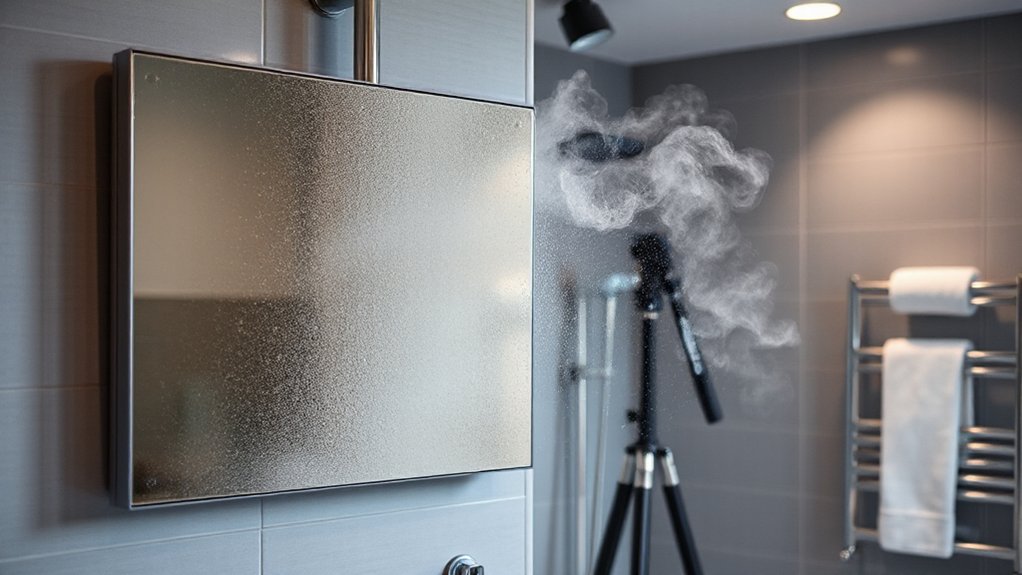
You’ll find that a demister mirror relies on a thin, gentle heating pad bonded to the rear of the glass to raise the surface temperature just enough to prevent condensation.
It’s powered via a mains-fed supply that must be correctly fused and RCD-protected to comply with UK bathroom zoning and electrical safety regulations.
You’ll typically control this low-wattage system through an integrated switch, timer, or thermostatic control, so it operates efficiently without wasting energy.
Gentle Heating Pad Mechanism
Although it looks deceptively simple, a demister mirror works by using a low‑wattage electric heating pad bonded to the rear of the glass, raising the surface temperature just a few degrees above the bathroom’s ambient air.
This ultra‑thin pad preserves mirror aesthetics, because it sits invisibly behind the silvering, so you don’t compromise on style to gain performance.
The pad uses resistive heating: current passes through a printed element, converting electrical energy into gentle, uniform warmth.
You’ll notice the clear zone forms directly over this element, preventing condensation while leaving the rest of the mirror unaffected.
When you’re planning for installation challenges, you’ll need to allow enough wall depth and a smooth backing surface so the pad adheres evenly, preventing thermal hotspots or cold patches.
Power Supply And Safety
Ever wondered what actually powers a demister mirror’s gentle heat? Behind the glass, a low‑wattage heating pad connects to your home’s 230V mains via a fused spur or bathroom‑rated switched outlet.
An integrated transformer or resistive element converts this supply into controlled radiant warmth, preserving aesthetic appeal while remaining hidden from view.
You’re kept safe by multiple protections: Class I or Class II construction, earth bonding where required, and mandatory IP ratings appropriate to bathroom zones.
Toughened safety glass and robust backing materials enhance material durability, resisting thermal shock and moisture ingress.
When a competent electrician installs it in line with BS 7671 and Part P, your demister mirror becomes a stable, low‑risk fixture you can rely on every steamy morning.
Energy Efficiency And Control
Instead of blasting the whole bathroom with heat, a demister mirror targets only the thin film of moisture on the glass, which is why its energy demand stays surprisingly low. A thin-film heating pad bonded to the rear of the mirror converts electrical energy directly into gentle radiant heat, typically drawing far less power than a standard towel rail.
To maximise energy savings, you’ll usually control the pad via a dedicated rocker switch, pull cord, or integrated mirror sensor. Many modern units link to the bathroom lighting circuit or a timer, so the heater only runs when you’re actually using the space.
This level of control supports user convenience while preventing waste, helping your household stay both comfortable and energy-conscious together.
What’s Inside a Demister Bathroom Mirror?
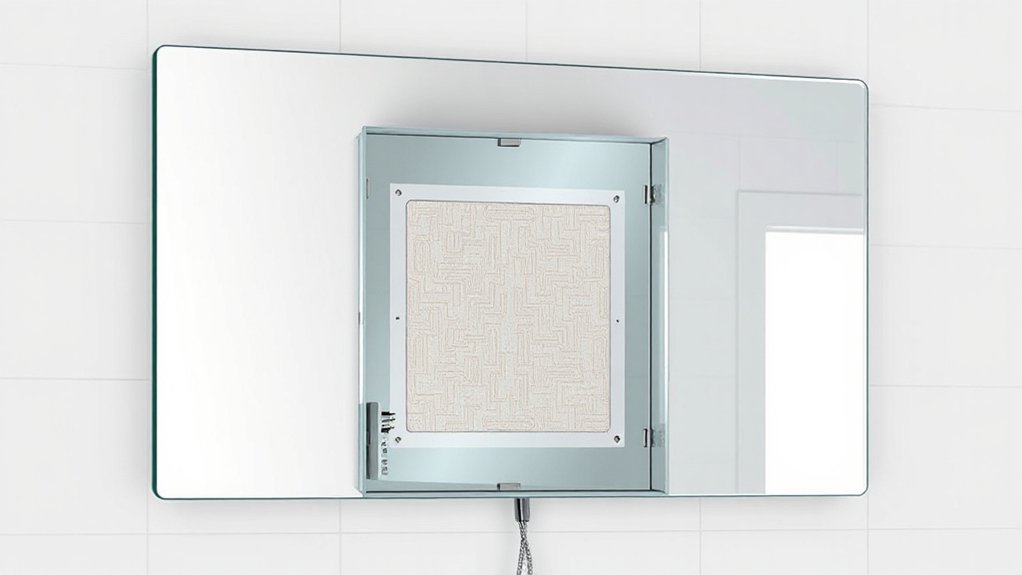
When you look beyond the glass, a demister bathroom mirror is fundamentally a layered assembly of toughened mirror glass, a conductive heating element, and electrical insulation, all bonded together in a slim profile.
The toughened glass gives you material durability and a reassuringly solid feel, while maintaining sharp optical clarity and a refined aesthetic design that sits comfortably in a modern UK bathroom.
Behind the reflective coating, a flat resistive heating pad adheres directly to the rear surface. It’s engineered to distribute heat uniformly, minimising thermal stress and preventing warping.
Electrical insulation laminates and moisture-resistant adhesives protect live conductors from the humid environment.
Cable terminations, earth bonding, and strain relief complete the assembly, so you can integrate the mirror confidently with your household wiring.
Types of Demister Pads and Demister Mirrors
When you specify a demister bathroom mirror, you’ll usually choose between standalone electric demister pads and fully integrated heated mirror assemblies.
Electric demister pad options vary in wattage, coverage area and IP rating, so you can match the pad to your mirror size and bathroom zoning requirements.
Integrated heated mirror styles, by contrast, incorporate the heater, mirror, LED lighting and often shaver socket or demista functions into a single, factory-sealed unit for straightforward installation.
Electric Demister Pad Options
Curious which electric demister solution best suits your bathroom mirror? You’ll usually choose between stick‑on demister pads and factory‑fitted heated mirrors.
Stick‑on demister pads mount on the rear of your existing glass, preserving mirror aesthetics while adding reliable anti-fog performance.
You’ll see demister pad materials such as PET film with embedded resistive elements, aluminium foil laminates, or carbon‑based heaters. PET and foil pads heat quickly and suit most domestic installations; carbon variants offer even heat distribution and lower energy consumption.
Check pad size, wattage (typically 15–60W), IP rating, and compatibility with your bathroom’s lighting circuit or separate isolator switch. When you match pad output to mirror dimensions and room humidity, you create a clear, welcoming focal point the whole household can share.
Integrated Heated Mirror Styles
Beyond retrofit pads, you can specify mirrors with integrated heating built into the unit from the factory, giving you a neater installation and more predictable performance. You’ll typically choose between framed cabinets, slimline wall-mounted mirrors, and full-height panels, all with the demister bonded directly behind the glass.
Factory-integrated units often combine LED perimeter lighting, touch-sensitive switching, and heated zones sized to match real-world use, so you don’t waste energy.
If you’re curating Luxury aesthetics, look for mirrors with concealed fixings, demister timers, and IP44 or higher ingress protection for UK bathroom zones.
For a Modern design scheme, you can align shapes, proportions, and colour-temperatures across your brassware, tiles, and heated mirrors, creating a cohesive, club-like bathroom experience.
How Demister Bathroom Mirrors Are Installed and Powered
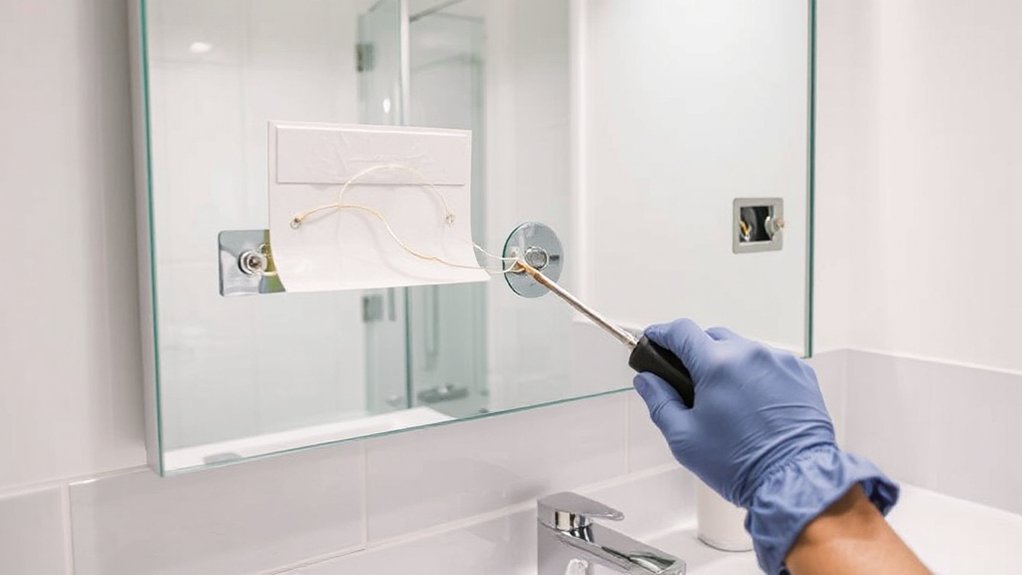
Although demister bathroom mirrors look like standard fittings, their installation and power supply follow strict electrical and building regulations. You’ll usually have a low-profile heating pad fixed to the rear of the glass, wired into a 230V mains circuit via a switched fused spur, often linked to the bathroom lighting circuit or an independent pull-cord switch.
A qualified electrician will assess IP ratings, bathroom zones, and RCD protection to guarantee compliance with BS 7671 and Part P. They’ll chase cables into the wall or use surface trunking, preserving your aesthetic design while hiding all terminations in an appropriate junction box.
Where smart technology is integrated, you’ll typically use a neutral and permanent live feed, enabling app or voice control without compromising safety.
Key Features to Look For in a Demister Mirror
When you’re comparing demister bathroom mirrors, focus on specification rather than aesthetics alone, prioritising features that affect performance, safety, and day‑to‑day usability. Assess the demister pad’s coverage area and wattage so you know the clear zone will actually match how you use the mirror. Check ingress protection (IP) rating to ensure suitability for your bathroom’s zone layout.
Look for robust material durability: copper‑free, anti‑corrosion backing, quality silvering, and shatter‑resistant safety glass all help your mirror withstand steam and everyday use.
Evaluate aesthetic design in context with your scheme – frame style, bezel thickness, and edge detailing should feel coherent with the rest of your home. Integrated features such as touch controls, dimmable LED lighting, and magnification can further refine your daily routine.
Demister Mirror Safety, Energy Use, and Maintenance
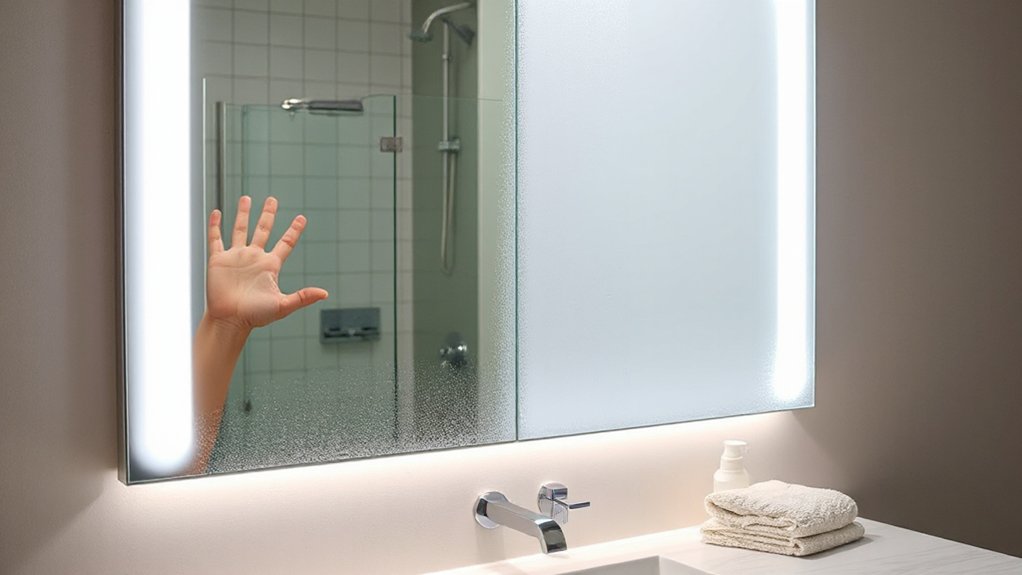
Even the most advanced demister mirror only delivers real value if it’s installed safely, run efficiently, and looked after correctly over its service life. You should always use a qualified electrician and comply with bathroom zoning and IP ratings, especially if your mirror dimensions push the fitting close to a basin or shower.
To keep running costs low and performance consistent, focus on sensible operation and routine care:
- Use a timer, pull-cord, or integrated sensor so the heating pad isn’t left on unnecessarily.
- Check cable terminations and isolation switch periodically for heat damage or looseness.
- Clean the glass, edges, and decorative framing with non-abrasive products to protect seals.
- Inspect fixings and wall anchors so heavier units, or larger mirror dimensions, remain secure.
Are Demister Bathroom Mirrors Worth It?
For many homeowners upgrading a bathroom, a demister mirror becomes less of a luxury and more of a practical specification decision based on performance, running costs, and usability. You’re weighing a modest uplift in upfront cost against daily clarity when shaving, applying make‑up, or using contact lenses.
When you look at historical trends in bathroom refurbishments, demister mirrors have shifted from premium extras to near-standard in mid-range UK fit‑outs. Low wattage heating pads mean running costs are typically pennies per hour, especially when wired to the lighting circuit or a timed spur.
Contemporary aesthetic designs integrate LED task lighting, shaver sockets, and touch sensors, so you’re consolidating several fixtures into one. In a compact British bathroom, that multi-functionality usually justifies the investment.
Frequently Asked Questions
Can I Retrofit a Demister Pad to an Existing Non-Demisting Mirror?
You can retrofit a demister pad if you’ve rear access to the glass, but you’ll need competent mirror installation, suitable IP‑rated electrics, and careful adhesion to protect heating element durability and comply with UK bathroom zoning regulations.
Do Demister Bathroom Mirrors Increase the Resale Value of a Home?
Yes, you’ll likely boost resale value, because buyers perceive improved mirror maintenance, greater energy efficiency, and hotel-style finish as premium. Don’t worry about niche appeal; UK purchasers increasingly expect such practical, low-running-cost upgrades in modern bathrooms.
Are There Smart-Home Compatible Demister Mirrors With App or Voice Control?
Yes, you’ll find smart-home compatible demister mirrors offering app integration, Smart features and voice control via Alexa, Google Assistant, or HomeKit. They typically include dimmable LEDs, colour temperature adjustment, and programmable timers, integrating seamlessly with modern UK bathroom setups.
Can Demister Mirrors Be Used in Other Rooms Besides Bathrooms?
You can absolutely use demister mirrors in bedrooms, cloakrooms or gyms, provided you optimise mirror placement and guarantee adequate humidity control. Integrate them with extraction, zoning, and appropriate IP-rated electrics to keep surfaces clear and installations fully compliant.
How Long Do Demister Mirrors Typically Last Before Needing Replacement?
They typically last 8–15 years before replacement, provided you treat them kindly; like a loyal kettle, consistent mirror maintenance preserves demister durability, ensuring reliable heat mats, intact seals, and safe electrics that keep your bathroom community fog-free.
Conclusion
You’ve seen why mirrors fog, how demister pads generate gentle radiant heat, and what sits behind that sleek, silvered glass. You now understand wiring, IP ratings, and load calculations; you can weigh energy consumption, safety features, and ongoing maintenance. When you choose a demister mirror, you’re not just buying clarity—you’re improving bathroom usability, enhancing compliance with UK electrical standards, and investing in a low‑profile, high‑performance solution that works every single morning.