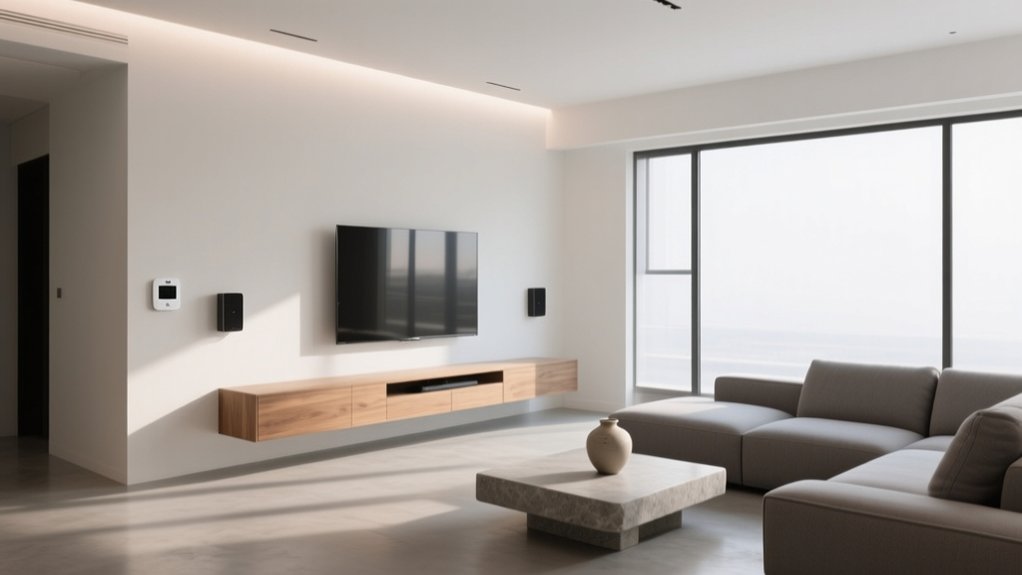

Create a calm modern interior by committing to clean lines, functional layouts, and disciplined display. You’ll keep a warm neutral base (warm white, greige, pale stone), then layer muted mid and deep tones with one restrained accent for rhythm. Mix matte paint, pale wood, stone, and crisp black or metal, repeating one dominant finish for cohesion. Plan 36–42 inch walkways, float seating to protect sightlines, and layer dimmable ambient, task, and accent lighting. Keep clutter invisible with flush built-ins and hidden charging—next, you’ll see how to apply this room by room.
Key Takeaways
- Favor clean, rectilinear lines and intentional negative space to create a calm, functional modern interior with minimal visual noise.
- Build a layered neutral palette, then add one muted accent hue in small doses to shape mood without clutter.
- Plan circulation first: protect main pathways with 36–42 inch walkways, and arrange furniture to support flow across key routes.
- Use smart, layered lighting—dimmable ambient, task, and subtle accent—to shift effortlessly between work, relaxation, and entertaining.
- Prioritize hidden storage and multi-functional furniture with integrated cable management to keep surfaces clear and support smart living.
Start With Modern Design Principles
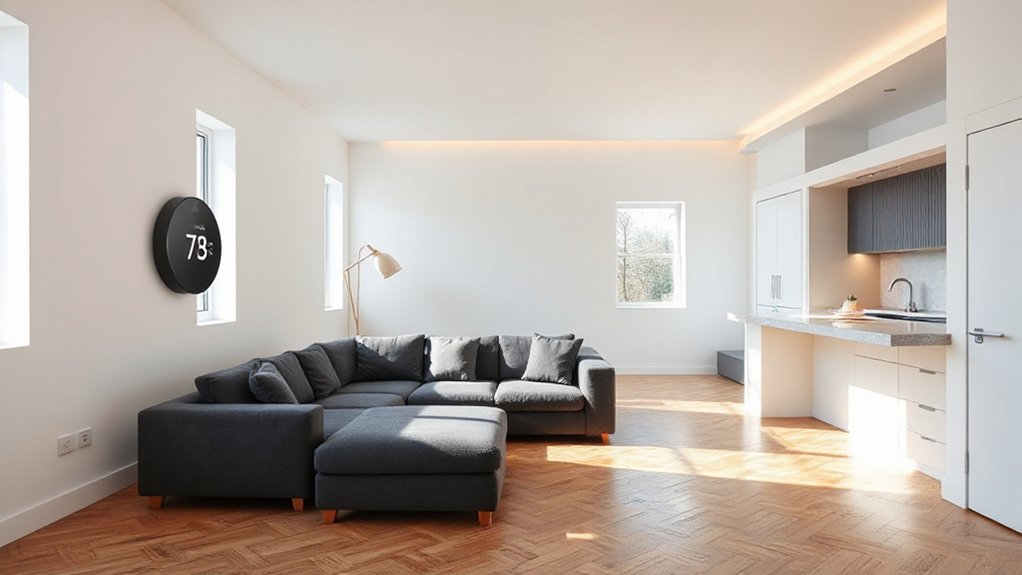
If you want a modern interior that feels intentional rather than “new,” start by grounding every decision in modern design principles: clean lines, functional layouts, and a disciplined edit of what you display. Choose simple, rectilinear silhouettes, then repeat them in trim profiles, casework, and lighting to create quiet cohesion. Let negative space do work; you don’t need more décor, you need better hierarchy.
Anchor your palette in warm neutrals and controlled contrast, then add one saturated accent with purpose. Respect Historical influences by referencing Bauhaus utility, midcentury proportion, or Scandinavian restraint—without copying period clichés.
Commit to Sustainable practices: specify low-VOC finishes, FSC-certified wood, recycled-content textiles, and durable hardware. Finally, tune texture—matte paint, natural stone, brushed metal—so the room reads modern, not sterile.
Plan a Layout That Flows Room to Room
Modern principles only land when you map them onto a layout that moves effortlessly from one room to the next. Start with your floor plan and identify primary paths: entry to kitchen, kitchen to dining, living to outdoor. Protect those lines first, then place furniture to support them, not block them.
Aim for clear traffic flow with 36–42 inches for main walkways and generous door swings. Create zones with rugs, lighting, and low-profile storage so sightlines stay open. Align key focal points across thresholds—like a fireplace to a dining credenza—to guide the eye forward.
Reduce pinch points by floating seating, using round tables in tight corners, and choosing sliding or pocket doors where they’ll prevent collisions. Test it: walk it, carry a basket, and adjust.
Choose a Calm Modern Color Palette
Because color sets the temperature of a space before you notice the furniture, choose a calm modern palette that stays consistent from room to room and lets texture do the talking. Start with a soft neutral base—warm white, greige, or pale stone—so daylight reads clean, not harsh.
Use color psychology to steer function: muted blues and sages support focus in work zones, while sand, clay, and blush tones promote ease in living areas. Keep saturation low and shift value instead, layering light, mid, and deep tones for depth without noise.
Limit accents to one restrained hue, repeated in small doses to create rhythm and mood enhancement. Test swatches morning and night, and match undertones across walls, trim, and ceilings for a seamless, modern calm.
Mix Modern Materials and Finishes Thoughtfully
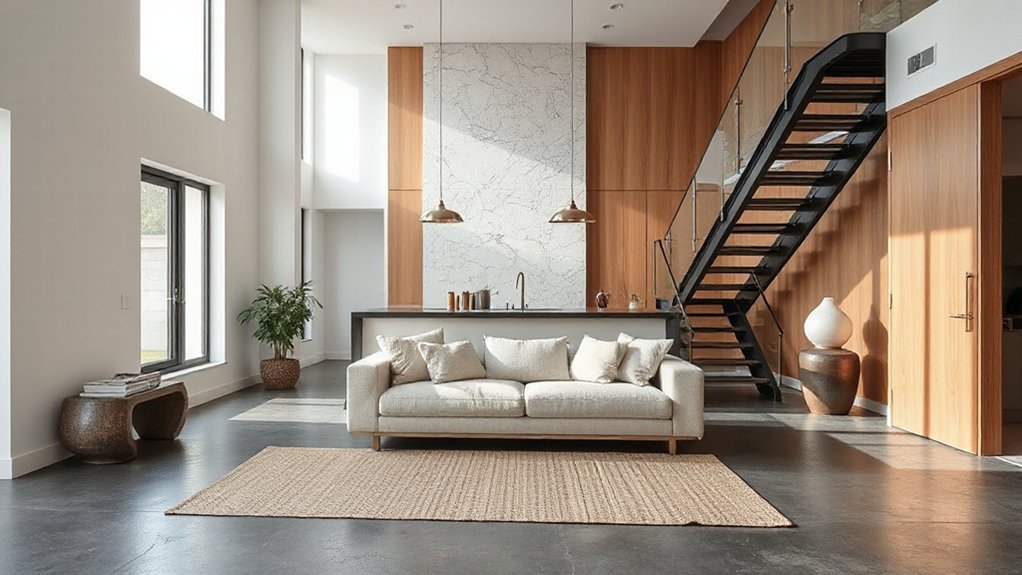
You’ll keep a modern interior sharp by balancing textures and tones—pair matte with polished, and warm neutrals with crisp blacks or cool grays.
Coordinate metal and wood with intent: repeat one dominant finish (like brushed nickel or blackened steel) and echo it across lighting, hardware, and accents. Then anchor it with a consistent wood tone or grain so the mix reads curated, not chaotic.
Balance Textures And Tones
Even if your layout feels spot-on, the room won’t read “finished” until the textures and tones work together. Aim for textural contrast: pair matte walls with a lightly reflective surface, or balance smooth upholstery with a nubby bouclé pillow. Keep the mix intentional—too many competing sheens or grains can look noisy.
Lock in tone harmony by choosing a tight undertone family: warm neutrals, cool grays, or softly muted earths. Then vary depth, not direction—layer light, mid, and dark values so the space gains dimension without losing calm.
Use one standout texture as your anchor, like plaster, ribbed glass, or microcement, and let supporting pieces echo it subtly. Finish by checking everything under evening lighting.
Coordinate Metal And Wood
When metal and wood align, a modern interior reads deliberate rather than pieced together. You’ll get that cohesion by choosing one dominant metal finish and repeating it across 3–5 touchpoints—hardware, lighting, table legs, frames, and faucet lines. Keep the sheen consistent: brushed for calm minimalism, polished for high contrast, blackened for architectural edge.
Then you’ll ground it with wooden textures that share an undertone. Pair warm walnut or oak with brass or bronze; match cooler ash or white oak with nickel, chrome, or stainless.
Control contrast by balancing weight: thin metal accents with thicker wood slabs, or chunky steel bases with lighter wood fronts. Finally, separate clashing tones using matte paint, stone, or glass so progression feel intentional.
Pick Slim, Low-Profile Modern Furniture
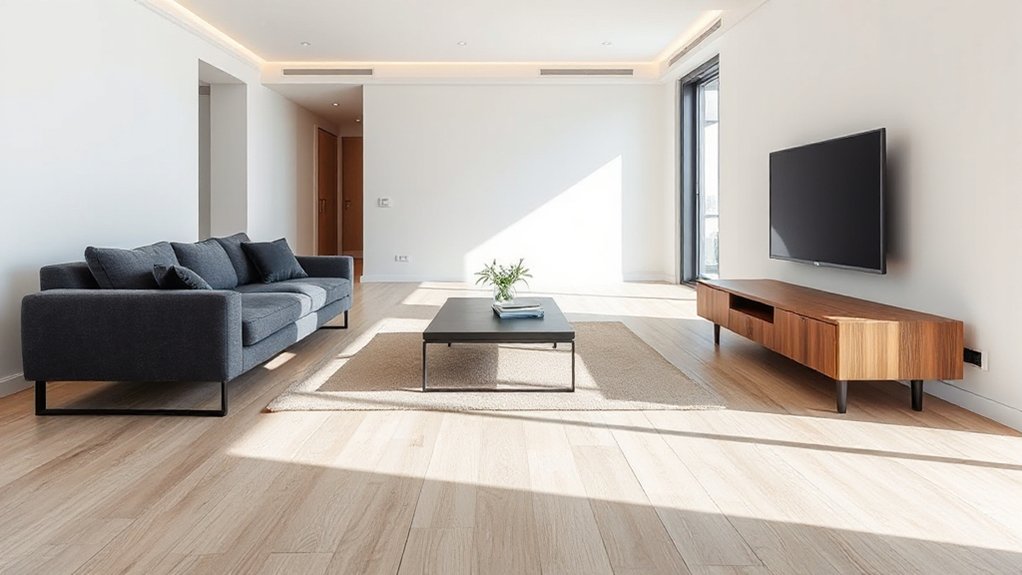
Keep your modern interior crisp by prioritizing slim silhouettes—think tapered legs, tight profiles, and clean sightlines that let the room breathe.
Choose low-profile seating with disciplined proportions and firm, tailored upholstery so the space reads open, not bulky.
Then opt for floating storage—wall-mounted consoles, vanities, and shelves—to lift visual weight off the floor and sharpen the architecture.
Prioritize Slim Silhouettes
Because bulky furniture instantly dates a room, prioritize slim silhouettes that sit low to the floor and read visually light. You’ll get a cleaner sightline and more breathing room, even in tight footprints.
Look for Slim profiles with tapered legs, thin rails, and recessed bases that create a subtle shadow gap. Favor sleek profiles on casegoods: low credenzas, floating consoles, and beds with narrow frames that keep mass off the floor.
Choose materials that reinforce lightness—powder-coated steel, pale oak, fluted glass, or stone tops on slender supports.
Keep proportions disciplined: align heights across major pieces, avoid overstuffed arms, and select hardware that’s minimal and linear. You’ll modernize the room without chasing fleeting micro-trends.
Choose Low-Profile Seating
Even if you love a plush look, low-profile seating instantly signals “modern” by keeping the visual horizon clean and the room’s proportions calm. You’ll make ceilings feel higher and sightlines longer when sofas sit closer to the floor and arms stay slim.
Choose Minimalist seating with tight tailoring, squared edges, and legs that read light rather than bulky.
- Keep seat height around 16–18 inches for a grounded stance
- Favor thin track arms or armless profiles to reduce visual mass
- Select ergonomic chairs with supportive lumbar shaping, not overstuffing
- Use performance fabrics or leather for crisp seams and long wear
Anchor pieces with a low coffee table and a clean rug border so everything aligns. Avoid skirted bases; show the frame.
Opt For Floating Storage
Once you’ve grounded the room with low-profile seating, shift your focus upward and off the floor with floating storage that keeps the perimeter clean and the architecture sharp. Mount floating shelves in aligned runs so sightlines stay uninterrupted, and keep depths slim to avoid visual weight.
Choose wall-hung consoles and vanities with crisp reveals; the shadow gap under them makes the room feel larger and easier to clean. Specify push-latch fronts and integrated pulls for a seamless facade, then hide the mess in hidden compartments for chargers, remotes, and paper clutter.
Anchor the layout by centering units on key axes—sofa, bed, or fireplace—and match finishes to your trim or wall color for a built-in look. Add under-shelf LEDs for glare-free task light.
Add Warmth With Texture and Textiles
- Choose a tight palette: ivory, charcoal, camel, and one muted accent.
- Vary scale: nubby upholstery, smooth drapery, and ribbed cushions.
- Use matte finishes to reduce glare and emphasize tactility.
- Edit hard surfaces with one statement textile per zone.
You’ll make the space feel lived-in, not busy.
Layer Lighting for Mood and Tasks
Because modern rooms rely on clean lines and restrained palettes, you’ll get the most comfort and function by layering lighting instead of depending on a single overhead fixture.
Start with ambient layering: dimmable ceiling lights or recessed downlights set an even base, while indirect cove LEDs soften shadows and make walls feel taller. Add accents with a slim floor lamp or picture lights to create depth without visual noise.
Then dial in task lighting where you work: a glare-controlled desk lamp, under-cabinet strips for prep, or a focused reading sconce by the sofa. Choose warm-dim LEDs (2700K–3000K) for evenings and higher output for daytime.
Put each layer on separate switches, ideally smart dimmers, so you can shift from energetic to calm instantly.
Hide Clutter With Smart Storage Solutions
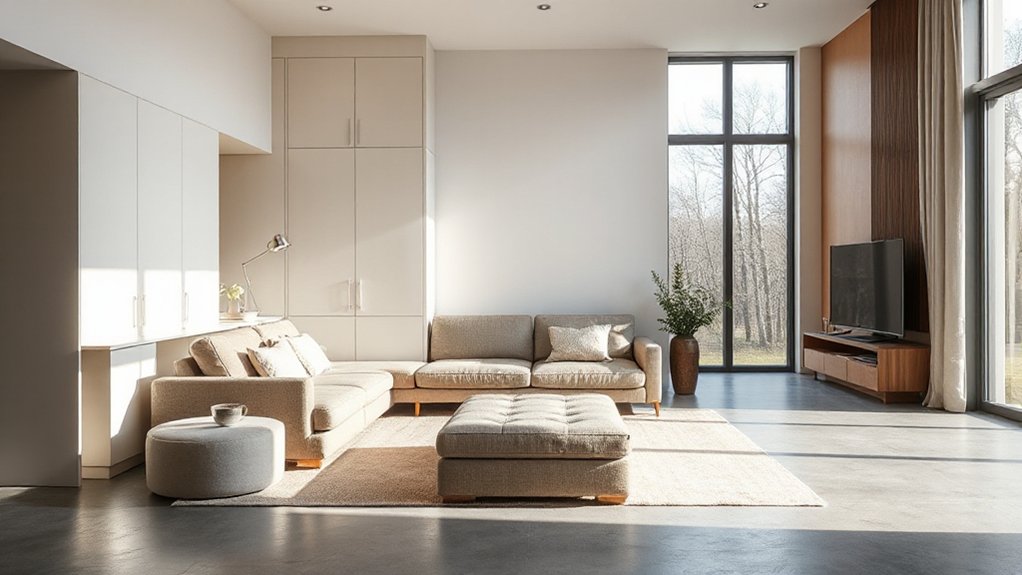
Layered lighting sets the mood, but clutter can still flatten a modern room’s clean lines, so you’ll want storage that disappears into the architecture. Start by mapping what you touch daily, then assign it a concealed home.
Choose built-ins that sit flush, use matching fronts, and run hardware in slim, matte profiles to keep sightlines quiet. Add modular shelving so you can reconfigure as needs shift without visual noise, and reserve open bays for a few curated pieces only.
For small essentials, integrate hidden compartments in benches, nightstands, and toe-kick drawers to keep surfaces bare and functional.
Prioritize these upgrades:
- Full-height, wall-to-wall cabinetry
- Modular shelving with closed modules
- Drawer dividers and cable management
- Hidden compartments for charging and keys
Make Rooms Work Double-Duty
How do you keep a modern interior feeling expansive when your rooms have to do more than one job? You design for quick changeovers and clear sightlines. Start with multi purpose furniture: a sofa bed with a slim profile, nesting tables that tuck away, or a lift-top coffee table that becomes a laptop desk. Choose pieces with hidden power management so cords don’t sprawl.
Define zones without building walls by using flexible room dividers. A ceiling-track curtain, slatted wood screen, or open shelving splits work from rest while still letting light travel.
Anchor each function with a tight rug and targeted lighting: a linear pendant for dining, an adjustable task lamp for work. Keep pathways wide and finishes consistent for cohesion.
Avoid These Modern Interior Design Mistakes
Even if you love that crisp, gallery-clean modern look, a few common missteps can make your space feel cold, cramped, or oddly unfinished. You’ll keep it sleek by balancing restraint with comfort, and by editing with intention rather than stripping everything away.
Prioritize proportion, layered light, and tactile contrast so the room reads designed, not sterile.
- Don’t rely on harsh artificial lighting; layer ambient, task, and accent sources with warm color temperature.
- Don’t push every piece to the wall; float key seating to define zones and improve flow.
- Don’t default to all-white; add matte blacks, warm woods, or mineral tones for depth.
- Don’t overdo decorative accents; choose a few sculptural, oversized pieces and repeat materials for cohesion.
Frequently Asked Questions
How Do I Blend Modern Interiors With Vintage or Heirloom Pieces?
Blend modern interiors with vintage accents by anchoring rooms in neutral, streamlined basics, then spotlight one heirloom piece per zone. Use heirloom integration through consistent metals, color echoes, and tailored lighting that elevates patina.
What Are the Best Modern Design Choices for Rental-Friendly Updates?
Want modern, rental-friendly updates fast? Choose Minimalist furniture, layer Neutral color palettes, swap hardware, add peel-and-stick backsplash, hang removable wallpaper, upgrade lighting with plug-ins, use large rugs, and add smart thermostats you can uninstall.
How Can I Make a Modern Home More Kid- and Pet-Friendly?
You make a modern home kid- and pet-ready by prioritizing child proofing safety—anchoring furniture, soft-close hardware, gated zones—and choosing pet friendly materials like performance fabrics, washable rugs, scratch-resistant flooring, and wipeable paints.
What Modern Interior Upgrades Add the Most Resale Value?
If you worry upgrades won’t pay off, focus on proven winners: kitchen refreshes, bathroom updates, efficient HVAC/windows, and Smart technology. Keep staging flexible with Minimalist furniture. You’ll attract buyers with turnkey function and style.
How Do I Achieve a Modern Look on a Tight Budget?
You’ll get a modern look on a tight budget by decluttering, choosing Minimalist decor, and upgrading Affordable lighting. Paint walls crisp white, swap dated hardware, add one large mirror, and stick to consistent finishes throughout.
Conclusion
When you follow modern design principles, your home becomes a well-tuned machine—quiet, efficient, and built for how you live now. Keep sightlines clear, let rooms flow, and stick to a calm palette that reads intentional. Balance warm woods with metal, glass, and matte finishes. Choose slim furniture, layer ambient and task lighting, and conceal clutter with integrated storage. Design flexible zones for work and rest, and skip over-styling that fights the architecture.