


Natural rock walls blend with your landscape by using locally sourced stones that age gracefully and resist weathering. Choose durable types like fieldstone, limestone, sandstone, slate, or granite, and mix textures and sizes to mimic natural formations while ensuring good interlock. Decide between dry-stack or mortared methods based on desired stiffness, drainage, and budget. Plan layered construction with a slight forward tilt, solid foundations, and proper backfill drainage. With thoughtful maintenance, these walls stay durable and visually cohesive over time, and you’ll learn more below.
What Sets Natural Rock Walls Apart
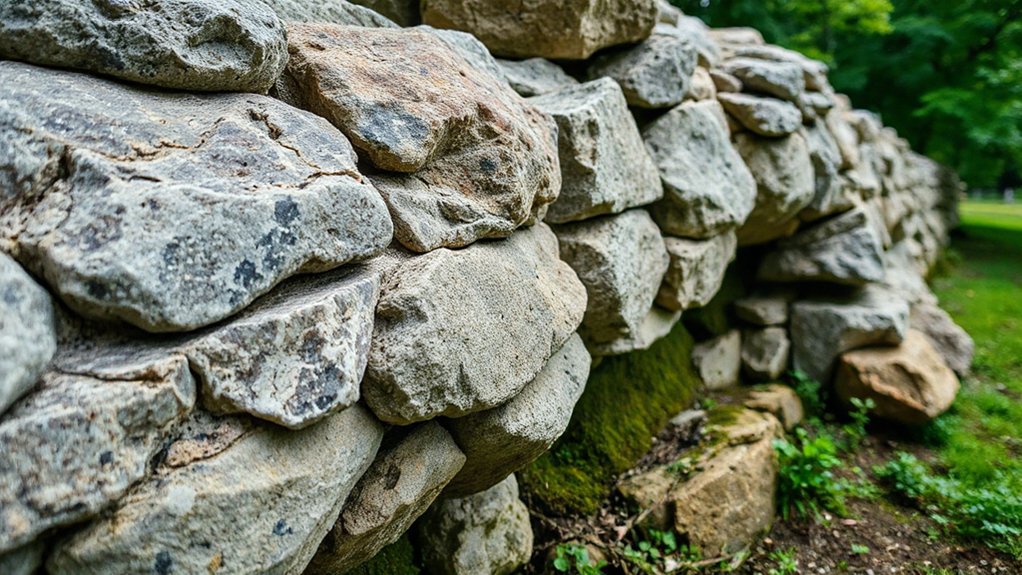
Natural rock walls stand out because they use locally sourced material that blends with the landscape and ages with the site. You approach these walls with a precise, data-driven mindset, focusing on material behavior, drainage, and stability.
What sets them apart is their natural aesthetics—textures, color tones, and irregular contours that mirror surrounding geology without artificial finishes. You assess how segmentation and wall face alignment preserve site characteristics while reducing visible maintenance.
Environmental harmony guides design choices, favoring permeability, root zones, and soil interaction that support local ecosystems. You optimize for minimal disturbance during excavation, selecting rock sizes that enhance interlock and resilience under load.
In performance terms, you prioritize long-term durability, ease of repair, and compatibility with native hydrology.
Dry-Stack vs Mortared Walls: Pros, Cons, and Use Cases
Dry-stack walls offer quick, low-impact construction by stacking dry units without mortar, which allows for differential settlement and drainage through joints. Mortared walls use cement to bond units, increasing stiffness and reducing seepage paths but requiring precise alignment and longer curing times.
In practice, you weigh installation speed, maintenance, and adaptability to grade changes. Dry-stack typically presents lower upfront costs and simpler sequencing, yet may require ongoing weeding or repointing joints to manage stability.
Mortared walls deliver higher rigidity, better load transfer, and tighter tolerances, but come with higher material, labor, and curing considerations, plus longer project timelines. Cost comparison varies by material quality and soil conditions.
Environmental impact favors dry-stack in some climates due to reduced cement use and enhanced drainage, while mortared constructions can minimize future disturbance with consolidated footprints.
Use cases favoring drainage, shallow grades, or rapid installation align with dry-stack.
Best Stone Types for Natural Rock Walls
Choosing the right stone for natural rock walls hinges on durability, workability, and drainage. For durable wall cores, select fieldstone, limestone, or sandstone with good breakage resistance and low water absorption.
Slate and schist provide strong shear strength and natural slip planes that aid locking, while quartzite offers hardness suitable for load-bearing sections.
Use basalt or granite in foundations or toe courses where frost resistance matters, but consider weight and handling.
For aesthetic appeal, mix textures and sizes to mimic natural formations, ensuring interlock patterns and set-back joints to reduce seepage.
Favor stones with compatible porosity to minimize internal cracking.
Prioritize consistent color variation and surface finish to maintain a cohesive look, and document stone provenance to support long-term maintenance and stone selection decisions.
Design Ideas for Terraced Walls, Curbing, and Steps
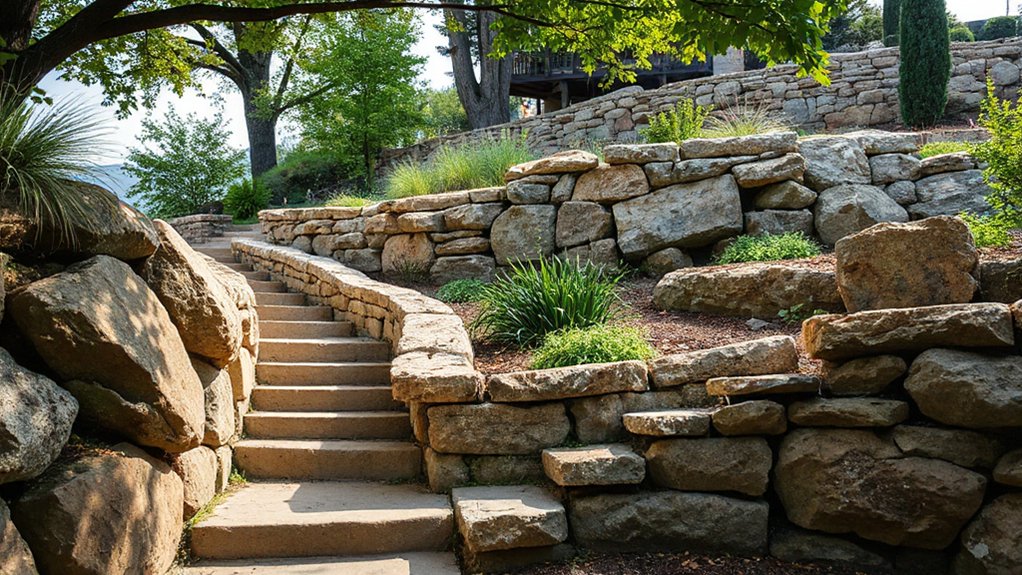
Terraced walls, curbing, and steps offer practical grading solutions and visual depth for natural rock projects. You design levels to reduce erosion and create usable space, aligning each terrace with the slope’s natural contours. Use staggered or flush alignment to control runoff while maintaining a cohesive look.
Curbs should be built from the same rock family for texture continuity, with joints tight enough to minimize soil intrusion. Steps must meet rise/run guidelines for accessibility, using wide treads to accommodate foot traffic and tool placement during maintenance.
Integrate garden pathways across terraces to connect functional zones, ensuring passages are smooth and stable. Add decorative accents—selected stone shapes, dry-laid edging, and contrasting textures—to enhance visual interest without compromising structure.
Practical Build Tips: Foundations, Drainage, and Stability
A solid rock wall starts with a sound foundation, proper drainage, and stable footing. You’ll verify footing depth and assure a level base before laying anything. Use compacted, well-drained soil and extend footing beyond the wall’s footprint to reduce settlement risk.
Control drainage with perforated pipes or aggregate fill, directing water away from the wall face to prevent hydrostatic pressure. Layer rock fragments to create a stable core, avoiding voids that could trap moisture. Align stones to maintain a continuous key, then notch against the backfill for backfill stability.
Consider weatherproofing details, sealing joints and surfaces exposed to freeze–thaw cycles. Monitor soil moisture during construction to prevent excessive soil compaction, which can reduce porosity and drainage efficiency. Regularly inspect for shifting or spalling after extreme weather.
Maintenance Tricks to Keep Walls Timeless
Regular cleaning regimens prevent grime buildup and preserve rock texture.
Timely drainage inspections catch clogs before they cause erosion. You should schedule brief, periodic checks to confirm outlet integrity and sediment levels, addressing issues before they impact wall performance.
Regular Cleaning Regimens
Regular cleaning keeps rock retaining walls looking and performing their best, preventing staining, moss growth, and mortar deterioration. You’ll establish a routine that targets surface soils, algae, and organic debris without damaging joints.
Begin with a dry brush to dislodge loose material, then apply a mild detergent solution and water, scrubbing in sections to avoid streaks. Rinse thoroughly, avoiding high-pressure blows that can loosen stone or mortar.
Address efflorescence by drying the wall, then applying a gentle wash as needed. Schedule seasonal cleanings to preserve color and texture, noting any brickwork or capstones that require resealing.
Integrate plant elements thoughtfully by coordinating with plant integration and lighting enhancements, ensuring moisture exposure is controlled.
Record observations for maintenance planning and further preventative steps.
Timely Drainage Inspections
Effective drainage inspections are essential to keep rock retaining walls durable; inspect regularly for signs of water pooling, erosion around joints, and displacement of soil pockets. You should schedule inspections after heavy rains and before frost, documenting any changes in grading or drainage paths.
Check French drains, weep holes, and backfill compaction, ensuring outlets remain clear and functional. Look for subtle soil erosion behind the wall face, which can undermine stability if left unchecked.
Monitor vegetation growth, noting where plant integration alters moisture flow or root pressure near joints. Record observed defects and corrective actions with timestamps for trend analysis.
Prioritize remediation strategies that minimize disruption to the wall’s geometry while maintaining proper drainage. Consistent inspections promote long-term performance and reduce repair costs.
Case Studies: Real-Life Natural Rock Wall Transformations
Case studies of real-world projects illustrate how natural rock walls perform under varying conditions and design goals. You review a hillside retreat where stacked boulders stabilize slope, minimize erosion, and blend with surrounding garden aesthetics.
In another site, you observe terrace modules where rock tiers support drainage and root zones; plant integration is deliberate, selecting native species to reduce irrigation while enhancing microclimates. You assess a commercial landscape that uses irregular rock faces as retaining steps, creating accessible terraces and low-maintenance features.
Documented outcomes emphasize material durability, backfill compaction, and proper drainage details. Across cases, maintenance needs focus on vegetation management and occasional repointing.
Practical lessons: match rock sizes to load, plan for seasonal moisture, and preserve visual harmony with surrounding plantings.
Frequently Asked Questions
How Long Do Natural Rock Retaining Walls Typically Last?
A natural rock retaining wall typically lasts several decades with proper maintenance. You benefit from erosion control and aesthetic enhancement, but expect maintenance for settling, joint integrity, and drainage to sustain structural life and prevent failure.
What Maintenance Is Required Annually for Rock Walls?
You’ll perform annual maintenance by inspecting joints, clearing vegetation, and reseeding as needed. About 60% of failures stem from poor drainage, so guarantee proper water handling. plant integration, erosion prevention; prune roots, monitor lifts, and lubricate drainage outlets.
Can Natural Rock Walls Support Safe Vehicle Traffic?
Yes, but only with proper vehicle weight considerations and rock wall design. You must assess load capacity, foundations, and reinforcement, guarantee movement control, and follow code, manufacturers’ guidelines, and site-specific constraints for safe vehicle traffic.
Are Local Permits or Codes Needed for These Walls?
Permitting requirements vary by jurisdiction, so you must check local regulations before starting. Local regulations may require structural plans, setback clearances, and inspections; obtain permits, follow codes, and document the wall’s engineering and drainage implications.
How Do I Estimate Material Costs for a Project?
To estimate material costs, you start with quantities and unit prices, then apply waste factors and contingencies. Use cost estimation and budgeting tips to align your plan with your target budget, updating as prices fluctuate and project scope changes.
Conclusion
Natural rock walls blend with landscape, offering durability and a timeless look. You’ll appreciate how dry-stacked walls gain flexibility, while mortared ones deliver greater rigidity where needed. One striking stat: properly built rock walls can last over a century with minimal maintenance, thanks to their load distribution and drainage. You’ll optimize with terracing, proper foundations, and efficient drainage. Use regional stone, monitor joints, and perform periodic checks to keep walls stable, safe, and timeless.


