
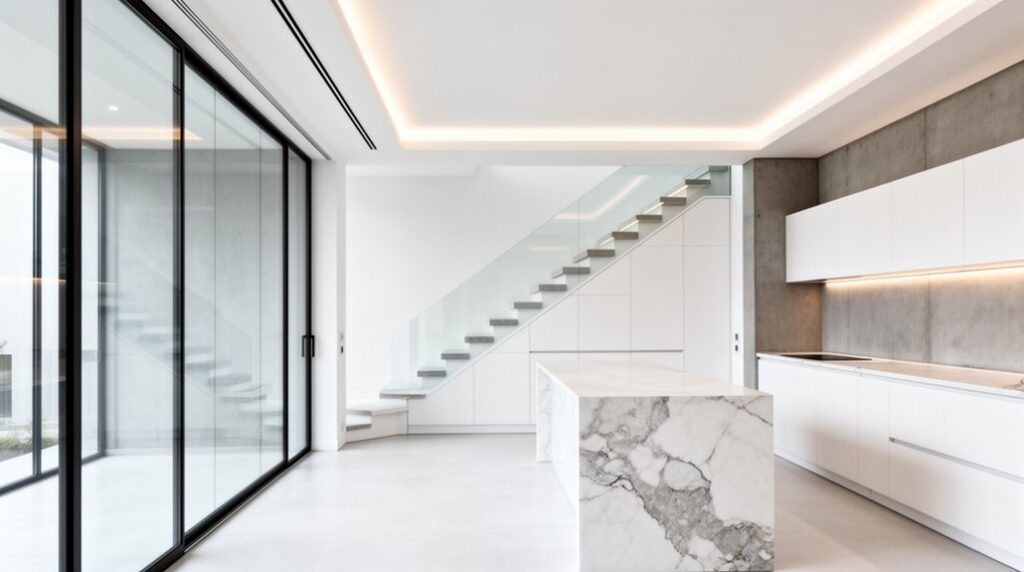

Ultra-modern interiors fuse precision-engineered detailing with tactile materials to create cohesive, durable spaces. You’ll translate concept into crafted elements through bespoke junctions, clean lines, and calibrated scales that emphasize process-driven clarity over decoration. Prioritize surface continuity with deliberate variation, texture contrasts, and sustainable materials. Lighting becomes architecture with Cove and Lip details, guiding perception and revealing materiality. Design built-ins and millwork to align with grids, MEPs, and sightlines, ensuring rhythm, proportion, and enduring coherence. Continue onward to uncover the practical workflow.
Why Bespoke Detailing Elevates Ultra-Modern Homes
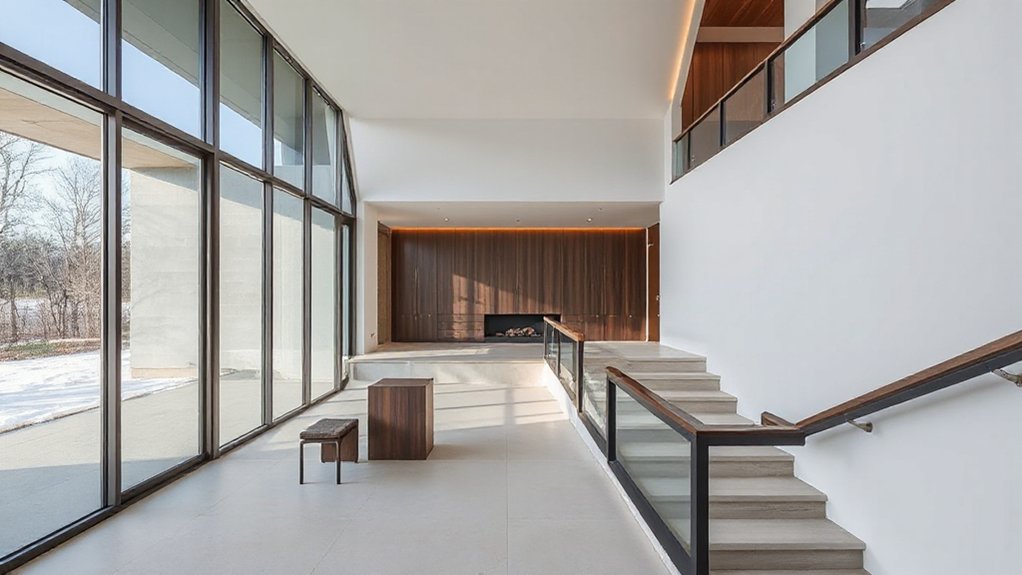
Bespoke detailing elevates ultra-modern homes by translating design intent into tangible, precise elements. You harness tailored junctions, clean lines, and calibrated scales to guarantee every feature serves function and form.
In this sphere, artistry isn’t decoration; it’s process-driven precision that communicates Contemporary identity. You align structural solutions with interior ambition, so lighting, acoustics, and movement corridors read as one cohesive system.
Artistic expression becomes measurable, not merely aesthetic, guiding decisions from mullion spacing to panel progression. Cultural influences inform restraint and reference without nostalgia, enabling a future-forward rhythm that still respects context.
You prioritize repeatability, constructability, and maintenance, delivering durable outcomes. The result is an environment that feels intentional, curated, and uniquely yours, where bespoke detailing elevates every interaction.
Materials and Textures for Tactile Modernism
Materials and textures define the tactility of modern interiors, translating technical performance into perceptible experience. You select surfaces that balance form and function, prioritizing precision in grain, finish, and edge detailing.
Textural contrast becomes a core tool, pairing matte with gloss, soft with hard, and warm with cool to guide wayfinding and emphasis without clutter. You’ll implement materials that satisfy performance criteria—durability, acoustics, and cleanability—while delivering refined appearance.
Emphasize material sustainability through low emissions, responsibly sourced constituents, and long lifespan, reducing lifecycle waste. Surface continuity across built elements reinforces unity, yet deliberate variation avoids monotony.
You’ll choreograph tactile moments—armrests, junctions, and inset panels—to reward close inspection. In this program, measurable specs, standardized finishes, and careful procurement ensure consistent quality, repeatability, and scalable application.
Lighting as Architecture: Cove and Lip Solutions
Cove lighting geometry defines how hidden luminance shapes space, guiding perception without overt fixtures.
Lip-lit aesthetic details reveal sculptural edges and micro-details that read as architecture rather than ornament.
You’ll balance clean lines with controlled glow to unify volume, texture, and daylight in a cohesive interior language.
Cove Lighting Geometry
Geometry defines light-emittance surfaces, reflector angles, and lensing choices, translating concept into measurable performance. Precision in cross-section, setback, and run length minimizes hot spots and creates seamless progressions between ambient and task layers.
You evaluate mounting tolerances, driver placement, and thermal paths to sustain lumen output over time. By coupling arithmetic with material behavior, you achieve predictable shadows, depth, and rhythm along architectural planes.
This approach embodies cove lighting geometry as integral, architectural lighting—not a decoration, but a controlled luminous framework.
Lip-Lit Aesthetic Details
Lip-lit details play a critical role in shaping architectural perception by detailing how light reveals form and texture along edges and planes. When integrated with cove strategies, they deliver a cohesive, sculptural experience rather than a static glow. You harness lip lighting to emphasize materiality, create edge definition, and guide experiential reading of spaces.
This approach foregrounds artistic expression while respecting cultural influences that inform material choices, finishes, and color palettes. You’ll design with precision: glare control, seamless progression, and consistent luminance norms ensure legibility and comfort.
Lip-lit elements stand as architectural accents, not afterthoughts, anchoring visual hierarchy and temporal mood across programs.
- Align edge lighting with key architectural moments to reveal texture and form
- Balance concealment and exposure to maintain narrative clarity
- Integrate cultural influences through materiality and color strategy
- Prioritize glare control and consistent luminance for comfort and precision
Designing Built-Ins: Millwork, Alcoves, and Metal Detailing
When designing built-ins, start by defining precise millwork profiles, alcove dimensions, and metal detailing that align with the space’s structural grid and project goals. You’ll specify joint types, panel layouts, and edge treatments for custom cabinetry so finishes read as a single, coherent wall plane.
Prioritize wall niches that maximize storage without sacrificing sightlines or light, calibrating depth and reveal to meet function and aesthetics. Detail alcove depths, crown stops, and toe-kick treatments to assure seamless integration with cabinetry and trim.
Specify material palettes, fabrication tolerances, and fastener schedules to minimize site adjustments. Communicate clear tolerances for alignment, plumb, and level, and coordinate with MEPs to prevent clashes.
Document finish schedules, hardware interfaces, and maintenance expectations for durable, precise built-ins.
Proportion, Rhythm, and Flow in Modern Interiors
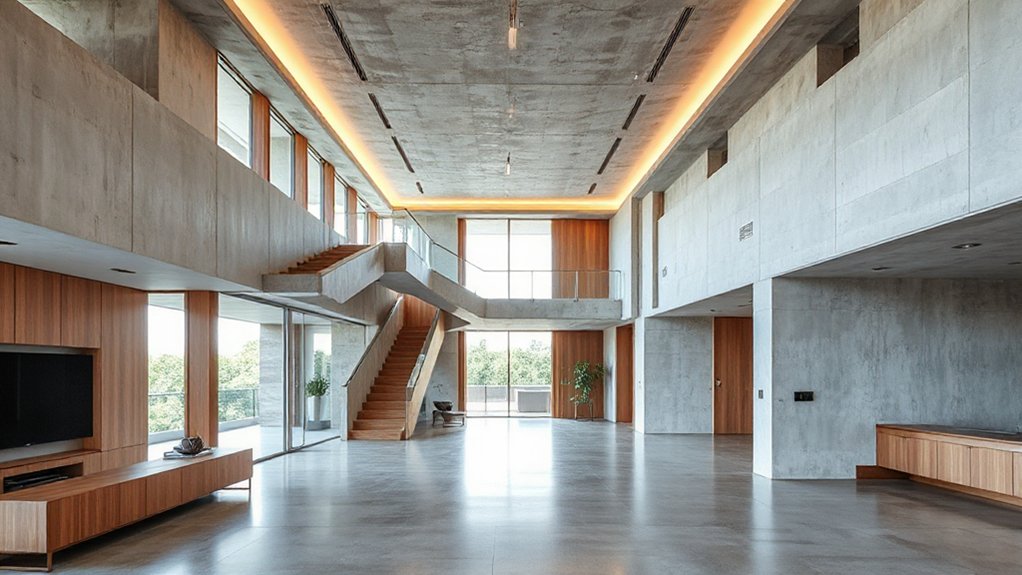
You’ll anchor spaces by establishing clear proportion in scale and layout, ensuring each element respects the overall geometry.
Rhythm emerges as you sequence details—edges, textures, and openings—that guide the eye without jolts.
Flow ties these choices together, balancing proportion and rhythm so movement feels effortless and intentional throughout the interior.
Proportion in Space
- Establish grid-based relationships to unify cabinetry, millwork, and openings
- Calibrate ceiling, wall, and floor moments for steady rhythm
- Match scale to human proportion for comfort and clarity
- Use proportion to reveal hierarchy and enhance spatial rhythm
Rhythm Through Details
Rhythm in modern interiors emerges from deliberate detailing that guides the eye and feet alike. You orchestrate cadence by aligning materials, scales, and joints to move readers through spaces with intention.
Proportions repeat along walls, ceilings, and furnishings, producing a measured beat that steadies perception without shouting. Rhythm through details relies on careful alignment of edges, reveals, and progressions, ensuring flow from one zone to the next.
You leverage artistic ornamentation sparingly, letting subtle cues punctuate rather than overwhelm, so the room breathes with precision. Cultural influences inform material choices, textures, and typologies, creating a layered tempo that feels both contemporary and respectful.
In practice, disciplined detailing delivers clarity, coherence, and a confident, enduring interior rhythm.
From Vision to Fabrication: A Practical Workflow
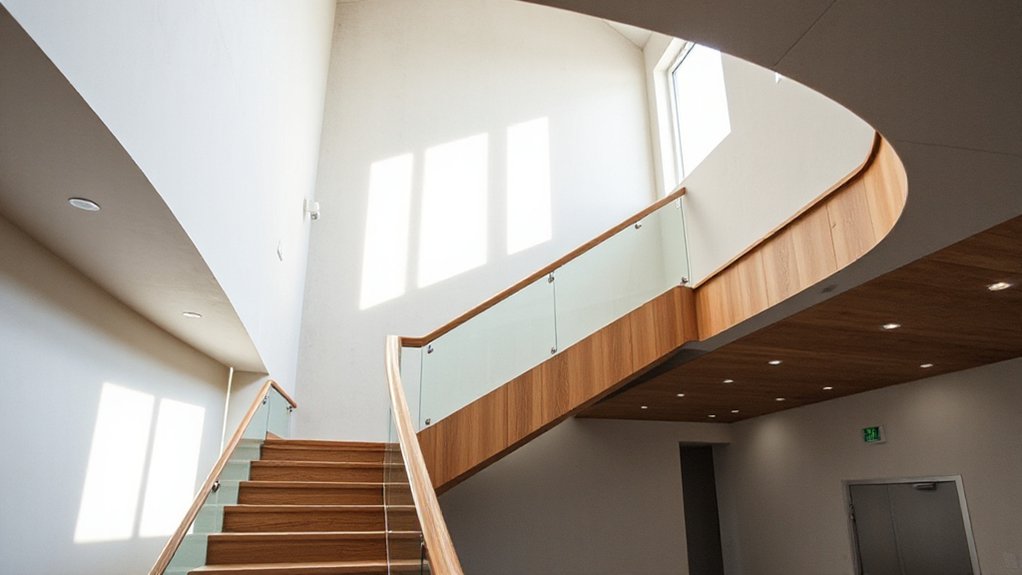
You follow a rigorous path that elevates evolutionary design and showcases innovative craftsmanship at every step, ensuring feasibility, tolerances, and performance. Precision governs decisions, from material selection to detailing, with clear accountability and traceable decisions.
- Define objectives, constraints, and metrics in a concise brief to anchor every phase
- Align teams through integrated documentation, CAD, and shop drawings
- Prototype iteratively to verify constructability, connections, and finishes
- Document changes, capture lessons, and lock specifications for durable delivery
Frequently Asked Questions
How Do I Budget for Bespoke Detailing in Ultra-Modern Homes?
Acknowledge early: to budget bespoke detailing, you’ll use precise cost estimation and design considerations. Start with scope, vendor quotes, and contingency; track changes, align specs with goals, and implement phased approvals to maintain control over costs.
What Maintenance Is Required for Metal Millwork Finishes?
Metal millwork finishes require regular maintenance to preserve metal finish durability; clean with mild, non-abrasive cleaners and avoid harsh chemicals. You should schedule periodic inspections, promptly address tarnish or corrosion, and document maintenance to guarantee long-term performance and reliable durability.
Can Off-The-Shelf Components Mimic Custom Built-Ins Convincingly?
Yes, off-the-shelf components can mimic built-ins convincingly if you prioritize precise proportions and seamless joinery. Focus on furniture integration and material authenticity, verifying grain, finish, and hardware alignments to achieve an authoritative, industry-focused result.
How Do Acoustics Influence Recessed Cove Lighting Placement?
Before you place recessed cove lighting, consider acoustics: lighting placement affects acoustic optimization and sound diffusion; align fixtures with wall/ceiling contours, ensuring acoustic optimization and lighting integration for balanced ambience and intelligible dialogue. (anachronism: “perchance”)
What Sustainable Materials Work Best for Tactile Modernism?
You should prioritize Eco friendly finishes and Recycled composites, choosing materials that balance tactile depth with performance. You’ll minimize embodied energy, guarantee durability, and specify coatings that resist wear, while maintaining perceptual quality and sustainable lifecycle advantages.
Conclusion
You’ve designed more than rooms; you’ve choreographed light, shadow, and touch into a single, living instrument. When bespoke detailing meets ultra-modern form, every seam becomes a conversation, every corner a deliberately carved moment. You’ll guide materials from concept to fabrication with surgical precision, ensuring millwork, alcoves, and metal detailing read as one continuous breath. The result isn’t decoration—it’s architecture that invites you to live inside its sculpted clarity, flowing with rhythm, proportion, and purpose.


