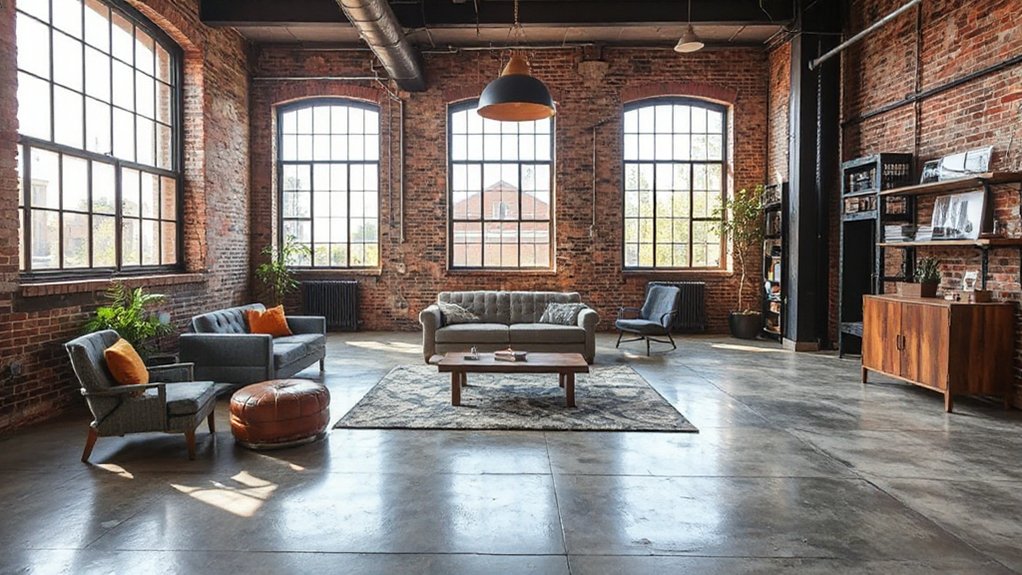

Transform your loft with a brighter, taller feel by embracing vertical space and smart zoning. Add a mezzanine for practical height without sacrificing flow, and use slim, floating furniture to keep sightlines open. Zone areas with layered lighting, concealed storage, and soft textures to damp echoes. Pair warm woods with bold color accents for warmth and personality. Finish with budget-friendly upgrades like modular storage and decorative wall panels. Want more specifics to elevate your design? Keep exploring these ideas.
How to Make a Loft Feel Taller and Brighter
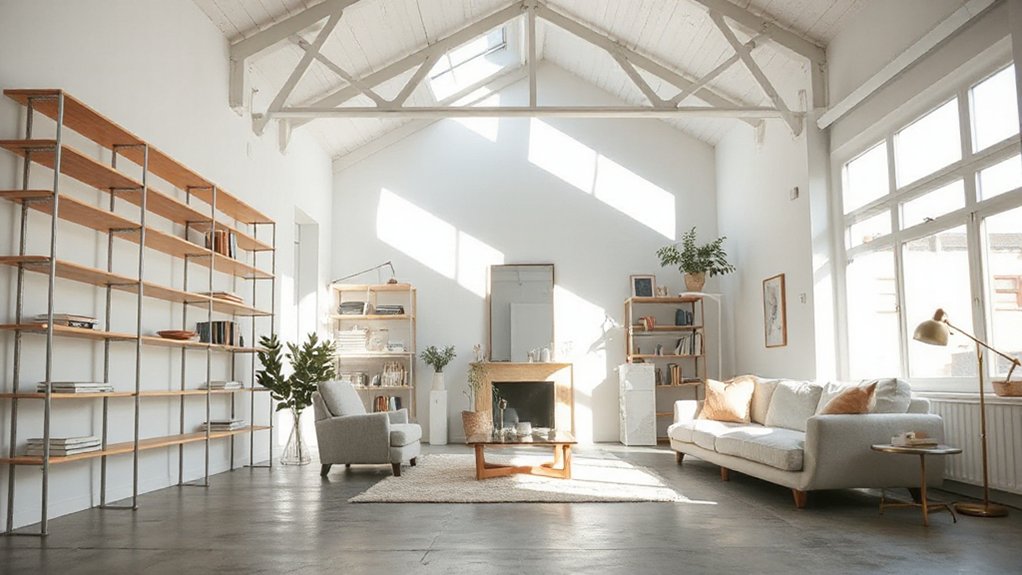
To make a loft feel taller and brighter, start with a clean, monochrome base: light walls, reflective surfaces, and minimal clutter that draws the eye upward.
You’ll maximize natural light by minimizing heavy drapes and choosing sheer or no window coverings. Pair white or cool neutrals with strategic color schemes that push depth, not darkness, like airy creams with pale blue accents.
Use vertical lines—tall shelving, floor-to-ceiling curtains, or slender artworks—to guide gaze upward. Reflective finishes on ceilings, glass, and metals amplify light without adding bulk.
Keep furniture low-profile and modular to preserve sightlines. Subtle, cohesive textures—linen, cotton, wool—add warmth without visual weight.
The result is a brighter, more expansive vibe that still feels curated and intentional.
Create a Mezzanine: Practical Height Gains You Can Actually Use
A mezzanine reshapes your space with height-optimized storage and seamless ceiling-to-floor flow, so every inch earns purpose. You’ll stack belongings where they’re least obtrusive, while keeping your lower level uncluttered and easy to move through.
Consider architectures that prioritize accessibility and clean sightlines to maximize both function and vibe.
Height-Optimized Storage
If you’re short on floor space but crave sizable storage, a mezzanine can reveal significant height-based gains without expanding your footprint. You’ll leverage vertical real estate with clean lines, choosing a railing style that reads modern rather than industrial.
Consider sloped ceilings in the design, routing storage along higher wall planes to maximize under-eave clearance. Build-to-fit solutions work best—think modular platforms, adjustable shelving, and integrated bins that tuck into recesses.
Plan for loft ventilation so air circulates around stored items and you don’t trap heat. Use a lightweight, compact stair or ladder to maintain flow between levels, keeping access effortless.
Finish with a neutral palette to emphasize openness, and add smart lighting to spotlight organized zones without visual clutter. This approach delivers practical height gains without sacrificing everyday usability.
Ceiling-to-Floor Flow
Ceiling-to-floor flow means designing your mezzanine so every inch counts—from access points to sightlines. You’ll optimize the footprint by aligning stairs with major traffic paths, so steps feel effortless, not tethered. Consider a low-profile railing that preserves openness while ensuring safety, and choose a compact lift or alternating stairs for flexible access.
Vertical clarity matters: keep load zones clean and avoid obstructing ceiling height with bulky cabinetry or oversized beams. Let ceiling height dictate your layout—a shallow mezzanine can still create meaningful volume if you zone by function and route natural light through skylights or transom windows.
Prioritize sightlines that unify upper and lower spaces, reinforcing a cohesive, airy feel aided by abundant natural light and a thoughtful material palette.
Zone Open Lofts With Smart Layout Strategies
While openness defines the vibe, smart zoning turns a single space into distinct, livable zones without walls. You’ll map flow with clean sightlines, choosing furniture placement and contrasting textures to delineate areas like living, dining, and work—without breaking the loft’s air.
Start with scale-aware furniture: a low-profile sofa, compact dining table, and a peninsula between kitchen and lounge create soft boundaries that feel intentional, not temporary.
Layer lighting to cue zones: warm task lamps near the desk, ambient pendants above the table, and recessed washes that guide movement.
Prioritize acoustics by adding acoustic treatments and soft surfaces to dampen echoes, preserving clarity of conversation.
Address loft insulation subtly, ensuring comfort without compromising ventilation or the open feel you value.
Hidden Storage That Disappears Into the Design
Hidden storage should feel like a design feature, not a compromise. You’ll hide clutter behind furniture lines that read as intentional details, not afterthoughts. Look for concealed shelving that blends with cabinetry, so it reads as part of the room rather than a tack-on solution.
Opt for hidden compartments integrated into benches, beds, or stairs, where grain and hardware align with the overall palette. Choose slim, magnetic, or push-to-open mechanisms to maintain clean silhouettes.
Material continuity matters: match doors to surrounding finishes, or use a nearly invisible façade in matte neutrals. Lighting should accentuate edges rather than reveal interiors, keeping functionality discreet.
The result: refined storage that serves, not shouts, elevating your loft’s curated vibe.
Floating Furniture and Wall-Mounted Tricks for Slim Spaces
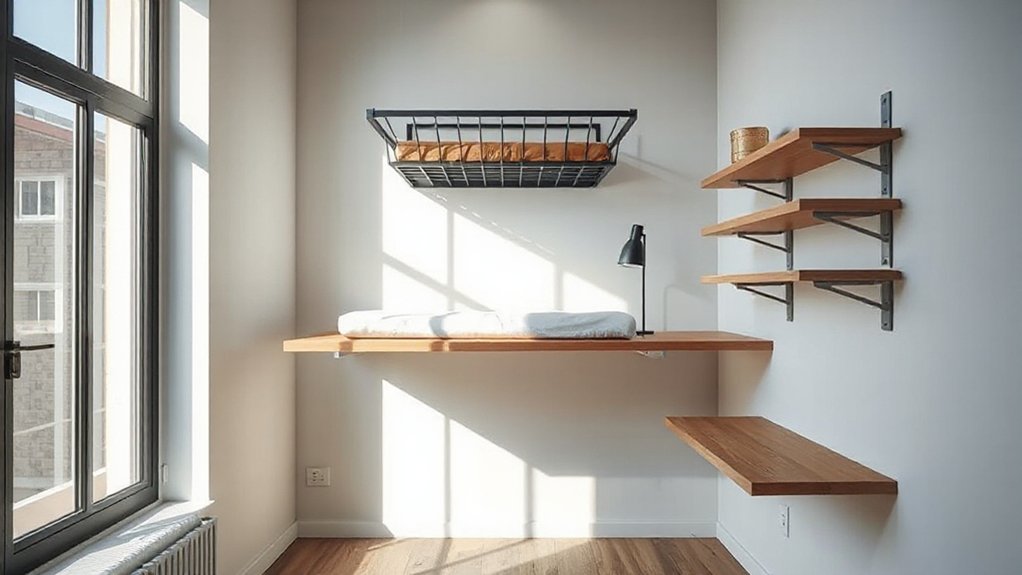
You’ll discover how floating furniture and wall-mounted tricks can unfasten slim spaces without sacrificing style.
Think clean lines, hidden supports, and strategic height to keep feet free and views open.
We’ll explore practical tweaks that pair function with a curated, trend-savvy aesthetic.
Floating Furniture Tricks
Floating furniture isn’t just a design flourish—it’s a smart move for slim spaces, freeing floor area without sacrificing function. You optimize composition with suspended pieces that retain utility while preserving openness. Think floating shelves to display essentials without a bulky footprint, paired with wall art that anchors mood without crowding sightlines.
Choose wall fixtures that balance weight visually, using thin profiles and soft finishes to maintain airiness. In seating, opt for leggy stools or a low-profile bench that allows light to pass beneath. Storage should hover above floors—totes on recessed shelves, modular units anchored into walls, not the base.
Maintain cohesive color and texture so each element reads intentional, not incidental. The result: a refined, breathable space that scales with daily life.
Wall-Mounted Space Savers
Wall-mounted space savers blend function with finesse, turning vertical real estate into sources of storage and style without crowding the room. You’ll harness floating shelves, wall-integrated desks, and hidden pull-out panels to reclaim floor space while keeping surfaces deliberately uncluttered.
Choose matte finishes and slim profiles to minimize visual weight, so art and textiles still read as focal points. Anchor a slim console with integrated charging and a corkboard strip for notes, recipes, or prints. Pair functional rails with decorative accents like Artistic wall murals to add personality without sacrificing room flow.
Vintage decor accents—think brass brackets, retro knobs, or a mid-century clock—insta-juxtapose modern efficiency with character. This approach delivers sleek practicality, curated texture, and a spacious, intentional loft vibe.
Lighting Plans That Sculpt Space, Mood, and Function
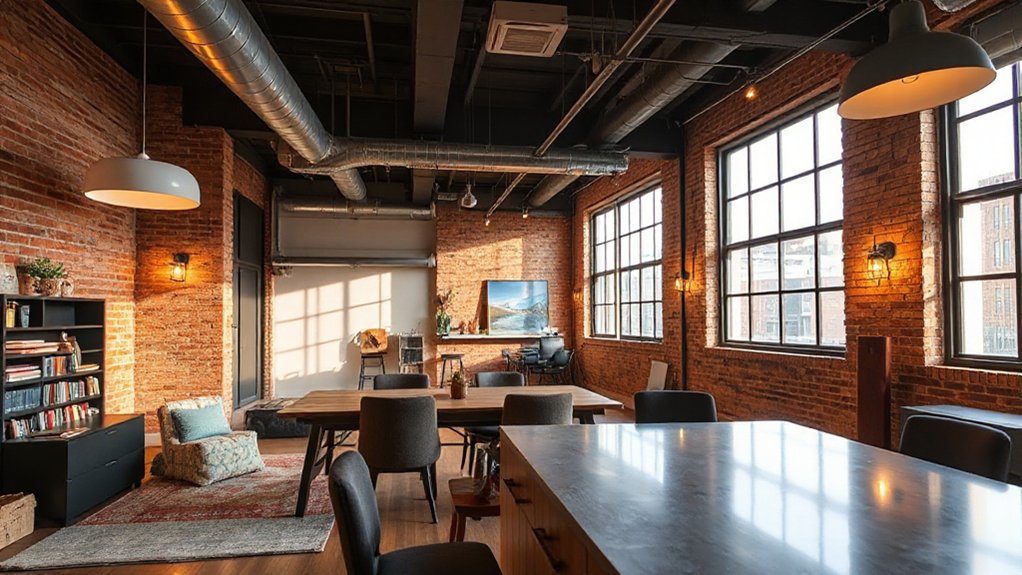
Lighting plans do more than illuminate—they sculpt space, mood, and function by layering layers of light, contrast, and placement. You map zones: task lighting for desks, ambient glow for rooms, and accents that highlight architectural quirks.
Start with dimmable LEDs to adjust ambiance creation as your day shifts. Integrate layered sources—ceiling, wall, and floor—so shadows sculpt depth without overpowering a view. Use color temperature deliberately: cooler for focus, warmer for lounge zones, balanced with wall wash to reveal textures.
Profile fixtures to maintain clean sightlines in open lofts, yet allow sculptural statement pieces for personality. Embrace smart controls so lighting design supports daily rituals, entertaining, and quiet evenings.
Your space becomes versatile, cohesive, and effortlessly chic.
Pairing Warm Woods With Bold Color Accents
Warm woods bring warmth, texture, and a natural backbone to loft spaces. Bold color accents wake that foundation with personality. You pair honeyed beams or walnut panels with saturated hues—emerald, terracotta, or deep indigo—to craft focal points that feel grounded yet electric.
Lean into rustic accents like rough-hewn shelves, live-edged trims, or distressed furniture to honor the wood’s grain while adding character. Vintage finishes on metal hardware or lacquered surfaces create a subtle patina that enhances contrast without shouting.
Keep the palette cohesive by repeating one warm tone across textiles, art, and upholstery. The result is a layered, curated look: tactile, energetic, and intentionally timeless, where warm timber frames bold mood without sacrificing sophistication.
Small-Space Workflow: Desk Nooks and Multiuse Zones
If you’re working in a tight footprint, create a cohesive desk nook that doubles as a charging hub and a task station. In small spaces, permeability matters: tuck cables into a slim sleeve, add a drawer-within-a-drawer for essentials, and keep a slim clock visible from your workstation.
Choose multiuse furniture that flips between work and relaxation—think a console that becomes a drafting surface or a bench that hosts a rolling cart underneath. Prioritize desk organization with modular organizers and discrete charging ports, so cords disappear and focus stays sharp.
Layer lighting to reduce glare: a dedicated task lamp plus ambient glow from a wall sconce. This workflow rewards intentional zoning, clean surfaces, and purposeful storage. Streamlined zones foster productivity without sacrificing style.
Budget Loft Upgrades With Big Impact
Small changes can yield big impact in a loft, especially when you’re balancing style with budget. You’ll prioritize smart upgrades that read as architectural wins, not bargain-bin fixes.
Start with loft acoustics: add wall panels or rug layering to absorb echo without cluttering sightlines, and choose textiles that soften sound.
For loft ventilation, swap heavy drapes for breathable, light-filtering alternatives and ensure a slim ceiling fan or discreet exhaust keeps air moving without stealing ceiling height.
Update lighting with layered sources—track, task, and ambient—so you can sculpt mood without costly rewiring.
Disable clutter with closed storage that blends into alcoves, and opt for matte finishes to hide wear.
Finally, reuse or refinish a statement piece to anchor the room with minimal expense.
Frequently Asked Questions
How Can I Acoustically Treat a Compact Loft?
You can soundproof a compact loft by layering lightweight, movable solutions, like rugs and curtains, then adding acoustic panel options on walls and ceiling; combine soundproofing techniques with bass traps for focused, stylish acoustic control.
What Are Safe Ladder Alternatives for Access?
If you’ve ever watched a tightrope walker, you know balance matters; use safety harnesses and fixed staircases as reliable ladder alternatives. You’ll reduce risk, maintain flow, and elevate access with curated, trend-smart, detail-oriented simplicity.
How Do I Avoid Losing Headroom on a Mezzanine?
To avoid losing headroom, you optimize headroom by maximizing mezzanine height with careful planing, beam alignment, and parapet choices; prioritize vertical clearance, shadow-free angles, and built-in storage. Headroom optimization guides your mezzanine height decisions throughout the project.
Which Materials Minimize Noise Transfer Between Zones?
Soundproofing panels and insulating barriers minimize noise transfer between zones; you’ll notice crisper rooms, better focus, and calmer evenings as you install them with precise detailing and a trend-savvy, curated approach.
Can a Loft Improve Resale Value and Appraisals?
A loft can boost resale value and appraisals, especially when you use home staging to highlight space, light, and flow, framing it for property valuation. You’ll attract buyers who see modern, versatile living in your listing.
Conclusion
Ready to elevate your loft vibes? Put these ideas to work and watch your space breathe—taller ceilings, brighter light, and smarter storage all in one cohesive story. Think of your loft as a stage where every detail has a cue: floating furniture, hidden nooks, warm woods kissing bold color. You’ll sculpt mood without crowding square footage, and workflow will feel effortless. Your space isn’t just lived in—it’s curated, confident, and utterly you.