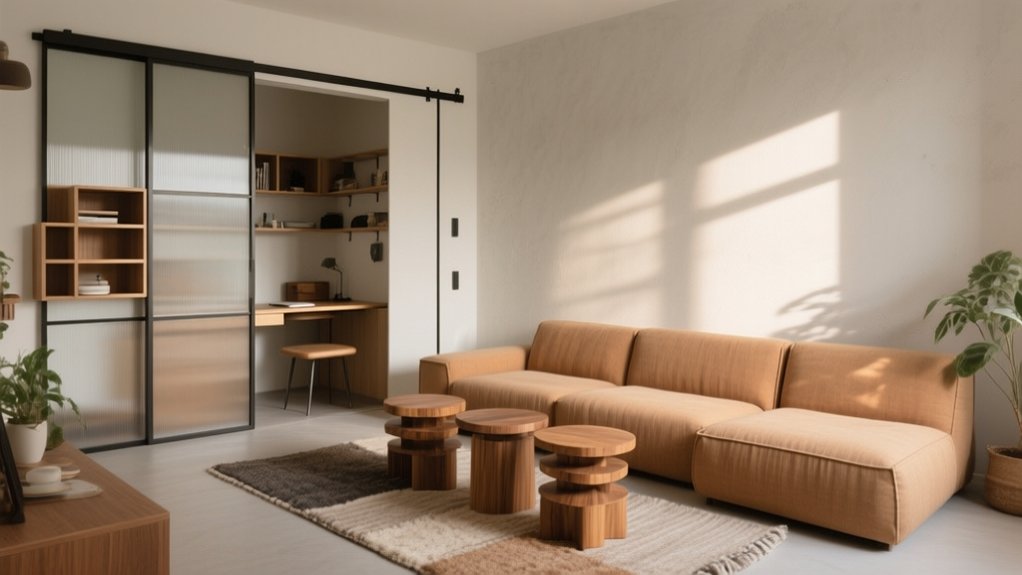

Design your home so it can shift with your routines, not fight them. You’ll map clear circulation between cooking, work and rest, then define zones with rugs, lighting and low joinery rather than walls. Choose multitasking, mobile furniture and place power and data points around the perimeter for easy re-layouts. Stick to neutral, low-VOC finishes you can refresh in phases, and add modular storage with adjustable components. Up next, you’ll see how to future-proof each zone.
Key Takeaways
- Plan flexible zones and clear circulation, using subtle thresholds like rugs or half-height joinery instead of fixed walls.
- Put power, data, and layered lighting around the perimeter to support shifting work, cooking, relaxing, and entertaining needs.
- Choose multifunctional, mobile furniture—extendable tables, nesting pieces, storage ottomans, adjustable desks—to scale activities without new purchases.
- Use finishes built for phased updates: neutral paints, swappable hardware, washable textiles, and floating floors that refresh easily over time.
- Install modular, adjustable storage on a repeatable grid, and design for life changes like WFH, kids, and aging-in-place with safer, wider access.
Plan Flexible Interior Layouts With Zones and Flow
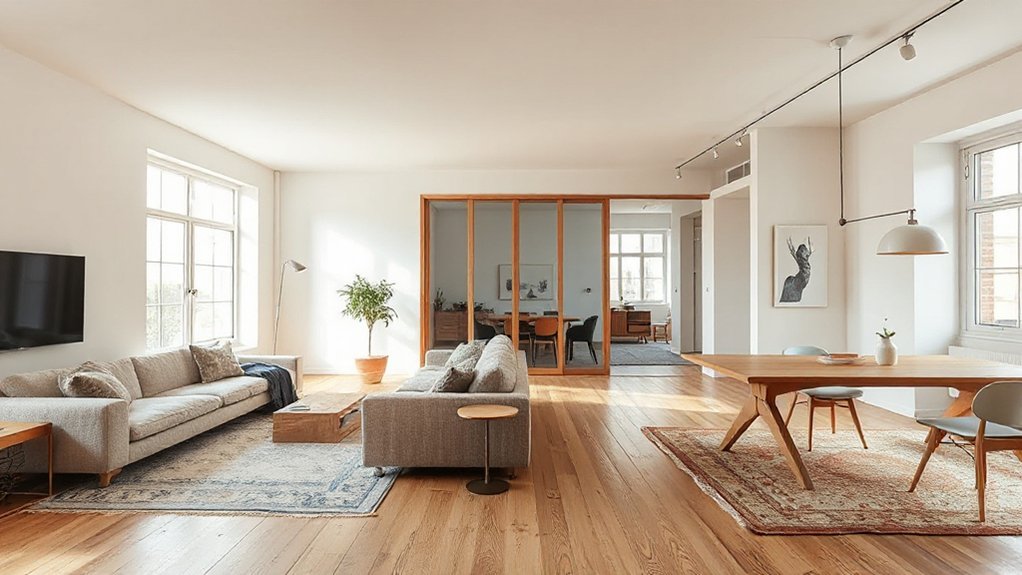
If you want a home that adapts as your routines change, start by planning a flexible layout built around clear zones and easy flow. Map how you move between cooking, working, relaxing, and storage, then keep circulation routes uncluttered and direct.
Use thresholds—rugs, ceiling lines, or half-height joinery—to define zones without boxing rooms in. Position power and data points around the perimeter so you can shift activities without rewiring.
Layer Creative lighting: task light for focus, dimmable ambient for evenings, and accent to guide movement.
Choose Sustainable materials for floors and wall finishes that tolerate reconfiguration, like hardwearing timber, cork, and low-VOC paints.
Leave breathing space near doors and windows for future changes.
Choose Adaptable Interior Furniture That Multitasks
As your needs shift from weekday work to weekend hosting, adaptable furniture stops your rooms from feeling locked into one purpose. Prioritise multifunctional furniture that earns its floor space: an ottoman with concealed storage, nesting tables that split for drinks, or a sofa bed that’s comfortable enough for proper guests, not just emergencies.
Choose extendable dining tables and stackable chairs so you can scale up without cluttering daily life.
Buy pieces with mobility and adjustability: a slim trolley for coffee kit or barware, a height-adjustable desk that doubles as a console, and shelving with moveable brackets.
Pair these choices with adjustable lighting—dimmable task lamps and swivelling wall lights—so one layout supports focus, relaxing, and entertaining effortlessly.
Pick Interior Finishes You Can Update in Phases
While your layout might stay put for years, finishes take the daily knocks, so choose ones you can refresh in stages without ripping everything out. Start with surfaces that are simplest to swap, then move to anything that needs a trade. Keep your colour schemes flexible: use calm, neutral bases and let accents do the heavy lifting.
Plan lighting options as part of the finish strategy, because bulbs, shades, and wall colours read differently under warm or cool light.
Work methodically:
- Paint first; it’s quick, cheap, and resets a room’s mood.
- Choose replaceable hardware: handles, taps, and switches modernise instantly.
- Specify floating floors or rugs over precious boards for easy change.
- Pick washable, re-coverable textiles to update wear zones without reupholstery.
Add Modular Interior Storage for Changing Routines
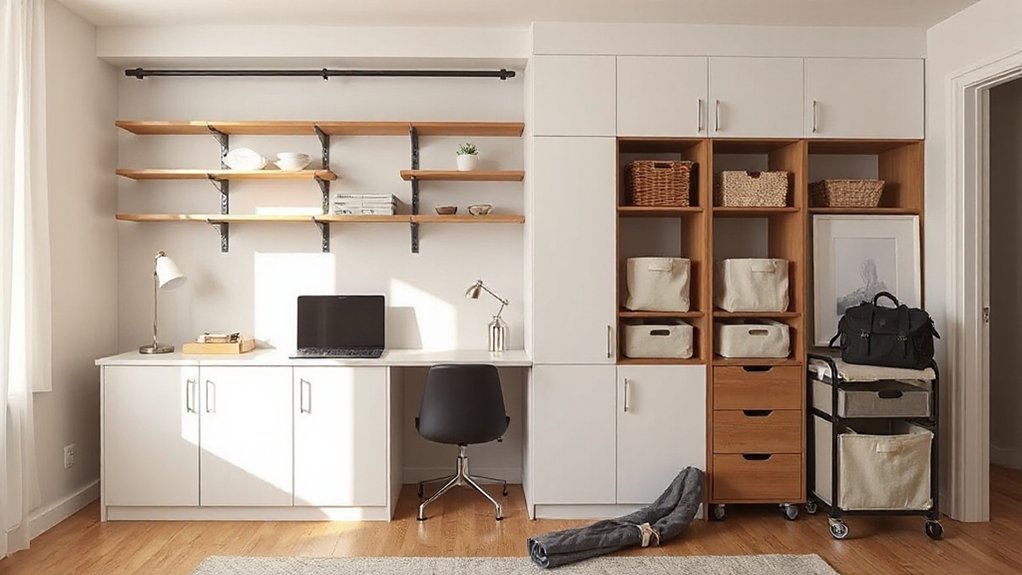
Because your routines shift faster than your floorplan, you’ll get more long-term value from modular storage you can reconfigure without calling in a joiner. Choose systems with standardised widths, adjustable uprights, and clip-in components so you can shift from open display to closed cupboards as clutter levels change.
Prioritise pieces that stack, bridge corners, and accept baskets, hooks, and rails; they’ll let you reorganise in minutes, not weekends.
Use Customizable shelving to tune heights for bulky appliances, file boxes, or tall vases, and keep a spare set of brackets for quick edits.
Anchor tall units to solid walls, level bases properly, and plan a repeatable layout grid.
Finish with labelled inserts so everything returns to place.
Adapt Interiors for WFH, Kids, and Aging-in-Place
If your home needs to handle video calls, homework, and quieter living later on, design each room to switch roles without a rebuild. Plan for flexible zones, sound control, and safer circulation so you’re not forced into major works when life shifts. Use sustainable materials that take knocks and clean easily, and integrate home automation to reduce daily effort and improve security.
- Fit a fold-down desk and concealed cable run; shut it away after work.
- Choose durable, repairable finishes: washable paint, cork, wool, and FSC timber.
- Build kid-proof storage at low level now, then repurpose it for accessible essentials later.
- Specify wider door swings, level thresholds, and motion-lit routes to the loo for night-time safety.
Frequently Asked Questions
How Do I Budget for Evolving Interiors Without Overspending?
Set a phased budget: prioritise essentials, then upgrades. Use adaptive planning to price future changes now. Choose flexible design pieces that move rooms. Track costs weekly, reserve 10% contingency, and reuse materials whenever possible.
Which Permits or Codes Affect Interior Changes Over Time?
You’ll face Building permits for structural work, electrics, plumbing, and change of use; Fire codes for escape routes, doors, alarms, and materials. Check local authority guidance, lease rules, and listed-building status before altering layouts.
How Do I Future-Proof Interiors for Resale Value?
Future-proof interiors for resale by choosing wildly versatile finishes, keeping layouts flexible, and investing in Adaptive furniture and Modular designs. You’ll appeal to more buyers, cut refit costs, and update easily with neutral palettes.
What Are the Best Ways to Reduce Renovation Downtime and Disruption?
You’ll cut downtime by planning trades tightly, ordering materials early, and using off-site fabrication. Keep rooms usable with Smart storage, sequence dust-heavy work first, and add lighting automation late. Protect routes and schedule noisy hours.
How Can I Choose Contractors for Phased, Long-Term Interior Updates?
You’ll nail contractor selection by checking phased experience, asking for staged references, and agreeing a detailed project timeline. You should insist on clear scope per phase, written change control, and a lead contact throughout.
Conclusion
If you design for change, your home won’t fight your life. Keep zones clear, furniture hardworking, and finishes easy to refresh in stages, so you’re not forced into costly overhauls. Build storage that shifts with routines, then plan ahead for WFH, children, and later-life comfort. One telling stat: Britons move house roughly every 8 years, yet your needs can change yearly—so make the interior adapt, not the other way round.