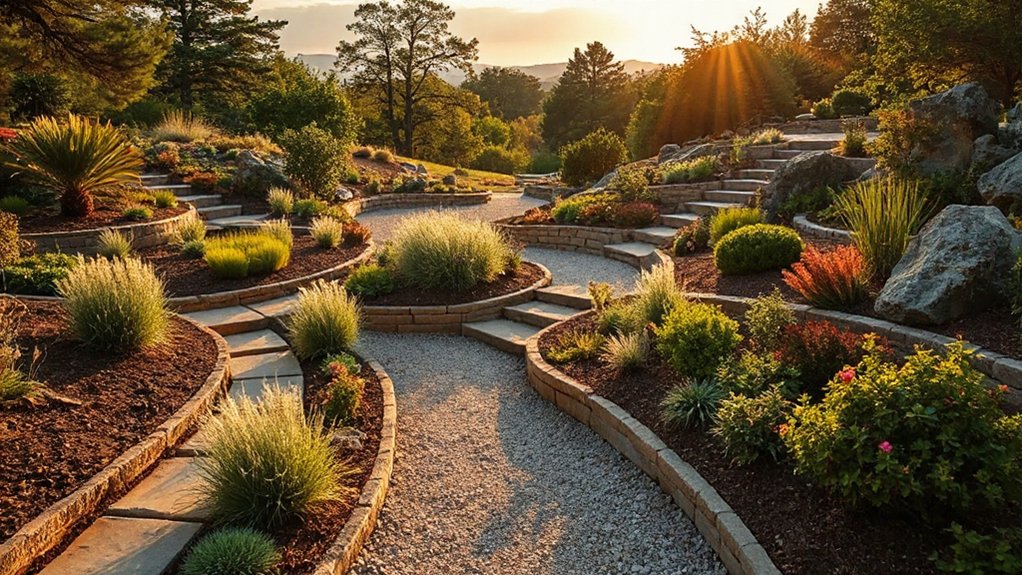

If you’re not yet sure how to approach slope gardening, you’ll find that subtle compromises can still yield strong stability. Start with a slope-friendly plan that respects terrain and water flow, then layer terraced beds with gentle steps to calm erosion. You’ll want drainage-first layouts, switchback paths, and smart plant choices that support soil health. Keep a practical checklist handy to guide shift from concept to structure, and you’ll see where the approach leads you next.
Key Takeaways
- Use terraced beds, swales, and berms to stabilize slopes, slow water flow, and create layered planting for year-round interest.
- Plan erosion control first with native ground covers and deep-rooted plants to protect soil and support biodiversity.
- Map micro-climates (sun, shade, moisture) to place plant palettes that suit each zone and maximize drought tolerance.
- Design accessible switchback paths with non-slip surfaces, clear sightlines, and gentle drainage to minimize erosion.
- Integrate habitat-friendly elements (pollinator plants, wildlife corridors) and monitor irrigation and soil health for long-term sustainability.
Start With a Slope-Friendly Design Plan
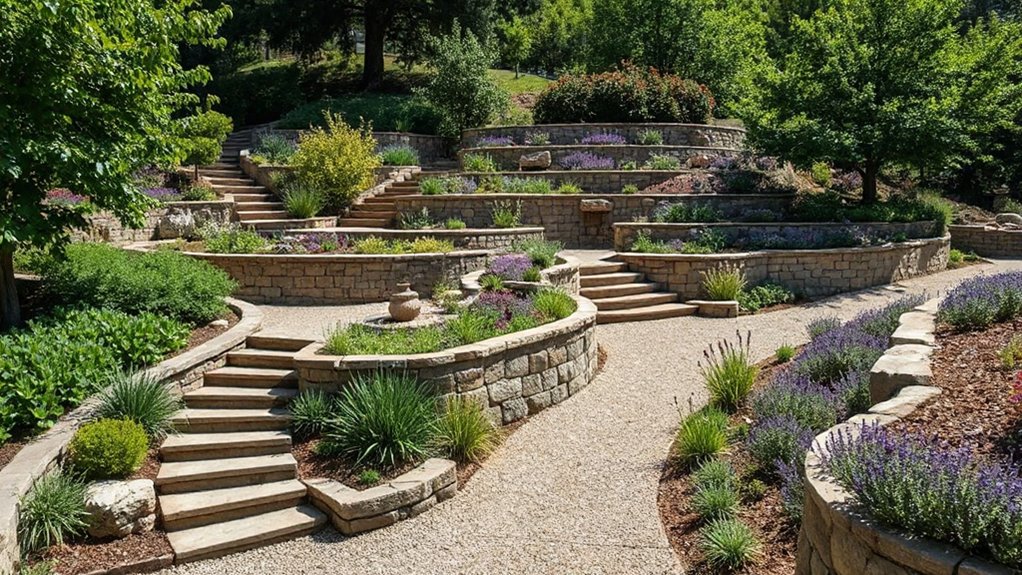
To design a slope-friendly layout, start by evaluating your site’s grade, drainage, and sun exposure. You’ll translate these measurements into a practical plan, marking highest to lowest points and noting wind patterns.
Assess soil type and depth, noting any erosion-prone seams. Prioritize pathways and access routes that minimize disturbance to existing terrain while preserving functional spaces.
Choose containment strategies that align with your grade, such as gentle terracing, swales, or staggered berms, to reduce runoff and erosion.
Integrate erosion control measures, like stabilized edges and native ground covers, early in the design.
Design with wildlife habitats in mind by reserving shaded understory zones and native plantings that attract pollinators.
Document spacing, plant selections, and irrigation needs to sustain a stable, low-maintenance slope landscape.
Terraced Beds That Stabilize and Beautify Slopes
Terraced retaining techniques anchor slope sections while guiding water flow to minimize erosion.
Pair soil stabilization methods with compact, drought-tolerant plantings to create structured, flourishing beds.
Plan an aesthetic sequence that blends color, texture, and height to highlight the terrace edges without sacrificing stability.
Terraced Retaining Techniques
Terraced retaining beds harness gravity and soil cohesion to stabilize slopes while creating level planting pockets. You plan each terrace using a careful slope analysis to match grade, drainage, and sun exposure.
Build shallow, staggered benches with compacted fill and a durable edging material to resist erosion. Channel water along the terrace edge with a drip or soaker system, directing runoff toward below-grade drainage where appropriate.
Soil placement prioritizes compaction control and organic enrichment, minimizing cohesion loss on steep sections. Use geotextile underlay in high-erosion zones and verify each tier remains level with a magnetic or laser tool during construction.
Erosion control is integral, not incidental, and you verify stabilization before plant installation. Maintain, monitor, and adjust irrigation to sustain soil structure and plant health.
Soil Stabilization Methods
Want stable slopes that also look polished? You implement soil stabilization with terraced beds that counter erosion while showcasing soil, rock, and plant textures.
Begin by surveying grade changes, then plan steps no steeper than 1:3, using compacted fill and structural supports to create solid, level planting zones.
Install durable retaining elements—crisp timber, masonry, or gabions—behind each terrace, anchored into engineered backfill.
Drainage must be deliberate: perforated pipes or French drains redirect runoff to safe outlets, preventing pooling and frost heave.
Choose native, deep-rooted species to weave a living barrier; roots stabilize soil and add succession-ready cover.
Integrate natural pest control strategies and wildlife habitats by selecting diverse plantings and undisturbed margins.
Regular inspection of joints, fasteners, and mulch keeps slopes resilient and visually cohesive.
Aesthetic Planting Schemes
As you shape terraced beds that stabilize and beautify slopes, begin with a deliberate plant mix that complements structural elements and site conditions. Layer species by microclimate: sun-exposed risers, shaded ledges, and moist low points.
Choose a cohesive palette of foliage texture and color to maintain year-round interest, then cluster repeats to read from a distance. Integrate Wildflower meadows at transitional bands to soften edges and reduce erosion, using perennial grasses for backbone structure.
Introduce Vertical gardens on select walls to maximize vertical interest without widening terraces. Schedule flowering sequences to stagger bloom windows, ensuring continuous color.
Use native or well-adapted cultivars with similar water needs, and implement drip irrigation to preserve soil structure. Regularly monitor soil moisture, prune strategically, and replace underperforming species promptly.
Drainage-First Layouts: Swales and Runoff Control
Swales guide water to where you need it, reducing erosion and directing runoff along the slope.
You’ll integrate shallow channels with grade breaks to slow flow, capture sediment, and recharge soil moisture.
Consider how each swale supports runoff management, slope-efficient planting, and overall drainage reliability.
Swales For Drainage
Swales are deliberate, shallow trenches designed to capture and slow runoff on sloped sites. You position them across contours to maximize infiltration rather than channeling flow downward. Dig to a uniform depth and width, then shape the bottom slightly to hold gentle water pools after storms.
Align each swale with existing soil structure and subsoil permeability, using stakes or string to keep lines true. Add a compacted berm on the downslope side to reduce overflow while maintaining accessible paths for maintenance.
Edge with mulch or groundcover to minimize erosion and evaporation. Use swales as part of a broader drainage strategy that supports Rainwater harvesting and soil erosion control, while still enabling planting beds to thrive.
Monitor sediment buildup and replenish mulch as needed.
Runoff Management Techniques
To manage runoff effectively on sloped sites, prioritize drainage-first layouts that place swales and runoff-control features ahead of planting decisions. You implement contour-aligned channels to slow water, then use graded terraces to dissolve peak velocity into usable irrigation later.
Swales capture sediment, recharge soil moisture, and create microhabitats that reduce erosion risk downstream. In-fill beds sit behind the water-management line, with mulch and compost layering to stabilize soils.
For irrigation techniques, align emitters and drip lines with the swale slopes to minimize overspray and soil compaction, ensuring steady percolation without pooling.
Pest control integrates with drainage: lower damp pockets become traps for pests, so you rotate crops and maintain plant health proactively.
Document runoff performance, adjust layouts seasonally, and maintain clear access for inspection and maintenance.
Slope-Efficient Planting
On sloped sites, begin with drainage-first layouts that place swales and runoff-control features ahead of planting, so water slows and sediments settle before beds are developed. You implement contour- or terrace-aligned swales to capture runoff, then direct it through filter strips and mulch before it reaches root zones.
Position berms to channel flow gently, reducing erosion and promoting gradual infiltration. Use setback distances between swales and crops to maintain consistent moisture without oversaturation.
Schedule planting in downstream sections after soil moisture stabilizes, selecting drought-tolerant, water-wise species to support water conservation. Integrate native grasses and groundcovers to trap sediment and foster wildlife habitats along margins.
Monitor infiltration rates, adjust swale depth, and document sediment loads to refine layouts for ongoing slope stability.
Switchback Paths That Invite Exploration and Accessibility
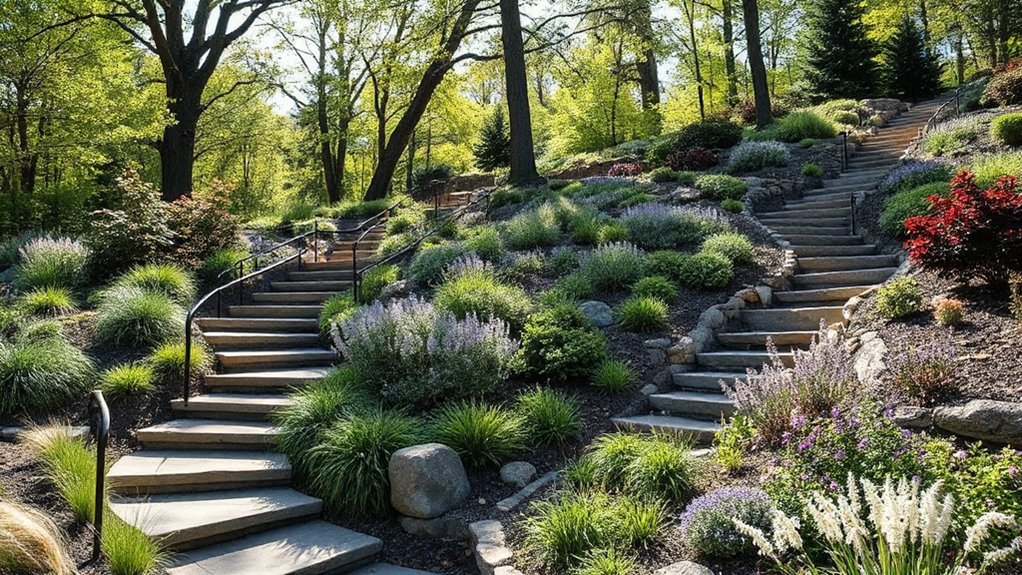
Switchback paths transform steep slopes into inviting, accessible routes that encourage exploration without overwhelming terrain. You design a serpentine gradient that minimizes grade, easing tread for all users. Each switchback should be clearly defined with compact, non-slip surface materials and sturdy edging to prevent erosion.
Place landings at regular intervals to provide resting spots and elevated viewpoints for selective panoramas. Use switchbacks to weave through existing vegetation, preserving roots and soil structure while creating visual intrigue.
Directionality is important: sightlines should guide visitors toward focal points, from elevated viewpoints to seating alcoves, without creating blind turns. Integrate gentle drainage channels beneath the path and mulch to reduce runoff.
Link the route to wildlife corridors, ensuring minimal disturbance and sustained engagement with the landscape.
Micro-Climate Zoning for Sun, Shade, and Water Use
By mapping sun exposure, shade patterns, and water flow across the site, you can designate micro-climates that steer plant selection and irrigation planning. You’ll identify micro climate zones where sun exposure is intense, partial, or limited, and where moisture drains or pools. This zoning guides both species choice and watering regimes, minimizing waste and runoff while maximizing resilience.
1) Assess sun exposure at different elevations to define hot, warm, and cool zones.
2) Map shade duration from trees, structures, and terrain to curate shade-tolerant and sun-loving beds.
3) Track water flow to locate drainage, runoff, and wetter pockets for appropriate planting.
4) Align irrigation with zone needs, using drip lines or soaker hoses tailored to each micro climate zone.
Plant Palettes for Gradients and Sun Exposure
To design effective plant palettes across gradients of sun exposure, start by pairing species with specific micro-climate zones identified earlier: full sun, partial sun, and shade. You’ll map light duration and intensity, then assign targets for bloom timing, foliage texture, and vertical layering.
Prioritize native plants to align with local soils and pollinator networks, optimizing compatibility with natural rainfall patterns. For full sun, select drought-tolerant bloomers, bold foliage, and sturdy stems; reserve cooler-season interest for late afternoon light.
In partial sun, combine deciduous and evergreen textures along with mid-season color shifts. In shade, emphasize low-maintenance groundcovers and understory shrubs that tolerate filtered light.
Design for wildlife habitats by spacing nectar-rich species near pathways and creating layered canopies that shelter birds and pollinators. Maintain clear labels and update palettes seasonally.
Soil-Building Tactics to Prevent Erosion on Slopes
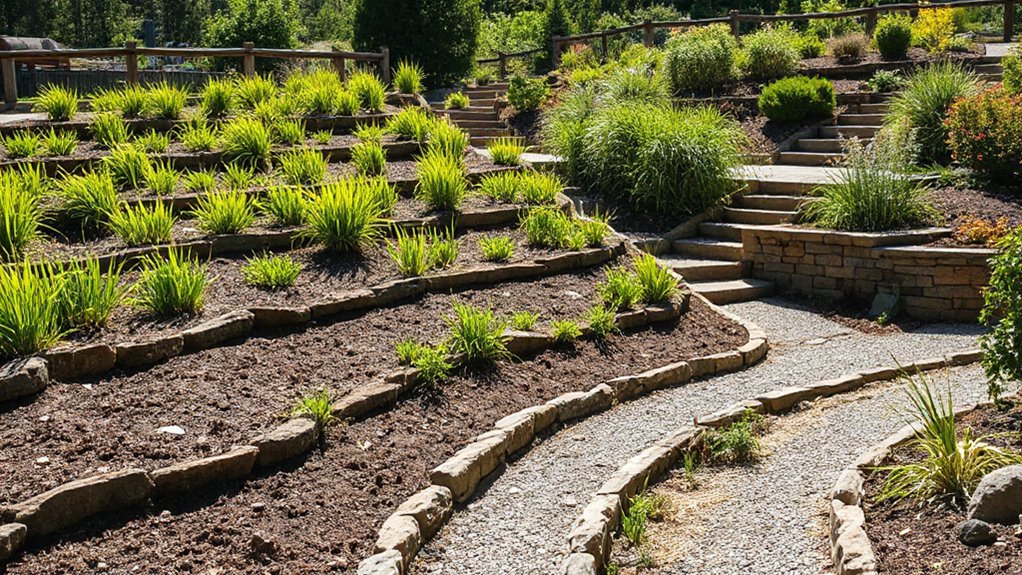
Slope stabilization hinges on deliberate soil-building tactics that create structure, improve infiltration, and reduce runoff. You’ll build a resilient profile by layering organic matter, compost, and mulch to foster soil fertility and microbial activity, while choosing cover crops that bind soil during unwelcome weather.
- Add composted manure and leaf mold to boost structure, increasing both erosion control and soil fertility for long-term productivity.
- Implement mulching strategies with coarse organic materials to minimize surface crusting and promote infiltration on slopes.
- Establish staggered, terraced planting beds designed to slow flow, trap sediment, and encourage root networks.
- Rotate legumes with deep-root crops to fix nitrogen, improve soil biology, and sustain erosion control across seasons.
Year-Round Maintenance for Sloped Gardens
Effective year-round maintenance for sloped gardens centers on proactive planning and timely actions that protect soil, plants, and terraces. You’ll implement a seasonal schedule: inspect drip lines, irrigation timers, and mulch depth every month; adjust for rainfall and heat.
In spring, reinforce erosion control with staggered planting, ground covers, and geotextile where needed, ensuring runoff is redirected toward safe channels.
Summer demands vigilant weed suppression, shading where plants overheat, and gradual slope mowing to minimize soil disturbance.
Fall tasks include reseeding bare patches, adding compost, and sealing terrace joints before freezes.
Winter care focuses on monitoring for frost heave and maintaining access paths.
Maintain wildlife habitats by leaving brush piles and native nectar sources intact, supporting pollinators while stabilizing edges.
Document adjustments to refine ongoing maintenance precision.
Practical Planning Checklist to Design Your Slope Oasis
A solid design plan sets your slope oasis up for success, building on the maintenance framework you already established. You’ll translate goals into concrete steps, balancing accessibility, erosion control, and microclimate shifts. Focus on scalable zones, reliable pathways, and modular beds that adapt to slope changes.
Simplicity in irrigation, soil health, and plant selection keeps upkeep predictable and efficient. Plan for vertical gardening to maximize space without widening the slope footprint, and design a wildlife-friendly corridor to support a sustainable wildlife habitat.
- Map zones and access routes with precise measurements and load considerations.
- Choose modular, tiered beds and retainers that stabilize slopes and permit easy reconfiguration.
- Integrate drip irrigation, soil amendment, and mulch for consistent moisture and fertility.
- Include native, pollinator-friendly plants to sustain wildlife habitat and seasonal interest.
Frequently Asked Questions
How to Estimate Slope Stability Before Planting?
You estimate slope stability before planting by performing soil testing and drainage assessment, then interpreting results methodically.
Start with a basic soil test to gauge cohesion, moisture, and composition; low cohesion or high clay signals risk.
Check drainage by observing how quickly water escapes after a thorough soak and by installing simple percolation tests.
Note groundwater depth, run-off paths, and turf cover.
Use findings to design terraces or swales that improve stability and prevent erosion.
What Are Cost-Effective Slope Stabilization Options?
You can use cost effective retaining walls and affordable terracing to stabilize slopes affordably. Start with compact, locally sourced materials like gravel-supported gabions or treated timber, ensuring proper drainage behind each wall.
Plan stepped terraces to reduce runoff and create flat planting zones. Install contour trenching at intervals to slow erosion.
Then, plant deep-rooted grasses or groundcovers for quick stabilization. Regularly inspect joints, re-secure loose sections, and reseat stones after heavy rains to maintain effectiveness.
Which Irrigation Method Works Best on Inclines?
Drip irrigation works best on inclines, because it delivers water directly to roots with minimal runoff. You’ll install emitters along terraced beds or contour paths, keeping lines low and protected to prevent damage.
Pair drip with a subtle sprinkler system for larger zones, ensuring coverage without erosion. Monitor pressure, use inline filters, and schedule early morning sessions to reduce evaporation.
Regularly check for leaks on slopes and adjust emitters as the slope settles.
How to Choose Plants for Erosion Control?
You should prioritize plants with strong root systems and erosion-fighting habits, selecting natives or well-adapted grasses for your slope. Start with plant selection that stabilizes soil, then pair them with appropriate soil amendments to improve structure and moisture retention.
Use layered groundcovers on contours to slow runoff. Test and adjust nutrient levels as needed, applying organic matter to seedbeds.
Monitor performance, replace underperformers, and stagger planting to maintain cover.
Can a Slope Garden Be Designed for Drought Tolerance?
Yes, a slope garden can be designed for drought tolerance. Start by selecting drought resistant plants suited to your sun and soil, and group them by water needs.
Use terraced beds to reduce runoff, and install level swales to capture moisture.
Implement Water conservation techniques like mulching, drip irrigation, and rain barrels.
Maintain a slow, deep irrigation schedule, monitor soil moisture, and prune to reduce evapotranspiration while preserving plant health.
Conclusion
Now you’ve got a solid, slope-smart plan in hand. By terracing, swales, switchback paths, and thoughtful micro-climates, you’ll stabilize soil, control runoff, and invite exploration. Layer in natives, build soil, and maintain year-round, and your garden becomes a resilient, multi-level oasis. Think of your slope like a living staircase—each step supports the next, guiding water and beauty downward. With careful planning, your hillside garden thrives, steady as a heartbeat beneath the sun and wind.