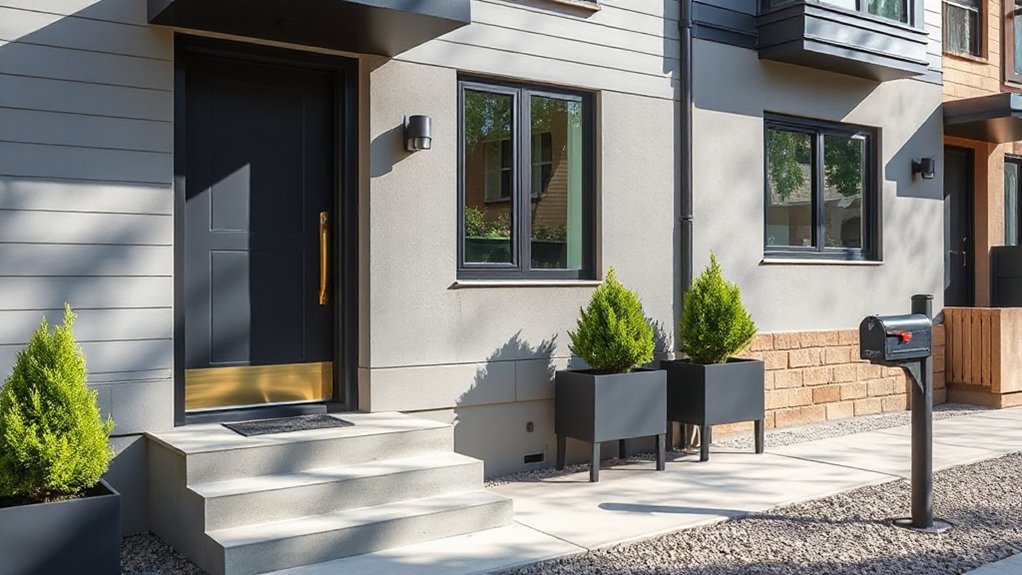

Think of your townhouse as a canvas you can update in stages, like replacing a tired siding with fiber cement to cut maintenance by years and raise curb appeal. You’ll want durable materials, a cohesive color base, and clean lines that stay timeless in a changing streetscape. Start with a practical plan, then layer in lighting, entry detail, and smart landscaping—enough to transform the façade without overwhelming it. There’s more to weigh before you commit, and the next steps matter.
Key Takeaways
- Prioritize durable, low-maintenance siding (fiber cement, engineered wood) with tight joints and proper ventilation for a modern, timeless look.
- Create cohesive curb appeal with consistent materials/colors across siding, porches, pathways, and doors for a unified streetscape.
- Use neighborhood-responsive color palettes starting with neutrals, with restrained bold accents and carefully placed murals or garden elements.
- Integrate refined architectural details and material shifts (brick-to-stucco, clean line entries) with concealed or layered night lighting for depth.
- Implement layered exterior lighting and smart controls (path, entry, garden, and sculpture focal points) to enhance security and ambiance.
Define Modern Townhouse Curb Appeal: Criteria and Goals
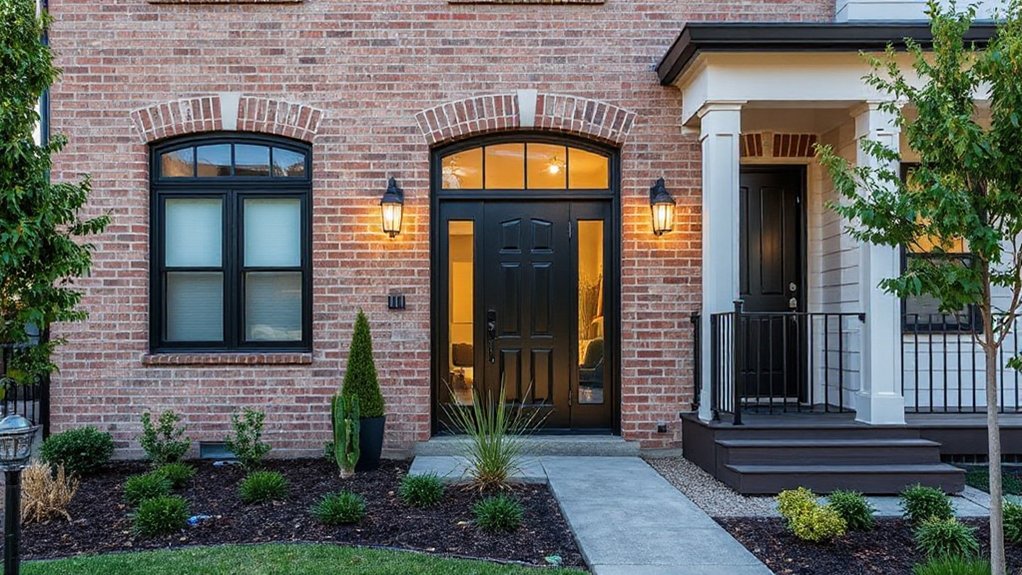
Modern townhouse curb appeal starts with a clear set of criteria and goals that guide every design choice. You define success by how the exterior communicates value, durability, and care.
Start with historical preservation in mind, honoring place and lineage without sacrificing today’s function.
Map your priorities: proportion, rhythm, material honesty, and color restraint.
Favor traditional aesthetics as a baseline, then identify modern enhancements that remain faithful to the street’s character.
Prioritize curb presence: entry emphasis, legibility from the sidewalk, and balanced massing with neighboring facades.
Establish measurable criteria—durability, maintenance, energy efficiency, and accessibility.
Create a phased plan that aligns with budget and timeline.
Finally, document decisions, so every update reinforces a cohesive, timeless, thoughtful exterior.
Choose Durable Siding for Low Maintenance and High Impact
Choosing durable siding is a smart investment that pays off in low maintenance and high impact. You’ll prioritize materials that resist weather, fading, and dirt, while delivering a clean, modern silhouette.
Opt for fiber cement, high-pressure laminate, or engineered wood with excellent dimensional stability and minimal upkeep. Choose boards with tight joints and proven warranty to reduce staining, repainting, and repairs.
Consider siding texture to add depth without clutter; subtle grooves or a smooth, refined finish can create visual interest from street level.
Implement color coordination from the outset, selecting a durable base tone and a restrained accent to emphasize architecture rather than busy contrasts.
Balance durability with installability, planning for proper ventilation, drainage, and access for future maintenance.
Bold Yet Neighborhood-Responsive Color Palettes
Bold color choices should honor the neighborhood while signaling modern, individual character. You select palettes that respect context yet push visual identity forward, avoiding clash with adjacent homes.
Start with a neutral base that feels timeless, then introduce accented tones drawn from local landscapes, art, and culture. Balance brightness with restraint: a bold door or trim can anchor the façade without overpowering neighboring properties.
Consider colors that age gracefully, so fading remains intentional rather than chaotic. Integrate garden elements into the exterior narrative—planters, trellises, and greenery that harmonize with color shifts rather than compete with them.
Include exterior murals only when they reinforce place and proportion, not as a generic statement. This approach yields coherent, contemporary curb appeal rooted in community sense and enduring design.
Subtle Architectural Details That Signal Modernity
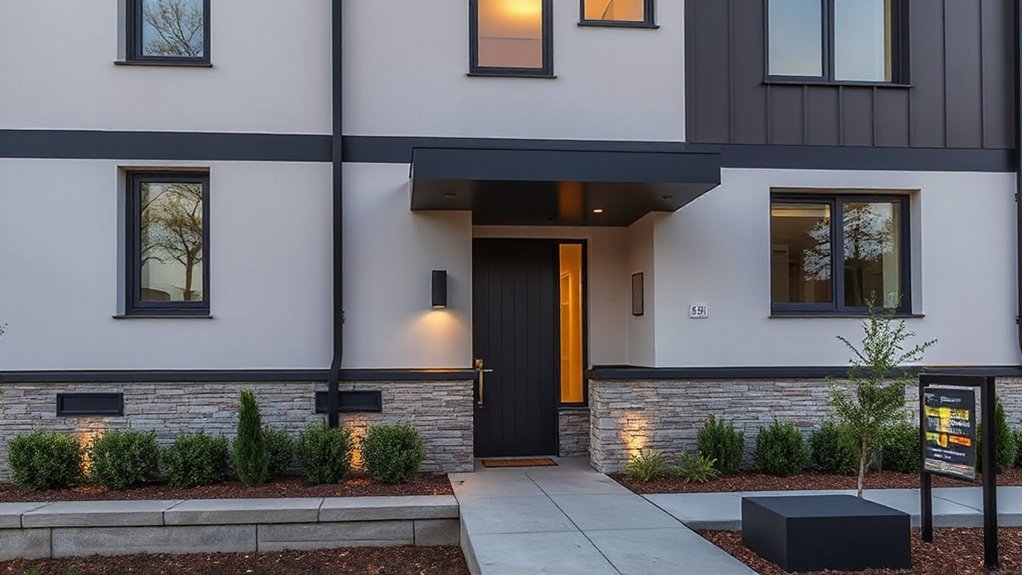
You can signal modernity with subtle material shifts that quietly shift from brick to stucco or timber, creating a refined texture without shouting.
Clean line detailing anchors the façade, guiding the eye along uninterrupted planes and framing entryways with purposeful restraint.
Hidden lighting cues reveal architectural intent at night, enhancing depth while keeping the exterior calm and legible.
Subtle Material Transitions
Subtle material shifts quietly signal modernity—think a seamless handoff from brick to steel, or a plaster wall stepping into a tinted concrete edge. You orchestrate progressions to feel inevitable, not abrupt, aligning scale, texture, and tone across surfaces.
Choose joints, reveals, and edge details that read as intentional curves rather than abrupt changes, guiding your eye along the façade with credibility and calm. Let garden sculptures and carefully chosen exterior paint finishes anchor the composition, creating anchors for rhythm without shouting.
Prioritize durable, low-maintenance materials and precise tolerances to avoid froideur. Your goal: a cohesive exterior where each material speaks its own language, yet harmonizes into a unified modern message.
- Material rhythm through alignment and edge treatment
- Subtle color progressions that respect natural light
- Texture balance across planes
- Visible, functional joinery over decorative
- Garden elements and finishes that reinforce cohesion
Clean Line Detailing
Keep soffits, fascias, and window reveals flush with the facade to read as a single, disciplined skin. Edges should line up with doorways and edging, creating a continuous outline that reads as modern restraint rather than decoration.
Materials stay honest and low-gloss, avoiding busy textures that interrupt the plane.
Introduce garden furniture and outdoor decor that mirror the same restraint: slim profiles, modular pieces, and monochrome palettes that recede rather than shout.
The result is a coherent narrative: a refined exterior that communicates contemporary clarity while inviting outdoor life without clutter.
Hidden Lighting Cues
- Concealed strip LEDs within soffits for even, low-glare wash
- Recessed wall washers to sculpt brick or timber textures
- Ground-level uplights angled to cast purposeful shadows
- Indexable lighting cues at entrances for clarity and safety
- Dimmable controls to adjust mood and efficiency
Affordable Energy Upgrades for Townhouse Exteriors
Consider smart energy controls that learn your routine and adjust heating and cooling accordingly. When selecting materials, prioritize durability and low embodied energy, aligning with Historical preservation and traditional craftsmanship.
Small, well-placed retrofit fixes—weatherstripping, proper caulking, and radiant barrier installs—preserve exterior aesthetics while boosting efficiency. Plan phased upgrades to spread costs and maintain curb appeal during renovation.
Modern Roofing and Gutter Options: Function and Style
You’ll explore modern roofing materials that balance durability, energy efficiency, and curb appeal, so your townhouse reads as fresh yet timeless.
Pair that with gutter system styles that handle heavy rain gracefully while blending with the façade. The goal is practical function that supports smart color, texture, and architectural emphasis.
Modern Roofing Materials
- Metal panels with integrated color to echo historic tones
- Cool asphalt shingles for low cost and quick install
- Slate-look composites offering durability and texture
- Standing-seam metal for clean, weather-tight joints
- Polymer or fiber cement alternatives that mimic natural textures
Gutter System Styles
Gutters are more than a finishing detail; they shape how a townhouse sheds water, protects siding, and blends with modern or historic exterior palettes. When choosing gutter system styles, you balance function and form.
A seamless aluminum or steel profile delivers clean lines and weather resistance, while box or k-style gutters offer larger capacity for heavy rainfall. Consider concealed-fascia systems for a minimalist look that still handles debris and ice risk.
Downspout routing matters: hidden runs reduce visual clutter, visible verticals can punctuate architecture. Gutter aesthetics should echo window trims, soffits, and brick tones to unify the facade.
Prioritize durable coatings and unobtrusive brackets. Regular gutter cleaning keeps flow steady, prevents mold, and preserves longevity. Pair style choices with practical maintenance for a resilient, contemporary exterior.
Lighting Plans for Curb Appeal and Security
A well-planned lighting scheme does more than brighten your townhouse—it guides visitors, enhances security, and highlights architectural details. You should layer light to create depth, using a mix of ambient, task, and accent effects that deter intruders without glare.
Position garden lighting to sculpt pathways and emphasize textures, while outdoor sculptures gain subtle, museum-grade illumination. Keep fixtures low-profile and energy-efficient, with smart controls for scheduling and remote adjustments.
Choose color temperatures that complement materials—warm tones for brick, cooler for metal and stone. Guarantee waterproof ratings suit exterior exposure, and plan for seasonal maintenance.
Integrate daylight harvesting where possible, and coordinate with landscaping to avoid shadows that obscure entryways.
- Layer ambient, task, and accent lighting for balance
- Illuminate paths and entry points with low-glare fixtures
- Use garden lighting to sculpt plantings and textures
- Highlight outdoor sculptures with targeted, soft illumination
- Opt for durable, energy-efficient, controllable fixtures
Windows and Doors: Framing the Exterior With Style
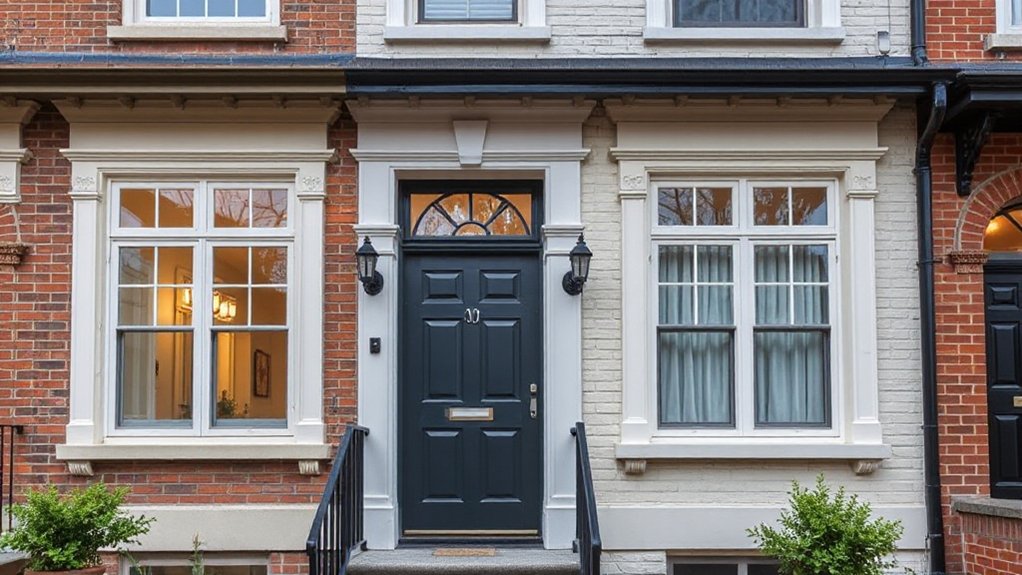
Think of windows and doors as the frame for your home’s story, balancing light, materials, and style to define character. You’ll consider glazing, frame finishes, and door hardware in tandem, so every opening feels deliberate and cohesive.
This is where light, texture, and siting converge to elevate curb appeal and everyday livability.
Framing With Light
Framing the exterior with light starts with deliberate window and door choices that define the townhouse’s rhythm and curb appeal.
- Use glazing to emphasize architectural symmetry, balancing header heights and pane divisions.
- Size openings to frame views, avoiding clutter while enhancing daylight.
- Select door and window profiles that respect historical preservation cues when appropriate.
- Integrate transoms or light shelves to elevate vertical emphasis without overpowering the façade.
- Align mullions and casings with the overall proportion, ensuring a cohesive, modern silhouette.
Material and Style Choices
Consider materials that age gracefully: wood for warmth, aluminum-clad for low maintenance, or composite blends that resist weather while staying true to form. Glazing should optimize daylight without glare, and hardware can carry a unifying finish throughout the front elevation.
Historical preservation can guide authenticity, while cultural influences inform color palettes and ornamentation. Avoid clutter by prioritizing clean sightlines and consistent framing around bays or porches.
Aim for doors and windows that frame views, invite entry, and signal modern living without sacrificing neighborhood context.
Hardscaping Magic: Pathways, Porches, and Entrance Cohesion
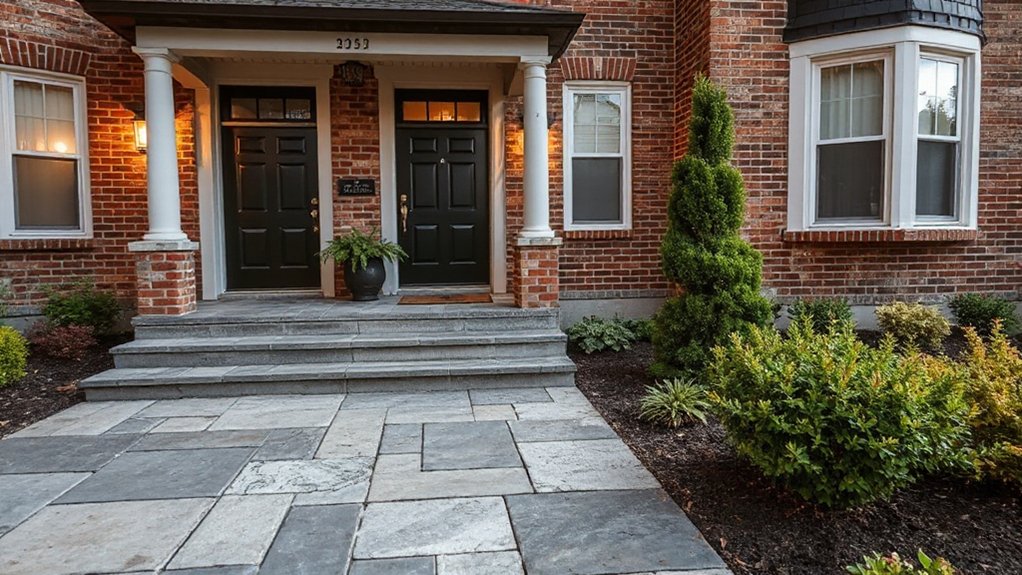
Pathways and entrances set the first impression of a townhouse, so design them as a coherent sequence rather than separate features. You align materials, lighting, and scale to guide the eye from curb to door, creating a curated journey.
Ground the path with consistent joints and edging, then pace the approach with porch steps that echo the façade. Porches become social thresholds, where outdoor furniture is both function and statement.
Integrate garden sculptures as focal accents to reinforce the home’s narrative without clutter. Guarantee shade, drainage, and accessibility are baked in from the start.
- Align materials and color across path, porch, and door
- Choose lighting that highlights architecture and steps
- Use garden sculptures as quiet acknowledgments, not distractions
- Position outdoor furniture for flow and view
- Prioritize durability, maintenance, and weather resilience
Maintenance-Light Materials to Future-Proof the Façade
Think about how the façade will age: you want looks that stay sharp with minimal upkeep, so start with maintenance-light materials that resist weather, wear, and staining. Choose cladding like fiber cement, aluminum composites, or high-pressure laminates that resist rot, cracking, and fading while remaining easy to clean.
Favor long-life finishes and factory-coated coatings that hold color and resist UV degradation. Pair these with slip-resistant, low-maintenance hardware and tight seals to curb water intrusion.
Plan for modular, repairable components you can swap without reworking the entire exterior. Integrate garden accessories that complement the material palette without adding maintenance burdens.
For color, limit exterior painting touch-ups to strategic accents—preserve a cohesive field color and reduce repaint cycles.
Result: a durable, modern façade with minimal ongoing effort.
Landscaping Tweaks That Complement a Modern Exterior
Landscaping tweaks should reinforce a modern exterior without competing with it; consider clean lines, restrained plantings, and structural accents that echo the façade’s materials. You shape a cohesive curb appeal by choosing plantings that stay low and architectural, avoiding clutter.
Use materials that mirror the building—stone, metal, or concrete—to unify textures. Integrate garden sculptures and water features as focal points, not distractions, placing them to draw the eye along sightlines.
Prioritize seasonal interest with evergreen silhouettes and subtle color shifts. Maintain a tidy, intentional scale so greenery complements rather than dominates.
- Strategic planting zones with vertical interest
- Low-profile hedges and groundcovers
- Garden sculptures as quiet anchors
- Water features integrated into hardscape
- Seasonal texture without crowding the line of sight
Budgeting and Sequencing Your Exterior Modernization Plan
Use a realistic contingency—5 to 15 percent—to cover unknowns without derailment. Historical preservation informs you where to invest in authentic detailing, avoiding overreach that erases character. Break the project into phases with defined milestones, securing permits and contractor availability early to prevent delays.
Cultural symbolism can guide material choices, color palettes, and design cues that honor the townhouse’s context. Track progress weekly, reallocate funds as costs shift, and maintain flexibility to preserve long‑term value.
Frequently Asked Questions
How Long Does Exterior Modernization Typically Take From Start to Finish?
Typically, exterior modernization takes 4–12 weeks, depending on scope and permitting. You’ll plan, source, and lock in contractors, then prep, install, and fine-tune.
You’ll document milestones, adjust schedules, and guarantee minimal disruption to surroundings. You’ll integrate Landscaping trends and Sustainable materials for lasting appeal and efficiency.
You’ll review inspections, synchronize timelines, and expect weather to bump or slow progress. You’ll stay pragmatic, adaptable, and focused on transforming your curb appeal with clear, measurable progress.
What Grants or Incentives Help Fund Exterior Upgrades?
When you notice a stray leaf landing on your plan, grants and incentives land nearby, ready to help. You’ll access programs like local restoration funds, energy efficiency rebates, and historic tax credits, plus municipal grants for façade upgrades.
You’ll pursue grants that support Landscaping ideas and Material selection, making paths, borders, and siding upgrades affordable. You’ll document costs, meet eligibility, and submit forecasts, using a pragmatic timeline to leverage funding for precise, visionary exterior improvements.
Can Modernization Affect Property Taxes or Insurance Premiums?
Yes—modernization can affect Property valuation and Insurance costs.
When you upgrade curb appeal, energy efficiency, and structural integrity, your home may appraise higher, boosting property valuation. That can influence taxes, though increases aren’t guaranteed and depend on local assessment practices.
For insurance, enhanced materials and systems often reduce risk, potentially lowering premiums. Keep documentation, gather quotes, and discuss with your insurer and assessor to gauge how specific improvements might change your costs.
Which Maintenance Schedule Minimizes Long-Term Renovation Costs?
To minimize long-term renovation costs, you should stick to a steady maintenance rhythm, addressing wear early and scheduling yearly checks. You’ll reduce surprises by prioritizing preventive fixes, like timely painting and sealing.
A disciplined plan protects your budget, letting you plan landscaping upgrades and paint selection with confidence. You’ll save money over time by catching issues before they escalate, keeping your townhouse looking sharp while preserving value, efficiency, and your peace of mind.
How Do HOA Restrictions Influence Exterior Redesign Choices?
HOA approval shapes every exterior redesign you consider, and aesthetic guidelines set the boundaries you must stay within. You’ll align materials, colors, and fixtures with approved palettes, ensuring curb appeal without triggering disputes.
Before drawing plans, review documented restrictions, submit designs early, and anticipate required revisions. You’ll document compliance, negotiate tasteful deviations when allowed, and prioritize cohesive street appeal.
Conclusion
You’ve got a clear, doable vision: durable materials, clean lines, and a cohesive palette that nods to your neighborhood. With fiber cement siding, metal or composite roofing, and strategic lighting, your townhouse will feel modern yet timeless. Think of your facade as a well-cut suit—global in its elegance, locally grounded in color. Prioritize low-maintenance choices, smart landscaping, and energy upgrades. When you’re done, the curb will greet guests with quiet confidence and calm, like a lighthouse on a quiet street.