


If your garden stays soggy, start by checking the soil you’re dealing with and where the water pools. You’ll want a straightforward plan: identify drainage gaps, add organic matter to loosen texture, and lay out surface channels or berms to move water away. For persistent dampness, consider subsurface solutions like perforated pipes or gravel trenches. Keep monitoring, adjust watering, and keep soil healthy—the result is a drier bed, but the next step will shape how you proceed.
Key Takeaways
- Assess drainage and soil texture (sandy, loamy, clay) to tailor fixes and identify compacted or hardpan layers.
- Improve surface drainage with shallow channels, raised beds, and temporary berms to guide water away from plants.
- Install subsurface drainage using perforated pipes with gravel backfill and accessible cleanouts to remove excess water.
- Improve soil structure long-term by adding organic matter, practicing aeration, and layering light soil to maintain porosity.
- Monitor rainfall, irrigation, and soil moisture; adjust schedules and amendments based on data to sustain a drier garden.
Why Your Beds Stay Wet and How to Fix It
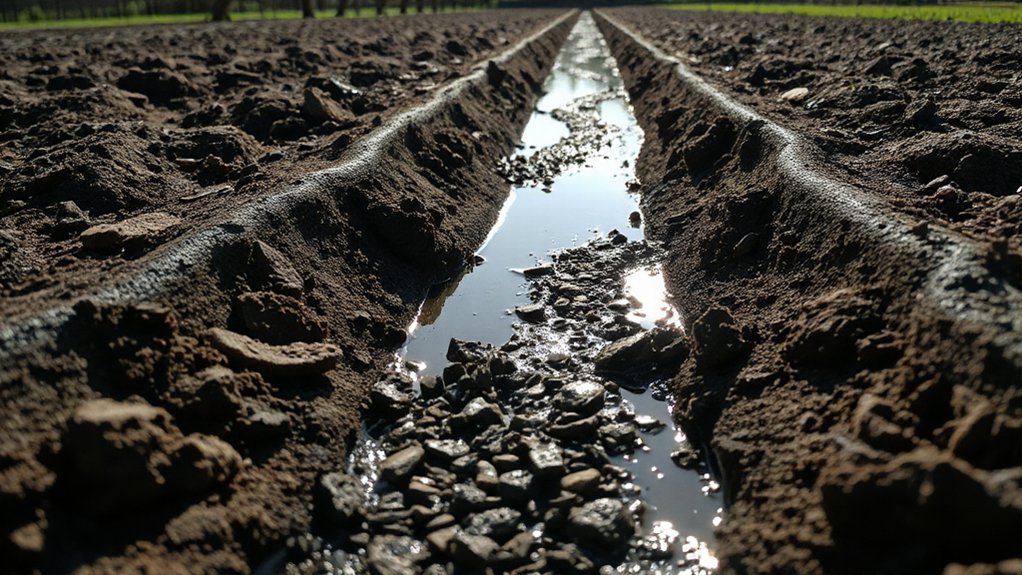
Wet beds usually happen when water can’t drain away quickly enough. You’ll fix this by tracing the blockage to soil structure, compaction, or poor slope, then acting decisively.
Start with water retention: verify whether the bed’s soil holds moisture too long after rain or irrigation. If so, loosen compacted layers with light, methodical cultivation or a mechanical dig to restore porosity.
Improve root health by widening rooting zones: remove hardpan, incorporate organic matter, and mulch to conserve moisture without creating puddles.
Drainage efficiency rises as you create even slopes and install simple outlets or French drains to channel excess water away.
Monitor after rain, adjust watering, and repeat as needed.
Maintain clear bed edges, avoid overwatering, and document improvements for ongoing precision.
Assess Your Soil: Quick Diagnostic Checklists
Your first step is to check soil texture, since sand, silt, and clay differences directly affect drainage.
Use a quick indicators checklist to spot signs of poor drainage, rooting limits, and organic matter gaps.
Note how compaction and drainage indicators interact so you can target fixes efficiently.
Soil Texture Matters
Soil texture governs drainage and root health, so you should know how it affects water movement before you plant. Your first step is simple: assess soil composition and texture analysis.
In practice, identify whether your soil is sandy, loamy, or clay-heavy, then anticipate drainage behavior after rain or irrigation. Sandy soils drain quickly but offer less nutrient retention; clay soils hold water and compact easily; loams balance drainage with moisture retention.
Consider how texture influences aeration, root penetration, and microbial activity, then tailor your approach. When you test, use a hands-on feel test and a basic jar method to confirm texture categories.
Drainage Indicators Quick Check
If drainage isn’t looking right after rain or irrigation, a quick check can tell you what your soil needs. In minutes, you can use simple drainage indicators to gauge performance: puddling duration, surface crust, and film on the soil surface after a heavy soak.
Press a finger or trowel into the top 6 inches; note how fast it loosens and drains. Observe if the soil remains wet beyond 24 hours, or if you see a loose, crumbly texture that drains quickly.
Check soil aeration by lifting a handful and inspecting fill powder and scent; lack of aeration often accompanies prolonged moisture. Record findings, compare to plant needs, and target improvements like organic matter or drainage solutions rather than broad fertilization.
Compaction Impact Assessments
Compaction can quietly undermine drainage even when surface conditions look acceptable. In this section, you’ll perform a practical compaction impact assessment that flags root-restrictive layers and perched water.
Start with a simple soil test: insert a rod or probe to gauge penetration resistance at multiple depths, noting where resistance spikes. If you encounter stiff layers within 6–12 inches, expect limited soil aeration and slower water movement.
Examine wheel paths and compaction zones in lawn or beds; visibly compressed soil often correlates with poor drainage. Record texture, color, and moisture responses after light rainfall.
Use quick indicators, such as water pooling after a moderate soak, to guide remediation. Prioritize improving soil aeration and reducing compaction through targeted cultivation and organic matter management.
Try These Quick Fixes This Season
Here are quick fixes you can apply now to start drying out a water-logged garden. Focus on immediate, actionable steps that don’t require major projects.
Improve surface drainage by raking shallow channels to guide excess water toward existing runoff or low spots. Then spread a thin layer of coarse mulch to prevent mud and boot traffic damage.
Time watering to early morning or late afternoon to reduce evaporation loss and support water conservation.
Move potted plants onto raised platforms or shelves to prevent root saturation while you assess soil texture.
Install temporary mulch berms around high spots to divert water away from beds.
Use pest control briefings to monitor for damp-loving pests and address problems before they spread.
Keep records of results.
Improve Subsurface Drainage Where It Counts
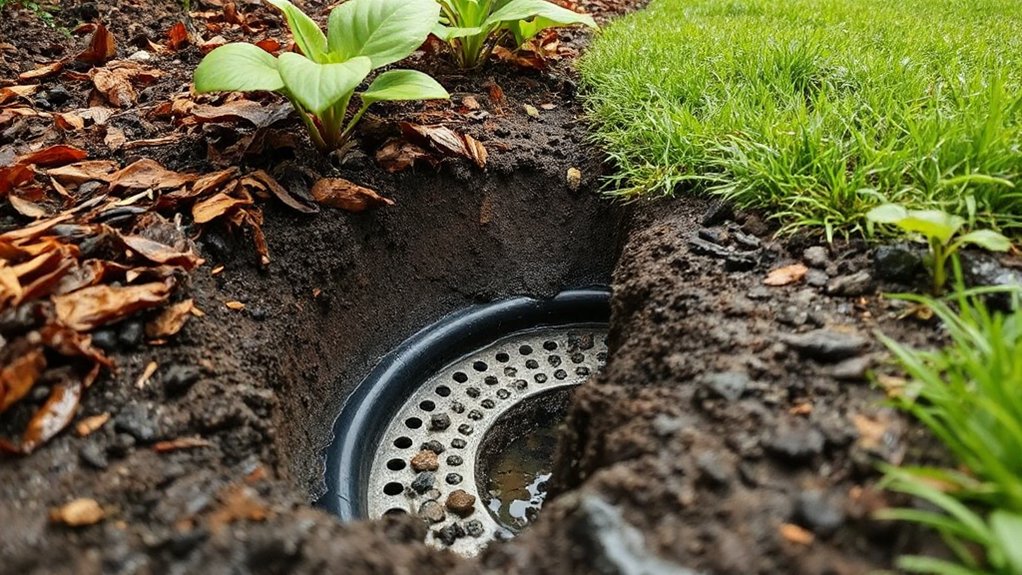
Subsurface drainage means getting the water out of the soil profile where roots live, not just moving surface water. You’ll target the root zone with purpose, using practical installations that stay reliable over seasons.
Start by locating natural low points and existing pipes, then plan a trench system that reaches the layer where water lingers. Install Subsurface barriers to direct moisture toward outlets, preventing lateral spread and soil saturation near crowns.
Use perforated drain pipes in gravel or sand backfill to promote steady flow, then cover with a tight layer to deter sediment intrusion. Place Drainage grates at access points or inspection intervals to simplify maintenance.
Test with a controlled flush, verify flow, and adjust grade to maintain a gentle slope away from beds.
Build Airy, Well-Structured Soil for Long-Term Health
To keep your soil airy and well-structured for long-term health, focus on building a stable, porous root zone that drains freely and retains essential moisture.
Start with the right base: loosen compacted layers, create a crumbly texture, and assure good vertical and horizontal porosity.
Incorporate organic amendments to feed biology and improve structure over seasons, such as compost or well-rotted manure, applied at modest depths to avoid surface crusting.
Use aeration techniques to relieve compaction: shovel-tilt passes, garden fork aeration, or core aeration where appropriate, repeating as needed.
Layer back with a light soil mix to preserve aeration channels.
Maintain drainage by avoiding heavy, water-retentive amendments in excess.
Monitor soil moisture cues and adjust organic inputs to sustain a friable, well-drained root zone year after year.
Smart Planting and Mulching to Keep Moisture in Check
Smart planting and mulching play key roles in keeping soil moisture steady after you’ve built a friable, well-drained root zone.
You’ll reduce evaporation by using organic mulching to insulate soils and slow surface drying, while adding organic matter gradually improves stability.
Choose plants with compatible moisture needs and arrange them through companion planting to support growth and deter pests without increasing water demand.
Keep spacing tight enough to shade soil but open enough for air movement, preventing mold and saturations.
Use mulch thickness of 2–3 inches and replenish as it breaks down.
Mulch, compost, and clipped leaves form a micro‑climate that moderates swings between wet and dry spells.
Avoid heavy irrigation after mulching; water deeply but infrequently to encourage deep roots.
Maintenance and Monitoring for a Drier, Happier Garden
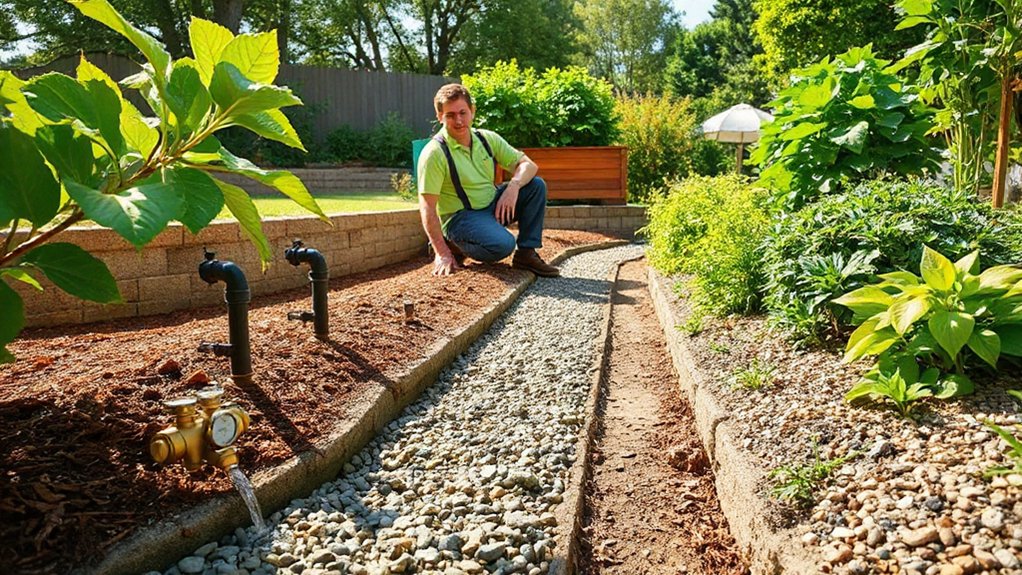
Maintaining a drier garden starts with steady monitoring and decisive actions. You should inspect drainage paths after storms, noting any pooling and adjusting outlets or grading as needed. Track soil moisture with a simple probe or calibrated sensor; target modest, consistent moisture rather than saturation.
Schedule monthly checks of drains, pipes, and swales to prevent blockages and erosion. Implement Rainwater harvesting to reduce runoff and provide controlled irrigation during dry spells, but verify storage capacity aligns with seasonal needs.
Apply Organic amendments to improve soil structure, promoting faster infiltration and reducing surface runoff. Re‑check pH and nutrient balance after amendments.
Keep records of rainfall, irrigation, and amendments to refine timings, ensuring ongoing improvements toward a reliably drier, healthier garden.
Frequently Asked Questions
Can I Reuse Rainwater for Garden Drainage Improvements?
Yes, you can reuse rainwater for garden drainage improvements. Set up rainwater harvesting barrels to collect runoff, then use the stored water to help test and flush clogged areas.
You can also mix the collected rainwater with soil amendments to improve aeration. When you apply it, prioritize Rainwater harvesting for irrigation cycles and use it alongside soil aeration practices to prevent compaction.
Use it strategically to water dry zones and monitor soil moisture to avoid oversaturation.
What Plants Tolerate Wet Soils Best in the Long Term?
Wet-tolerant perennials are your best long-term bets. You’ll want plant selection that thrives in saturated soils, like willows, sedges, iris, astilbe, and heuchera varieties, plus native grasses.
Guarantee soil aeration by mixing in organic matter and avoiding compaction. You’ll monitor moisture, choose mulch wisely, and group plants by water tolerance.
This approach prioritizes soil aeration, resists rot, and keeps your bed looking purposeful, even when moisture remains.
How Do I Evaluate Drainage Efficiency After a Rainstorm?
After a rainstorm, you evaluate drainage efficiency by performing quick soil permeability checks and drainage testing.
Push a rod or finger into the soil to feel resistance, noting compaction or standing water within a few minutes.
Measure runoff distance and time to infiltrate.
Record results, compare to your soil’s typical permeability, and adjust.
Use these drainage testing outcomes to guide improvements, such as amendments or subsurface drains, ensuring you optimize soil permeability for ongoing field conditions.
Are There Cost-Effective DIY French Drain Alternatives?
Did you know permeable pavements can cut surface runoff by up to 50%? Yes—there are cost-effective DIY alternatives to a French drain.
You can layer mulch barriers around problematic beds to slow water, and create shallow swales to guide moisture away.
Also consider innovative fill like recycled gravel. You’ll get better drainage with minimal disruption, using tight, precise installation, simple tools, and step-by-step checks to guarantee each section drains freely.
Does Landscaping Grading Affect Underground Utility Lines?
Yes, landscaping grading can affect underground utility lines. You should plan with utility maps and call 811 before any grading, because grading impact varies by line depth and type.
Maintain safe distances, use non-invasive methods, and follow local codes to protect utility line safety.
If you must trench, hire professionals and obtain permits. Always verify service locations, mark lines, and monitor soil changes to minimize risk and avoid outages.
Conclusion
To wrap up, you’ve got the tools to drain that garden. Start with quick soil checks, add organic matter, and create surface channels to guide water away. Install basic subsurface drainage where needed, and build airy, well-structured soil for long-term health. Keep monitoring, tweak watering, and mulch wisely. See how, with steady care, the beds stay drier and more productive—water simply stops being your problem, and your garden finally breathes. Your soil, your success.


