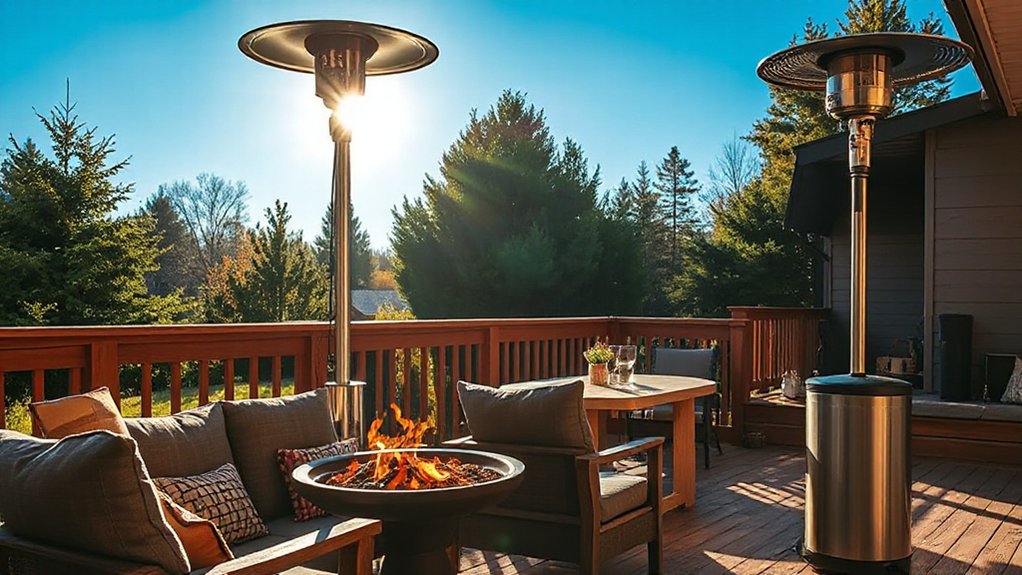

Outdoor heating for year‑round use hinges on balancing heat type, fuel, and placement. You’ll want instant infrared for quick bursts, plus radiant or forced-air systems for steady ambient warmth in colder months, with gas-fired options for larger spaces and electric choices for efficiency. Consider windbreaks, reflective surfaces, and safe clearances to maximize efficiency and reduce risk. The key is selecting a combo that aligns with your space, budget, and seasonal needs. There’s more to optimize beyond the basics.
Key Takeaways
- Combine radiant infrared and ambient convection to balance immediate warmth with steady outdoor comfort year-round.
- Prioritize corrosion-resistant, heat-tolerant materials with proper venting, weather protection, and accessible maintenance access.
- Compare BTU/h or kW outputs normalized to space, insulation, and conditions for accurate year-long sizing.
- Use gas (propane/natural) or electric options with controls and safety features; consider solar offsets where feasible.
- Ensure proper installation with clearances, weatherproofing, and routine inspections for leaks, corrosion, and safety compliance.
What Outdoor Heating Options Suit Year‑Round Use?
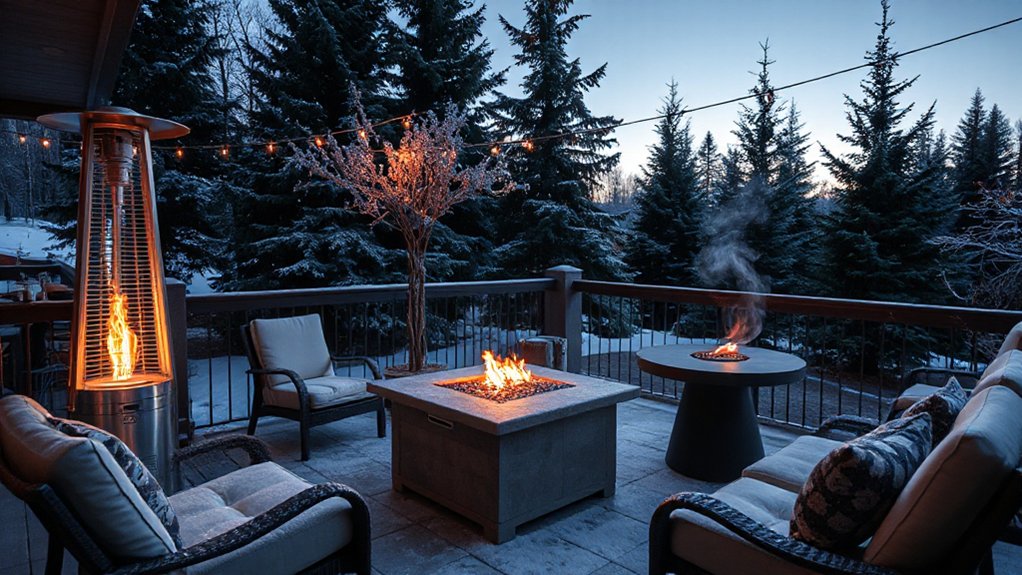
Outdoor heating options for year‑round use must balance heating output, energy efficiency, safety, and weather resistance. You evaluate options by how well they deliver consistent warmth in varying conditions, while minimizing energy waste.
Solar energy can supplement heating during mild, sunlit periods, reducing fuel use, but relies on climate and exposure.
Thermal insulation plays a critical role, preserving heat between cycles and lowering peak demand.
Consider radiant and forced‑air systems to target occupied zones, with controls that adapt to outdoor temperatures.
Safety features matter: spark arrestors, enclosures, and overheating protection reduce risk in open spaces.
Weather resistance and corrosion tolerance determine longevity in wind, rain, and snow.
Choose modular approaches that scale with occupancy, ensuring predictable comfort without excessive energy spikes.
How to Compare Heat Output, Fuel, and Efficiency
To compare heat output, start with clear metrics like BTU/h or kW and relate them to your outdoor space size and insulation.
Consider fuel type impacts—gas, propane, electric—each with different availability, cost, and emission profiles.
Use efficiency comparison techniques to normalize results across devices, accounting for standby losses, duty cycles, and real-world operating conditions.
Heat Output Metrics
How do you compare heat output across different outdoor heaters? You measure output relative to rated BTU, watts, or kilojoules per hour, then normalize for actual conditions like target area, wind, and ambient temperature. Use manufacturer specifications as baseline, but apply real‑world corrections: a higher BTU rating doesn’t guarantee more usable heat if efficiency is lower or spacing reduces radiant reach.
Distinguish radiant, convective, and hybrid outputs, and compare warmth per square foot under typical setups. Track runtime efficiency and steady‑state temperature rise rather than peak bursts.
Historical heating data helps benchmark long‑term performance, while environmental impact considerations guide choice toward sustainable options. Prioritize consistent, verifiable metrics over marketing claims to minimize misinterpretation and optimize year‑round comfort.
Fuel Type Impacts
What fuel type most affects heat output and efficiency in outdoor heaters, and how should you compare them? You weigh energy density, system losses, and practical use. Natural gas, propane, ethanol, and electric options each differ in heat per unit, storage needs, and emissions.
Key comparisons focus on heat output relative to fuel consumption, installation costs, and safety profiles. Consider fuel storage, line pressures, and refueling convenience, then assess emission concerns and local regulations. Use consistent test conditions to benchmark performance across fuel types.
- Heat output per unit of fuel
- Storage requirements and convenience
- System efficiency and losses
- Emission concerns and regulatory limits
- Installation, safety, and maintenance costs
Efficiency Comparison Techniques
Efficiently comparing heat output, fuel types, and overall efficiency requires a disciplined, metric-driven approach: establish identical test conditions, quantify heat output per unit of fuel, and account for system losses and storage impacts.
You’ll use standardized enclosures, measured ambient temps, and repeatable operation cycles to guarantee comparability. Report heat yield in consistent units (Btu/h or kW) and normalize for fuel energy content, duration, and consumption.
Include start-up and runtime losses from ignition, fans, and reflectors to reveal true efficiency. Assess fuel-to-heat conversion with practical metrics, not abstractions.
Consider indoor heating implications, storage heat leakage, and rechargeability. Document energy conservation implications, maintenance effects, and safety margins.
This disciplined framework aids decision-making for durable, efficient outdoor setups aligned with energy-conscious goals.
Propane vs Natural Gas: Which Outdoor Heating Fuel Is Right for You?
Propane and natural gas offer similar heat output for outdoor heating, but their economics, convenience, and installation requirements differ considerably. You evaluate fuel choice by cost stability, equipment compatibility, and safety protocols, then align with your space and climate.
Propane delivers higher energy density and portability, ideal for remote spots and seasonal use, while natural gas provides steady month-to-month supply if a dedicated line exists. Consider tank upkeep, refill logistics, and line pressure standards for consistent performance.
Indoor safety and climate considerations guide any outdoor fuel deployment, including venting needs, leak detection, and frost protection. Weigh upfront installation against long‑term fuel costs and availability.
Decide based on usage patterns, property layout, and local utility incentives.
- Fuel cost stability and supply certainty
- Tank access, refilling, and transport
- On‑site safety procedures and leak detection
- Connection standards and equipment compatibility
- Climate considerations and seasonal usage planning
Electric Infrared vs Electric Convection: Which Feels Warmer Outside?
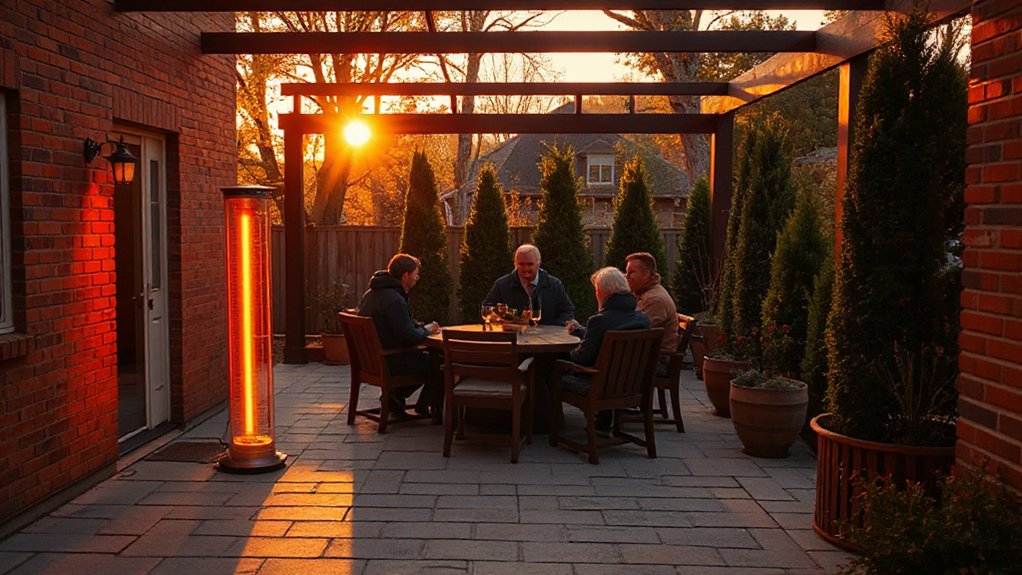
Electric infrared and electric convection heaters feel warmth differently outdoors, and choosing between them depends on how you value immediacy, coverage, and ambient comfort.
Infrared units heat objects and people directly, producing instant warmth that feels penetrating and focused.
Convection heaters warm the air, creating a more uniform but slower ramp of comfort.
For patios with intermittent use, infrared offers quick comfort without heating empty space wasted energy, whereas convection performs better in consistently occupied zones with even heat distribution.
Consider energy sources: electric blankets can supplement localized warmth indoors, and Solar panels can offset outdoor operation costs, though performance hinges on sun exposure.
In mixed environments, pairing infrared for targets and convection for ambient heat provides balanced comfort.
Gas‑Fired Patio Heaters: Pros, Cons, and Safety Tips
Gas-fired patio heaters offer reliable, high-heat output for outdoor spaces, but they require careful attention to installation, ventilation, and fuel management. You’ll assess space, clearances, and mounting to guarantee stable operation and minimize tip hazards. Follow heater installation guidelines, verify clearances from combustibles, and confirm proper venting to avoid gas buildup.
Use correct fuel type, monitor levels, and schedule routine checks for leaks. Safety precautions emphasize secure connections, shutoff valves, and CO awareness. Plan for wind conditions and radiant heat distribution to prevent heat stress or glare. Regular maintenance reduces failures and extends lifespan.
- Proper heater installation and clearances
- Ventilation, CO monitoring, and leak checks
- Fuel management and storage guidelines
- Secure connections, shutoff valves, and gas fittings
- Wind considerations and heat distribution
Fire Pits and Ambient Features: Style That Keeps You Warm
Fire pits and ambient features mix heat with aesthetic appeal to extend outdoor usability, while guiding selection toward reliable warmth and safe operation. You assess heat output, fuel type, and wind exposure, prioritizing consistent burn efficiency and low emissions.
Fire pit aesthetics influence placement, sizing, and enclosure design, guaranteeing wind shadowing and ignition reliability without compromising safety clearances. Ambient lighting complements warmth, enabling eye relief, mood control, and perimeter visibility for safe movement after dark.
Choose materials with corrosion resistance and heat tolerance, verify spark arrestment, and confirm CSA/UL compliance where applicable. Integrate venting considerations for indoor-adjacent setups and assure accessibility for maintenance.
Finally, document warranty terms, service intervals, and spare parts availability to sustain long‑term performance and curb unintended hazards.
Portable Space Heaters: When and Where to Use Them Safely
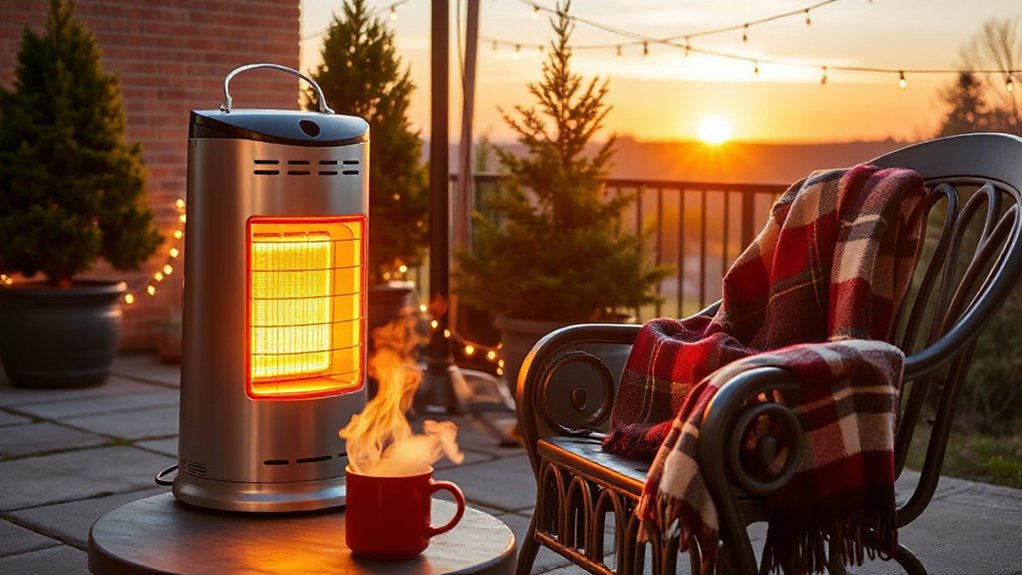
Portable space heaters can extend outdoor comfort when used correctly, but you must select the right type, place, and precautions to minimize risk. When selecting devices, prioritize models with stable bases, tip-over shutoff, and lives for indoor safety guidelines adapted to outdoor use.
Favor portable design units with enclosed burners and low-emission controls. Position heaters at least 3 feet from combustibles and keep cords clear of walkways. Use only outdoors or in well-ventilated areas; never use in enclosed spaces.
Regularly inspect wiring, plugs, and seals for damage. Follow manufacturer instructions for heat settings and shutdown procedures. Don’t modify units. Store when not in use to prevent weather-related degradation and ensure reliable performance.
- Choose certified designs with safety features
- Maintain proper clearance from combustibles
- Use in ventilated, outdoor spaces
- Inspect wiring and seals regularly
- Store securely after use
Radiant Patio Heaters: Extend Outdoor Seasons With Direct Heat
Radiant patio heaters deliver direct heat with high efficiency, concentrating warmth where you stand and reducing energy waste.
You’ll note how heat output translates into an outdoor comfort range that extends usable time without overhauling space or insulation.
This discussion focuses on Direct Heat Efficiency and the Outdoor Comfort Range to guide practical sizing and placement decisions.
Direct Heat Efficiency
You optimize radiant output by aligning emitter temperature, distance, and panel or mounting geometry to minimize heat dispersion and maximize surface transfer.
- Calibrate emitter height to control heat spot size and minimize stray radiation.
- Maintain airtight enclosure or windbreaks to improve wind resistance.
- Use reflective surfaces to direct heat toward occupied zones.
- Select emitters with high radiant efficiency and stable output.
- Monitor ambient and object temperatures to avoid overcooling or overheating.
In practice, expect efficiency gains from stable power delivery, reduced heat loss, and focused warmth on occupants and seating areas. Solar panels, when integrated, can provide supplemental, renewable input to sustain operation.
Outdoor Comfort Range
Consider ceiling height, patio size, and enclosure factors to avoid overheating nearby surfaces or creating cold drafts behind obstacles. Calibrate heater wattage to match target area, using lower settings when multiple devices share coverage.
Track seasonal temperature fluctuations and sun exposure to maintain a consistent feel without excess energy use. Document safety barriers, clearance distances, and shutoff thresholds for each installation.
This approach supports seasonal outdoor decor while maintaining outdoor heating safety, reducing heat loss, and extending usability of outdoor spaces through predictable, repeatable performance.
Cost of Operation: Compare Fuel, Electricity, and Maintenance
When evaluating the cost of operation for outdoor heating, weigh fuel, electricity, and maintenance against usage patterns and efficiency. You’ll compare fuel costs per hour, electrical demand, and service intervals to determine total lifecycle expense.
Efficiency changes operating cost materially, so quantify heat loss, insulation, and cycling behavior. Energy conservation and weather resilience factor into long‑term budgeting: higher efficiency reduces fuel or electricity needs and extends component life.
Choose systems with predictable maintenance schedules and readily available parts to minimize downtime. Use load matching and smart controls to avoid oversupply.
Budget for seasonal use, outdoor exposure, and ancillary accessories to prevent hidden costs.
- Fuel cost per hour and burn efficiency
- Electrical demand and tariff impact
- Maintenance frequency and parts availability
- Heat loss mitigation and insulation
- Controls, cycling, and scheduled servicing
Installation, Placement, and Safety Essentials for Outdoor Heat
Proper placement and safe installation are essential to reliable outdoor heat performance and to prevent hazards. You should select mounting surfaces and clearance that meet manufacturer specifications and local codes, avoiding combustibles within eight feet of any heat source unless explicitly approved.
Verify electrical wiring or gas lines are routed per standards, with dedicated circuits, weatherproof enclosures, and proper grounding. Establish protective setbacks from walkways and seating to minimize contact risk and ensure unobstructed heat flow.
Use weather protection for controls and connections, and perform a post-install test run to confirm ignition, flame stability, and control responsiveness.
Consider garden decor alignment and wind exposure when positioning units, and document periodic inspections for corrosion, leakage, and mounting integrity. Prioritize clear labeling and user safety instructions.
Maintenance and Longevity: Keeping Outdoor Heaters Ready Year‑Round
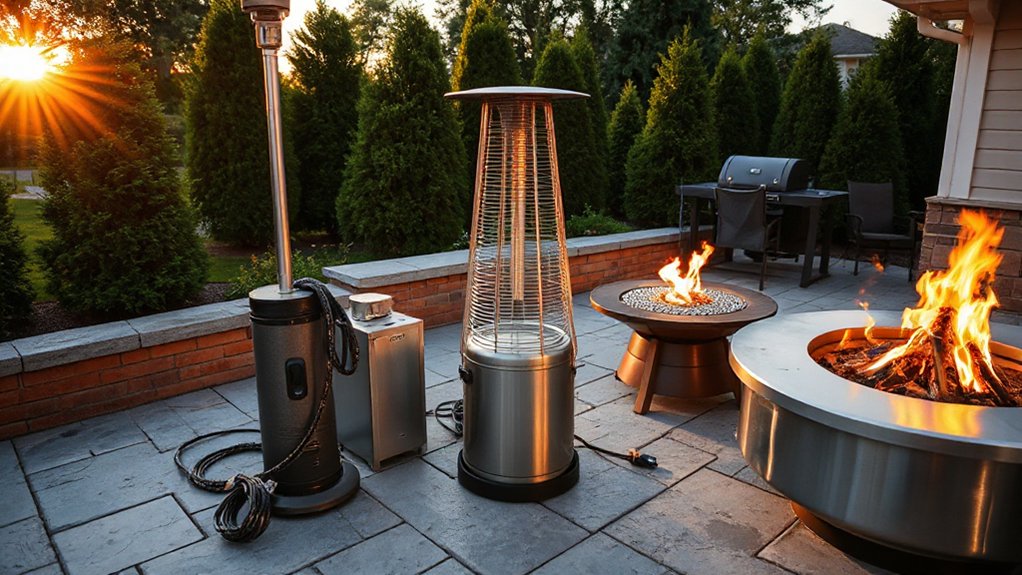
Regular maintenance is essential to keep outdoor heaters reliable year-round, prevent performance declines, and extend service life. You’ll schedule inspections before each season, verify pilot/ignition, and test safety shutoffs to catch issues early.
Cleaning matters: remove dust, debris, and corrosion from burners, vents, and electrical connections to preserve efficiency. Use manufacturer-recommended lubricants on moving parts and tighten fittings to avoid leaks.
Seasonal decor and outdoor lighting should be kept clear of heat sources to prevent fire risks. Store or cover units properly during extreme weather, and replace worn components promptly to minimize downtime.
Keep a maintenance log with dates, parts, and test results for traceability.
- Pre-season inspection checklist
- Burner and ignition verification
- Corrosion and debris removal
- Lubrication and fastener check
- Storage, covers, and seasonal decor considerations
Frequently Asked Questions
How Long Do Outdoor Heaters Last in Cold Climates?
In cold climates, outdoor heaters typically last 5–15 years, depending on usage and model. You’ll maximize lifespan by monitoring thermal efficiency and following maintenance requirements.
Regularly check ignition components, fuel lines, and wiring for wear, and winterize units to prevent corrosion.
With proper care, you’ll maintain high thermal efficiency, minimize downtime, and reduce replacement costs.
Remember that frequent cycling in freezing temperatures can shorten life, so you should perform preventive service annually.
Which Heater Suits Small Patios Best?
Like a quiet lighthouse in a fog, you’ll want a compact, efficient unit for a small patio.
For you, a small propane patio heater or electric infrared wall unit works best.
Portable options maximize flexibility, while space considerations keep clearances safe and performance steady.
You’ll prioritize a compact footprint, easy setup, and consistent heat output, avoiding bulk that crowds seating.
Choose models with adjustable heat and tip-over safety for reliable, year‑round comfort.
Are Unplugged Outdoor Heaters Weatherproof Enough?
Unplugged outdoor heaters aren’t weatherproof enough for reliable, prolonged use. You should expect moisture, dust, and temperature swings to degrade performance and safety over time.
For portable options, choose models with IP ratings and overheat protection, and store them indoors during harsh weather.
Electric versus gas: electric units are cleaner and safer outdoors when weatherproofed; gas delivers more heat but requires ventilation and fuel handling.
Always follow manufacturer warnings and use a rated enclosure or cover.
Do Heating Costs Vary by Room Temperature Target?
Yes, heating costs vary with your target temperature. When you dial temps higher, your system runs longer, increasing energy use. You’ll notice small adjustments matter for total bills, especially with efficient controls.
You should focus on temperature control and energy efficiency to optimize costs. Coincidence: as you reduce the setpoint by a degree, you often gain more comfort from better insulation or zoning.
In practice, monitor feedback and maintain efficient, precise operation.
What Safety Checks Before Storage in Off-Season?
Before storage, perform safety checks: inspect for damage, unplug power, and guarantee cool-down before handling.
Clean surfaces, remove fuel, and store in a dry, ventilated area.
Check cords and connections for wear; secure loose parts.
For storage safety, drain condensate and test, if applicable, per manufacturer guidelines.
Off season precautions include covering or enclosing outdoor equipment, keeping away from combustibles, and documenting any faults.
Follow these steps to minimize risks during storage.
Conclusion
You now have a clear map for selecting outdoor heat that matches your space and season. By balancing fuel types, outputs, and safety, you optimize comfort with efficiency. Think of it as tuning an instrument: each heater plays a part, harmonizing warmth from instant infrared to steady ambient heat. With proper installation and ongoing maintenance, your outdoor retreat stays usable, year-round, even as weather shifts. Prioritize safety, weather resistance, and placement to sustain performance.