You can transform a Victorian Yorkshire kitchen by pairing heritage-friendly layouts with durable, period-accurate details. Start with a protective workflow plan that protects timber floors, then organize a central work triangle and hidden pantries to reduce steps. Choose light, earthy palettes inspired by the Dales and Moors, with timber tones, slate accents, and brass hardware. Integrate panel-ready appliances, tile splashbacks, and authentic joinery that ages gracefully. If you continue, you’ll uncover practical steps to apply these ideas.
Key Takeaways
- Balance practicality with Victorian charm by using robust timber joinery, panelled cabinetry, and brass accents in neutral limestone whites and earthy greens.
- Plan heritage-friendly layouts with a central work triangle, protected flooring, and strategic storage to minimize renovations and backtracking.
- Conceal modern appliances behind paneling and use panel-ready refrigeration to maintain a seamless, vintage flow.
- Incorporate long Yorkshire room islands and concealed storage to maximize prep space while preserving sightlines and period detailing.
- Integrate vintage textures and hardware with durable materials: slate, stone floors, beadboard, soft brass fixtures, and patina finishes.
What Makes Victorian Yorkshire Kitchens Special
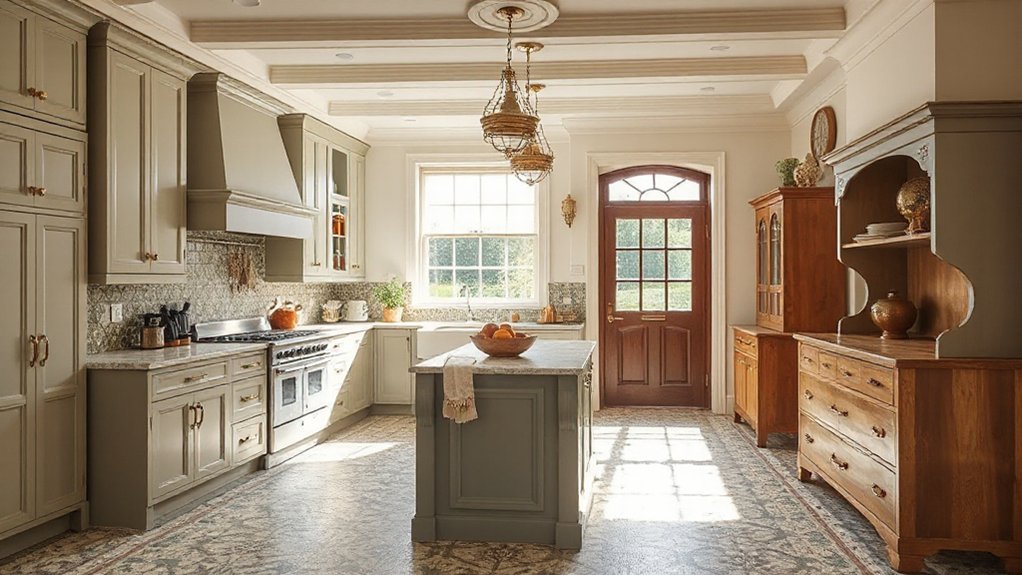
Victorian Yorkshire kitchens stand out for their blend of practicality and period charm, where sturdy craftsmanship meets thoughtful layout. You notice how robust timber joinery and iron fittings convey durability without sacrificing elegance.
Victorian craftsmanship informs every detail—from panelled cupboards to stepped shelving—creating efficient work zones that still feel refined. Yorkshire aesthetics emerge in warm stone tones, coal-black ranges, and brass accents that echo regional sensibilities.
You’ll appreciate the honest, utilitarian design: wide worktops, plenty of storage, and clear sightlines that streamline meal preparation. Natural light, high ceilings, and decorative plasterwork add subtle grandeur without overpowering function.
The result is a kitchen that respects heritage while supporting modern convenience, delivering a cohesive space that speaks to tradition and timeless usefulness.
Start With a Heritage-Friendly Layout That Protects Timber Floors and Tiles
A heritage-friendly layout starts with protective staging that keeps timber floors and tiles intact while you plan modern efficiency. You assess traffic flows, align work zones, and reserve clearances for doorways, ensuring genuine timber and quarry tile survive inevitable refinishing.
Begin with a central work triangle that minimizes backtracking, so daily use remains calm and predictable. Position prep, cooking, and cleaning stations to reduce cross-traffic, and elevate high-traffic areas with temporary protective mats during renovations.
Prioritize accessibility to essential services, and plug adjacent storage into the design so you don’t trap movement behind cabinetry.
Choose Contemporary aesthetics that honor period details without compromising function, and plan around Modern appliances to maximize efficiency while preserving the kitchen’s character.
Finalized spacing before fittings to avoid costly rework.
Light and Color Palettes Inspired by the Dales and Moors
Drawing light and color from the Dales and Moors brings a calm, nature-inspired palette to a Victorian kitchen that feels both timeless and fresh. You’ll harness restrained neutrals punctuated by earthy greens and slate accents to mirror moorland horizons.
Use soft limestone whites for cabinetry and warm timber tones for detail, balancing formality with approachability. Color inspiration should anchor choices: introduce muted blues or sage, never overpowering, to preserve architectural clarity.
Maximize daylight with reflective surfaces, brass hardware, and glass for subtle lusters. Texture matters: plaster walls, stone floors, and woven fabrics add depth without visual clutter.
Let Dales scenery guide mood, not novelty, ensuring cohesion across fixtures, backsplash, and textiles for a refined, enduring kitchen.
Timber-Friendly Storage With Period-Appropriate Details
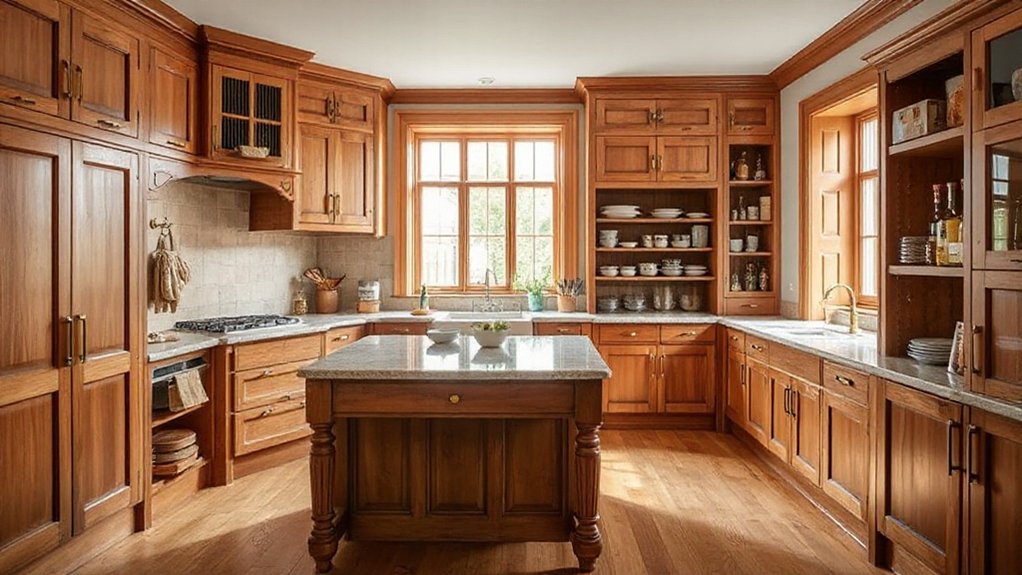
Timber-friendly storage starts with cabinet details that reveal honest timber grain and robust joinery.
Pair period-appropriate hardware with Yorkshire-style storage elements to create authentic, cohesive lines.
This foundation guides your layout and informs future detailing choices.
Timber-Loaded Cabinet Details
Timber-loaded cabinets embrace Victorian character while delivering practical storage. You’ll pair knotty oak or pine with traditional architrave mouldings, ensuring seamless integration into Yorkshire kitchens.
Design focuses on clear, site-fitted joinery, avoiding visible nails and relying on mortise-and-tenon connections for enduring strength. Shelving spans align with work zones, while pantry bays conceal provisions behind panelled doors that echo period interiors.
You’ll optimize space with shallow pull-out racks, dovetailed drawers, and quiet hardware chosen for restrained elegance. Let modern appliances inhabit purpose-built cavities behind timber fronts, preserving a cohesive facade.
While sleek countertops provide a contemporary counterpoint to warm timber tones. Finish with a low-luster varnish or wax that enhances grain without glare, ensuring timeless, maintenance-friendly appeal.
Period-Appropriate Hardware
When selecting hardware for timber-focused storage, prioritize period-appropriate details that blend with the warm grain and traditional joinery. You’ll reinforce the Victorian vibe with carefully chosen pulls, latches, and hinges that look forged or hand-worked, not mass-produced.
Favor finishes that patina with use, avoiding stark chrome. Integrate antique fixtures and period appropriate lighting to unify the space without overpowering the joinery.
- Satin-bronze pulls with subtle engraving
- Latch closures that resemble early hand-worked hardware
- Soft brass hinges keyed to timber tones
- Concealed, timber-friendly mounting plates
- Coordinated lighting fixtures to echo era warmth
These elements preserve authenticity while ensuring durable, functional timber storage. Avoid modern incongruities; let hardware read as an extension of the cabinet’s craft.
Yorkshire-Style Storage Elements
Choose tall larders, bench-height cupboards, and shallow display cubbies to mirror Victorian architecture without sacrificing flow. Keep hardware minimal yet authentic—cupboard latches, pegged doors, and exposed hinges—so every piece reads as a cohesive part of the scheme.
Integrate adjustable shelving to accommodate seasonal wares, while paneling and beadboard accents reinforce the period feel. Lighting should highlight grain without glare, preserving the atmosphere of Yorkshire landscapes.
*Guarantee* finishes are matte, warm, and breathable to avoid modern sheen that disrupts authenticity. This approach blends practicality with timeless charm.
Appliances That Blend in With Period Charm
Hidden appliances can look at home in Victorian kitchens when you choose designs that hide or disguise modern tech. Aim for period-pleased integrations and seamless vintage aesthetics that still deliver today’s performance.
When you plan, prioritize discreet panels, integrated cabinetry, and color or material matching to keep the appliances truly in sync with period charm.
Hidden Appliance Styling
To preserve period charm, choose appliances that sit within cabinetry or are concealed behind panels that match your millwork, so the kitchen reads as seamless rather than showroom-new. You’ll deploy hidden appliance strategies that emphasize flow over flash, with concealed technology guiding the design.
Prioritize panel-ready units and integrated hoods to keep sightlines uninterrupted. Precision matters: align heights, grain direction, and hardware to maintain a refined, cohesive aesthetic. The goal is utility without distraction, where function remains evident yet understated.
- Panel-front refrigeration that vanishes into the cabinetry
- Hidden range hood concealed behind a vented panel
- Integrated dishdrawer within full-height cabinetry
- Flush-mounted controls for a clean surface
- Concealed charging and docking stations with discreet access
Period‑Pleased Integrations
Identify opportunities to hide compact refrigeration behind panelled cabinetry and to mount dishwashers adjacent to sinks for logical workflow. Select ovens and vents with understated profiles, integrated controls, and brass or aged-metal trim that echoes period fixtures.
When you install lighting, prioritize Vintage lighting that complements crown mouldings and ceiling roses, avoiding chrome glare. For flexibility, hide microwaves in tall unit banks or appliance hubs, maintaining clean sightlines.
Pair these choices with durable, period-appropriate finishes, and your space remains cohesive while benefiting from reliable, modern functionality.
Seamless Vintage Appliances
As you weave seamless vintage appliances into a Victorian kitchen, prioritize pieces that mirror period detailing while delivering modern performance. Choose integrated units with soft-metal finishes, rounded handles, and panelled fronts to preserve harmony with era elements.
Seek models that offer quiet operation and energy efficiency, wrapped in casing that resembles homegrown crafts. Install controls in discreet locations and pair with vintage lighting to maintain atmosphere.
Consider hidden venting to keep sightlines clean, and select fabrics like Antique textiles for seating or window treatments to unify tone. Prioritize durability and repairability, ensuring parts remain available.
Align with Yorkshire craftsmanship through smart zoning, allowing practical task areas to disappear behind seamless exteriors.
- Concealed controls and panelled fronts
- Soft-metal finishes matching era cabinetry
- Quiet, efficient performance
- Hidden venting for clean sightlines
- Complementary Vintage lighting and Antique textiles accents
Hearth-Centered Zones: Safe, Cook-Friendly Fireplaces
Hearth-centered zones place safety and practicality at the core of your kitchen’s design, guaranteeing the fireplace serves as a reliable warmth source and a functional cooking aide. You’ll position the hearth as a focal point, but with clear clearances, noncombustible surrounds, and updated flues to prevent smoke intrusion.
Use a shielded ignition zone for wood or coal, and install heat-resistant countertops to protect prep surfaces. Integrate Victorian decor with modern conveniences: concealed storage for fuels, accessible pots, and heat-ready surfaces that don’t compromise style.
Choose adjustable radiants or a controllable firebox to regulate warmth and airflow. Favor easy-to-clean chimney linings and durable stone or tile that resists spills.
Precise planning guarantees safety, efficiency, and elegance, letting the hearth enrich cooking, ambience, and family gatherings.
Long Yorkshire Room Island Concepts That Save Space and Cash
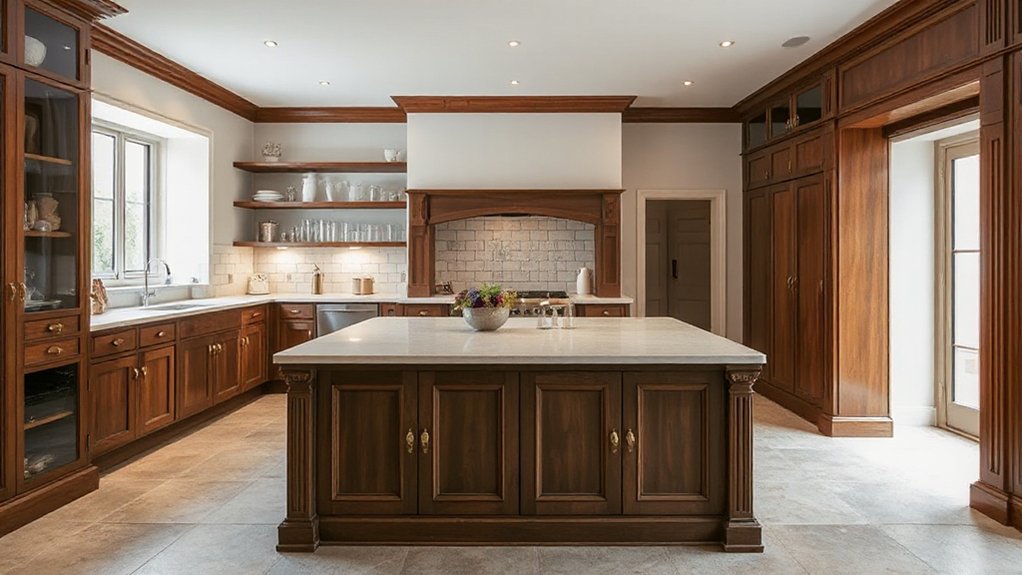
You’ll explore space-saving island concepts that fit the Long Yorkshire room’s proportions without sacrificing style.
We’ll integrate Victorian touches with cost-effective layout tricks that optimize workflow and storage.
Expect practical advice on Victorian-style integration that saves cash while preserving period character.
Space-Saving Island Ideas
For Victorian kitchens, space-saving island ideas must maximize function without crowding the room, and long Yorkshire-style island concepts achieve that balance by combining storage, prep space, and seating in a single streamlined footprint.
You’ll pursue modern minimalism and open concept layouts by selecting slim, uninterrupted profiles, integrated appliances, and concealed storage that minimizes visual clutter. A long, multipurpose island becomes the room’s backbone, encouraging flow between zones while preserving sightlines.
Prioritize durable finishes, under-counter lights, and seating that doesn’t intrude on traffic paths. Use columns or panels to hide cables and keep appliances tucked away. Consider movable components for flexibility during gatherings, ensuring open sightlines remain intact.
- Integrated appliances
- Concealed storage
- Slim profile
- Under-counter lighting
- Movable components
Cost-Effective Layout Tricks
Long Yorkshire room islands prove you don’t have to sacrifice function to save money; by prioritizing modular components, you can stretch a tight budget without sacrificing flow. You’ll prioritize layouts that maximize prep zones while preserving open sightlines, using compact island cores that support essential tasks without clutter.
Choose base cabinets with integrated organization and slim counters, so every inch earns purpose. Position sinks or cooking zones to create efficient work triangles, reducing unnecessary movement.
Favor modern appliances that run on streamlined electrical loads, allowing you to keep compact footprints without sacrificing performance. Embrace minimalist design: clean lines, concealed storage, and a restrained palette that makes spaces feel larger.
Finally, select interchangeable panels and finishes to evolve the look as needs change, not the price.
Victorian-Style Integration Tips
- Choose a wood-toned island core with clean inset panels
- Add decorative corbels for architectural detail
- Pair brass hardware with muted apron-front sinks
- Incorporate botanical motifs from a Victorian garden
- Align finishes to reinforce Yorkshire traditions
Tilework and Splashbacks That Nod to History Without Feeling Old-Fashioned
Tilework and splashbacks can honor Victorian detail without clinging to the past by selecting patterns and textures that feel current. You shape a kitchen that nods to history with restraint, balancing antiquated motifs and contemporary finishes.
Choose vintage ceramics for small, deliberate accents, ensuring they read as curated rather than relics. Patterned tiles work best when they’re scaled to modern proportions and glazed in matte or low-sheen tones that complement timber work and brass hardware.
Avoid busy repeats in high-traffic zones; instead, place a single, striking motif as a focal splash or a narrow backsplash band. Pair with plain field tiles to preserve clarity, then seal surfaces for durability.
The result is refined authenticity without sentimentality.
Hidden Pantry and Smart Circulation for Busy Cooks
Hidden pantries streamline workflow by keeping essentials within easy reach yet out of sight, so you can maintain a clean, uncluttered counter when the stove is hot. You’ll optimize circulation by aligning prep zones with storage, minimizing steps and streamlining timing.
Smart lighting marks key work areas and adjusts to task phases, ensuring you never search for a utensil in dim corners.
Focus on kitchen ergonomics: reachable shelving, drawer depths tuned to common tools, and a clear path between fridge, sink, and range. This approach supports rapid, multi-dish cooking without crowding corridors or creating bottlenecks.
You gain efficiency without sacrificing Victorian character or warmth.
- Smart lighting integration for zones
- Ergonomic drawer layouts and depths
- Strategic pantry placement
- Clear traffic flow corridors
- Minimalist, accessible surface clutter reduction
Materials and Craftsmanship That Age Gracefully
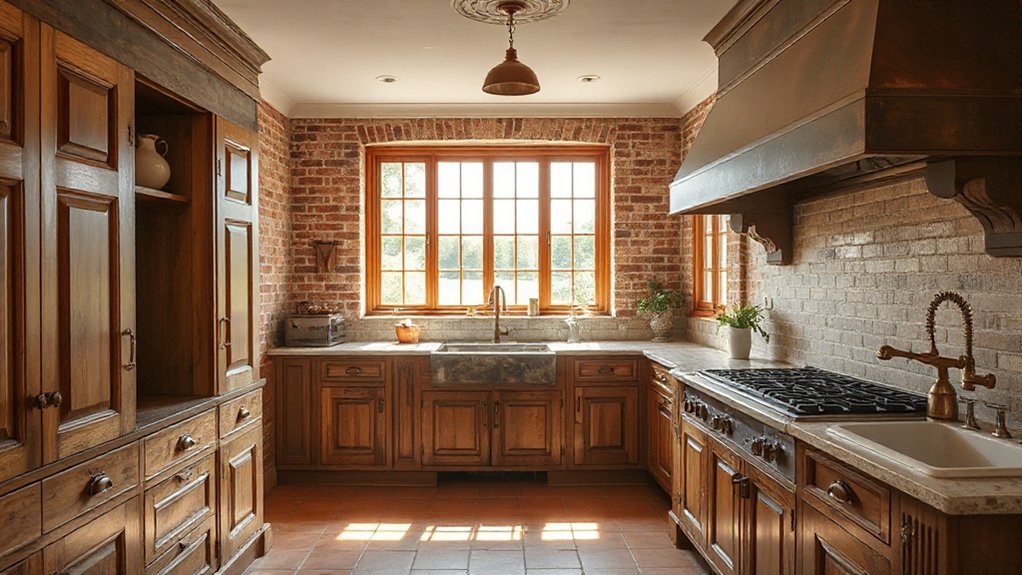
Materials and craftsmanship set the tone of a Victorian-inspired kitchen that ages gracefully, balancing durability with refined detail. You select enduring materials—timber, enamel, ceramic tile—and insist on precise joints, traditional joinery, and restrained ornament.
Your goal is longevity without heaviness, so you integrate periods-appropriate hardware and hand-cut profiles that read as authentic rather than recreated. You pair classic craftsmanship with thoughtful modern sensibilities: today’s essentials tucked within classic shells.
When you introduce Modern appliances, verify they fit the scale and proportion of the room, preserving sightlines and symmetry. Contemporary lighting should illuminate work zones without overpowering craftsmanship, combining brass or matte black fixtures with period-inspired glass.
The result is a kitchen that remains functional, elegant, and historically coherent through evolving tastes and use.
Practical Renovation Checklist for Yorkshire Victorian Kitchens
A practical renovation checklist for Yorkshire Victorian kitchens blends time-honored craft with modern efficiency, building on the careful materials and joinery discussed earlier. You’ll verify layout, lighting, and ventilation before purchases, ensuring workflows honor Victorian kitchen decor while supporting today’s needs.
Prioritize durable surfaces, traditional tile patterns, and discreet storage that respects Yorkshire culinary traditions. Establish a phased schedule with milestones, risk assessments, and contingency buffers.
Source craftsmanship-minded fittings, seal old timber where appropriate, and document changes for future maintenance. Use a project binder with specs, warranties, and care guides.
Collaborate with skilled trades, and maintain quality control at every step.
- Define scope and budget
- Validate structural viability
- Select period-accurate fixtures
- Plan ventilation and lighting
- Set inspection checkpoints
Frequently Asked Questions
How Can I Preserve Original Timber Floors During Updates?
You should prioritize timber preservation by avoiding aggressive levelling; use gentle restoration techniques and breathable finishes. Seal gaps, treat for pests, and document patina. Restoration techniques protect structure; timber preservation maintains character while updating kitchen functionality for longevity.
What Budgeting Strategies Suit Victorian Yorkshire Kitchen Projects?
Set a clear project scope and timeline, then track every cost weekly. Prioritize Modern appliances where they save time or energy, and use Budget planning to reserve contingency funds for architectural or finish upgrades. Keep stakeholders aligned throughout.
Can Period-Accurate Hardware Balance Modern Functionality?
Yes, period-accurate hardware can balance modern functionality. It’s a bridge, merging Modern fixtures with Vintage aesthetics so you enjoy reliable performance while preserving authentic charm, and you won’t sacrifice usability for period detail.
Which Lighting Ideas Respect Historic Character and Energy Efficiency?
Yes, you should use vintage lighting with energy efficient fixtures. You’ll maintain historic character while lowering consumption, selecting period-appropriate silhouettes, LED filament or dimmable LEDs, and smart controls to balance ambiance, visibility, and modern efficiency.
How Do I Choose Appliances That Blend With Antique Aesthetics?
To blend with antique aesthetics, choose appliances with clean lines and muted finishes, prioritizing integrated panels and vintage-inspired hardware. Seek Victorian charm through proportion and detailing, ensuring each piece supports Antique integration without overpowering your kitchen’s historic character.
Conclusion
In your Yorkshire Victorian kitchen, purposeful planning yields timeless taste. Preservation partners with practicality: period palettes, timber-friendly storage, and clever circulation keep character intact while modern life flows smoothly. Thoughtful tiling teases tradition, appliances appear artfully ambient, and enduring craftsmanship ensures elegance endures. Favor faithful fixtures, refine with restrained radiance, and favor functional fresh-air layouts. By balancing beauty with bias-free usability, you’ll create a kitchen that’s perfectly poised, profoundly personable, and perpetually polished.