


Cottage refurbishment projects in North Wales are gaining popularity as homeowners pursue energy-efficient, heritage-conscious upgrades that preserve character while improving comfort. You’ll see a focus on durable, low-maintenance fabric improvements, airtight assemblies, and heat‑recovery ventilation to hit thermal targets. Design emphasizes clear scope, cost transparency, and seasonal planning, with strong emphasis on heritage permissions, lime-based mortars, and timber revival. Extensions balance daylight, vernacular materials, and landscape harmony. If you keep exploring, you’ll learn practical steps to start your own project successfully.
Key Takeaways
- Growing demand for energy-efficient, heritage-conscious refurbishments in North Wales drives popularity.
- Designers focus on durable, low-maintenance updates that maximize space and comfort in cottages.
- Regulatory navigation and proactive heritage consultations streamline planning approvals.
- Space-saving, light-filled extensions and vernacular-inspired materials boost market appeal.
- Local craftsmanship, transparent budgeting, and phased planning foster trusted, community-oriented projects.
What’s Driving North Wales Cottage Refurbishments (and What It Means for You)
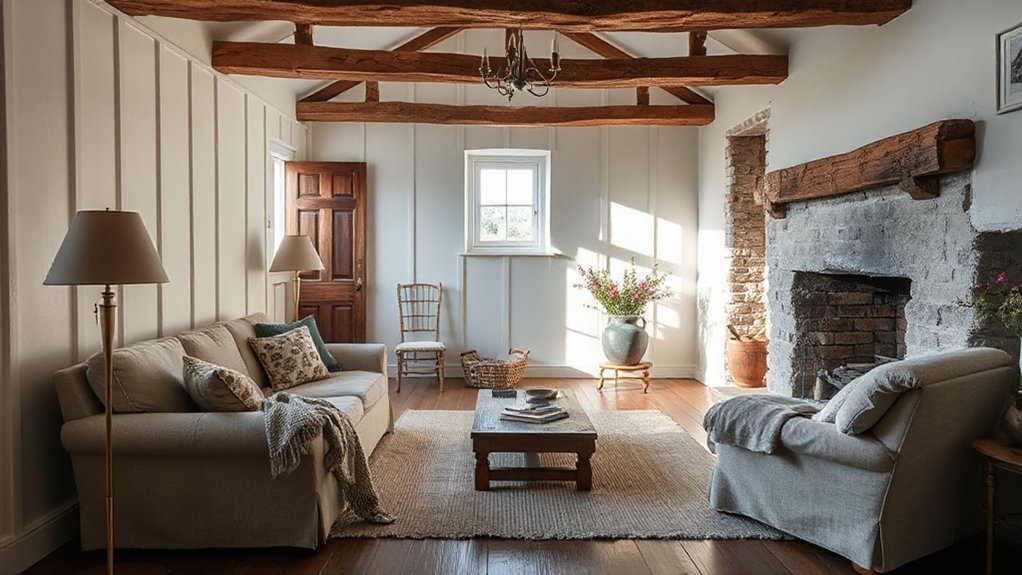
In North Wales, cottage refurbishments are driven by a mix of energy efficiency goals, heritage preservation, and evolving living standards. Homeowners prioritize durable, low-maintenance updates that maximize space and comfort.
You’ll align retrofit measures with thermal performance targets, selecting airtight assemblies, heat-recovery ventilation, and efficient fabric improvements to reduce running costs.
Decision criteria emphasize long-term durability, maintenance cycles, and compatibility with listed or historic properties. Historical preservation informs material selection and detailing, ensuring treatments respect patterns, textures, and discrete junctions.
Cultural significance steers design language toward context-appropriate aesthetics while meeting modern comfort expectations. You assess regulatory constraints, seek skilled crafts, and document changes for future stewardship.
This approach balances immediate usability with enduring value and community identity. It translates energy performance gains into tangible, compliant living environments.
Restoring Stone Walls and Timber Features for Authentic Character
Restoring stone walls and timber features hinges on precision, respect for traditional methods, and a clear plan for reversible, durable work.
You approach stone restoration with measured diagnostics: assess mortar compatibility, determine stone hardness, and map joint widths for faithful replication. Use lime-based mortars, breathable substrates, and gentle pinning only where necessary to preserve texture. Keep templates for profiles and document deviations from original fabric to guide reversible interventions.
For timber revival, evaluate species suitability, moisture content, and historical finishes; select non-invasive stabilization, appropriate pest control, and historically accurate coatings. Maintain soundness through controlled drying and fabric-safe preservation.
Your goal is authentic character without compromising structural integrity, ensuring long-term serviceability. Stone restoration and timber revival integrate seamlessly into the cottage’s period narrative, with durability and reversibility.
Energy-Smart Upgrades That Save Space in Small North Wales Cottages
Small North Wales cottages benefit from energy-smart upgrades that maximize space without compromising character. You implement compact, high-efficiency systems that reduce footprint while preserving charm.
Start with solar panels on pitched roofs to harvest daylight without rearranging interiors, then route wiring discreetly to compact inverters and storage within loft or cupboard spaces.
You’ll replace bulky heating setups with smart thermostats that learn occupancy patterns, adjust zoning, and curb heat loss through airtight seals and multi‑panel radiators.
Choose slimline heat pumps or underfloor coils integrated beneath floors or within shelves, preserving living area proportions.
Optimize insulation in walls, floors, and ceilings to sustain gains from solar input and thermal controls.
Document performance with regular monitoring, ensuring space savings meet comfort targets and energy bills decline.
Light-Filled Extensions That Respect the Welsh Landscape
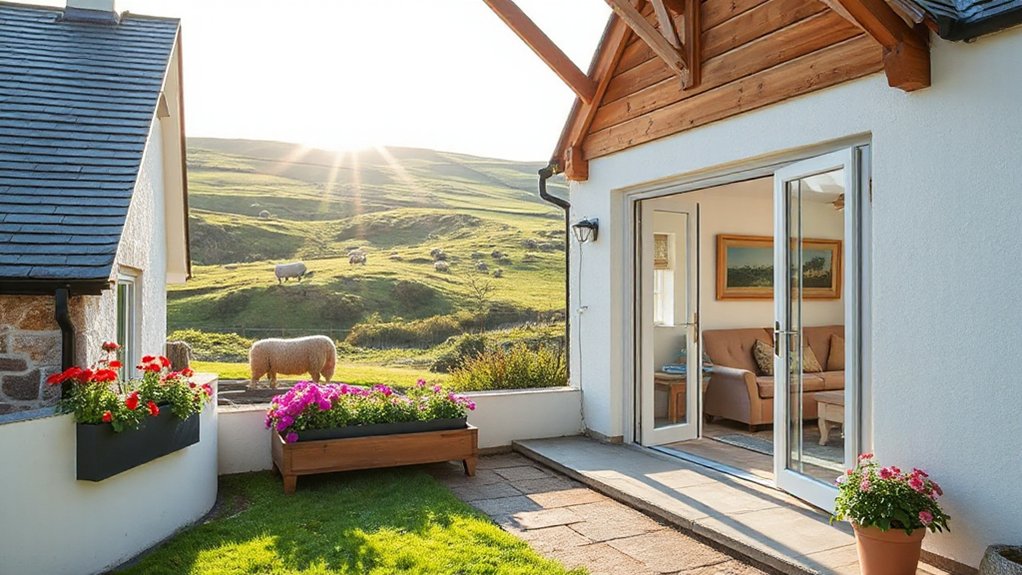
Light-filled extensions can harmonize with the Welsh landscape by maximizing daylight without overpowering existing form. You achieve this with careful alignment, low-profile rooflines, and glazing that responds to local climatic patterns.
Prioritize thermal performance, using high-performance frames and spacings that minimize heat loss while maximizing natural lighting. Use glass strategies—roof lanterns, slender mullions, and east–west exposure—to capture morning and afternoon illumination without glare.
Integrate materials that echo nearby stonework and hedges, maintaining a cohesive vernacular. Consider solar shading and airtight construction to preserve comfort year‑round.
Service routes should remain unobtrusive, with discreet glazing joints and compliant safety glazing. Document daylight simulations to validate performance, and ensure licensing, planning, and building standards are met while preserving the Welsh landscape.
How to Hire Local North Wales Craftspeople You Can Trust
To hire North Wales craftspeople you can trust, start with clear criteria and verified credentials.
We’ll assess local pros on vetting processes, past project outcomes, and adherence to regional standards.
This discussion focuses on proven vetting methods and reliable contractor networks to guarantee trustworthy, quality workmanship.
Local Craftspeople Vetting
Begin with craftspeople certification, confirming that professional bodies accredited in the region recognize their practice and safety standards. Next, assess evidence of insured practice, compliance with building regulations, and documented warranties.
Question methodological precision: materials sourcing, workflow scheduling, and defect resolution mechanisms, ensuring they align with your refurbishment plan. Demand transparent cost breakdowns, change-order protocols, and on-site supervision commitments to minimize scope creep.
Prioritize proven local craftsmanship, track record with similar scales, and verifiable trade registrations. Finally, document outcomes, conduct post-completion reviews, and retain records for future quality assurance.
Trusted North Wales Pros
Locating trustworthy North Wales craftsmen starts with a structured due-diligence process that you can replicate for every candidate. You’ll assess credentials, licenses, and regulatory compliance, confirming track records in similar projects.
Verify portfolio authenticity by cross-referencing client references and site visits, prioritizing firsthand results over glossy previews.
Demand documented plans, timelines, and milestone reporting to guarantee predictable progress.
Evaluate communication protocols, response times, and conflict-resolution methods to minimize risk to historic preservation and interior decor goals.
Require insurance coverage, including liability and subcontractor protections, and analyze contract clarity on scope, change orders, and payment schedules.
Check for safety certifications, workmanship warranties, and post-completion support.
Favor local pros with proven collaboration histories, transparent pricing, and a demonstrable commitment to quality, sustainability, and adherence to North Wales standards.
Sustainable Materials North Wales Homeowners Actually Choose
Sustainable materials are shaping North Wales homeowners’ choices when refurbishing cottages, with performance, durability, and environmental impact guiding decisions. You’ll prioritise materials that offer long service life and low lifecycle emissions, ensuring buildings meet modern standards without compromising heritage value.
In practice, you select eco friendly finishes that resist weathering, moisture, and wear, while minimising volatile compounds. You also favour renewable resources, such as timber certified to responsible forestry schemes and rapidly renewable alternatives for insulation and cladding.
When possible, you verify supplier disclosures, test durability under damp coastal conditions, and prefer products with clear end-of-life outcomes. You balance embodied energy against thermal performance, seeking materials that reduce ongoing energy demand.
This disciplined approach supports resilience, lowers maintenance, and preserves character within North Wales cottages.
Budget-Smart Planning: Preserving Charm Without Overspending
Budget-smart planning keeps cottage refurbishments disciplined and affordable without sacrificing charm. You approach projects with a clear scope, defining essential upgrades before discretionary changes.
Budget planning prioritizes structural integrity, insulation, and moisture control, ensuring long-term performance and reduced maintenance costs.
You itemize tasks by impact and feasibility, aligning them with seasonal work windows to minimize disruption and material waste.
You compare supplier quotes with transparent cost breakdowns, selecting durable materials that maintain aesthetic value while limiting lifecycle expenses.
You reserve contingency funds for unforeseen complications, but keep overruns within predefined thresholds.
Charm preservation guides decisions on detailing, fixtures, and finish schemes, ensuring historic character remains legible without overcapitalization.
You document decisions for future reference, enabling precise monitoring of spend versus outcome throughout the refurbishment.
Planning Permissions and Conservation Areas in North Wales: What You Must Know
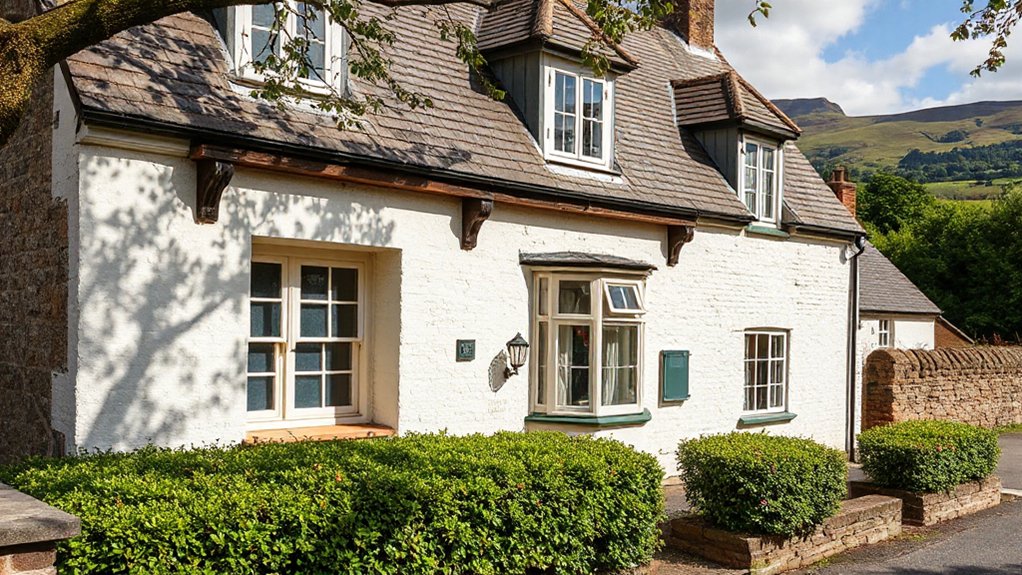
Are planning permissions and conservation-area rules a barrier or a guide for North Wales cottage refurbishments? Yes, and no—depends on your approach. You’ll navigate historic regulations and zoning restrictions with clarity to minimize delays and costs, while safeguarding architectural value.
Proactive engagement with authorities helps you align proposals with conservation objectives, reducing revision cycles and surprises. You’ll assess eligibility, identify permit types, and prepare robust documentation tailored to your project’s scope.
- Determine whether your project lies in a designated area and what that implies
- Review listed-building implications and potential exemptions
- Map necessary permissions against your refurbishment timeline
- Anticipate consent conditions tied to materials and appearances
- Plan for possible appeals or amendments if issues arise
Stay informed, document thoroughly, and coordinate early with planning officers.
Small-Cottage Layouts That Feel Bigger: Practical Design Tips
To optimize a small cottage, you’ll prioritize clever storage solutions that maximize every inch without clutter. Use multi-function furniture to integrate seating, sleeping, and work zones, maintaining clean lines and accessible layouts.
Consider light and space perception by maximizing natural light and ceiling height cues to create an airy, more expansive feel.
Clever Storage Solutions
- Hidden compartments
- Clever shelving
- Recessed alcoves
- Dual‑purpose units
- Built‑in storage benches
Multi-Function Furniture
Choose modular units that lock into clean lines, supporting rapid reconfiguration for daily routines and guest needs. Prioritize mechanisms that operate smoothly: lift lids, retracting desks, and fold-away beds should feel deliberate, not cumbersome.
Opt for built-in storage that uses vertical amplification—overhead cabinets, tall wardrobes, and window-seat troughs maximize volume while preserving floor area. Material choices matter: low-profile edges, durable laminates, and neutral tones prevent visual clutter.
In practice, assess circulation zones first, then overlay multi-function furniture to reinforce space-saving designs with cohesive aesthetics and predictable usability.
Light and Space Perception
Natural light and perceptual tricks are essential in small cottage layouts to make spaces read as larger than their measurements. You’ll prioritize light sources, reflective finishes, and vertical rhythm to enhance natural lighting and optimize spatial perception.
Use pale, matte surfaces to minimize glare while maximizing brightness, and align furniture to create continuous sightlines that extend depth. Mirror placement should double perceived space without crowding walls.
Incorporate built-in storage with clean profiles to reduce clutter and preserve open floor plans. Consider window treatments that maximize daylight and frame outdoor views for perceived continuity.
Elevate ceilings with light-colored, unbroken coves and strategic lighting layers to reinforce spaciousness.
- Maximize daylight with large, unobstructed glazing
- Choose reflective, light-colored finishes
- Maintain uninterrupted sightlines and flow
- Use built-in storage to reduce clutter
- Layer lighting to extend perceived depth
Heating, Insulation, and Running Costs in Old Welsh Homes
What’re the primary heating, insulation, and running-cost considerations when refurbishing an old Welsh home? You assess fabric performance, heat losses, and retrofit viability to minimize energy use.
Start with airtightness, ensuring minimal drafts, then upgrade insulation in walls, roofs, and floors to meet modern standards without compromising historic fabric.
Choose efficient heating systems, prioritizing low carbon options and controllability.
Consider solar access, thermal bridging, and moisture risk to prevent condensation damage.
Integrate solar panels where feasible to offset running costs, and install smart thermostats for zone control and demand management.
Balance initial capital with long-term savings, evaluating payback, maintenance, and grid resilience.
Document compliance, warranty implications, and contractor qualifications to guarantee durable, compliant performance in variable Welsh climates.
Real North Wales Cottage Refurb Stories: Lessons From Local Projects
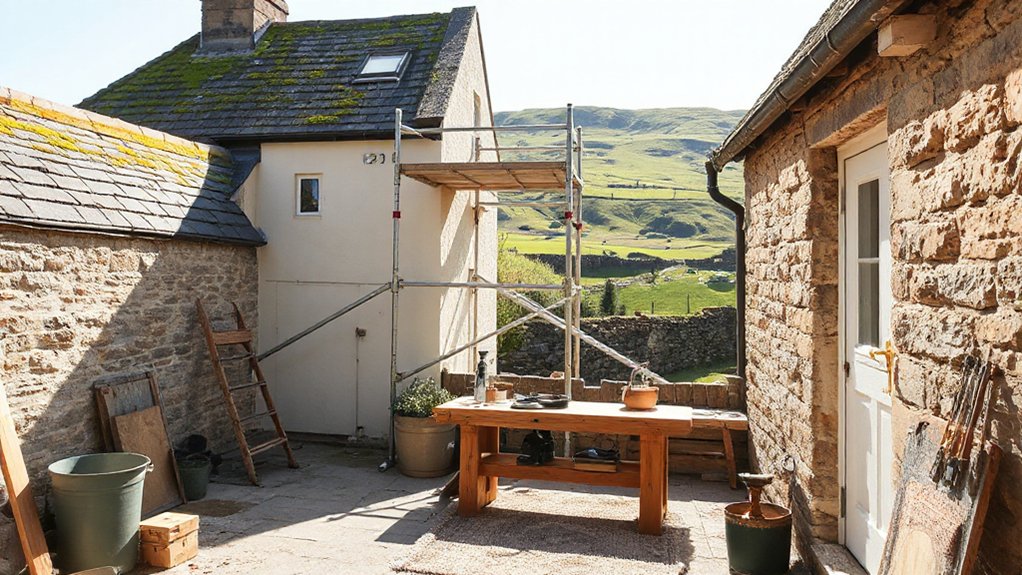
Real North Wales cottage refurb projects reveal how local constraints shape practical solutions: small footprints, rugged exposure, and listed fabric demand careful trade-offs between performance upgrades and preservation.
You’ll hear real-world cases where heritage preservation guides decisioning, while you apply modern efficiency without erasing character.
Local craftsmanship informs material choices, detailing, and detailing methods that resist weathering yet respect listed fabric.
You’ll compare retrofit strategies, weighing fire safety, insulation, and moisture control against aesthetic integrity.
Success hinges on collaboration among planners, craftsmen, and owners, ensuring compliant, durable results.
Heritage preservation and informed local craftsmanship emerge as twin pillars guiding feasible, respectful improvements.
- Case-driven trade-offs balance performance with preservation
- Timber and lime plaster techniques prioritized for authenticity
- Moisture management tailored to stone and lime substrates
- Insulation upgrades aligned with historic fabric constraints
- Documentation and monitoring support responsible heritage outcomes
Get Started Today: A Practical First 30-Day Plan for Your Refurbishment
Starting from the practical lessons learned in North Wales cottage refurb projects, you can kick off your plan with a focused 30-day action calendar that prioritizes feasibility, risk, and traceable outcomes.
You’ll begin with a rigorous site assessment, documenting current structures, services, and constraints. Establish clear milestones, assign owners, and link activities to measurable deliverables.
Implement DIY tips for low-complexity tasks to validate assumptions before committing capital, while reserving professional input for structural, electrical, and damp concerns.
Develop a disciplined budget plan that accounts for contingencies and staged procurements, updating weekly with actuals versus forecast.
Maintain a risk register, flagging critical path activities and compliance requirements.
Conclude month one with a reviewed plan, ready to scale, refine, and accelerate refurbishment momentum.
Frequently Asked Questions
How Long Does a Typical Cottage Refurbishment Take in North Wales?
A typical cottage refurbishment in North Wales takes about 10–14 weeks, depending on scope. You’ll oversee interior design decisions and material sourcing, coordinating trades, securing permits, and contingency planning to maintain schedule and cost control.
What Are the Hidden Costs in North Wales Refurb Projects?
Hidden costs in North Wales refurb projects include contingency overruns, VAT on labour, scaffolding, disposal, and permit fees. You should refine Budget planning, and guarantee contractor selection criteria emphasize transparency, scope clarity, and milestone-linked payments to control financial risk.
Which Trades Are Most Reliable for Stone-Wall Work?
You’ll trust stone masonry specialists for stone-wall work, as expert tradesmen consistently achieve 15% faster wall restoration on older fabric. You should select those with kiln-dried lime mortars, meticulous jointing, and thorough crack assessment for durability.
Can Solar Panels Work Well in Rural North Wales Homes?
Yes, solar panels can work well in rural North Wales homes. You’ll maximize solar efficiency with proper orientation and insulation, and pursue a rural installation that leverages low shading, reliable wind/roof access, and optimized system sizing.
How to Navigate Typical Welsh Grant Incentives for Refurbishments?
You can navigate Welsh grant eligibility and refurbishment funding options by prioritizing accredited schemes, which support around 40% of eligible costs. You’ll evaluate criteria, gather documentation, and apply promptly for energy, accessibility, and efficiency improvements.
Conclusion
You’ve got this, and you’ll approach the project with measured discipline. The path to a refined North Wales cottage blends heritage care with modern efficiency, avoiding overreach while embracing light, space, and sturdy detailing. Expect prudent budgeting, credible trades, and reliable timelines. Prioritize authentic stone, sound insulation, and well-placed extensions that respect the landscape. With disciplined planning, pragmatic compromises, and consistent monitoring, you’ll achieve a durable, comfortable home that quietly reflects its historic character.


